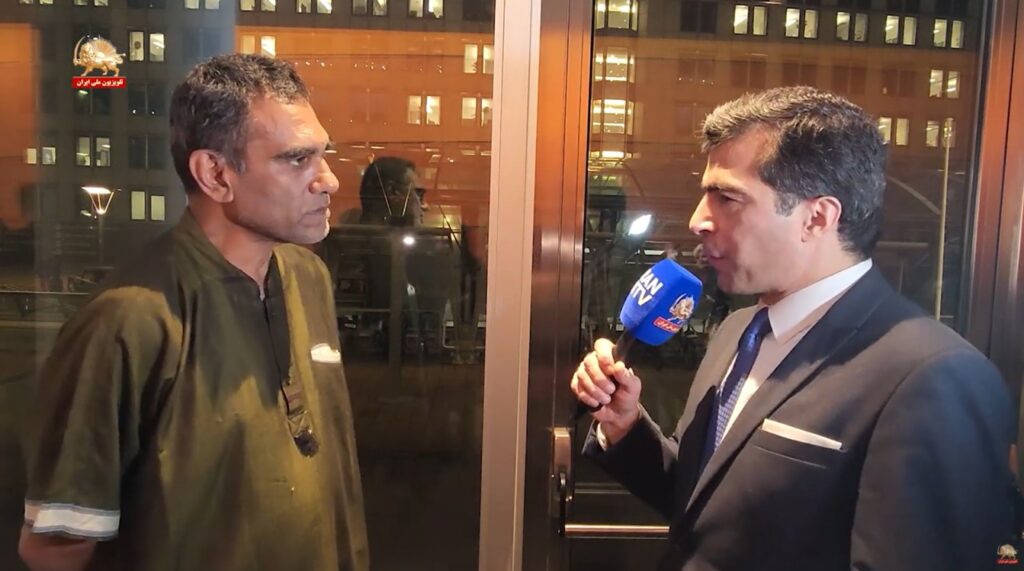
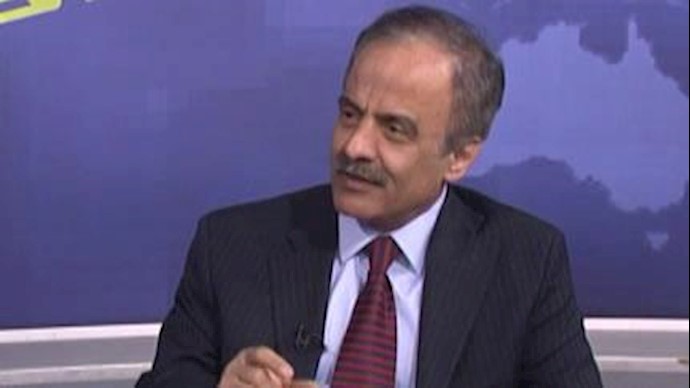
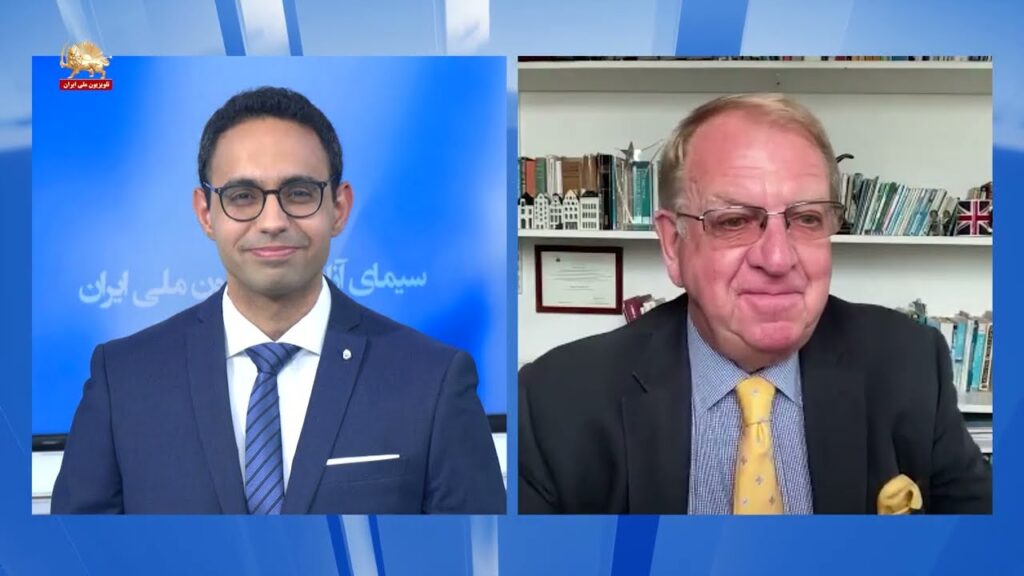
An interview with Mr. Stevenson on Iran’s political landscape and the need for democratic change.
—
[TEXT]:
Welcome, Mr. Stevenson, and thank you for accepting our invitation for this interview with Seemai Azadi.
It’s a pleasure. It’s always a pleasure to speak to you.
So let’s start with the questions. You were one of the speakers at the recent event in the UK Parliament that brought together lawmakers from both houses to discuss developments in Iran and a possible path forward. Could you tell us, please, about the focus of that meeting, how it was received, and how you view its significance at this time?
The meeting was arranged by the British Committee for Iran Freedom. Now, I’ve been to many meetings arranged by that important organization. This meeting was in the House of Lords and was attended by more than 30 MPs and peers from the House of Lords. It was one of the biggest, best-attended meetings I’ve ever been at. The reason was the Committee for Iran Freedom; they were billing the meeting as looking at a third option for the future of Iran. Everybody knows now that we have reached the tipping point with the Mullah’s regime. The dictatorship is on the edge of a cliff. It’s about to tumble over into the abyss. After the 12-day conflict involving both Israel and America, and after the effective decapitation of the so-called axis of resistance that the mullahs always relied on, we have seen the mullahs now at the weakest point they have been since the 1979 Revolution. They have reached the tipping point. This has become of critical importance to the rest of the world because everybody recognizes that the dictatorship in Iran is the head of the snake. We have now reached this ceasefire, which is a fragile ceasefire between Iran, Israel, and America.
But we now can see that the mullahs are saying, “Oh, well, we’re going to go back to rebuilding our nuclear weapons.” It was a clandestine affair for many years, exposed by the recent top-level report to the UN Security Council by the UN nuclear watchdog, the International Atomic Energy Agency, and its boss, Rafael Grossi, who said, “The Iranians now have £900 worth of heavily enriched uranium, enriched to almost weapons-grade, 60% purity.” They could produce a number of nuclear bombs in a very rapid time. Clearly, the time has arrived for the world to take notice of this, to stop messing around with appeasement and dialogue and all the rest of it. This was the purpose of the meeting in the House of Lords. We were looking at the three options that have always been traditionally tabled. The three options include military intervention, which, of course, nobody wants. No one wants to see boots on the ground, which would effectively lead to an Iraq-style situation. The second option has traditionally been appeasement. For far too long, the EU, in some cases under the previous Biden administration and the UK, have said, “Oh, but we must try to talk to the moderates in the leadership of the mullahs’ dictatorship.”
This has never worked. Appeasement can lead to war. That’s the lesson we should have learned from history. And appeasement, certainly with the mullahs, has made no difference at all. They love to play for time and to pretend that they’re willing to negotiate. No negotiations ever take place. They take hostages. They say, “If you give us more freedom, if you lift more sanctions, we will return your hostages.” When we capitulate and give them what they ask for, they simply take more hostages again. So negotiation has come to an end. What we must look at is the third option. The third option is quite clearly backing the Iranian people and their democratic opposition and the resistance movement to overthrow this tyrannical regime and to restore peace, democracy, human rights, and women’s rights, end the death penalty, end the nuclear threat, and restore peace not only to the Middle East but to the whole world. That was the message coming across in the House of Lords meeting, and that was the message that the MPs and peers who attended were prepared to take back and to talk to ministers, to talk to the UK government, to try to implement these ideas.
You just spoke about the third option. Could you please elaborate on that? What are the core values of this option and how can it be realized by the Iranian people and their organized resistance, as you referred to?
Well, nobody wants to see boots on the ground. Nobody wants to see military intervention that would lead to a huge conflict and reduce Iran to what happened in Iraq. That is a lesson from history that we want to avoid. We also have to wake up to the fact that appeasement just doesn’t work. Those people who keep saying, “Oh, but we’re searching for a moderate within the leadership of the Iranian mullahs’ regime,” there is no such thing as a moderate. They said when Massoud Pzezkian was elected with a tiny proportion, the tiniest proportion ever of the common vote in the whole of Iran, when he was elected after Abraham Raisi’s death in the helicopter crash, everybody said, “He is a moderate figure. He is a heart surgeon. He is the person we could talk to.” Since his election, there has been a frenzy of executions, partly because the mullahs are so frightened of another massive uprising, a nationwide uprising that could drive them from power. They’re clinging on to power by their fingernails. They have authorized a frenzy of executions that’s leading to hangings; virtually five or six people are being executed every day.
The regime is waging war on its own people. Now, that’s why there has been a huge rise in the resistance movements, which are commanded by the National Council of Resistance of Iran and the Mujahideen-e Khalq, the MEK, and people in the West have to wake up to the fact that we need to show the Iranian resistance and the Iranian people that we back them morally; we support them. They have a right to overthrow this evil regime. They have a right to introduce the 10-point plan that Mrs. Maryam Rajavi, the charismatic leader of the National Council of Resistance of Iran, has proposed, which would restore peace, democracy, human rights, women’s rights, and end the death penalty and the nuclear threat. This is what the people of Iran want, and this is why the West has an imperative now at this tipping point in the numbered days of the mullahs’ regime. We have the opportunity now to push them over the edge and to give moral support to the people of Iran and their resistance to do this.
Thank you very much. So for our third question, you’ve been the author of several publications and books, but one of your most recent publications is a book called “Dictatorship and Revolution: Iran: A Contemporary History,” which traces more than a century of political developments in Iran, including the monarchy, Pahlavi’s regime, and the post-1979 system. It also discusses how different political currents have shaped the country’s direction. In that context, how do you assess the recent efforts by the remnants of the Shah’s regime to reenter the political landscape, including the reported outreach to parts of the IRGC? Do you see these efforts as part of a broader trend? And what perspective does your book offer in understanding how past systems of governance continue to influence the present debate about Iran’s future?
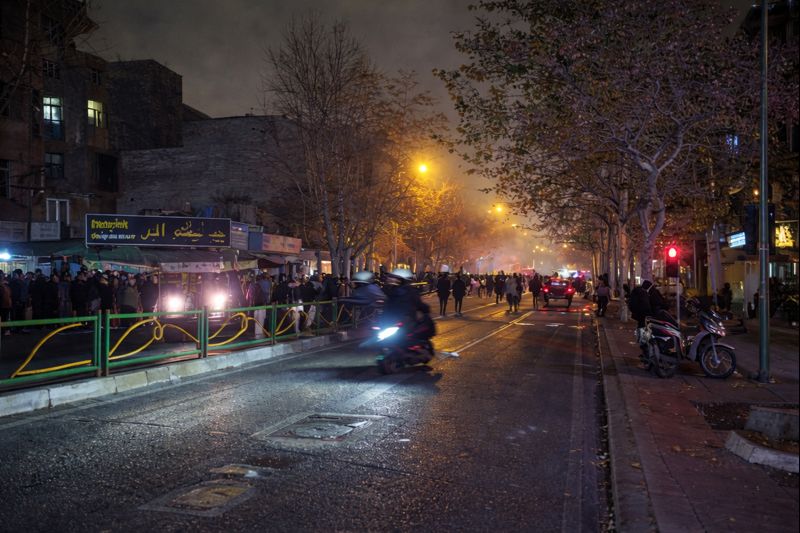
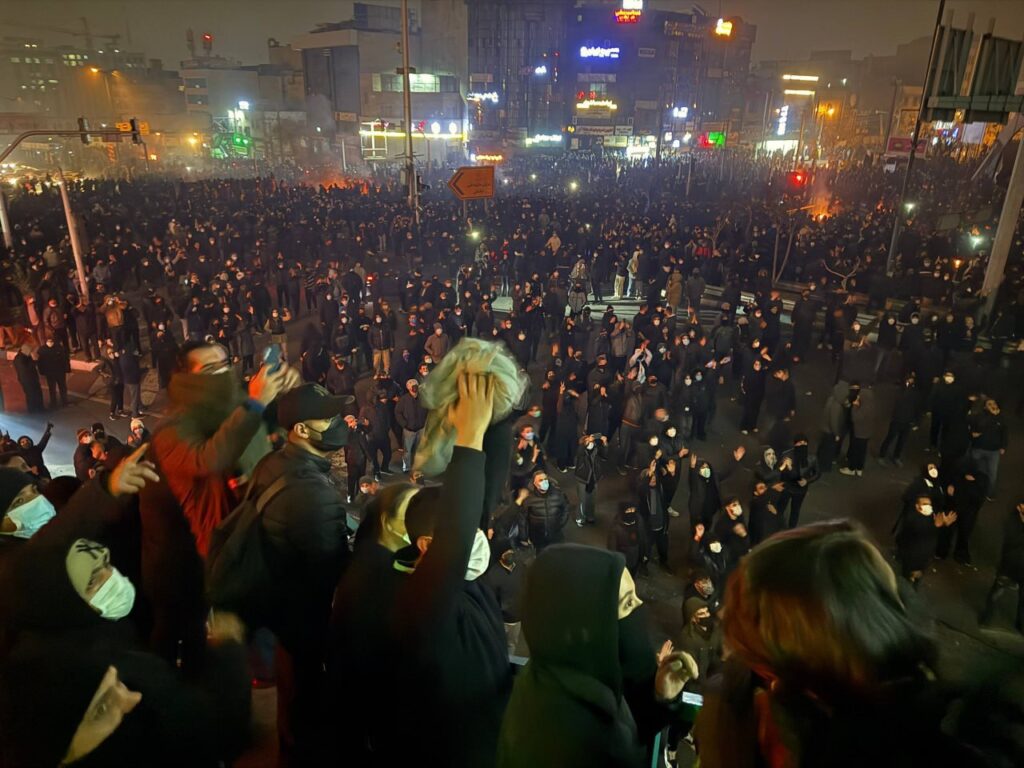
Well, when the people of Iran rose up in 1979 to overthrow the Shah, it was because the Shah was a hated figure; he had demolished democracy. He had gotten rid of all political parties except one, his own political party. His secret police, SAVAK, were well known for their brutality, for torturing, for tearing out fingernails and toenails to extract false confessions before people were then executed. This was a hated regime that the people of Iran rose up and overthrew. Sadly, the revolution was hijacked by Khomeini, who the world, again, stupidly thought, “Oh, he is a holy man. He is a religious leader. He must be a moderate. He will restore peace and justice to the people of Iran.” He was clearly a psychopath, as we discovered, with his fatwa against the MEK, which led to the execution of more than 30,000 political prisoners in the massacre of 1988—a horrific event that is still under close examination by the United Nations. But every time we have seen the signs of a nationwide uprising, and there have been quite a few recently, particularly the massive uprising after the death in custody of Mahsa Amini, when we saw millions of people take to the streets, every time there is an uprising, and it looks like there could be an opportunity to overthrow the mullahs, up pops the son of the Shah, Reza Pahlavi.
He has done absolutely nothing for 46 years. He has lived in luxury in his hugely affluent houses and palaces that he has all over the world, based on the estimated 25 to 30 billion dollars that his father looted from the people of Iran. The Pahlavi family is living in affluence and luxury, but he suddenly pops up and starts jetting around the world claiming he is the Crown Prince, saying he will be the savior of Iran after the mullahs are overthrown. He will come back and claim the Peacock throne. This is pathetic nonsense, quite frankly, for a man who has no credibility whatsoever and no support within Iran. During these protests, people are chanting, “No to the Crown, no to the turban.” They say, “No to the Shah, no to the mullahs.” He has no credibility. Worse still, recently, he has totally misread the situation. When Israel was attacking Iran directly during the 12-day conflict, he misread that situation by saying, virtually, that he supported Israel and calling on the people of Iran, “Now is your moment, rise up and overthrow the mullahs while the Israelis are attacking.” The Israelis were actually, some of their missiles and bombs were killing Iranian citizens.
For somebody who claims that he wants to be the king of Iran after the overthrow of the mullahs to say, “I am backing the Israelis for attacking us right now,” was a seriously damaging mistake, which shows his lack of imagination. Also, incredibly, he held a press conference in Paris last month in June, where he said he is in direct communication with leaders in the IRGC, the Islamic Revolutionary Guards. He says that he is inviting them because they want to be part of the national salvation. He’s inviting them to join him when they overthrow the mullahs. This sounds like, at the end of the Second World War, Winston Churchill saying, “We will need the help of the Gestapo to maintain peace after we get rid of Hitler’s Nazis.” This is just stupidity and incredible. He really has made himself into a joke figure. He’s the son of the naked Emperor trailing around Europe—the Emperor with no clothes—or indeed, the Clown Prince would be a more appropriate characterization.
So thank you very much for this enlightening answer. Let me ask you at the end of this interview about your message to the Iranian people, because you are one of the long-lasting supporters of this resistance. If you have any message for the Iranian people, please tell them right now.
Well, I’ve spent the last roundabout quarter of a century supporting Mrs. Rajavi and the Iranian resistance, the National Council of Resistance of Iran. I know that these people are like a government in exile. They have a perfect plan. They are saying it will be up to the Iranian people to produce a new constitution to elect the government that they want to lead them. But in the meantime, we’ve got to support them. We have to rely on the Iranian people themselves to rise up and do this, to back their resistance movement, these courageous people who are taking to the streets day and night to try to overthrow the current tyrannical regime. The West has to back them. The message for the West now is to ban the IRGC, blacklist the IRGC and the Basij, and introduce the snapback mechanism through the United Nations that reintroduces all of the sanctions that were put on hold. The regime is at its last legs. We now need to give it that final push over the edge of the cliff.
Well, thank you very much for accepting this interview with Seemai Azadi. It was indeed a pleasure to have you with us.
It’s been a pleasure, as always, to speak to you.
Thank you.