Simay Azadi English

Author name: Amir Pasha Borjkhani

Exclusive Interviews, News

Robert Joseph: “The Iranian People Need a Democratic Republic”

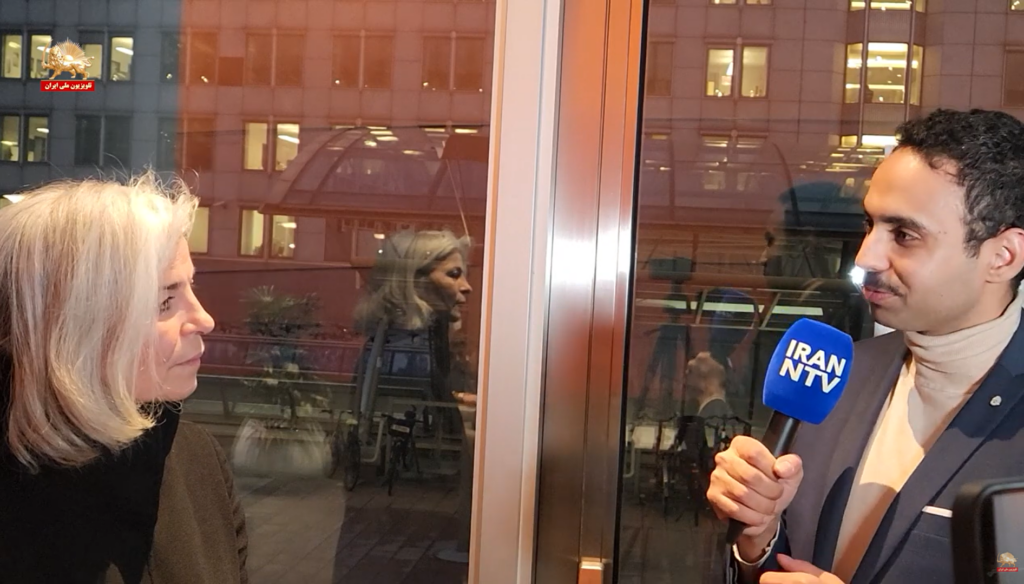
The former U.S. Under Secretary of State discusses Iran’s wave of executions, the alternative to the current regime, the NCRI’s Ten-Point Plan, and why he believes democratic change must come from the Iranian people. In an interview with Simay Azadi on the sidelines of the Free Iran World Summit in Paris, former U.S. Under Secretary of State for Arms Control and International Security Robert Joseph discussed the recent wave of executions in Iran, the regime’s response to growing internal pressure, the alternative to the current political system, international policy toward Tehran, and the cancellation of the Free Iran rally in Paris. During the interview, Joseph argued that the recent executions reflect the regime’s growing weakness rather than strength. He said the Iranian people reject both religious dictatorship and a return to monarchy, endorsed the National Council of Resistance of Iran’s (NCRI) Ten-Point Plan, criticized policies of appeasement toward Tehran, and emphasized that democratic change must come from the Iranian people themselves rather than through foreign intervention. Read the full text of the interview below (edited for clarity): Q: Thank you very much, Ambassador Joseph, for this interview with Simay Azadi. Let us begin with this question. We have witnessed a wave of executions in Iran in recent months, especially after the war. Eight members of the People’s Mojahedin Organization of Iran (PMOI/MEK) have been executed. Why do you think the regime has increased the number of executions at this time? Ambassador Robert Joseph: I think the executions reflect the current state of the regime. The regime is at its weakest point, and these executions are a means of intimidating the people of Iran. Anyone who resists—even in defense of the most basic human and civil rights—faces prosecution, torture in many cases, and execution. I believe this is a desperate regime that is on its last legs, and the international community must work together to stop these executions. Q: In recent months, we have also seen efforts to promote Reza Pahlavi, the son of Iran’s deposed Shah, as an alternative to the current regime. As someone who has spent many years in diplomacy and foreign affairs, what do you believe is an alternative to this regime, and what is not? Ambassador Robert Joseph: First of all, I have never understood the proposition that the Iranian people would want to replace one corrupt and brutal regime with another corrupt and brutal regime. The attraction of Reza Pahlavi is simply incomprehensible to me, and I believe it is equally incomprehensible to the Iranian people. The true alternative to both the religious dictatorship and the restoration of the monarchy is a democratic republic. That democratic republic is founded on the principles contained in Mrs. Rajavi’s Ten-Point Plan and represented by the NCRI and the MEK. That is the vision for a free, democratic, secular, and non-nuclear Iran. Q: You have supported the Iranian Resistance for many years. Why do you support the Ten-Point Plan and this movement? Ambassador Robert Joseph: My professional background is in nuclear affairs. When I was serving at the White House, I came to the conclusion that as long as this regime remains in power, the world will continue to face the threat of a nuclear-armed Iran. The only way to move beyond that threat is through regime change—not imposed by the United States or any outside power—but achieved by the Iranian people themselves. When I first reached that conclusion, I didn’t even know what the NCRI stood for. I looked at the opposition and asked who was capable of leading the Iranian people to end this religious dictatorship. The answer was clear. Mrs. Rajavi, the NCRI, and the Ten-Point Plan provide the principles for a modern, democratic, and secular society. Q: What should the international community do now? Some argue for military action, while others continue to advocate engagement with Tehran. How do you view those approaches? Ambassador Robert Joseph: The first principle is that we must not throw this regime another lifeline through policies of appeasement. We saw that under President Obama. We saw it again under President Biden. Those policies need to be reversed. The world must recognize that this regime has to go and support the Iranian people’s efforts. That is the only solution—not only to the nuclear challenge, but also to the regime’s support for terrorist proxies, its destabilizing regional activities, and its brutal repression of the Iranian people. If there is ever a moral imperative, it is to stand with the Iranian people. And I believe Mrs. Rajavi best represents Iran’s future. Q: Yesterday, a major Free Iran rally in Paris was canceled less than 24 hours before it was scheduled to begin, despite organizers expecting around 100,000 participants from across Europe. What message does that decision send, and what should the French government have done? Ambassador Robert Joseph: I believe the French court’s ruling betrays the fundamental principles of a democratic society. Freedom of assembly and freedom of speech are core principles rooted in France’s own Declaration of the Rights of Man and of the Citizen of 1789. That historic document has served as a model for democratic societies for nearly two and a half centuries. Those are the principles France should uphold—not blackmail or coercion by the Iranian regime, which I believe influenced this decision. In my view, this was a political decision that betrayed the principles of the French Republic. Q: Finally, what message would you like to send to the Iranian people, especially the Resistance Units who will be watching this interview on Simay Azadi? Ambassador Robert Joseph: First of all, I congratulate everyone involved in the Resistance at every level. My message is simple. This regime is at its weakest point in nearly half a century. Now is the time to seize the opportunity. Now is the time to consign this regime to the trash bin of history. It has shown that it cannot change and cannot reform. Its answer has always been repression, war against women, and

Uncategorized

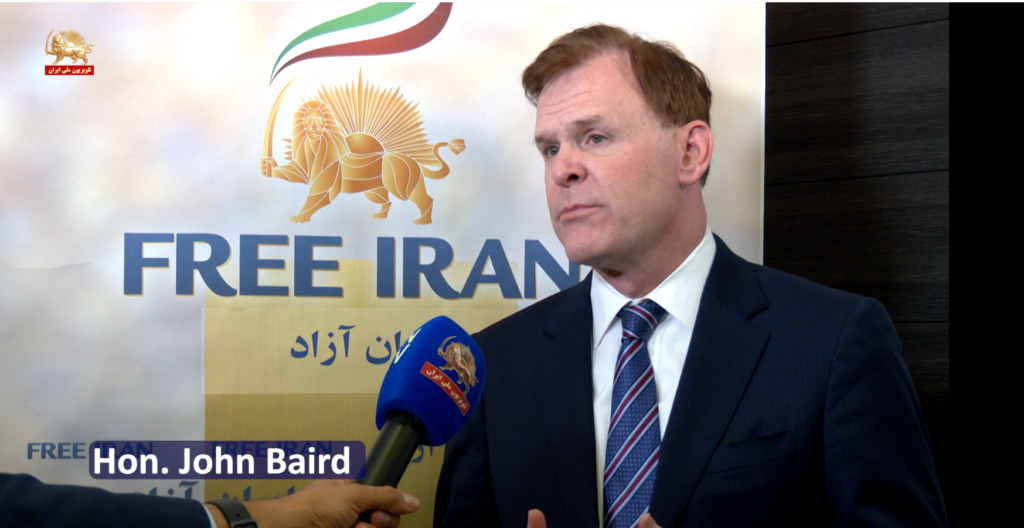
John Baird: “You Can’t Negotiate With Evil in Iran” 

Former Canadian foreign minister discusses executions in Iran, Western policy toward Tehran, the NCRI’s Ten-Point Plan, and the cancellation of the Free Iran gathering in Paris.  In an interview with Simay Azadi on the sidelines of the Free Iran World Summit in Paris, former Canadian Foreign Minister John Baird discussed the Iranian regime’s human rights record, the wave of executions in Iran, Western policy toward Tehran, democratic alternatives to the current regime, and the cancellation of the June 20 Free Iran gathering in Paris.  During the interview, Baird argued that the Iranian regime’s human rights abuses, support for terrorism, and nuclear ambitions make it impossible to negotiate or appease Tehran. He also discussed Canada’s past policy toward Iran, expressed support for the Iranian people’s aspirations for freedom, endorsed the National Council of Resistance of Iran’s Ten-Point Plan, and criticized the French authorities’ decision to cancel the Free Iran rally.  Read the full text of the interview below (edited for clarity):  Simay Azadi: Thank you very much, Mr. Minister, for accepting this interview with Simay Azadi. Let me begin with this question. Yesterday, in your speech at the Free Iran gathering, you said that Iran’s regime is evil and that nobody should negotiate with evil. Can you elaborate on that? Why do you consider this regime evil?  John Baird: I think its abysmal human rights record, its extensive use of the death penalty against political opponents, its nuclear program, and its material support for terrorism throughout the region make this regime evil.  You can’t negotiate with evil, you can’t appease evil, and you can’t work with evil.  Simay Azadi: You just referred to Iran’s ongoing human rights violations. We have witnessed a wave of executions in recent months, especially after the war broke out. Why do you think the regime has increased the number of executions, particularly targeting January protesters and members of the MEK? John Baird: Iran has shown massive political abuses and extensive use of the death penalty going back 40 years.  I think of 1988, and I think of what happened in the aftermath of January.  This regime only uses one tool against its political opponents: brutal force.  Whether it’s peaceful protesters, students, teachers, or resistance fighters, the regime responds with force.  The world has got to take note of this and recognize the true evil that we’re confronting.  Simay Azadi: When you were Canada’s foreign minister during Prime Minister Stephen Harper’s government, Canada recognized the 1988 massacre as a crime against humanity and cut diplomatic relations with the regime.  What do you think the world should do today when it comes to the Iranian regime? What should Canada, the United Kingdom, and European countries do in their relations with Tehran?  John Baird: They need to do two things.  First, realize what we’re dealing with and call it what it is: evil.  Second, understand that this regime only understands one thing: power. It understands a clear and consistent message.  You can’t appease them, you can’t negotiate with them, and you can’t trust them.  They understand strength and consistency, and you don’t back down.  In Canada, one of the things we were most concerned about was not only Iran’s abysmal human rights record but also its complete lack of respect for diplomacy.  Look at what happened to the British Embassy, the American Embassy, and the Saudi Embassy.  We were not confident that Iranian security officials would protect Canadian diplomats.  That’s why even dealing with these people diplomatically doesn’t work. They have no respect for diplomatic conventions such as the Vienna Convention.  Simay Azadi: In your opinion, what is an alternative to this regime, and what is not an alternative?  John Baird: I think people in Iran—and indeed people around the world—understand one thing: the people of Iran want to get rid of dictatorship.  Whether that’s the hereditary dictatorship that existed before the religious fascists took over in 1979, the Iranian people need something that gives them hope.  They need something that can rebuild Iran and improve their lives.  That’s why people should look at the Ten-Point Plan put forward by the NCRI under the leadership of Madam Rajavi.  If we gathered a group of constitutional experts and asked them to design a ten-point plan, I don’t think we could come up with a better one.  Take six months, hold an assembly, and move from dictatorship to freedom, diversity, equality between men and women, and a system without religious hierarchy.  Simay Azadi: You spoke about appeasement and about why we should not negotiate with this regime. Yet French authorities canceled the Free Iran gathering here in Paris while Iranians were traveling from around the world to attend.  What message does this send to the Iranian regime and to the Iranian people? What should have been done?  John Baird: It’s a victory for evil, and it’s a setback for freedom.  We were very disappointed by the French government’s decision to cancel the rally.  When people think of France, the first word that comes to mind is liberté.  I think the message sent here in Paris is a very negative one for the hopes, dreams, and aspirations of the Iranian people.  Simay Azadi: If you would like to send a message to the Iranian people, especially the Resistance Units who will be watching this interview on Simay Azadi, what would it be?  John Baird: We have your back.  We support you.  The world is watching.  I can speak for many millions of Canadians who dream of a better future for the Iranian people.  Canadians will continue to stand with them and support them in this great struggle.  Earlier this year, the regime was at its weakest point.  The regime remains in a very vulnerable position.  Freedom will come one day.  And hopefully we won’t have to return to Paris next year.  Hopefully we’ll hold the next Free Iran conference in Tehran.  Simay Azadi: We hope so too. Thank you very much for this interview with Simay Azadi.  John Baird: Thank you. 

News

Iran’s Food Costs Surge as State Media Warn of Growing Class Divide 

For an Iranian family of four, the cost of basic food items now consumes 71.5 percent of the minimum wage. As Iran’s inflation persists, local publications are signaling that the country’s economy is approaching a threshold where the cost of daily survival may soon exceed the total income of a working-class household.  Reports published by Iran’s state-affiliated media on June 9 and June 10, 2026, provide a stark look at this decline, documenting soaring prices and the rapid erosion of government-provided safety nets.  The Shrinking Safety Net  The government’s ““food basket“” program—a metric used to track the cost of essential calories—has become a primary indicator of the crisis. According to Eghtesad News, the cost of a single-person basket rose from 2.576 million tomans (approx. $14.75) in December 2025 to 5.034 million tomans (approx. $28.83) in May 2026.  Eghtesad News highlighted the growing gap between government promises and the reality on the ground:  “The final price of the food basket in May 2026 was 2.457 million tomans [approx. $14.07] higher than the price of the same basket in late December 2025, and the government covers only one million tomans of this price difference.”  The outlet further noted the rapid devaluation of that subsidy:  “The purchasing power of this one million toman credit bears no resemblance to the one million tomans of last winter, or even the value of the same credit this past April.”  While authorities had previously promised to increase food-basket credits to compensate for policy shifts, Eghtesad News reported that government spokespersons have cited “financial constraints” as the reason those commitments have not been honored.  Price Shocks at the Grocery Store  The impact of these rising costs is most visible in dairy, a staple of the Iranian diet. Donya-e-Eqtesad reported that producers are facing simultaneous shocks to their supply chain.  “The dairy industry has faced two waves of rising costs in recent months; on one hand, the price of raw materials and packaging supplies has more than doubled compared to before the war, and on the other, the rise in raw milk prices has placed the main pressure on production costs.”  According to inflation data from the Iran’s Statistical Center, year-on-year price increases as of May 2026 include:  Pasteurized milk: 135 percent.  Yogurt: 126.2 percent.  Doogh: 110 percent.  Cream: 83.7 percent.  The Threshold of Sustainability  Beyond food, housing is placing an unsustainable burden on families. In a report published on June 9, 2026, Donya-e-Eqtesad noted that in parts of Tehran, rent alone can consume 60 percent of the minimum wage, while the government-approved housing allowance remains fixed at 3 million tomans (approx. $17.18) per month.  The outlet warned of the broader societal implications if these trends hold:  “If the current inflationary trend continues and the minimum wage remains unchanged in 2026, in the coming months the entire minimum wage could be spent on food expenses.”  The publication attributed these pressures to three primary drivers: the devaluation of the currency, which has spiked the cost of imported goods; disruptions in maritime trade that have limited supply; and the degradation of domestic infrastructure due to the recent conflict.  The report concluded with a somber assessment of how households are attempting to cope:  “To cover these costs, in many households two or more people are forced to work, or the head of the household is forced to work multiple shifts; otherwise, they must forgo their daily caloric intake.”  Editor’s Note: Currency conversions are calculated based on the approximate free-market exchange rate of 174,600 tomans to $1 USD as of June 12, 2026. Data is derived from state-affiliated media reports. 

News

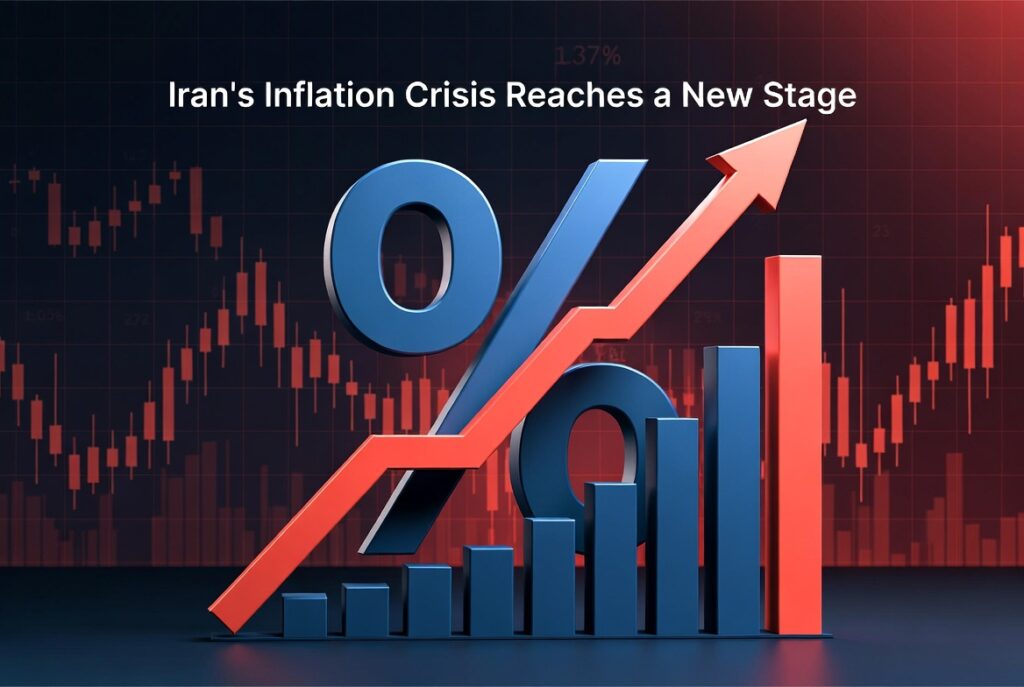
Iran’s Inflation Crisis Reaches a New Stage, State Media Warn 

State-affiliated economists say soaring prices, collapsing purchasing power, and structural failures have pushed many Iranian workers beyond inflation and into what they describe as a “survival crisis.”  Two reports published by state-affiliated newspapers on June 2, 2026, reveal growing concern among Iranian economists over the country’s worsening economic conditions. While official figures show inflation already running at some of the highest levels in decades, analysts quoted by the regime’s own media warn that the crisis has evolved beyond rising prices and is increasingly threatening the basic livelihood of millions of Iranians.  According to Jahan-e Sanat, citing data from the Statistical Center of Iran, annual inflation reached 50.6 percent, while point-to-point inflation in April 2026 reached 67 percent compared to April 2025. More strikingly, prices in the goods sector increased by 95.7 percent, while services rose by 39.1 percent over the same period.  The newspaper noted that the real concern among economists is not only the overall inflation rate but the speed at which service-sector prices are rising.  According to the official figures:  Point-to-point inflation (April 2026 vs. April 2025):  Monthly inflation (April 2026 vs. March 2026):  Yet, the real figure, can be much higher, according to independent experts. The newspaper emphasized that while goods inflation remains higher overall, economists are increasingly alarmed by the 38 percent monthly jump in service inflation, describing it as a figure that cannot be ignored.  “The service price index increased by 38 percent in April compared with the previous month,” the report stated, noting that the costs of haircuts, home repairs, vehicle repairs, doctor visits, restaurants, and similar services rose by more than one-third in a single month.  To illustrate the impact on ordinary households, the report translated the statistics into everyday expenses. A washing-machine repair that cost 400,000 tomans increased to more than 550,000 tomans. At the current market rate of roughly 174,800 tomans per U.S. dollar, those increases represent jumps from about $2.86 to $3.95 and from $2.29 to $3.15, respectively.  The sharpest monthly increases were recorded in the categories of miscellaneous services, transportation, and communications, which rose by 88 percent, 85 percent, and 20.6 percent, respectively. According to the newspaper, any service dependent on transportation, energy, labor, or imported components experienced substantial price increases.  A separate report published by Tosee Irani on the same day focused on the deteriorating condition of workers and low-income households. Economist Farshad Delangizan argued that inflation is no longer the central problem facing many Iranians.  “The worker’s problem is not inflation; it is survival,” he said.  Delangizan argued that many discussions about inflation fail to reflect how working families actually spend their income. While food accounts for only about 28 percent of the official inflation basket of 470 to 480 goods and services, he noted that for many workers nearly all income is spent on food.  “When food prices increase by more than 100 percent, wage increases not only fail to improve purchasing power, they can actually reduce it,” he said.  The economist also highlighted the extent of the hardship facing low-income families.  “If a person wants to consume only dry bread and use the most basic transportation, they must spend at least 100,000 tomans per day.”  That amounts to approximately 3 million tomans per month for one person and 12 million tomans per month for a family of four—roughly $17 and $69 per month, respectively, at the current exchange rate.  He warned: “If these people are not helped and if the government does not define a support basket, we will face a survival crisis.”  Significantly, the newspapers themselves pointed to the roots of the problem. According to Jahan-e Sanat, economists identify three key requirements for controlling inflation: stabilizing the exchange rate, ending government money creation to finance budget deficits, and preventing rent-seeking through greater transparency in the allocation of foreign currency resources. The report explicitly stated that repeated government borrowing from the Central Bank and printing money to cover budget shortfalls continue to fuel inflation.  Taken together, the reports published by Iran’s own state-affiliated media depict an economy struggling under the weight of chronic inflation, currency instability, budget deficits, and declining purchasing power. While officials often attribute economic difficulties solely to sanctions and external pressures, the figures and analysis presented by the regime’s own economists repeatedly point to structural mismanagement, monetary expansion, rent-seeking networks, and failed economic policies as major drivers of the crisis.  For many Iranians, the issue is no longer simply inflation. As one economist quoted by state-affiliated media put it, the question has become one of survival.  The constant warning by the state-run media and officials is due to their fear that the ongoing economic crunch could trigger another uprising like the ones in 2019 and 2026.  

News

Iran Internet Dispute Deepens Amid Ongoing Blackout Crisis 

Conflicting statements by Iranian officials and state-linked media on May 28 highlighted growing internal divisions over internet restrictions, as millions in Iran continue to face disruptions following the world’s longest nationwide internet blackouts.  The latest dispute erupted after members of parliament and state-aligned media criticized attempts by the administration of President Massoud Pezeshkian to partially restore internet access through a newly formed digital oversight body.  According to comments published by the state-run Mehr News Agency on May 28, Ahmad Rastineh, spokesperson for the Cultural Commission of Iran’s parliament, said reopening unrestricted international internet access would be “against the law” and urged Pezeshkian to reverse the decision.  Rastineh argued that the newly formed “Headquarters for Organizing Cyberspace,” created by presidential order, overlaps with the authority of Iran’s Supreme Council of Cyberspace, the body ultimately overseen by Supreme Leader.   “The reopening of international internet access beyond the approved framework is illegal,” Rastineh said, according to Mehr.  He also claimed unrestricted internet access had contributed to unrest during the January uprising, claiming that some detained teenagers had faced “identity and ideological challenges” because of “hostile media and cyberspace.”  At the same time, Morteza Mahmoudi, another member of parliament, criticized what he described as contradictory policies inside the government. In remarks published on May 28 by the Telegram channel of the state-linked newspaper Arman-e Melli, he said the Supreme National Security Council, chaired by Pezeshkian himself, had approved internet shutdowns, while the same administration later attempted to reverse the restrictions through another body.  “The result of this game of cutting and reconnecting the internet is nothing except manufacturing achievements for themselves,” Mahmoudi said.  The dispute widened further after the hardline newspaper Kayhan, known as the mouthpiece of Iran’s Supreme Leader, criticized the Ministry of Communications for refusing to defend the legality of the new internet body during a live television debate broadcast on May 27. According to Kayhan’s Telegram channel, a legal expert argued the body contradicted both Khamenei’s directives and Iran’s constitutional framework.  Meanwhile, the state-run ISNA News Agency published comments on May 28 from a lawyer defending the legality of the new structure, saying decisions made by the body remain valid unless formally dissolved by competent authorities.  The conflicting statements come as ordinary users across Iran continue reporting slow speeds, unstable mobile connections, and outages even after partial restoration efforts. On May 27, the state-linked website Khabar Online published complaints from users asking why internet shutdowns can be imposed “within minutes” while restoration takes far longer.  Iran’s internet crisis intensified after the outbreak of regional conflict in late February 2026, when authorities imposed sweeping restrictions that monitoring group NetBlocks later described as the longest nationwide internet shutdown in modern history. Rights groups and digital freedom advocates say the blackout severely affected businesses, students, medical access, and communication for millions of Iranians.  The shutdown also followed the January 2026 uprising, during which authorities imposed major internet restrictions while security forces carried out  deadly crackdowns and mass arrests. Since then, the regime has continued expanding internet controls, while different factions inside the political establishment increasingly blame each other over the economic and political fallout of the blackout. 

News

Deadly Fire at Tehran-Area Commercial Complex Highlights Iran Safety Crisis

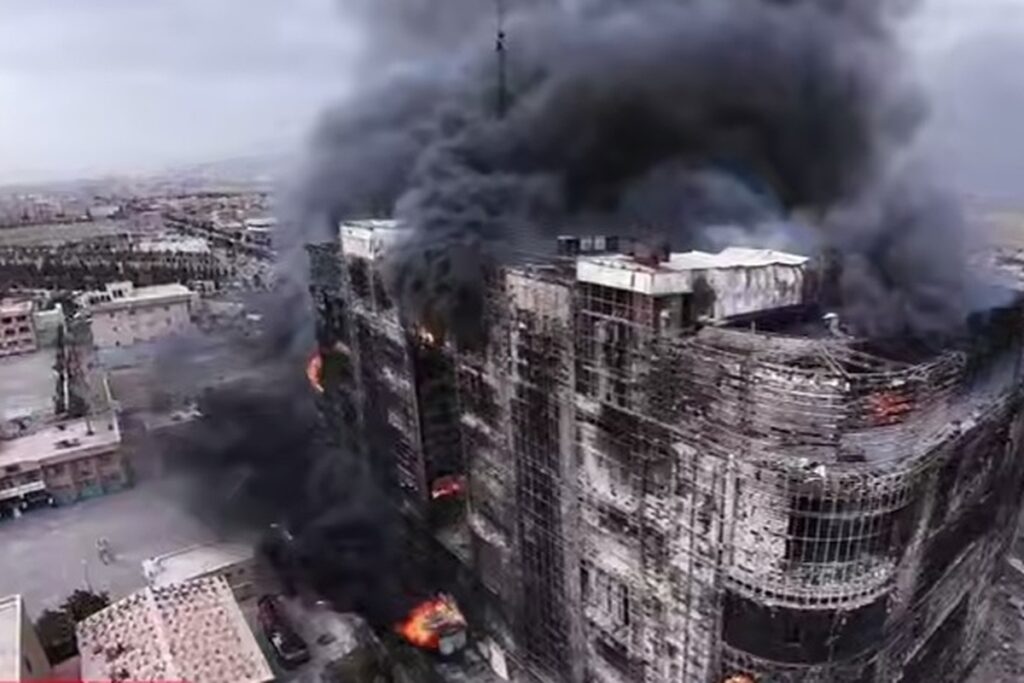
Simay Azadi – Iranian emergency officials announced on Wednesday, May 6, that at least 11 people were killed and 26 injured following a major fire at the Arghavan commercial complex in Shahriar, west of Tehran. According to officials from Tehran’s northwestern emergency services, most of the injured suffered what authorities described as minor injuries and were treated at the scene, while one person was transferred to hospital care. 🚨 Iran News: Deadly Fire in Shahriar Kills At Least 11 Iranian emergency officials said on Wednesday, May 6, that at least 11 people were killed and 26 injured following a major fire at the Arghavan commercial complex in Shahriar, west of Tehran. According to state media,… pic.twitter.com/5eIiGKLpOg — SIMAY AZADI TV (@en_simayazadi) May 6, 2026 State-run Mehr news agency quoted local officials in Shahriar as confirming the deaths of 11 people. Authorities said 26 others had either been hospitalized or treated on an outpatient basis. The fire reportedly began Tuesday afternoon. Videos published by state media and circulated on social media showed flames consuming large sections of the multi-story commercial complex. Officials have not yet announced the cause of the fire. Reports indicate the Arghavan complex housed more than 250 commercial units, several sports clubs, and approximately 50 office units. The deadly incident is the latest in a long series of fires, explosions, and industrial disasters that have repeatedly raised questions in Iran over building safety, aging infrastructure, regulatory oversight, and the allocation of state resources. The tragedy has revived memories of the January 2017 collapse of Tehran’s Plasco building, where a fire tore through the high-rise commercial center before the structure collapsed, killing firefighters and civilians. In the aftermath, merchants and victims’ families staged days of protests over delays, negligence allegations, and what many described as the authorities’ failure to enforce basic safety measures despite repeated warnings before the collapse. In recent years, similar incidents have continued across Iran. In Bandar Abbas, a massive explosion at Rajaee Port earlier this year injured hundreds and caused widespread destruction at one of Iran’s key commercial hubs. Reports surrounding the blast pointed to serious concerns regarding the storage of hazardous materials and broader failures in safety management. Another major fire erupted at the Abadan oil refinery, one of Iran’s largest refining facilities, sparking fears among local residents over environmental hazards, poor maintenance, and deteriorating industrial infrastructure. Many analysts attribute Iran’s recurring domestic disasters with the vast resources spent by the Iranian regime on regional military operations, security institutions, and overseas terrorist activities, while many civilian sectors inside Iran face chronic underinvestment, outdated safety systems, and allegations of systemic corruption. Although officials often describe these incidents as isolated accidents or technical failures, the growing number of deadly fires, industrial explosions, and infrastructure collapses has reinforces that real issue of  governance, accountability, and national priorities in Iran.

News

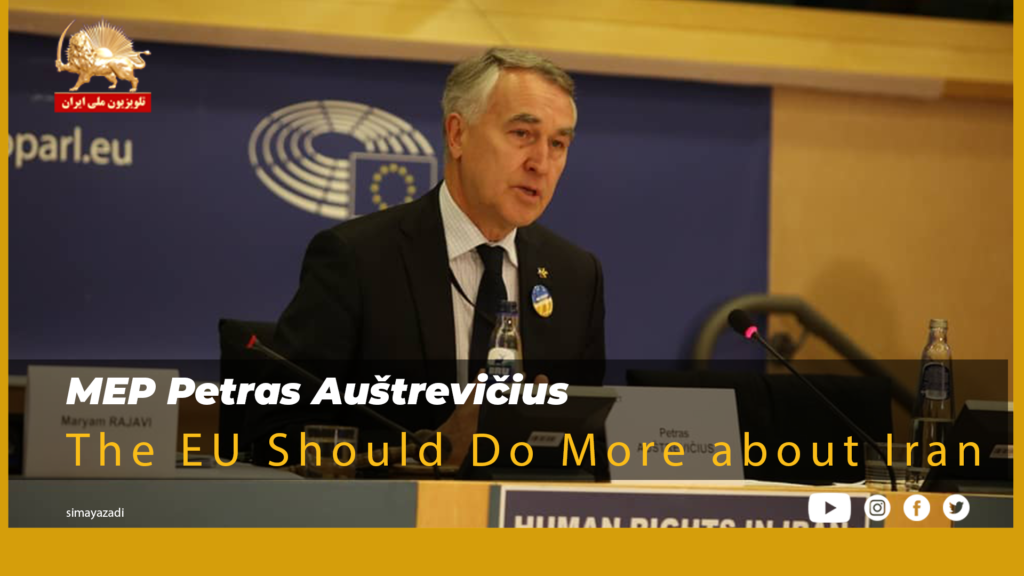
Iran’s Human Rights Crisis: MEP Petras Auštrevičius Calls for EU Accountability

In an exclusive interview with Simay Azadi, MEP Petras Auštrevičius criticized the European Union’s “too slow” response to the escalating human rights crisis in Iran, while calling for a fundamental shift in Western strategy toward supporting a total regime change. Highlighting the lack of accountability for those behind the wave of executions, Auštrevičius said, “Names might change, but the regime will not,” urging the international community to prioritize the freedom of the Iranian people over economic interests like oil and gas. Q: Thank you very much, Mr. Auštrevičius, for this interview. First of all, tell us what the European Union and the European countries should do when it comes to Iran’s human rights situation. Petras Auštrevičius: I’m sure we have to do much more. From time to time we express our full support for human rights and especially voicing strong concerns about the human rights violations, but we do probably too little, if anything. Firstly, we still didn’t somehow come out with the summary of all those executions from the beginning of this year. If we just close down this page and we believe that it’s over, it’s a huge mistake. Those responsible are not called for responsibility; sanctions are not imposed on dozens, if not hundreds and thousands of the Iranian regime officials who are behind torture, killing, and the intimidation of civilians—people who are just expressing their hope for a different country and freedom. So that’s why I think we are vocal, but too slow. The European Union has a responsibility because we are a Union of Freedom. So that’s why I hope we will be back, we will correct our mistake in this regard, and I hope we will be more staunch supporters of the Iranian people in the future. Q: And let me finish by this: right now Iran is a hot topic here in Europe and around the globe. What do you think is the solution to the current crisis in Iran? Petras Auštrevičius: It’s a regime change. I don’t believe there will be any strategic shift in Tehran’s policy with those elite groups and families in power. They will do everything to fight till the last Iranian, so to say. They have to go away. And it must be a very strategic line of the Western policies towards Iran. As I said, [the goal is] not to fight for oil or gas, but for the freedom of the Iranian people and for regime change. If it doesn’t happen and we are still in a kind of cosmetic change, it will be the same. Iranian people will be again prosecuted under the mullahs’ regime. Names might change, but the regime will not. That’s why I think we have to seriously reconsider our approach towards Iran. Q: If you have any message for the Iranian people and you want to tell them directly, what would that be? Petras Auštrevičius: It would be probably: we didn’t do what we had to do, but there are people who understand the scope and probably our responsibility towards the Iranian people. We stand with freedom. We fight with Ukrainians for their freedom, but I’m sure we have to do the same supporting the Iranian people. This day will come. Q: Thank you very much.

News

Iran To Execute Two Political Prisoners Linked to the PMOI/MEK

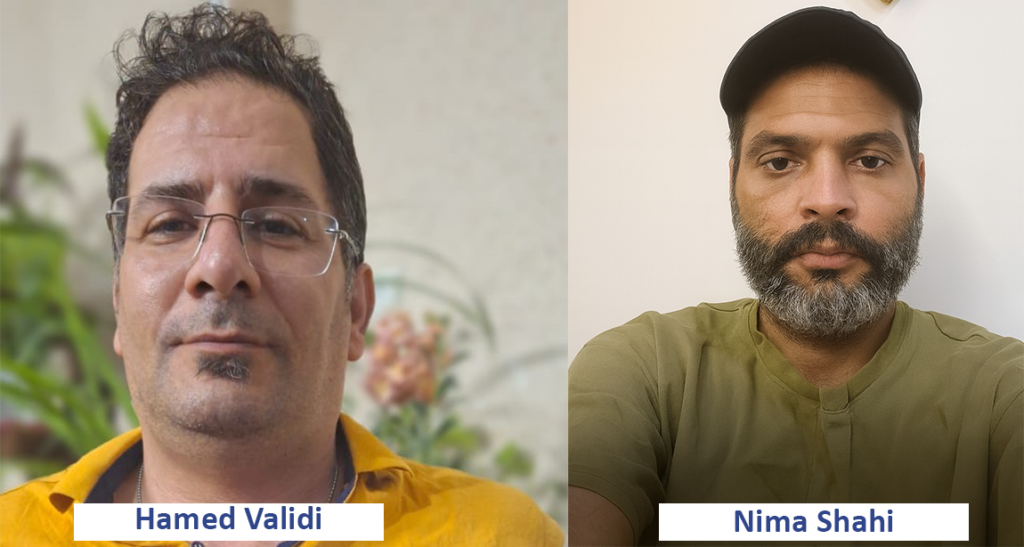
Iran – On Sunday afternoon, April 19, 2026, two political prisoners linked to the People’s Mojahedin Organization of Iran (PMOI/MEK), Hamed Validi and Nima Shahi, were hastily transferred from Karaj Central Prison to an undisclosed location. The abrupt move has raised severe alarms regarding the potential imminent execution of both men. Validi, a 45-year-old civil engineer, and Shahi, a 38-year-old technical worker, were originally arrested in Tehran on May 13, 2025, alongside several of their relatives. Following their detention, both men were reportedly subjected to intense interrogation and torture. By late September 2025, the Iranian judiciary sentenced both men to death on charges of membership in the PMOI. There are some contradictions in the state’s case against them. On September 27, 2025, the Chief Justice of Alborz Province accused the two men, along with two other detainees, of espionage related to the “12-day war.” However, records show that both men were arrested at least a month before that conflict even began. Simay Azadi had previously reported on their arrests on September 7, 2025. The Iranian opposition PMOI had already submitted their names and details to the United Nations and various human rights organizations. In response to the charges, the Secretariat of the National Council of Resistance of Iran (NCRI) issued a statement on September 27 calling for the case to be investigated by the UN Independent International Fact-Finding Mission on Iran. This alarming transfer comes amid a spike in capital punishment in the country. Since March 30, at least 13 individuals have been executed. This total includes six other PMOI members, including the elite physicist Vahid Baniamerian, as well as several individuals arrested during the recent 2026 nationwide protests in Iran. The urgency of the situation is further compounded by remarks made today by Iran’s Judiciary Chief, Gholam-Hossein Mohseni-Eje’i. Addressing judicial officials on Sunday, Eje’i demanded an aggressive acceleration of legal procedures and verdicts, directing prosecutors and courts to bypass standard investigative timelines. Highlighting the pressure of ongoing nightly demonstrations across the country, Eje’i stated that officials must work through nights, weekends, and holidays to process cases rapidly. 🚨 Iran's Judiciary Chief: “If 'the case' is given in the morning, get the results by the afternoon.” In a drastic escalation of summary justice, Iran’s Judiciary Chief Gholam Hossein Mohseni Eje'i has ordered prosecutors to bypass standard legal timelines and issue "immediate"… pic.twitter.com/cNzcxtxNyj — Pasha Borjkhani (@BorjkhaniP1847) April 19, 2026 “Today, work must be entrusted to experts, moving faster and faster, both in the prosecutor’s office and the courts,” Eje’i declared. “Don’t just say, ‘We’ve handed the case to the investigator.’ If it’s given in the morning, get the results by the afternoon. Not a week later, nor ten days later. It used to be standard to allow ten days for an investigation… Go right now, complete the investigation immediately, and return.” With fears mounting that Validi and Shahi could face execution as early as Monday morning, April 20, the Iranian opposition has appealed to the international community. They called on the UN High Commissioner for Human Rights, the UN Human Rights Council, the Special Rapporteur on Iran, the Independent International Fact-Finding Mission, and other international human rights authorities to take immediate, emergency action to save the lives of the two men.

Uncategorized

Iran Executes Two PMOI Members Mohammad Taghavi, Akbar Daneshvarkar – Report

At dawn on March 30, 2026, the Iranian regime executed two members of the People’s Mojahedin Organization of Iran (PMOI), Mohammad Taghavi and Akbar Daneshvarkar, according to statements issued by the regime’s judiciary. The authorities claimed the two had been convicted of “membership in the PMOI” and “armed operations in Tehran,” along with charges of “assembly and collusion against national security” and “armed uprising against the state.” Mohammad Taghavi, 59, was a former political prisoner from the 1980s who had also been detained in 2020 and held for three years. In a message dated August 7, 2025, from Fashafouyeh Prison, he reaffirmed his position following the execution of Behrouz Ehsani and Mehdi Hassani. He wrote: “In these days, with the glorious steadfastness of our martyred brothers Mehdi and Behrouz—who said, ‘I do not bargain over my life’—the situation has taken on a very special character.” Introducing himself, he stated: “I, Seyed Mohammad Taghavi Sangdehi, in the struggle for the liberation of the oppressed people, and as a fighter for freedom… under the proud banner of the People’s Mojahedin Organization of Iran, where the desperate regime, with its coercive nature, takes the ‘will to survive’ hostage, it is time to turn to offensive approaches and say, ‘bring it on.’” He concluded with a vow: “I swear to fight with all my being until my last breath, to die standing… and with certainty in victory, I declare: I am Ready until the end.” Akbar Daneshvarkar, 60, a civil engineer, had been arrested in January 2024. He was sentenced to death in December 2024 by Tehran’s Revolutionary Court. In a letter written from Qezel Hesar Prison in February 2026, Daneshvarkar described the broader context of recent unrest in Iran. Referring to the nationwide protests in January, he wrote:“From months ago, it was clear and certain that an uprising in Iran was on the way. What happened in January was only a prelude, and the main earthquake… that will lead to the overthrow… is inevitable.” He also warned against efforts to divert the protests, writing:“The dictator’s son and his remnants tried to ride the wave of the Iranian people’s uprising, deliberately tying a purely domestic movement to foreign agendas.” Daneshvarkar further described the authorities’ response, stating:“Khamenei ordered that the protesters be put in their place… the repression apparatus labeled the freedom-seeking people as ‘terrorists’ and carried out killings, crimes against humanity, and mass arrests.” He added that detainees were subjected to pressure, including “brutal physical torture, false promises, and repeated threats… to extract forced confessions.” The executions of Taghavi and Daneshvarkar come amid growing concern over other PMOI prisoners facing death sentences, following the executions of Behrouz Ehsani and Mehdi Hassani in 2025.

Uncategorized

Dorien Rookmaker: “The Regime in Iran Is Pure Evil”

Exclusive Interview — Simay Azadi On the sidelines of a conference at the European Parliament marking the International Day of Human Rights, Simay Azadi spoke with Dorien Rookmaker, former Member of the European Parliament (Netherlands).In this interview, Ms. Rookmaker sharply condemned Tehran’s human rights record, called on the European Union to take concrete action, voiced explicit support for Maryam Rajavi’s plan for a secular and democratic Iran, and stressed that economic interests must never take precedence over human rights. She also delivered a message of solidarity and encouragement to the Iranian people, emphasizing that the regime is weak and nearing collapse. Read the full text of the interview below. Interview with Dorien Rookmaker — Simay Azadi Simay Azadi: Thank you very much for accepting this interview with Simay Azadi. We just heard your speech at the conference here at the European Parliament. Can you just tell us what you think about today’s conference and what was its message? And if you can, in several points, say your message that was in the powerful speech that you just gave—what was it? Dorien Rookmaker:First of all, today is the International Day for Human Rights, and it’s an important day for all humankind, I think. It’s important that we all respect human rights. And the regime in Iran is, unfortunately, one of the regimes that don’t respect human rights. I think the regime in Iran is pure evil. I think the UN is doing its part, but we’re here as guests in the European Parliament, and I addressed the European Parliament and I called upon them to take action. The magnificent and very good plan of Maryam Rajavi for the freedom of Iran, for a secular democratic Iran, is extremely good. And I think as a European Union, we have to follow up on that. And I proposed a 10-point plan for the European Union in support of Maryam Rajavi, and I think it went well—it went down well with the European Union members, that is. I think it’s important that we explicitly speak out our support for Maryam Rajavi and the PMOI. I think it’s very important that we mention and state that the IRGC is a terrorist organization. And I think it’s very important that we never, ever, ever prioritize economic interest above human rights, because what you don’t want others to do to you, you shouldn’t do upon others. And if other countries would let a prolific situation of human rights violations in Europe and Iranian people wouldn’t stand up for us, we would be furious. And I admire the Iranian people that they have so much courage to stand up against a regime that is ruthless, and I admire their patience with the European Union and the international community. We should step up and do far more than we do now. Thank you. Simay Azadi: Well thank you very much. If you have any message to the Iranian people, you can address them directly and tell them. Dorien Rookmaker:Well, to the Iranian people, I would like to say that the situation in Syria and the breakdown of the regime of Assad, but also the situation in Iran—which is awful, of course, because of shortages of water and fuel prices going up sky-high, etc.—these are all signs that the regime in Iran is weak and it is on the point of breakdown. And this is why it’s so important that the international community supports you, and it’s why it’s so important that you step up and have trust and faith, because this regime will fade away, will go, and we will charge all those people that have murdered—we will hold them accountable. Thank you.

Scroll to Top