Simay Azadi English

News

News

Iran NTV Exclusive: Vahid Baniamerian’s Final Defense Against the Regime

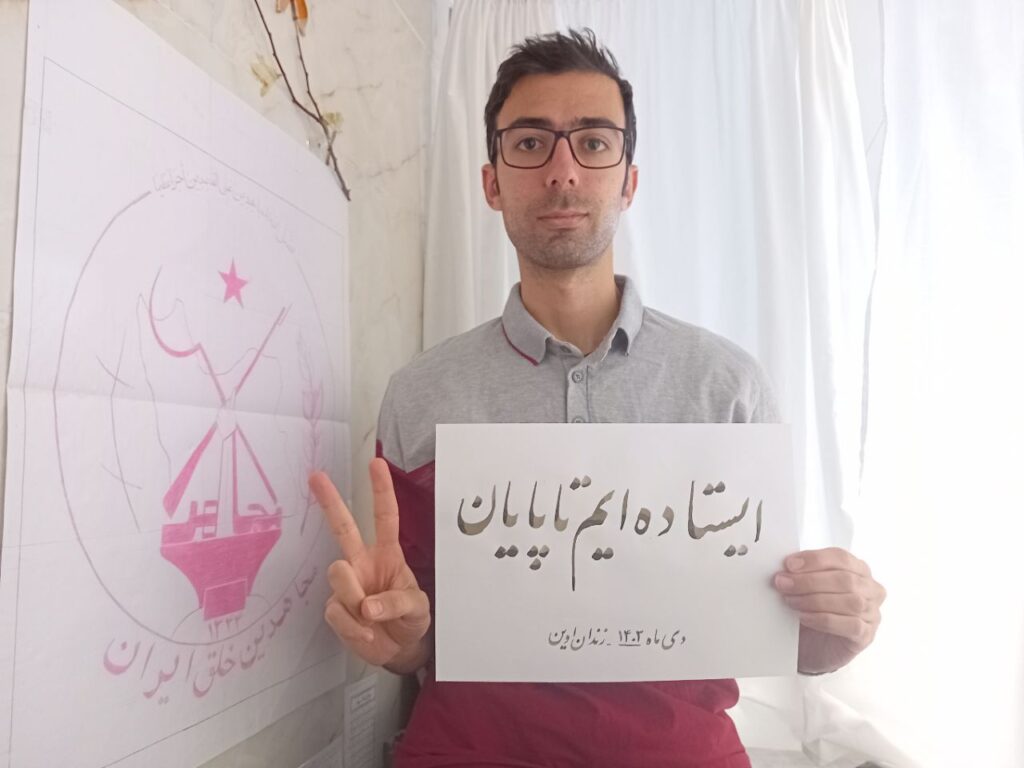
Simay Azadi (Iran NTV) – A smuggled video from Iran’s notorious Evin Prison has captured the final, unyielding defiance of Vahid Baniamerian, a 32-year-old member of the People’s Mojahedin Organization of Iran (PMOI/MEK) known within his unit as Commander Vahid, who was executed on April 4, 2026. Five other PMOI members from the same group on identical charges of supporting the opposition were also execution from March 29 to April 4. In the recording, Baniamerian rejected the legitimacy of the “tribunal that bore no resemblance to a court” that had sentenced him to death, dismissed the regime’s offer of repentance as meaningless, and delivered a stinging indictment of its long history of suppression—reaffirming instead his commitment to a democratic Iran and the 10-point plan of Maryam Rajavi. His words, now a posthumous testament, underscored the resolve of a generation that has come to see personal survival as secondary to the struggle for the nation’s freedom. The Full Remarks of Vahid Baniamerian: Greetings and salutations. I am Vahid Baniamerian, a 32-year-old political prisoner currently under a death sentence. I am very happy to be able to send this message to you—the people of Iran and the world—from behind the bars of Evin Prison. My goal in insisting on the publication of this video, despite all the consequences it may have for me, is to make my defense public. Since this regime knows very well it has no legitimacy, it is terrified of public trials for political prisoners. So, to the “Supreme Leader” who wants to execute us to create fear in society, to stop the movement, and to block the revolution: I want to remind you that I and those like me rose from the blood of freedom-loving youth who, throughout these years, remained nameless. Without many knowing who they were or what they did, or what tortures they endured in your dungeons, they never bowed to you or Khomeini, and thousands upon thousands kissed the gallows. Be certain that if you execute me and my kind, we will only multiply, even if you hide our corpses. And be certain that your regime will have no escape from being overthrown. I, along with five of my friends, was sentenced to death in a tribunal that bore no resemblance to a court. Essentially, the judiciary and the security apparatus in dictatorial and fascist regimes are pillars of suppression and crime, not executors of justice and law. That is why our responses were very short. We do not recognize such an apparatus at all and have nothing to say to it. What I said in court can be summarized in a few sentences: We do not accept the charges you leveled. We were entirely under mental and physical torture throughout the entire process following our arrest. And for a court whose result is predetermined, it makes no difference what answer we give. Please do not trouble yourselves with these formal trials. Based on your Imam’s words, anyone who “stands their ground” is considered “Mahdour-ol-dam” [one whose blood can be shed] and deserves execution. Well, I am standing my ground. That is all. That was our entire trial. But now, I want to publicly announce my response to the four questions raised in this court before the people, addressing the regime directly. Question one: Why didn’t you pursue a normal life after being released from prison? Why are you wasting your youth? My answer to the regime is this: May that life be forbidden to me if the price is stepping on my conscience and closing my eyes to the pain of my people. You have miscalculated. I will neither return to that “normal” life, nor will I allow you and your guards to comfortably continue your lives through plunder, destruction, and the massacre of people. This is the very beauty of life for me: “Life is but belief and struggle” (Innama al-hayat aqida wa jihad). After my previous release from prison, you yourselves exiled me to Bashagard. I saw with my own eyes the innocent Baluchi children perishing in deprived huts [kapars] due to a lack of resources. Should I remain silent while you lounge on the throne of power, living off the people’s pockets and the blood of the youth, continuing your massacres and destruction? Should I focus on my own studies and personal life while millions live below the poverty line, and your warmongering, misogyny, and double oppression against ethnicities and religions continue? Never. Never. Let me be very clear: under a death sentence, I rest my head on my pillow at night not with fear of your gallows, but with the memory of my people’s pain. I think of the bitter fate of those child vendors on the Seyyed Khandan pedestrian bridge who were before my eyes for four whole years. My classmates at K. N. Toosi University probably remember them. Where are they now after 10 years? What are they doing? For what sin? Often, the wails of those poor mothers and fathers echo in my mind and ears, taking sleep from my eyes—like the father in front of the Kermanshah hospital, holding his sick child who needed surgery. They had no money, and the father said in Kurdish: “How can I raise this much money with a worker’s wage? Must I let my child die?” And the mother shrieked: “How can I let my child die? O God! O Justice!” And now you talk to me about a “normal life,” you sellers of religion? You have miscalculated. Let me make it perfectly clear who my role models are. They are the Ashrafis—the ones whose very name terrifies you. Those who gave their youth, their entire lives, and everything they owned for the freedom of the people and the prosperity of this land, from Kurdistan to blood-soaked Baluchestan, and from the marshes of Mahshahr to Azerbaijan and every single city in Iran. Question two: Do you accept the charges? My answer is: Which charges? For the mullahs’ terrorist
News

Who was Iran’s Dictator Ali Khamenei?

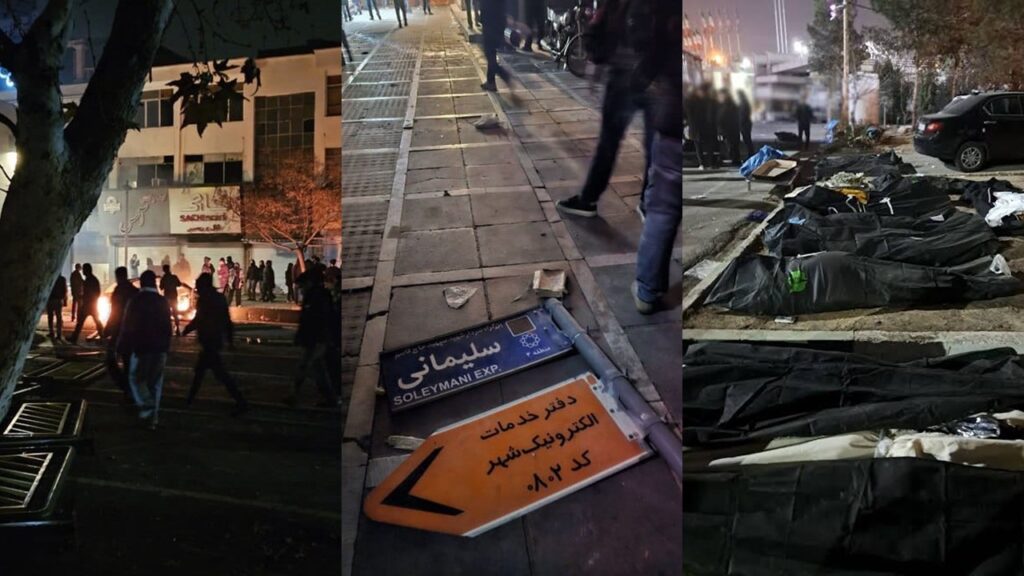
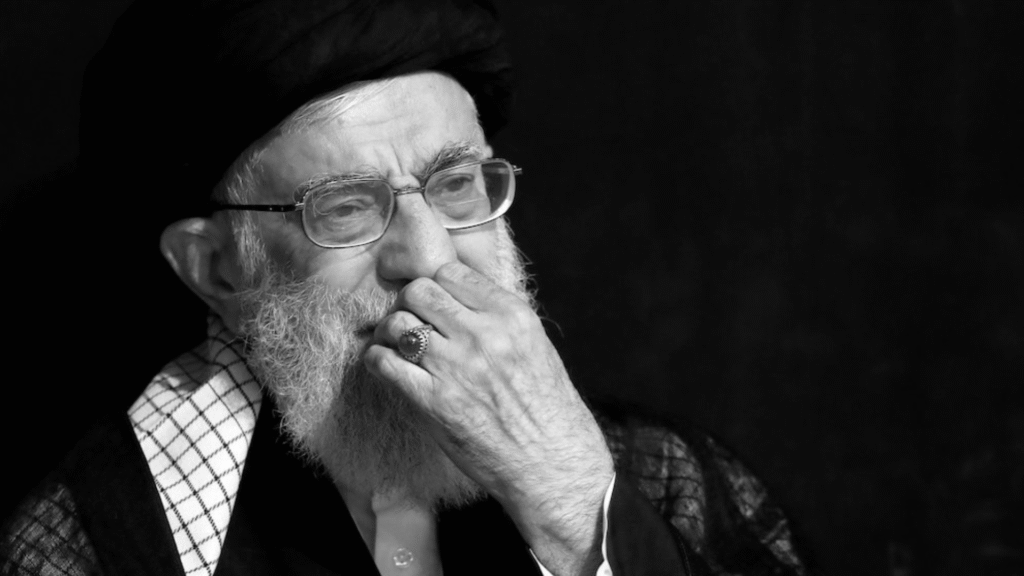
Simay Azadi April 2026 – April 8, marked the 40th day since the death of Ali Khamenei, the Iranian regime’s supreme leader. Khamenei’s final days were defined by the January 2026 uprising, where his final act of domestic policy was the “black bag” strategy—broadcasting images of dead protesters in industrial bags to terrorize the public. It was the closing chapter for a leader whose transition from a minor cleric to a multi-billionaire dictator left Iran on the brink of ruin.  Roots and the “Superficial” Scholar  Born in Mashhad on April 19, 1939, Khamenei was the son of Javad Khamenei, a cleric born in Najaf, Iraq. His education began in traditional Maktab-khanehs and progressed through various seminaries in Mashhad and Qom. However, his religious credentials were long disputed; his brother-in-law, Sheikh Ali Tehrani, described his studies in Qom as “superficial and unfocused,” noting that he spent only four years in serious study and lacked the focus required for high-level jurisprudence.  His political activities occurred at age 23, not through a pursuit of democracy, but in opposition to the Shah’s “White Revolution.” Alongside Khomeini, Khamenei opposed land reforms and women’s suffrage, viewing these changes as a threat to the feudal class interests of the mullahs. During the Shah’s reign, he was arrested six times, with his longest stint being an eight-month imprisonment in 1975.  The Path to Absolute Power  Following the 1979 Revolution, Khamenei moved rapidly through the regime’s hierarchy, serving as a representative to the Defense Ministry, the Imam of Friday Prayers in Tehran, and eventually President from 1981 to 1989.  His path to the Supreme Leadership was somehow cleared by the 1988 massacre of 30,000 political prisoners. Hussein-Ali Montazeri, the designated successor to Khomeini, was ousted and placed under house arrest after protesting the execution . Following Khomeini’s death in 1989, Khamenei was elevated to Supreme Leader with the help of Akbar Hashemi Rafsanjani, despite lacking the constitutional requirement of being a high-ranking mujtahid (jurist). At the time, Khamenei himself admitted his own inadequacy, stating, “We should weep tears of blood for the nation for which even the possibility of someone like me becoming the leader is proposed.”  As the Iranian regime marks 40 days since Khamenei’s death, it is worth remembering his own words before taking power in 1989: “One should weep tears of blood to even consider me for leadership.”Tens of thousands of killings and executions later, he was proven right.#IranWar pic.twitter.com/y6eyU9Rt2F — Ehsan Eghbal Eslami (@Ehsaneghbale) April 9, 2026 A Governance of Blood: Domestic and Foreign Terror  Khamenei’s 37-year reign as Supreme Leader was marked by the systematic elimination of dissent:  The $200 Billion Shadow Empire  While a 2018 Gallup poll ranked him as the world leader least attentive to his people’s welfare, Khamenei amassed a fortune estimated by the U.S. Embassy in Iraq and reported by Reuters at $200 billion. This wealth was managed through the “Setad” (Execution of Imam Khomeini’s Order) and various foundations like Bonyad Mostazafan and Astan Quds Razavi, which own thousands of companies in shipping, dairy, and oil.  His personal life stood in stark contrast to his public image of a “pious ascetic”:  The Cost of “Strategic Depth”  Khamenei’s foreign policy funneled the nation’s wealth into regional chaos:  The Final Failure  The regime’s supreme leader consistently preached a doctrine of “No war, no negotiation.” Yet, his strategic blindness led to both. By early 2026, his provocations resulted in the direct military confrontation that claimed his life. He died leaving behind an Iran scarred by 47 years of clerical rule—a period that began with a “superficial student” and ended with a billionaire dictator whose final legacy was the “black bags” of his own citizens.  In 2018, Ali Khamenei, as the Iranian regime’s supreme leader, said: “There will be no war, and we will not negotiate.”Eight years later, after major changes in Iran and across the region, negotiations have taken place, war has broken out, and he himself has been killed. https://t.co/Q8KEjdP64h pic.twitter.com/qBXUJlmfMd — Ehsan Eghbal Eslami (@Ehsaneghbale) March 29, 2026

News

Simay Azadi Exclusive: PMOI Commander on Feb. 23 Offensive on Khamenei HQ

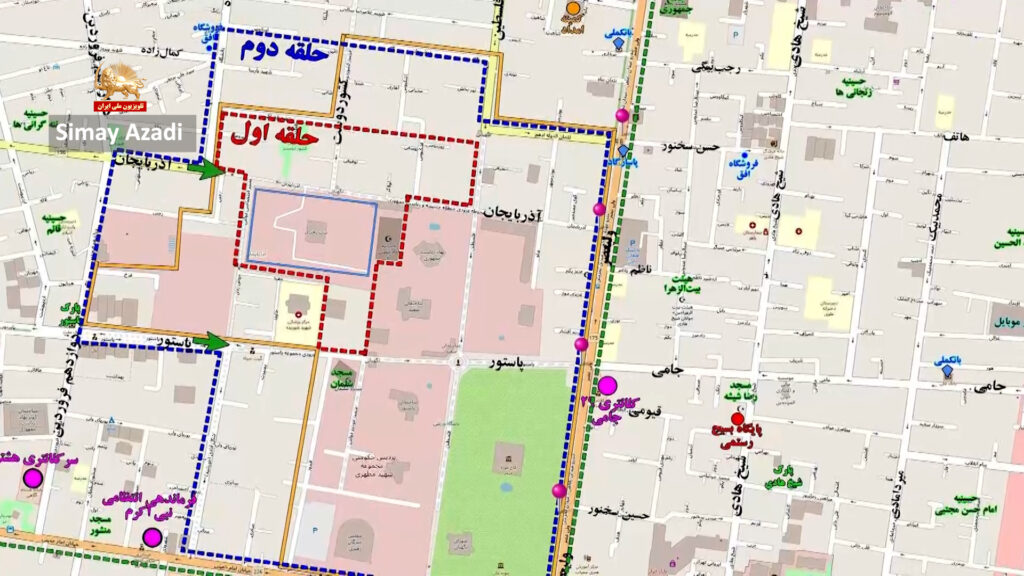
This report features a firsthand account from a commander of the People’s Mojahedin Organization of Iran (PMOI/MEK) Resistance Units who participated in the offensive against the headquarters of the Iranian regime’s Supreme Leader on February 23, 2026. Positioned within the second ring of engagement, the commander describes the tactical movement through Tehran’s back alleys, the intense firefights with security forces, and the vital support provided by local residents. This testimony highlights the determination of the units to strike at the center of the regime’s power despite the heavy presence of the IRGC and specialized protection forces. The Commander’s Report: Hello and greetings. It was around 10:00 PM on Sunday, February 22nd, that according to the plan and schedule we had prepared beforehand, we got our tools and equipment ready. We had to travel a certain distance, and considering the security atmosphere there, we had to start our work around 4:00 AM according to our schedule. Before entering the path, all the guys took an oath together, and with the memory of the resistance martyrs and prisoners, we encouraged ourselves and renewed our covenant to strike at the heart of darkness today—meaning the head of the “Snake of Supreme Leader.” Along the way, we sent a couple of the guys ahead of us, and they identified points where inspections were possible and reported back to us. Through the secondary back alleys, we managed to reach the location we had in mind. In fact, the further we progressed along this path, the more the feeling of power and motivation grew within us. Our entire focus was on being able to carry out our mission in the best possible way. When we reached our intended location, we once again, very quickly, reminded ourselves of our duties. Then, immediately, we moved from Jomhouri Street toward Vali-e Asr. I was moving ahead when suddenly the sound of gunfire and volleys rose from the direction of Azarbaijan, Loghman, and Jami streets—which are the entrances to “Khamenei’s Beyt.” At this point, the guys immediately readied their weapons. With the start of these other units’ activities—as soon as the sound of these noises and explosions rose—the agents poured out like ants and locusts. We couldn’t afford any delay. We immediately began firing toward the security forces, and I can say they were completely caught off guard. This situation was quite evident because their attention was entirely focused on the forces ahead of us who had initiated the operation. This caused us, right at the start—due to that surprise—to take down a number of them. A number of them fell on the sidewalks, and the rest retreated. Of course, they were also firing back at us, but their shooting was blind. It was almost dark, and unfortunately, in the midst of this, one of our guys was hit by a bullet. The others pulled him to a corner so he wouldn’t be in the line of fire of the regime’s forces. Then, we continued firing with even greater intensity. I believe this situation lasted for about half an hour. The sound of gunfire and explosions had filled that entire area. The problem we faced was that we ran low on ammunition. During this time, the guys charged at the enemy with full force. They felt as though they were facing an entire battalion, and this was the reason they just fired blindly and without a target. The casualties they suffered were because of this. They didn’t have the courage to get close to us. We took advantage of this situation and tried to pull back, to get ourselves out of that zone. I should also add that it is a residential area. The help from the people who were there early in the morning was truly effective in our escape from that area. What was very noteworthy was the motivation of our guys to strike them and take them out of action. I must say here that I am proud of every single one of them. You might not believe it, but those who had been shot had morale that was perhaps even higher than ours. Another point I find necessary to mention is the help and assistance of the people in the area. Despite all the dangers this could have entailed for them, they truly did not withhold anything. I once again took an oath that on the path to overthrow the regime, I would not neglect any effort. In the words of Massoud Rajavi and Maryam Rajavi, may God find us worthy to save the people of Iran from the clutches of this bloodthirsty, anti-human regime. And with God’s help, we will certainly accomplish this. Additional Info – According to the Command Headquarters of the PMOI/MEK inside Iran, heavy clashes occurred from the early hours of Monday, February 23, 2026, until that afternoon around Khamenei’s headquarters in the Motahari Complex. This 620 by 770-meter compound houses the offices of Mojtaba Khamenei, the Guardian Council, the Judiciary, and the Ministry of Intelligence. While more than 100 Mojahedin fighters were martyred or arrested, over 150 fighters operating in the second security perimeter (a 350-meter radius) returned safely to their bases. The complex is defended by nearly 8,000 personnel, including the IRGC Vali-e Amr Protection Corps and the Ansar al-Mahdi Corps. Despite the presence of reinforced concrete walls and anti-drone barriers, internal collaborators helped disable surveillance cameras at dawn. Following the attacks—first reported by state-affiliated media at 6:00 AM—heavy casualties were reported within the compound, leading to continuous ambulance traffic until noon. IRGC-run Bultan News admitted the severity of the breach, questioning how the “enemy” achieved such audacity in the heart of Tehran. Meanwhile, the regime has initiated brutal pursuit operations across the capital, though many citizens continue to provide shelter to wounded fighters.

News, Special Production

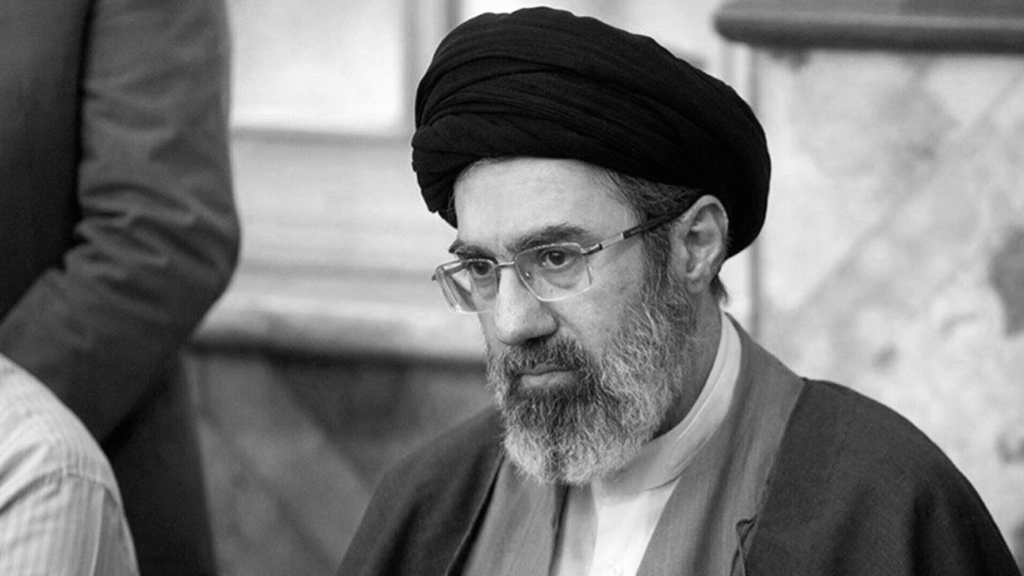
Who is Mojtaba Khamenei? Iran’s New Supreme Leader  

The Life, Crimes, and Dynastic Rise of Mojtaba Khamenei  March 8, 2026 — On March 8, the Iranian regime’s Assembly of Experts officially chose Mojtaba Khamenei to succeed his father as Supreme Leader. While the state presents him as a man of faith, investigative dossiers reveal a “corrupted prince” who has spent decades commanding paramilitary death squads and amassing a private fortune through the systematic pillaging of Iran’s oil wealth.  I. The Indoctrination of a Successor  Born on September 8, 1969, in Mashhad, Mojtaba was groomed within the regime’s most elite and controversial circles.  II. The “Commander of the Coup” (2005–2009)  Mojtaba’s rise to power is inseparable from the subversion of Iran’s elections and the blood spilled on Tehran’s streets.  III. Regional Ambitions: The “Iraq Iftar”  Mojtaba has long acted as a shadow diplomat, directing regional instability alongside the late Qasem Soleimani then commander of the IRGC’s Quds Force.  IV. The Global Property Empire: The Bloomberg Investigation  A recent landmark investigation by Bloomberg has exposed how Mojtaba used a network of shell companies and loyal oligarchs to shield a massive international real estate portfolio from the Iranian public.  V. Financial Crimes & The 1.6 Billion Euro Embezzlement  Mojtaba’s name is synonymous with the pillaging of the public treasury (Beit-al-Mal).  Conclusion: A Legacy of Repression  By elevating Mojtaba Khamenei on March 8, the Assembly of Experts has once again showed that the regime lacks any pretense of religious or popular legitimacy. Mojtaba takes the throne as a leader who is already reviled for:  His reign begins with a nation united by a single, decades-old slogan: “Mojtaba bemiri, Rahbari ro nabini” (Mojtaba, may you die and never see the Leadership). The “Shadow Prince” has become the Sultan, but he inherits a country that has already rejected his family’s right to rule, as it rejected the rule of the Shah and his son.  

Iran War, News

LIVE REPORT —War in Iran: NCRI Declares Transitional Government to Transfer Sovereignty to the People

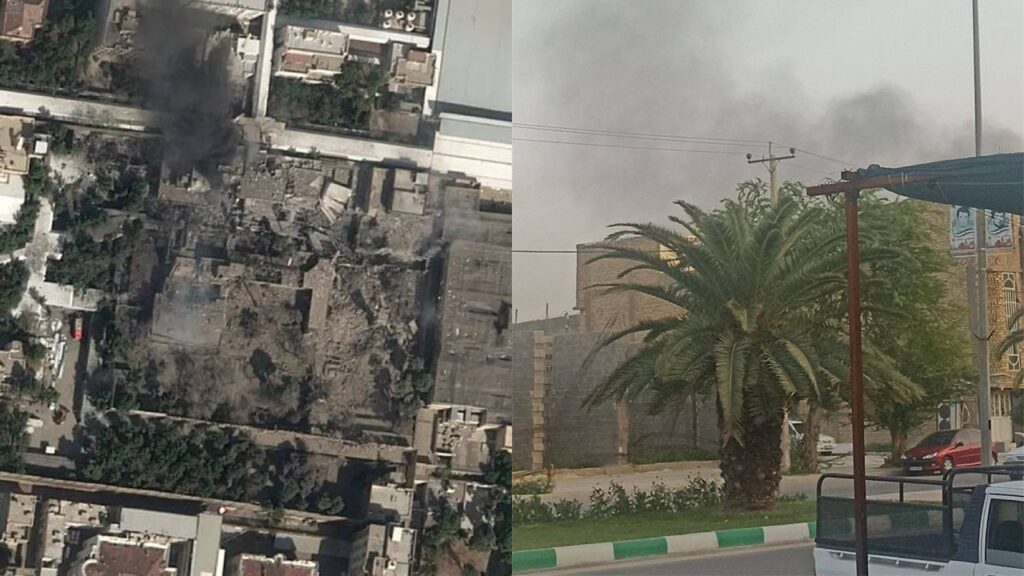
Explosions Across Tehran and Multiple Provinces as Missile Exchanges Expand Regionally A military escalation unfolded across Iran following coordinated strikes attributed to the United States and Israel, targeting military and political infrastructure inside the country. Explosions were reported across Tehran and more than 20 provinces. Missile exchanges quickly expanded beyond Iran’s borders, triggering air defense responses in Israel and several Persian Gulf states. Regional governments issued emergency statements, airspace closures followed, internet disruptions were reported inside Iran, and diplomatic tensions surged worldwide. This is a developing situation. 🔴 Key Developments Declaration of a Transitional Government by the National Council of Resistance of Iran To Transfer Sovereignty to the People of Iran and Establish a Democratic Republic Based on Mrs. Maryam Rajavi’s Ten-Point Plan In a decisive political development amid escalating military events, the National Council of Resistance of Iran has declared the formation of a Transitional Government aimed at transferring sovereignty to the people of Iran and establishing a democratic republic. 🔴 10:00 PM CET — Escalation Deepens, Khamenei’s Status in Question As military exchanges intensify across the region, new statements from international and military sources point to a rapidly evolving situation inside Iran. ▪ Netanyahu: “Signs” Khamenei May No Longer Be in Power Reuters reports that Israeli Prime Minister Benjamin Netanyahu said there are “many signs” suggesting that Iran’s Supreme Leader Ali Khamenei “is no longer,” while stopping short of providing confirmation.He added that Israel’s operation would continue as long as necessary. Separately, Reuters reported that Iranian officials stated Khamenei was not in Tehran and had been moved to a secure location, though his condition or status has not been officially confirmed. ▪ CENTCOM: Hundreds of Iranian Missiles and Drones Intercepted According to statements from U.S. Central Command (CENTCOM), American forces successfully defended against hundreds of Iranian missile and drone attacks across the region.CENTCOM reported no U.S. casualties and minimal damage to American installation Strikes Inside Iran Israeli officials stated that dozens of military sites were targeted in coordinated operations conducted alongside the United States. Confirmed and reported targets included: Explosions were reported in: Tehran, Ahvaz, Urmia, Karaj, Kermanshah, Isfahan, Qom, Tabriz, Dezful, Kharg Island, Kordestan Province, and eastern districts of Tehran including Seyed Khandan. Reports indicated strikes near Mehrabad Airport and areas close to presidential and the supreme leader’s compounds. Smoke columns were observed rising over central Tehran. Israeli officials stated that essential regime personnel connected to military planning were targeted. Some reports indicated that Ali Khamenei and President Pezeshkian were among those targeted. Iranian authorities later stated Khamenei had been moved to a secure location. Casualties Among Regime Command Arabic media cited Iranian sources confirming that senior Revolutionary Guard commanders and political officials were killed. Reports from sources close to regime channels indicated significant casualties among IRGC operational personnel, including individuals holding specialized command roles. Iranian Missile Response Iranian state-linked outlets reported missile strikes targeting: Sirens sounded across Israel including Tel Aviv, the Galilee, Golan Heights and northern coastal regions. Smoke was reported over Tel Aviv. Regional governments confirmed interception of missile waves. Qatar, UAE, Kuwait and Bahrain stated they reserve the right to self-defense. Regional Escalation Kataib Hezbollah in Iraq warned that attacks on U.S. bases would begin soon. Reports indicated drone activity targeting the U.S. consulate in Erbil. Coalition forces reportedly intercepted missiles and drones. Yemen’s Ansar Allah announced resumption of Red Sea operations. Explosions were reported in Syria’s Sweida industrial zone after a missile impact caused casualties. International Reactions France, Germany and the United Kingdom issued a joint statement declaring they were not involved in the attack but are in close contact with international partners. European leaders condemned Iranian missile attacks and called for restraint. French President Emmanuel Macron warned the conflict carries consequences for global peace and security and called for an urgent UN Security Council meeting. EU Commission President Ursula von der Leyen called for maximum restraint. Spain rejected unilateral military escalation. Saudi Arabia condemned Iranian attacks on Gulf states. Oman expressed disappointment at the collapse of diplomacy. Canada supported U.S. efforts to prevent Iran from acquiring nuclear weapons. Kosovo expressed support for U.S. action. Domestic Situation Inside Iran The regime’s judiciary warned that spreading fear or rumors would be treated as a national security offense. The Supreme National Security Council announced that schools and universities would remain closed indefinitely. Mobile service disruptions were reported across eastern and western Tehran. Internet connectivity weakened in several areas. Major Iranian state news websites experienced hacking or access disruptions. Witnesses reported long fuel lines in Tehran as residents attempted to leave the city. Iran’s airspace was closed. Airspace and Travel Disruptions Russia halted flights to Iran and Israel and began evacuating personnel. Turkey suspended flights to Lebanon, Syria, Iraq, Iran and Jordan. Airlines across the Middle East suspended operations. Cyber Operations Cyber disruptions affected Iranian government news platforms including IRNA and ISNA. What Happened Coordinated U.S.–Israeli strikes targeted Iranian military and political infrastructure. Iran responded with multiple missile waves toward Israel and U.S. regional bases. Missile interceptions were reported across Gulf states, and explosions were heard in numerous Iranian cities. Airspace closures, evacuations, internet disruptions and global diplomatic reactions followed, marking one of the most significant regional escalations in recent years.

Iran Protests 2026, News

Live Report – Day 31 of Iran Protests Student Mobilization, and New Martyrs Identified

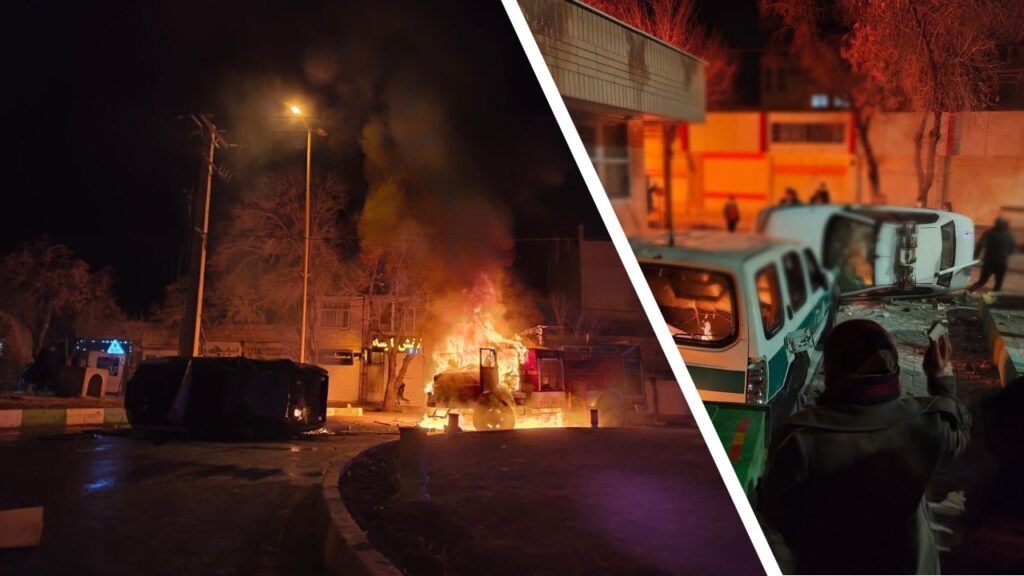
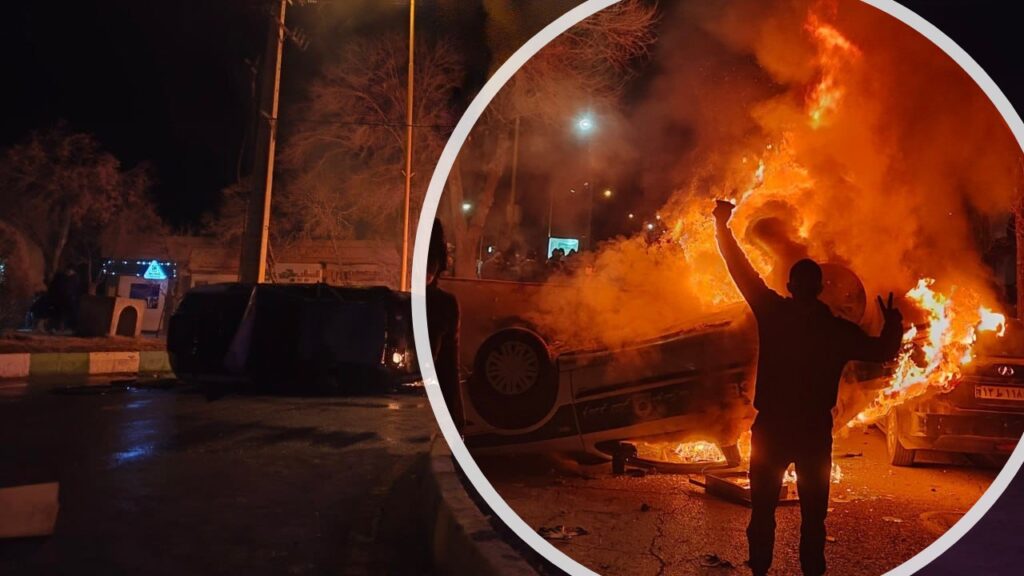
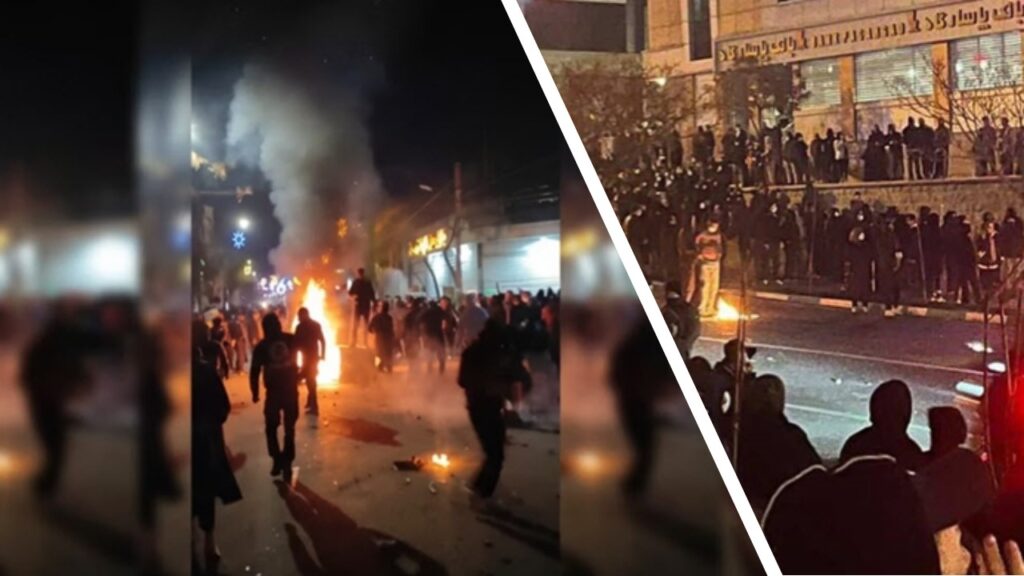
Day 31 of Iran Protests Live Report: Student protests expand in Tehran, clashes reported in multiple cities, and the number of identified martyrs reaches 700 Key Highlights from Day 31 of Iran Protests Martyrs of the Uprising: New Names Released The People’s Mojahedin Organization of Iran announced on Monday, January 26, 2026, the names of 69 additional martyrs of the nationwide uprising after verification. This brings the total number of identified martyrs to 700, including 84 women and at least 40 children and teenagers. Urban Clashes and Confrontations Across Iran Tehran (Ariashahr) – Friday, January 9, 2026 Skirmishes and running confrontations erupted in the streets of Ariashahr, forcing special units to retreat amid widespread street unrest. Karaj (Azimieh) – Thursday, January 8, 2026 Protesters set fire to the municipality building of District 1 in Azimieh. Video footage recorded voices stating that the building had been taken over before crowds moved toward nearby security facilities. Shahriar (Qods / Qal‘eh Hassan Khan) – Wednesday, January 7, 2026 The local municipality building was set ablaze during confrontations with security forces. Ramsar – Thursday, January 8, 2026 Clashes led to the takeover and burning of a police station. Security forces were forced to flee, and several police vehicles were set on fire. Footage showed officers surrendering with raised hands before retreating. University of Tehran: Student Protests and Sit-ins On Monday, January 26, 2026, students at the University of Tehran held multiple gatherings: Students later held a sit-in outside the hall, maintaining their protest stance. Rasht: From Economic Protest to Sustained Clashes In Rasht, protests evolved rapidly over several weeks: Throughout this period, chants such as “Don’t be afraid, we’re all together” and “Death to the dictator” echoed across Rasht. What Happened On Day 31 of the Iran Protests, the uprising showed its multi-layered strength: rising martyr numbers underscored the regime’s brutality, while students, urban protesters, and striking communities continued to challenge repression across Iran. From universities to city streets, the movement sustained pressure despite arrests, violence, and intimidation—demonstrating its persistence and nationwide character.

Iran Protests 2026, News

Live Report – Day 29 of Iran Protests: Resistance, Mass Protests, and Regime Executions

Day 29 Live Report: Rural armed resistance breaks IRGC sieges, Baluchistan erupts after Friday prayers, regime admits scale of uprising as executions accelerate Key Highlights from Day 29 of Iran Protests Dalahoo (Kermanshah Province): Rural Resistance Breaks Siege In the village of Qalakhani, in Dalahoo, on Thursday, January 22, 2026, residents and rebellious youth mounted armed and coordinated resistance against a violent siege by the IRGC and the regime’s Intelligence Ministry. The forces had surrounded the village to arrest five wounded protesters. During the confrontation: This marked a rare and significant armed defeat of regime forces in a rural area. Baluchistan: Mass Protests After Friday Prayers On Friday, January 23, 2026, large-scale demonstrations swept through Zahedan, Rask, and Khash following Friday prayers. Chants included: In Rask, protesters explicitly chanted: Nationwide Attacks on Repression Centers Arak – Thursday Night, January 22, 2026 In the Gerdou neighborhood of Arak, rebellious youth attacked Police Station No. 12 (Razavi) to prevent the transfer of detained protesters. After fierce clashes and incendiary attacks, security forces were forced to evacuate the station. Shiraz – Thursday, January 22, 2026 In Shiraz, rebellious youth confronted special-unit forces after agents fired indiscriminately at residential homes. Street battles followed, accompanied by chants of “Death to Khamenei” and “Death to the dictator.” Isfahan – Tuesday, January 19, 2026 In Isfahan, the Koohpaye Basij base—implicated in the killing of protesters—was hit with repeated Molotov attacks, leaving three Basij agents injured. Regime Officials Admit the Scale of the Uprising On Wednesday, January 21, 2026, regime security official Ali Akbar Pourjamshidian admitted publicly: Meanwhile, regime president Masoud Pezeshkian acknowledged: “These developments are no longer merely protests; they have become a project aimed at overthrow.” Martyrs of the Uprising: New Names Released The People’s Mojahedin Organization of Iran announced on Saturday, January 24, 2026, the names of 94 additional martyrs of the nationwide uprising. ➡️ Total identified martyrs: 543, including 65 women. Regime Executes 32 Prisoners in Four Days Between January 21 and January 24, 2026, the regime executed at least 32 prisoners in an attempt to terrorize society and suppress the uprising. What Happened On Day 29 of the Iran Protests, the uprising escalated on multiple fronts. Rural communities broke armed sieges, Baluchistan saw mass mobilization after Friday prayers, and repression centers were targeted nationwide. As executions surged, even regime officials admitted the scale of the revolt—confirming that the movement has evolved into a nationwide confrontation challenging the regime’s survival.

Iran Protests 2026, News

Live Report – Day 27 of Iran Protests: Street Battles Continue as European Parliament Condemns Regime Crimes

Day 27 Live Report: Fierce clashes in Shiraz and Isfahan, sweeping EU condemnation, and defiant voices from death-row political prisoners Key Highlights from Day 27 of Iran Protests Nationwide Resistance Operations – Day 27 🔴 Update – 10:00 PM CET | Arak Clashes Escalate as UN Human Rights Council Condemns Regime Crackdown Arak: Police Station Forced to Evacuate In Arak, on Thursday night (2 Bahman), rebellious youth carried out heroic street operations in the Gerdou neighborhood: BREAKING | UN Human Rights Council Takes Action on Iran During a Special Session in Geneva on Friday, January 23, 2026, the UN Human Rights Council adopted a resolution strongly condemning Iran’s violent crackdown on nationwide protests. Vote outcome:25 in favor | 7 against | 14 abstentions Key Elements of the Resolution The resolution was sponsored by numerous countries, including Austria, Belgium, Germany, Spain, Sweden, the United Kingdom, Norway, Denmark, Finland, and Luxembourg. 🗣️ Volker Türk urged Iranian authorities to end the brutal repression immediately, stressing the international community’s responsibility to pursue accountability. In Shiraz, on Thursday, 2 Bahman, rebellious youth engaged in intense street battles with special-unit forces, despite relentless live fire. Protesters responded with chants of “Death to Khamenei” and “Death to the dictator”, after regime agents opened fire on residential homes. In Isfahan, on Tuesday, 30 Dey, rebellious youth carried out a direct assault on the anti-people Basij base in Koohpaye, launching repeated Molotov attacks. During the operation, three Basij agents were injured, marking another blow to regime repression centers. European Parliament: Overwhelming Condemnation of Regime Crimes The European Parliament adopted a landmark resolution condemning the Iranian regime’s violent, systematic, and nationwide repression by an overwhelming majority—562 votes in favor, 9 against. The resolution: Statement by 12 Political Prisoners A powerful statement issued on January 18, 2026, by 12 political prisoners—six under death sentences for 14 months—from Qezel Hesar Prison declared the uprising nearing victory. The prisoners commemorated January 19, the anniversary of the liberation of Iranian Resistance leader Massoud Rajavi, calling it “a decisive and fateful turning point.” They emphasized: The prisoners called on the people to intensify relentless struggle, striking fear into the regime and hastening liberation. What Happened On Day 27 of the Iran Protests, street resistance continued despite brutal repression, while international pressure escalated sharply. The European Parliament’s sweeping resolution, combined with ongoing urban clashes and the defiant voices of political prisoners, underscores a widening gap between the regime’s violence and the people’s determination to bring the uprising to its conclusion.

Iran Protests 2026, News

Live Report – Day 25 of Iran Protests: Basij Base Attacked in Tehran as Nationwide Clashes Continue and European Parliament Voices Support

Day 25 Live Report: Street battles across Iran, regime bases torched in Tehran, and growing international backing for the uprising Key Highlights from Day 25 of Iran Protests Nationwide Protests and Street Battles – Day 25 🔴 Update – 6:30 PM CET | Luxembourg Parliament Unanimously Moves to Terror-List the IRGC In a major political development supporting the Iran Protests, the Parliament of Luxembourg on Tuesday, January 30, unanimously adopted a resolution—with all 60 members voting in favor—calling for the terrorist designation of the Islamic Revolutionary Guard Corps (IRGC). The resolution urges the European Union to take active and immediate steps toward formally listing the IRGC as a terrorist organization. The vote took place during an official parliamentary session attended by Luxembourg’s Foreign Minister Xavier Bettel. Key Points of the Resolution In Zahedan, on Tuesday night (30 Dey), rebellious youth blocked enemy access routes with fire, chanting “Death to the oppressor, whether Shah or Leader.” The action disrupted security movements despite continued repression. In Kermanshah, on Tuesday night, protesters engaged in intense street battles and running clashes with IRGC forces and special units across multiple districts of the city. In Rasht, on Tuesday, rebellious youth carried out a bold offensive against special units, engaging in street confrontations and pursuit battles in several areas. In Mashhad, on Tuesday, protesters fought street battles with heavily armed special-unit forces as clashes spread through urban neighborhoods. Tehran: Basij Base Targeted – Atabak Neighborhood In Tehran, on Tuesday (30 Dey), rebellious youth launched a bold attack on the anti-people Malek Ashtar Basij base in the Atabak neighborhood. The operation marked a significant blow to regime infrastructure in eastern Tehran. European Parliament: “Iran’s People Deserve Freedom” During a session of the European Parliament, its president, Roberta Metsola, paid tribute to those killed in Iran’s uprising: “The European Parliament pays tribute to the bravery of all those killed in Iran with a moment of applause, not silence.The people of Iran don’t need silence. They have been kept forcefully silent for 47 years.They deserve to be free.” In addition, numerous Members of the European Parliament spoke out in support of the Iranian people’s uprising, emphasizing: What Happened The Iran Protests, now in their 25th day, continue to expand in scale and intensity. Despite brutal repression, protesters across the country persist in street resistance, targeted actions against regime bases, and explicit rejection of both past and present dictatorships. At the same time, international support—particularly from European institutions—is becoming more vocal, reinforcing the legitimacy of the Iranian people’s struggle for freedom.

Iran Protests 2026, News

Live Report – Day 24 of Iran Protests: Tehran Hospitals Overwhelmed as Street Battles Spread Nationwide

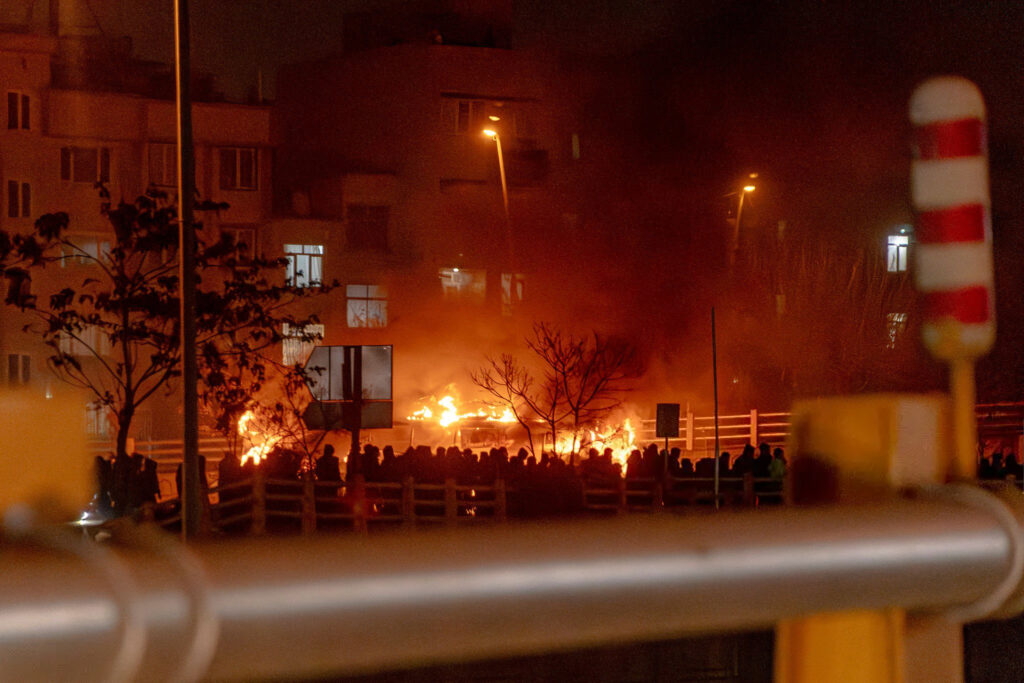
Day 24 Live Report: Exclusive hospital testimony from Tehran, fierce clashes across major cities, and resistance exposed despite internet blackout Key Highlights from Day 24 of Iran Protests EXCLUSIVE – Tehran Hospital Testimony In an exclusive report obtained by Simay Azadi, a hospital shift worker in Tehran described scenes of mass casualties, stating that hospitals are overwhelmed with the dead and wounded. “Blood was flowing everywhere in the city… Everyone is mentally shattered. The death toll is extremely high.” According to the witness, regime forces opened a neighbor’s car and killed two of their sons and two grandchildren. The source further reported execution-style shootings of wounded protesters inside hospitals, highlighting the scale of violence being carried out against civilians. Tehran Street Battles – Monday Night, 29 Dey On Monday night (January 9, 2026), rebellious youth engaged in fierce street battles with heavily armed special units along Jomhouri Street in Tehran. Saadat Abad: Resistance Revealed After Internet Blackout Following the gradual reopening of internet access, newly published footage revealed the scale of resistance in Saadat Abad, Tehran. The video—recorded during the afternoon of Thursday, January 8, 2026—shows a woman providing a moment-by-moment live account as clashes unfold, counting burning vehicles: “One car, two cars, four cars…” Field reports and images show that after security forces responded to a public gathering with live fire and brutal violence, unarmed civilians launched courageous counter-attacks, setting fire to multiple vehicles and suppressive units.The scenes reflect accumulated public anger and legitimate resistance, demonstrating that repression has strengthened, not silenced, the uprising. Nationwide Clashes – Day 24 In Tabriz, on Monday night (January 9, 2026), rebellious youth carried out a bold offensive against special units, engaging in street battles and running clashes across several neighborhoods. In Izeh, on Monday night (29 Dey), protesters engaged in fierce clashes with IRGC and special-unit forces throughout the city, continuing resistance despite heavy repression. Mrs. Rajavi: Judiciary Threats Signal Mass Executions In a post published on X, Mrs. Maryam Rajavi warned that threats by the head of Khamenei’s judiciary calling for “swift punishment” are a clear signal of the regime’s intent to carry out mass executions. Mrs. Rajavi wrote that: together constitute Khamenei’s all-out war against the Iranian people. She emphasized that the anger and determination of the people and Iran’s rebellious youth are far stronger than repression, and that this resolve will ultimately overwhelm the ruling criminals. What Happened The Iran Protests, now in their 24th day, represent a nationwide uprising against decades of dictatorship, executions, and systemic repression. The regime’s escalation—from street massacres to hospital executions and judicial threats—has failed to suppress resistance. Instead, it has deepened public fury and reinforced the determination of a population resolved to overthrow the ruling system.

Scroll to Top