Simay Azadi English

Author name: Editorial Board

News

Iran MOU Sparks Open Infighting Within Regime Ranks

As Tehran and Washington move toward a new memorandum of understanding, criticism from regime insiders and supporters is increasingly spilling into public view, exposing growing divisions within the Iranian establishment. The announcement of a new memorandum of understanding (MOU) between Tehran and Washington has triggered a wave of criticism and public infighting within Iran’s ruling establishment, with regime supporters, hardline media outlets, and senior political factions openly attacking government officials involved in the negotiations. The controversy intensified after U.S. President Donald Trump announced that Washington and Tehran had reached an understanding and suggested that negotiations were continuing over issues including Iran’s nuclear activities and regional security arrangements. While Iranian authorities have released few details about the agreement, the lack of transparency has fueled criticism from hardline factions and prompted an increasingly public confrontation between rival camps within the regime. One of the sharpest attacks came from Hossein Shariatmadari, the Supreme Leader’s representative at Kayhan. In a June 15 editorial titled “Memorandum of Understanding or a Gift to Trump?”, Shariatmadari complained that the Supreme National Security Council had provided almost no information about the contents of the agreement. Referring to Trump’s public comments about the negotiations, he wrote: “If Trump is telling the truth, then the memorandum in question should be considered a birthday gift to Trump.” Shariatmadari added that if Trump’s statements were inaccurate, Iranian authorities had a duty to publicly deny them without delay. The criticism reflects a broader debate inside the regime over whether the negotiations amount to a strategic retreat by Tehran. State-affiliated outlet Rouydad24 reported that pressure from the Paydari Front, linked to Saeed Jalili, and its allies has moved beyond media criticism and taken the form of organized gatherings and increasingly direct slogans against senior officials. According to the report: “The provocations of the Paydari Front and its allies have gone beyond media criticism and appeared in the form of organized gatherings and explicit slogans against senior officials.” The growing tensions have also been acknowledged by senior officials within the regime. Speaking on June 15, Ebrahim Rezaei, spokesperson for the Iranian Parliament’s National Security and Foreign Policy Commission, warned against internal divisions while criticizing the agreement. “We must preserve unity and avoid falling into discord, especially regarding an understanding whose details are still unclear. I myself am among the critics of this understanding.” Rezaei also suggested that concerns over internal unrest are influencing the debate surrounding the negotiations. “The enemy has plans to create division and, in fact, to provoke an internal conflict inside Iran. This is a reality they have invested in. They hope that in the coming months there will once again be unrest and disturbances.” His remarks are notable because they combine criticism of the agreement with an explicit warning about factional divisions and the possibility of renewed domestic unrest. They also reflect growing concern among regime officials that disputes over the negotiations could deepen existing political tensions at a time of economic difficulties and continuing public dissatisfaction. The divisions have also become visible on the streets. In recent days, multiple videos circulating on social media have shown groups of regime supporters openly attacking senior officials associated with the negotiations. One video showed demonstrators chanting: “Ghalibaf, Araghchi, resign now!” The slogan targeted Parliament Speaker Mohammad Bagher Ghalibaf and Foreign Minister Abbas Araghchi, two of the most prominent figures associated with the regime’s diplomatic efforts. Another video, reportedly filmed outside the Foreign Ministry’s representative office in Mashhad, showed demonstrators chanting: “Death to Araghchi, the dishonorable compromiser!” The protesters also directed slogans against Ghalibaf. A separate video circulated on June 13 showed supporters of the regime chanting: “Ghalibaf, Araghchi, what about the blood of our Leader?” The slogan appeared to reference Supreme Leader Ali Khamenei and reflected accusations by hardline supporters that officials involved in negotiations are compromising principles associated with the regime’s leadership. The public nature of the criticism is particularly notable because such demonstrations have traditionally been directed at external adversaries or opposition groups rather than senior figures within the ruling establishment itself. The growing infighting comes at a sensitive moment for the regime. Iran continues to face economic difficulties, political unrest, and international pressure, while questions remain about the future direction of its foreign and nuclear policies. As details of the MOU remain unclear, rival factions appear increasingly willing to challenge one another publicly. Whether the agreement ultimately leads to a broader understanding between Tehran and Washington remains uncertain. What is already visible, however, is that the prospect of such an agreement has exposed significant divisions within the regime, with critics and supporters of the negotiations increasingly confronting each other in public.
News

Iran NTV Exclusive: Vahid Baniamerian’s Final Defense Against the Regime

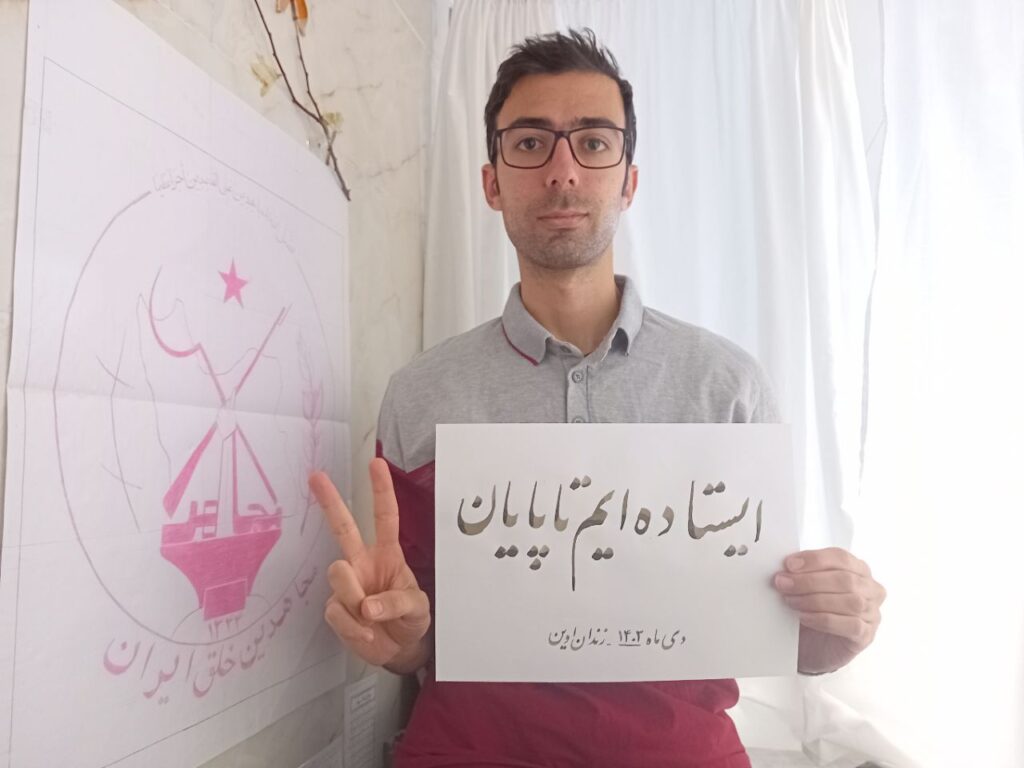
Simay Azadi (Iran NTV) – A smuggled video from Iran’s notorious Evin Prison has captured the final, unyielding defiance of Vahid Baniamerian, a 32-year-old member of the People’s Mojahedin Organization of Iran (PMOI/MEK) known within his unit as Commander Vahid, who was executed on April 4, 2026. Five other PMOI members from the same group on identical charges of supporting the opposition were also execution from March 29 to April 4. In the recording, Baniamerian rejected the legitimacy of the “tribunal that bore no resemblance to a court” that had sentenced him to death, dismissed the regime’s offer of repentance as meaningless, and delivered a stinging indictment of its long history of suppression—reaffirming instead his commitment to a democratic Iran and the 10-point plan of Maryam Rajavi. His words, now a posthumous testament, underscored the resolve of a generation that has come to see personal survival as secondary to the struggle for the nation’s freedom. The Full Remarks of Vahid Baniamerian: Greetings and salutations. I am Vahid Baniamerian, a 32-year-old political prisoner currently under a death sentence. I am very happy to be able to send this message to you—the people of Iran and the world—from behind the bars of Evin Prison. My goal in insisting on the publication of this video, despite all the consequences it may have for me, is to make my defense public. Since this regime knows very well it has no legitimacy, it is terrified of public trials for political prisoners. So, to the “Supreme Leader” who wants to execute us to create fear in society, to stop the movement, and to block the revolution: I want to remind you that I and those like me rose from the blood of freedom-loving youth who, throughout these years, remained nameless. Without many knowing who they were or what they did, or what tortures they endured in your dungeons, they never bowed to you or Khomeini, and thousands upon thousands kissed the gallows. Be certain that if you execute me and my kind, we will only multiply, even if you hide our corpses. And be certain that your regime will have no escape from being overthrown. I, along with five of my friends, was sentenced to death in a tribunal that bore no resemblance to a court. Essentially, the judiciary and the security apparatus in dictatorial and fascist regimes are pillars of suppression and crime, not executors of justice and law. That is why our responses were very short. We do not recognize such an apparatus at all and have nothing to say to it. What I said in court can be summarized in a few sentences: We do not accept the charges you leveled. We were entirely under mental and physical torture throughout the entire process following our arrest. And for a court whose result is predetermined, it makes no difference what answer we give. Please do not trouble yourselves with these formal trials. Based on your Imam’s words, anyone who “stands their ground” is considered “Mahdour-ol-dam” [one whose blood can be shed] and deserves execution. Well, I am standing my ground. That is all. That was our entire trial. But now, I want to publicly announce my response to the four questions raised in this court before the people, addressing the regime directly. Question one: Why didn’t you pursue a normal life after being released from prison? Why are you wasting your youth? My answer to the regime is this: May that life be forbidden to me if the price is stepping on my conscience and closing my eyes to the pain of my people. You have miscalculated. I will neither return to that “normal” life, nor will I allow you and your guards to comfortably continue your lives through plunder, destruction, and the massacre of people. This is the very beauty of life for me: “Life is but belief and struggle” (Innama al-hayat aqida wa jihad). After my previous release from prison, you yourselves exiled me to Bashagard. I saw with my own eyes the innocent Baluchi children perishing in deprived huts [kapars] due to a lack of resources. Should I remain silent while you lounge on the throne of power, living off the people’s pockets and the blood of the youth, continuing your massacres and destruction? Should I focus on my own studies and personal life while millions live below the poverty line, and your warmongering, misogyny, and double oppression against ethnicities and religions continue? Never. Never. Let me be very clear: under a death sentence, I rest my head on my pillow at night not with fear of your gallows, but with the memory of my people’s pain. I think of the bitter fate of those child vendors on the Seyyed Khandan pedestrian bridge who were before my eyes for four whole years. My classmates at K. N. Toosi University probably remember them. Where are they now after 10 years? What are they doing? For what sin? Often, the wails of those poor mothers and fathers echo in my mind and ears, taking sleep from my eyes—like the father in front of the Kermanshah hospital, holding his sick child who needed surgery. They had no money, and the father said in Kurdish: “How can I raise this much money with a worker’s wage? Must I let my child die?” And the mother shrieked: “How can I let my child die? O God! O Justice!” And now you talk to me about a “normal life,” you sellers of religion? You have miscalculated. Let me make it perfectly clear who my role models are. They are the Ashrafis—the ones whose very name terrifies you. Those who gave their youth, their entire lives, and everything they owned for the freedom of the people and the prosperity of this land, from Kurdistan to blood-soaked Baluchestan, and from the marshes of Mahshahr to Azerbaijan and every single city in Iran. Question two: Do you accept the charges? My answer is: Which charges? For the mullahs’ terrorist

News

Anniversary of Revolution in Syria : When Khamenei’s forces fell

by Ehsan Aminroaya The storm of events that swept across Syria for 11 days since November 27 until December 8, 2024, toppled Bashar Al-Assad’s regime and shook the Mullahs in Iran to their core. It has also put forth an important question: what was the principal factor leading to Assad’s rapid fall? This question is rooted in a deeper theoretical discussion concerning the actual strength of the ruling power in Iran. Why did the Iranian regime, in spite of having an army of 100,000 personnel, besides hundreds of military bases in Syria, at the most critical moment of its reign in that country, fail to preserve its most important allied state in the region?  As a response, no one adheres to the theory of foreign powers’ intervention as much as the supreme leader of the clerical regime in Iran, Ali Khamenei. In his first speech after the fall of Assad, Khamenei summarized the reasons behind the defeat as being due to the facts that in the final days, “Zionist and American planes” had not allowed his dispatched planes to pass in order to deliver “equipment, personnel and forces” to “sites around Zaynabia”[i]. Logically, this is a clear fallacy begging the question. Khamenei has presented that which itself needs an explanation [i.e., the effect] as the cause. It is as if a knocked-out boxer cites the opponent’s heavy blow as the reason for his defeat; instead of admitting what sort of inability, unawareness and weakness he had been suffering from, that had provided the enemy with the opportunity to land the intolerable blow. Then how should the overthrow of Assad’s dictatorship be viewed? This event has a double-significance: on the one hand, it exposes the exasperation of the clerical regime in Iran under the pressure of overwhelming crises – crises rooted at its very nature – and on the other hand, it signifies a stage in the process of the regime’s inevitable fall. The velocity of the events in December, Khamenei’s decline and confusion, the collapse of the IRGC forces in Syria, and the regime’s subsequent reactions should be interpreted based on the above assertion. The main issue here is not the major military blow that has been dealt to the regime – although, in military and intelligence terms, what has occurred is the destruction of the greater part of the regime’s war machine in the region, the restoration of which is inconceivable; Nor is it the fact that the regime’s strategic corridors for supporting and maintaining the Hezbollah have been eliminated,[ii] but beyond these, it should be noted that one of the pillars necessary for the survival of the whole system has collapsed. For years, the regime, in order to avoid major uprisings and the possible overthrow, had established firm ties between its existence and its position in Syria. This position no longer exists. Regarding the Gaza war, of which Khamenei was the founder and a main party, the leader of the Iranian Resistance, Massoud Rajavi, had explicitly said: “The biggest strategic loser in this war is Khamenei.” On December 8, Khamenei’s strategic defeat in Damascus reached its peak and reduced the regime to a miserable state. The events that have taken place during the course of the eleven days have equivocally provided an objective measure of the actual strength of Khamenei’s IRGC (Iranian Revolutionary Guards Corps), in the sense that its military power and different capabilities were gauged in a decisive battleground. In this respect, the period in which the regime’s forces crumbled, more specifically, the initial moment in Aleppo, is extremely important. This moment provides a better understanding of the process of the regime’s decline of power and therefore, it is exactly what the former has been trying to cover up. The significance of the moment when the Revolutionary Guards collapsed in Aleppo is not of a tactical nature. Rather, it is a manifestation of the fundamental weakness of the entire regime. In other words, had the regime possessed the necessary power and capacity, it would certainly have prevented the collapse. Tasnim News Agency – the main media outlet of the Quds Force of the Revolutionary Guards – has presented a revealing picture of the initial battleground: “From the viewpoint of military logic, in the western edge of Aleppo province, where the conflict started, the resistance forces [(IRGC and its proxies)] had a very strong presence. The opposition groups say that the resistance forces had more than 30 bases in this area, but in the maps that do not exaggerate as much as the opposition does, it becomes obvious that the resistance had at least 17 bases in the area.”[iii] This report leaves no doubt about the sufficiency of the military logistics of the regime to confront the small number of opponents. Another testament to the heavy presence of Tehran’s forces in Syria is the interview of the Russian president, Vladimir Putin. Russia participated in this war and since a few years ago, it has had a large air base in Latakia as well as a large naval base in Tartus besides 21 important bases and 93 military points across Syria. The Russian president, in an interview with the state television of his country, said: “350 opposition forces entered Aleppo, while 30,000 government forces and those loyal to Iran retreated without any resistance, destroying their own positions and leaving the area”. He added: “the same pattern was repeated throughout Syria” According to this account, the 30,000 forces of Khamenei and Assad at that point were, in the precise sense of the word, routed. Sources that spoke with Reuters during this war confirmed: “Iranian forces and their allied groups were in control of the command. Most of the operational command structure of the Syrian army was run by Iranian military advisers and their allied groups. The sudden departure of the Iranians left the Syrian army in a critical and leaderless situation, which led to successive retreats”.[iv] What happened at that critical moment in the IRGC command center? From

News

Iran: Political Prisoner Shahin Zoughitabar Sends Message from Evin Prison

Exclusive — Simay Azadi: Shahin Zoughitabar, a political prisoner re-arrested by IRGC Intelligence on July 23, 2025, has sent a message from Evin Prison calling on the Iranian people and the international community to reject the regime’s disinformation and to support the organized Resistance. In a statement dated July 28, 2025, Zoughitabar describes new interrogation and prison tactics by the regime and reiterates his support for Mrs. Maryam Rajavi’s “Third Option” as the path to liberation. In the name of God and the heroic people of Iran. Greetings to Massoud Rajavi and Maryam Rajavi. Greetings to the heroic Resistance Units. I, Shahin Zoughitabar, am calling from Evin Prison. I was previously a political prisoner for 5 years. And I was arrested again on July 24, 2025, by the IRGC Intelligence. I, like all Iranians, am one of the hostages of the terrorist IRGC. During this short period since my re-arrest, I have learned about a new line of the mullahs’ Gestapo in interrogations and prison conditions, which I want to share with the people of Iran. The infamous Mullahs’ Ministry and the terrorist IRGC are trying to place the PMOI and the heroic Resistance Units alongside Israel and the Monarchy. To the best of my understanding as a PMOI supporter and political prisoner, I found it necessary to clarify the political red line of the Iranian people with the slogan, “Death to the oppressor, be it the Shah or the Leader.” A central slogan that the people of Iran also chanted in the streets of Iran. The people of Iran know well that the solution to overthrowing the mullahs’ regime is the path of fire of the PMOI Resistance Units. I tell the world and the world’s politicians: the solution for peace in the world and the Middle East is the Third Option of Mrs. Maryam Rajavi. Surely, the dust cloud that the Shah, the Mullahs, colonialism, and appeasers have thrown between the Iranian people and the Mojahedin cannot prevent the regime’s overthrow. Just as a person does not eat their own vomit, the return of the traitorous Shah is certainly impossible. The regime’s war with Israel showed that foreign war is also useless, just like appeasement of the regime. I emphasize again: the only way to liberation is the Third Option of Mrs. Rajavi, the path of the Mojahedin, and the path of the Resistance Units. The main battle is between the people of Iran and the Mullahs’ anti-human regime. I and other political prisoners will certainly stand by the people of Iran until the last drop of blood, until the overthrow of the infamous Mullahs’ regime. Hoping for the freedom of the Iranian people. October 22, 2025. I request that this voice be published and broadcasted on the PMOI’s website and Simay Azadi and its affiliated channels.

News

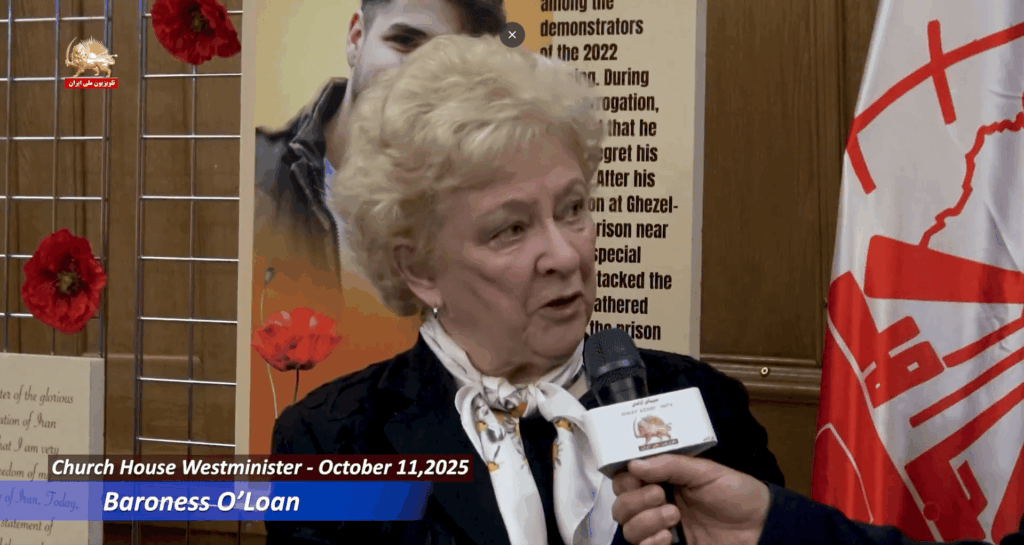
Baroness O’Loan: “Madame Rajavi’s Ten-Point Plan is a clear roadmap for a democratic Iran”

Baroness Nuala O’Loan, former Police Ombudsman for Northern Ireland and member of the UK House of Lords, called for urgent international action to stop executions in Iran and to hold the regime accountable for its human-rights abuses.Speaking in an exclusive interview with Simay Azadi on the sidelines of the conference at Church House Westminster on October 11, 2025, held as part of the “No to Execution” Campaign Week, she urged the United Nations to refer Ali Khamenei and other officials responsible for atrocities to the International Court, and called on the UK government to expand its sanctions to target all perpetrators.Baroness O’Loan praised Mrs. Maryam Rajavi’s Ten-Point Plan, describing it as “a clear articulation of how Iran could be governed democratically, ensuring equal rights, freedom, and justice.” #Iran News Alert“In the past year, over 1,700 people have been executed in Iran,” said Baroness O’Loan in an exclusive interview with Simay Azadi at Church House Westminster on October 11, 2025, during the “No to Execution” Campaign Week. She called on the UN to refer Khamenei… pic.twitter.com/JcWbhHT1rx — SIMAY AZADI TV (@en_simayazadi) October 17, 2025 Full Interview INTV Reporter: In the past year, more than 1,700 people have been executed in Iran. What should the international community—and especially the UK government—do to stop this? Baroness O’Loan: I think action is required both by the United Nations and by individual countries. The United Nations needs to refer the Supreme Leader, Ali Khamenei, and all the perpetrators of these atrocities to the international court for prosecution for the crimes they have committed. The United Kingdom has enhanced its sanctions regime, but it needs to expand it further so that it captures everyone responsible for these terrible acts—sanctioning them in terms of their assets and international dealings. The international community must also call for an end to executions in Iran and publicly shame the regime for what it is doing. INTV Reporter: There are voices calling for a return of the Shah’s son, who has never condemned his father’s abuses. How can this cycle end, and what are your thoughts on Mrs. Rajavi’s Ten-Point Plan? Baroness O’Loan: Madame Rajavi is a very exceptional lady. She has immense courage and has worked for nearly fifty years for the cause of the ordinary people of Iran—for democracy and freedom. Her Ten-Point Plan is a very clear and inspiring roadmap for how Iran could be governed so that people enjoy their rights, access education, and live freely as citizens in charge of their own affairs. It has been widely praised, and rightly so. Exclusive interview with Baroness Nuala O’Loan, conducted by Simay Azadi on October 11, 2025, at Church House Westminster, London.

News

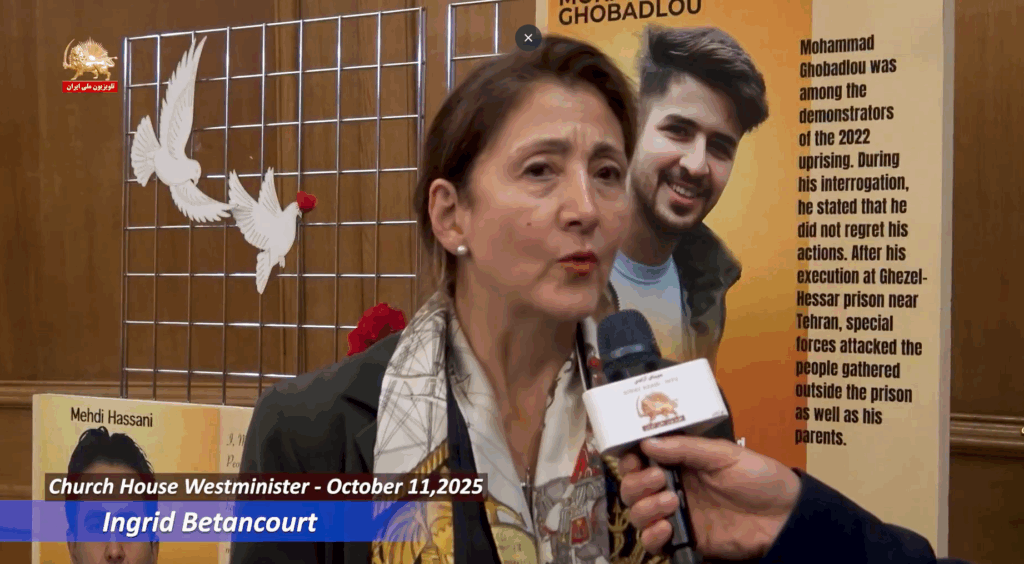
Ingrid Betancourt To Simay Azadi: “We Say No to the Shah and No to the Mullahs

Prominent Colombian politician and former presidential candidate Ingrid Betancourt expressed her strong solidarity with the Iranian Resistance and condemned the Iranian regime’s executions and repression during an exclusive interview with Simay Azadi on the sidelines of the conference at Church House Westminster on October 11, 2025, part of the “No to Execution” Campaign Week. She emphasized that both the Shah’s dictatorship and the clerical regime represent two sides of the same tyranny and called for global unity to end executions in Iran and support the struggle for democracy and equality led by Mrs. Maryam Rajavi and the NCRI. #Iran News Alert“We say no to the Shah and no to the mullahs — two faces of the same coin,” said @iBetancourtCol in an exclusive interview with Simay Azadi at Church House Westminster.“Going back to monarchy means going back to bloodshed. Iran deserves a democratic future.”… pic.twitter.com/m0vsxmqaTw — SIMAY AZADI TV (@en_simayazadi) October 15, 2025 Full Interview INTV Reporter: Ms. Betancourt, could you tell us why the situation in Iran matters to you and what message you wish to share today? Ingrid Betancourt: The cause of Iran is for me very important because what’s happening in Iran is irradiating in a very bad manner throughout the world. The regime of the Ayatollahs is exporting terrorism, tyranny, and violence through its proxies. I have a special connection with the Iranian people, and today I wanted to ensure that we join forces to fight for the right to stay alive. We are appalled to see how the regime uses a parody of justice to murder its political opponents—people whose only “crime” is to dream of democracy, of truth, of equal rights for women and men, of what we take for granted in free countries like the UK. We know that 17 members of the MEK are on death row. We want them to know they are not alone and that we will never give up. We will do everything in our power to speak to everyone we can to put pressure on the regime to stop these executions and move toward a democratic transition in Iran. INTV Reporter: You mentioned the Shah’s son and the slogan “No to the Shah and No to the Mullahs.” Why is this distinction so important? Ingrid Betancourt: Because for us it’s the same — two faces of the same coin. Under the Shah there were violations of human rights, no democracy, abuse of power, corruption, torture, imprisonment, and executions. Now, 40 years later, we have another regime that has turned religion into a deadly weapon. We must not go back in history to a monarchy that shed blood. We must open people’s eyes and explain Iran’s real history so no one is deceived into supporting the ambitions of someone who brings nothing but his father’s abuses. There is a democratic opposition—the MEK and NCRI—that has fought with its life for six decades. When we stand with them, we stand for freedom. Exclusive interview with Ingrid Betancourt, conducted by Simay Azadi on October 11, 2025, at Church House Westminster, London.

News

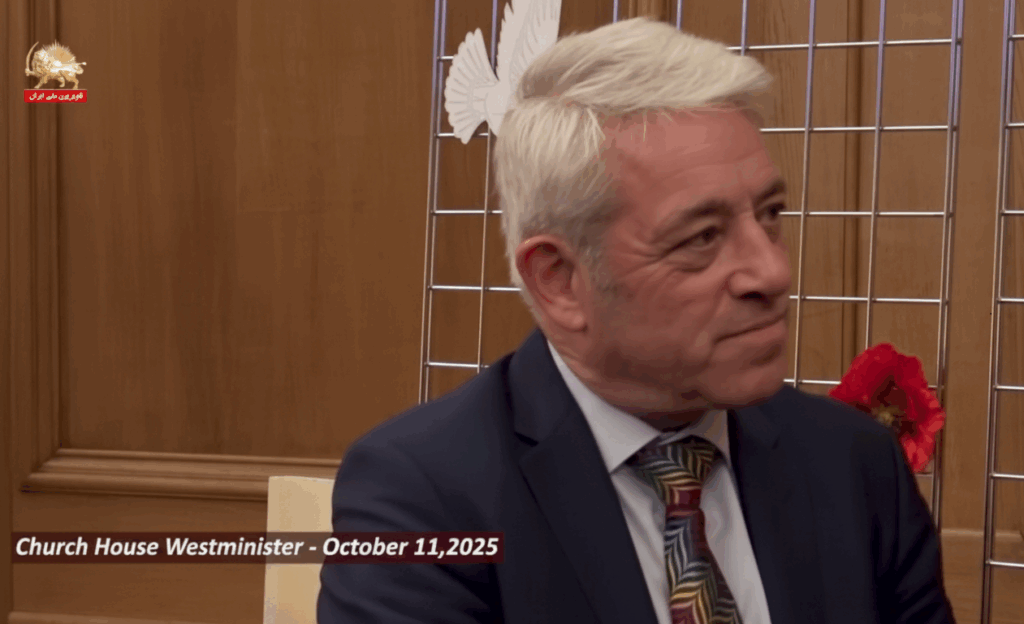
John Bercow to Simay Azadi: I Support Iran’s Resistance

The Rt. Hon. John Bercow, former Speaker of the UK House of Commons, expressed firm support for Mrs. Maryam Rajavi, President-elect of the National Council of Resistance of Iran (NCRI), in an exclusive interview with Simay Azadi on the sidelines of the conference at Church House Westminster on October 11, 2025, held as part of the “No to Execution” Campaign Week. Mr. Bercow condemned the Iranian regime’s extensive use of executions and repression to maintain power, calling it a “disgrace to humanity.” He stressed that Mrs. Rajavi’s Ten-Point Plan presents a clear and democratic vision for Iran’s future—one that rejects all forms of dictatorship, whether monarchical or theocratic, and embodies the universal values of freedom, equality, and justice. #Iran News Alert“As long as I have breath in my lungs, I will continue to speak up and speak out in support of Mrs. @Maryam_Rajavi and the @iran_policy and its 10-point plan for the future of the country," said the Rt. Hon. John Bercow in an excusive interview with Simay Azadi,… pic.twitter.com/QA0xS8FWBT — SIMAY AZADI TV (@en_simayazadi) October 12, 2025 INTV Reporter: Mr. Bercow, could you share your thoughts on the current situation in Iran and your message to those fighting for freedom? John Bercow: As long as I have breath in my lungs, I will continue to speak up and speak out in support of Mrs. Maryam Rajavi and the NCRI, and its 10-point plan for the future of the country. I believe that the Iranian people have suffered grievously for far too long. The denial of human rights, the systematic use of torture, the deployment of executions as a political weapon—these are all abominations that disgrace the regime and shame humanity. The world must be clear: the Iranian people deserve better. They deserve freedom, equality, justice, and democracy. That is precisely what Mrs. Rajavi’s 10-point plan stands for. It is a civil, humane, and democratic vision for the future of Iran—one that rejects all forms of dictatorship, whether it wears the garb of the Shah or the turban of the mullahs. The international community must not turn a blind eye to the atrocities taking place in Iran. The executions must stop. The repression must end. And the Iranian people must be supported in their quest to build a free and democratic republic. I salute the courage of the Iranian Resistance and the brave men and women who continue to risk everything for liberty. They are not only fighting for Iran—they are fighting for the universal values of justice and human dignity. Exclusive interview with the Rt. Hon. John Bercow, conducted by Simay Azadi on October 11, 2025, at Church House Westminster, London.

News, Special Production

Iran: 88th Week of “No to Execution Tuesdays” – 871 Executions in First Half of 2025

September 30, 2025 – In the 88th week of the “No to Execution Tuesdays” campaign, prisoners in 52 prisons across Iran launched coordinated hunger strikes to protest executions carried out by the genocidal regime. In its statement, the campaign declared:“This week, once again, with deep sorrow and endless solidarity, we stand in memory of Somayeh Rashidi, a political prisoner who lost her life due to lack of medical care. This oppressed death is part of the policy of ‘torturing prisoners to death’ and a bitter warning about the situation of sick prisoners in the country’s prisons—prisoners who have been deprived of the most basic human rights.” The campaign expressed “heartfelt condolences to her family and friends.” The statement highlighted recent cases: Execution of Bahman Choobi Asl on espionage charges on September 28 after a secretive process Death sentences for political prisoners Hamed Validi and Nima Shahi in the Revolutionary Court of Karaj Supreme Court approval of the execution sentence for Peyman Farahavar According to the campaign:“These unjust sentences are clear violations of human rights and tools of repression that must be stopped immediately.” International attention also intensified. The campaign noted:“The position of Ms. Mae Sato, the UN Special Rapporteur on human rights, regarding widespread violations of prisoners’ rights in Iran once again drew the attention of the world to the catastrophic situation of the prisons.” The campaign provided alarming statistics:“46 executions in the past week, 190 executions in September—unprecedented in the past 35 years—and 871 executions in the first six months of 2025 give a horrifying picture of the brutal violation of human rights.” The statement concluded:“The ‘No to Execution Tuesdays’ campaign, while condemning these crimes, once again calls for the immediate halt of execution sentences and an end to this inhumane process. Our voice is a cry of solidarity with all prisoners caught in the chains of oppression and injustice. As always, while thanking all supporters of the campaign around the world, we emphasize that the execution machine can be stopped with solidarity and unity. Every act of protest against a death sentence is a step toward stopping this cruel process. We ask all opponents of execution to raise their voices against these inhuman sentences.”

News

Iran Prisoners’ Statement on Saeed Masouri’s Attempted Abduction

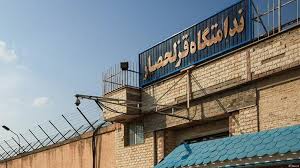
We all rushed to the barred gate.” With these words, a group of political prisoners in Iran’s Qezelhesar Prison begin their account of collective defiance. In this joint statement, they describe how they prevented the abduction of Saeed Masouri, Iran’s longest-serving political prisoner, whom authorities were attempting to exile to an unknown location. Like always, our day began today with yet another piece of news about the government’s maximum pressure on the people and the flagrant violation of their basic rights. This time, as the prison’s administrative hours began, it was Saeed Masouri’s turn—the longest-serving political prisoner in Iran—to once again taste the vengeance of the Islamic Republic’s tyrannical system. His exile to an unknown location after 25 agonizing years in prison. They used the trick of telling him that the prison’s security and intelligence office needed to see him to lure him out of the political ward. After he passed through the barred gate leading to the head office of Unit 4, they locked the gate behind him. Given the bitter experiences of the past, Saeed Masouri realized that this was not a prison matter and that they intended to move him to an unknown location. One of the political prisoners who was with him quickly returned to the hall and informed us of the security agencies’ attempt to abduct Saeed Masouri. We all rushed to the barred gate and found Saeed there, having refused to go with them. The gathering of political prisoners behind the barred gate forced the prison officials to inform us of their true intention for taking Saeed Masouri… Exile to one of the western or southwestern provinces. At that moment, as the barred gate opened for another prisoner to pass through, we seized the opportunity to pull Saeed back into the hall. Chanting slogans, we brought him back inside. We locked the main door to the hall from the inside and, by barricading ourselves, declared our explicit opposition to this cowardly decision by the security agencies and their hostage-taking methods. After this act of resistance, the prison informed us that Saeed Masouri’s exile has been postponed until Saturday, but that on Saturday, it must happen by any means necessary. The abduction of political prisoners and their exile to unknown locations is one of the most blatant examples of human rights violations, which the Islamic Republic has used extensively as a tool to suppress prisoners from its inception to this day. But in the current situation, the war has provided another pretext for the government to tighten its grip on the people, especially political prisoners. Under various excuses, they impose pressure and various forms of torture to enforce an atmosphere of suffocation in the country. This is happening while some political activists, including some former political prisoners, have raised the necessity of “national unity” in these circumstances. It is as if they are unaware that the Islamic Republic considers the people themselves, not foreign governments, to be its main adversary in this war… and the pressure on the people has only increased since the war, under various pretexts. Stripping the people of their security through arbitrary and relentless arrests, wholesale fabrications of charges, and pressuring political prisoners to the point of death—all of this shows the government rolling up its sleeves to take revenge for the recent war on the unarmed populace. And today, Saeed Masouri, the longest-serving political prisoner in the country, is one of the individuals set to taste this blind vengeance. We, the political prisoners of Qezelhesar, call on all free people to stand with us to stop this flagrant violation of human rights inside the prison.

News, Special Production

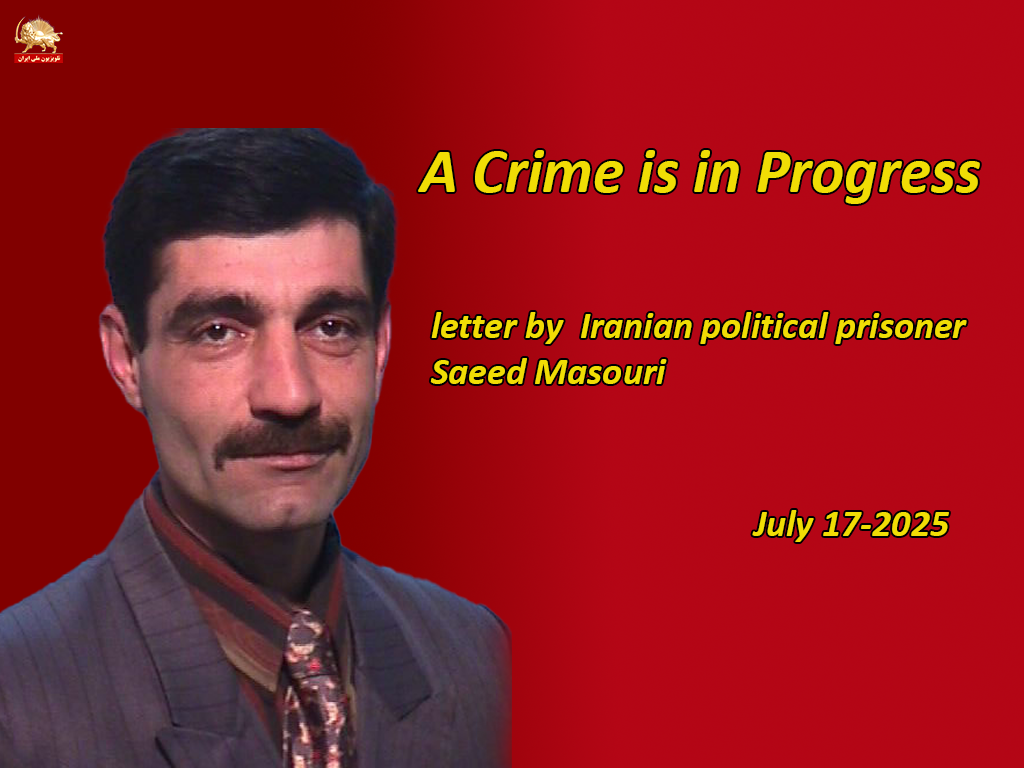
“A Crime is in Progress” Saeed Masouri’s Letter From Iran’s Prison- July 17

The following is an exclusiveletter from Saeed Masouri, an Iranian political prisoner who has been incarcerated for nearly 25 years. This is his warning to the world. “A Crime is in Progress” by Saeed Masouri Since this morning, they have been trying to transfer me using a thousand and one tricks—threats, enticements, and solemn oaths. What is certain is that this method of operation (abduction within the prison under the guise of a “transfer”) is by no means limited to me; it is fundamentally a tactic to control, isolate, and silence prisoners. The conflict is not about whether I am transferred or not; it is solely about suppression, more suppression, and still more suppression, and an insistence on more killings and executions! It is exactly as it happened in 1988, and today we fear that the same path will be repeated, albeit with different language and methods. Back then, it was called the “Death Committee”; today, it is “fire at will.” But this widespread repression and intensification of executions are not signs of strength, but rather a confession of the regime’s helplessness in the face of truth and the will of the people. In the same vein, this “fire at will” is nothing but an attempt to cover up the depth of infiltration, decay, and structural collapse within the ruling system—a failure they want to compensate for by taking retribution on the people of Iran and their prisoners. My refusal to accept a “transfer” from the exile of Qezelhesar Prison to yet another place of exile is not out of fear of being moved, nor is it due to the delusion that a few of us prisoners can stop these illegal acts. It is solely and exclusively to ensure that the massacre does not happen in silence and obscurity, as it did in 1988, but instead takes place before the eyes of history and awakened consciences! Yes, let the world hear this time that “a crime is in progress”—and that there is resistance against it! Even if this resistance only serves as a warning, an alert for the people of Iran and the world that “a crime is in progress”! Sabran Bani al-Kiram! (Patience, O noble sons!) As for me personally, as a political prisoner and a supporter of the Mojahedin-e Khalq (PMOI/MEK), especially during the days of Muharram and in the presence of the eternal message of Imam Hussein, I want to affirm that the blood of his son, which was thrown to the heavens, continues to rain down upon us Iranians, upon the Shiites, and upon his followers. And far be it from us to take a single step back on the path of freedom and liberation because of this prison, this exile, and these executions. Even if the massacre of all of us serves only as a news report to announce the day of the event and prevents a crime from being carried out in silence! What honor and fortune it would be if we have given this nation and our people just one alert, just one warning, even at the cost of our lives! For Iran and Iranians have learned nothing from their myths of Siavash and Ariobarzanes, and from the epics of Ferdowsi, other than perseverance and resistance. And what an unparalleled honor it is that we have drawn inspiration and learned from them, as well as from the liberating message of Islam, its Prophet of Mercy, and his legendary companions, for whom it is said: Tazul al-jibal wa la tazul (The mountains may move, but you shall not). Alhamdulillah alladhi hadana li hadha wa ma kunna li nahtadiya lawla an hadana Allah (Praise be to Allah, who has guided us to this, and we would never have been guided if Allah had not guided us). Saeed Masouri17 July 2025

Scroll to Top