Simay Azadi English

Iran Protests 2026

Latest on the Iran Protests 2026 and the revolution in making Iran.

Iran Protests 2026, News

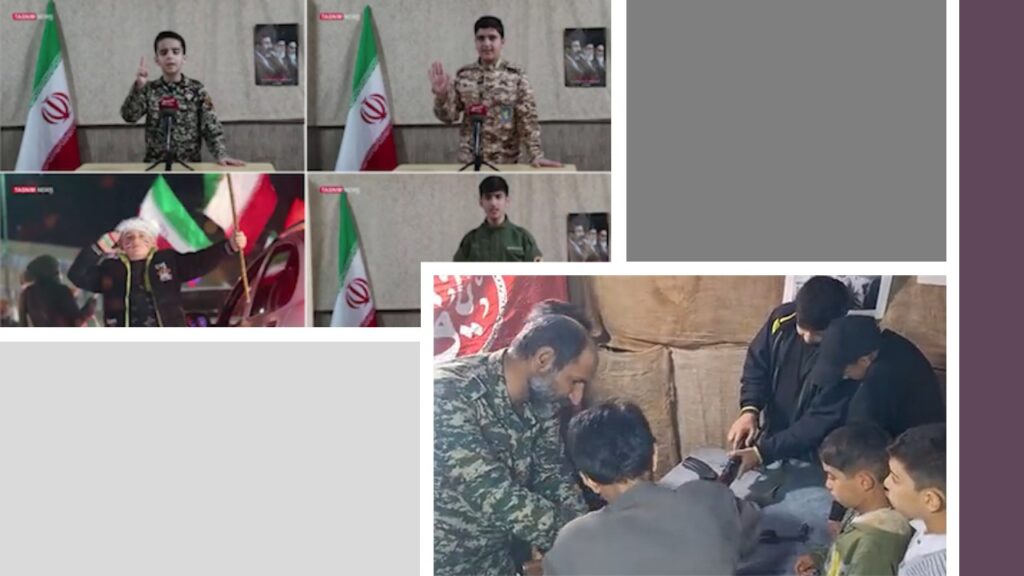
Iran Arms Children in Public Weapons Drills

Iran Regime Trains Children as Child Soldiers in Public Weapons Drills and Propaganda Rallies  • Iranian regime is openly training children and teenagers in weapons handling during nighttime street rallies across the country    • State media are releasing multiple videos showing kids in IRGC uniforms learning to use guns, reciting “Destroy the enemy” slogans    • Latest footage released features young children in military uniforms delivering scripted threats    • Amnesty International has warned that recruiting children as young as 12 into the IRGC’s campaign is a war crime    • The regime is reviving the same “one-time-use soldiers” tactics used during the Iran-Iraq War, when thousands of children were sent to clear minefields    As weapons training takes place during nighttime street rallies across Iran, the regime has simultaneously staged public spectacles featuring children and young teenagers.  State-affiliated media outlets — including Fars News Agency (affiliated to the IRGC) and Tasnim News Agency (affiliated with the IRGC’s Qods Force) — have released multiple video clips showing children being taught to handle weapons, interviewed on camera, and made to repeat regime slogans such as “We will destroy the enemy” while praising the IRGC. In some gatherings, children have been fitted with banners reminiscent of the widespread deployment of child soldiers during the eight-year Iran-Iraq War.  On 12 April 2026, Amnesty International warned that the recruitment of children as young as 12 into the IRGC’s military campaign constitutes a war crime under international law.  One video published by Tasnim from Eslamshahr shows a military parade of three Shahed-136 drones — the same model used extensively in the war in Ukraine — alongside interviews with children repeating the regime’s talking points.  Another clip, released in mid-May by the state-run Student News Agency from Shahrekord, depicts Basij forces conducting weapons training in a public area while children are visibly present.  Subsequently, Fars News Agency aired footage from Bojnūrd in which military personnel are seen actively training children and teenagers in weapons handling.  In on the latest examples, released by Tasnim News Agency, young children dressed in military and IRGC uniforms were filmed imitating regime press conferences and reciting scripted threats related to the ongoing conflict.  The regime’s exploitation of children for its political and military objectives is not new. During the Iran-Iraq War under the rule of Khomeini, children were used as “one-time-use soldiers,” including being sent ahead to clear minefields. Mohsen Rezaei, then Commander-in-Chief of the IRGC, explicitly stated the need for such disposable soldiers.  Years later, Akbar Hashemi Rafsanjani — who served eight years as president of the Islamic Republic — acknowledged the scale of these losses. In his Friday prayer sermon in Tehran on 31 October 1997, he said:  “The student Basijis who went to the slaughterhouse of the battlefields during the Sacred Defense numbered 36,000 — and that is truly a large figure.”  Brigadier General Eskandar Beiranvand, former commander of the 84th Infantry Brigade in Khorramabad, described one such operation involving the “Lovers of Hussein” battalion:  “They informed us that the Lovers of Hussein battalion was on its way to clear a minefield. Until that day I had never heard of this battalion and was not familiar with their methods. Within an hour, two Rio vehicles arrived… The young men had not even stepped out of the vehicles when they embraced and kissed one another. It was a strange scene. Everyone started crying because of their intense weeping. We still did not know what these boys were going to do… They lined up beside the minefield, their faces full of tears, staring at the field. The area fell silent and everyone watched them with excitement and anxiety. A young man, about 20 years old, turned to the others and said: ‘May our bodies be torn to pieces for the sake of Agha Ababdullah [Imam Hussein]. All our souls belong to him. Agha is waiting. Do not keep Agha waiting any longer.’ He shouted ‘Ya Hussein!’ and stepped into the minefield. A hellish series of explosions created a wall of fire in front of everyone. Their cries of ‘Ya Hussein’ were lost in the sound of the blasts.”    (Islamic Republic newspaper Ettelaat, 27 September 1997)  The current wave of public weapons training and the prominent role given to children in ongoing street rallies have heightened concerns about the regime’s renewed use of child soldiers to advance its own objectives. 
Iran Protests 2026, News

Iran Executes January Protester Abbas Akbari 

Iran authorities executed Abbas Akbari Feyzabadi early Monday, May 25, according to judiciary-linked Mizan News Agency, making him one of the latest known detainees connected to the January 2026 uprising to be put to death.  According to Mizan News Agency,  Akbari had been arrested in Naein, Isfahan Province, accusing him of “leading armed unrest” during protests, attacking local government buildings and security centers, and opening fire toward security forces. Authorities also claimed:  “He was present in the streets while carrying a military handgun and opened fire toward security personnel.”  🚨 Iran State Media Releases CCTV Footage of Executed January Protester Iran’s state media has published what it describes as the “first CCTV footage” showing Abbas Akbari Feyzabadi, executed on May 25, allegedly carrying out armed actions and attacks in Naein, Isfahan during… https://t.co/jsdCYAHfBF pic.twitter.com/Lc6EGILJhR — SIMAY AZADI TV (@en_simayazadi) May 25, 2026 Iran Continues Executing Protesters The execution adds to growing concern over death sentences linked to the January unrest and broader political prosecutions. Since March 19, at least 15 January protesters have been executed in less than two months, following trials rights groups and activists say lacked due process. The known cases include Saleh Mohammadi (19), Mehdi Ghasemi, Saeed Davoudi, Amir Hossein Hatami (18), Shahin Vahedparast (31), Mohammad Amin Biglari (19), Ali Fahim (23), Amirali Mirjafari, Erfan Kiani, Sasan Azadvar (21), Mehdi Rasouli (25), Mohammadreza Miri (21), Ebrahim Dowlatabadi, Mohammad Abbasi, and now Abbas Akbari Feyzabadi. The figure covers only confirmed executions of January uprising participants and excludes other political prisoners executed during the same period.  These cases come in addition to the execution of at least eight PMOI members since March 30, 2026, including Vahid Baniamerian, Pouya Ghobadi, Babak Alipour, Mohammad Taghavi, Akbar Daneshvarkar, and Abolhassan Montazer, six of whom were executed between March 30 and April 4, 2026. Hamed Validi and Mohammad Masoum Shahi were executed on April 20 for PMOI membership.    Earlier this month, more than 300 former UN officials, judges, Nobel laureates and legal experts warned that executions in Iran had reached levels “not seen in nearly four decades,” while noting that more than 50,000 people were arrested following nationwide protests and additional detainees remain at risk.  The latest execution comes amid increasingly explicit calls by senior officials for harsher punishment. In mid-May, Judiciary Chief Gholam-Hossein Mohseni Eje’i urged courts to accelerate verdicts and implementation of sentences, arguing delays weaken deterrence, after previously calling for judges to show “no mercy” in protest-related cases.   On May 21, regime MP Hamid Rasaei called for wartime “field courts,” public floggings, and rapid executions, telling Eje’i: “Mr. Mohseni-Eje’i, your launcher must fire.” Days earlier, another regime MP described harsher punishment as a “public demand.” The rhetoric has unfolded alongside rising executions, expanded arrests, and continued sentencing of political prisoners in Iran. 

Iran Protests 2026, News

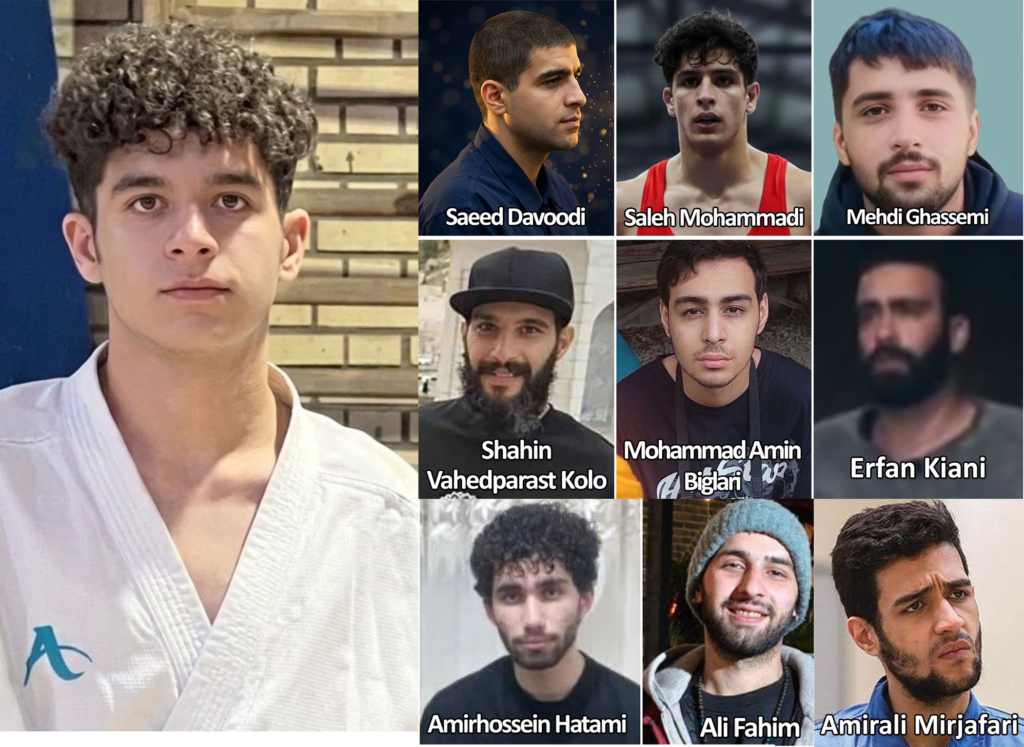
Iran Hangs Karate Champ Sasan Azadvar  as 10+ Protesters Executed

On April 30, 2026, Iranian authorities executed 21-year-old karate champion Sasan Azadvar at dawn, bringing the number of January 2026 protesters put to death to at least ten since the eve of the Persian New Year. The execution was announced hours after Iran’s Judiciary Chief Gholam-Hossein Mohseni-Eje’i publicly ordered the judiciary to accelerate the issuance and implementation of death sentences, openly dismissing international calls to halt the executions. 🚨 Iran Judiciary Calls for Rapid "Enforcement of Sentences"In recent remarks, Iran’s judiciary chief Gholamhossein Mohseni-Eje’i called for accelerating judicial proceedings and enforcement of sentences. “I emphasize again: these cases must be handled quickly, accurately, and… pic.twitter.com/M6yd7Un1eW — SIMAY AZADI TV (@en_simayazadi) April 30, 2026 Eje’i Orders “Speedy” Implementation of Death Sentences In a video published on April 30, Mohseni-Eje’i rejected criticism from abroad over Iran’s hanging spree and demanded faster verdicts and executions.“Who are you to say there should be no executions?” he asked, before declaring: “Sentences should be issued sooner and implemented according to the law.” Pattern of Protesters Executions Since March 19 Since March 19, the Iranian regime has carried out a rapid series of executions of young protesters arrested during the January 2026 uprising. The ten confirmed cases are: • March 19: Saleh Mohammadi (19, champion wrestler), Mehdi Ghasemi and Saeed Davoudi• April 2: Amir Hossein Hatami (18)• April 5: Shahin Vahedparast (31) and Mohammad Amin Biglari (19)• April 6: Ali Fahim (23)• April 21: Amirali Mirjafari• April 25: Erfan Kiani• April 30: Sasan Azadvar (21, provincial karate champion) All ten were convicted on charges of “Moharebeh” (enmity against God) or related offences for their roles in the protests. The cases were tried in closed-door proceedings widely criticized by human rights organizations for lacking due process. These executions exclude other political prisoners put to death during the same period. Human rights groups stress that the exact number of executions remains unknown, and many more January protesters are still at imminent risk of execution. Protesters Crackdown Rooted in the January Uprising The wave of executions follows the January 2026 protests, during which the regime faced one of its most serious challenges in years. In the immediate aftermath, state television broadcast staged forced confessions, some personally overseen by Mohseni-Eje’i — a figure already known internationally for his role in the 1988 massacre of tens of thousands of political prisoners. One example from January 15 shows Eje’i questioning a female detainee in a forced confession broadcast by IRIB: Eje’i: You were throwing blocks toward the crowd.Detainee: It was officers. They were in their military uniforms. 🚨 In a staged forced confession aired by IRIB, Iran's Chief Justice appears to attempt to frame a female detainee for attacking ordinary citizens. Her exchange: Eje'i: You were throwing blocks toward the crowd. Detainee: It was officers. They were in their military uniforms. https://t.co/3UC1gWueVP pic.twitter.com/VRPbJScTrO — Ehsan Eghbal Eslami (@Ehsaneghbale) January 15, 2026 Infamous Judges and Sham Trials Some of the death sentences, including those of Hatami, Vahedparast, Biglari and Fahim, were issued by Branch 15 of the Tehran Revolutionary Court under Judge Abolqasem Salavati, widely known as the “Hanging Judge.” Judicial Mobilization During the War The pace of executions intensified during the recent conflict. On April 19 and 20, Mohseni-Eje’i issued directives ordering courts to treat all acts of dissent as threats linked to “US and Israeli agendas,” demanding immediate verdicts and round-the-clock judicial work, including nights and Fridays. 🚨 IRAN: CHIEF JUSTICE EJEI DECLARES JUDICIAL WARIn an unprecedented directive, Mohseni-Ejei has ordered a total mobilization of the courts to crush dissent. Comparing judges to "combatants," he demanded they work nights and Fridays with no holidays.He ordered prosecutors to… pic.twitter.com/gqMVBHy81T — Ehsan Eghbal Eslami (@Ehsaneghbale) April 19, 2026 Human rights groups report that detainees are subjected to torture and denied fair trials, with many convictions based on forced confessions obtained under duress. 🚨IRAN – PRETEXT FOR PURGE: Eje'i's command for “Immediate Verdicts” In a new directive, the regime’s Chief Justice Mohseni-Eje'i has moved to equate all acts of dissent with the agendas of the US and Israel. In the video below (published on Monday), Ejei orders the Prosecutor… https://t.co/mUvXctFgt4 pic.twitter.com/t8If0bllYS — Ehsan Eghbal Eslami (@Ehsaneghbale) April 20, 2026 On Feb 20, Amnesty International warned that 30 January protesters are at risk of execution. Some of them undergoing “a fast-tracked, torture-tainted grossly unfair trial before Branch 26 of the Revolutionary Court of Tehran for alleged involvement in an 8 January 2026 fire” at a Basij base in Tehran province, “that killed two Basij agents.”

Iran Protests 2026, News

Live Report – Day 31 of Iran Protests Student Mobilization, and New Martyrs Identified

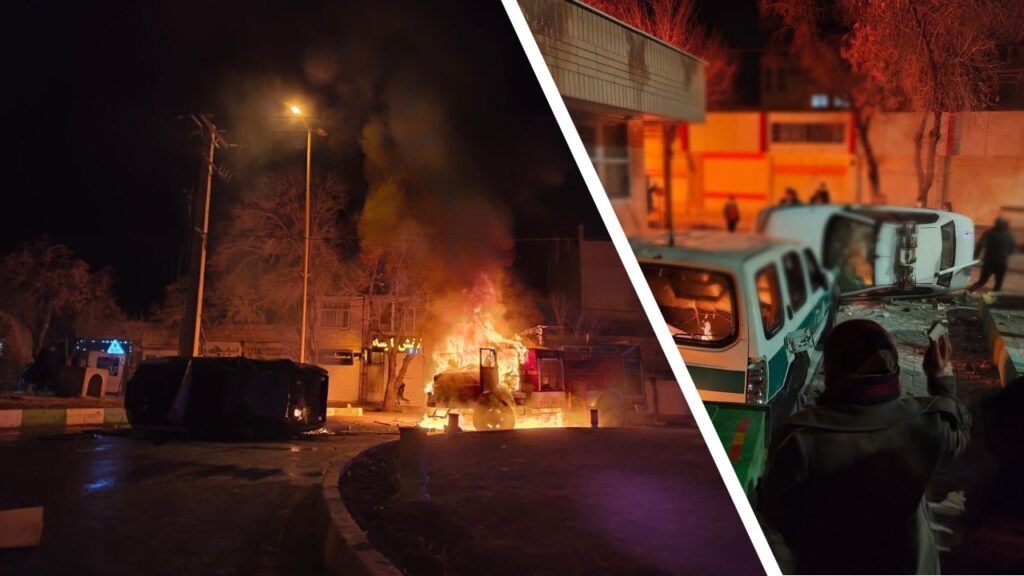
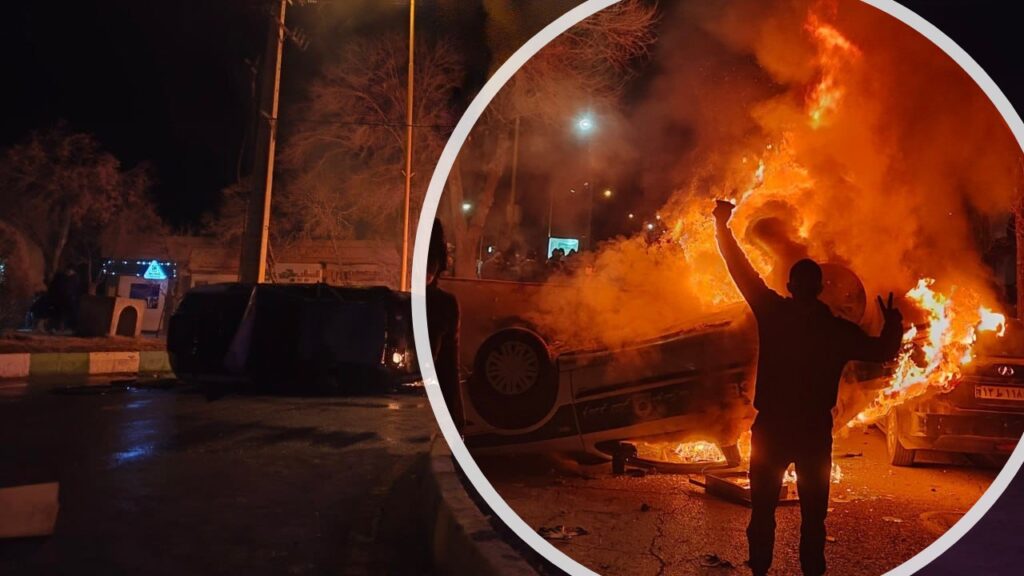
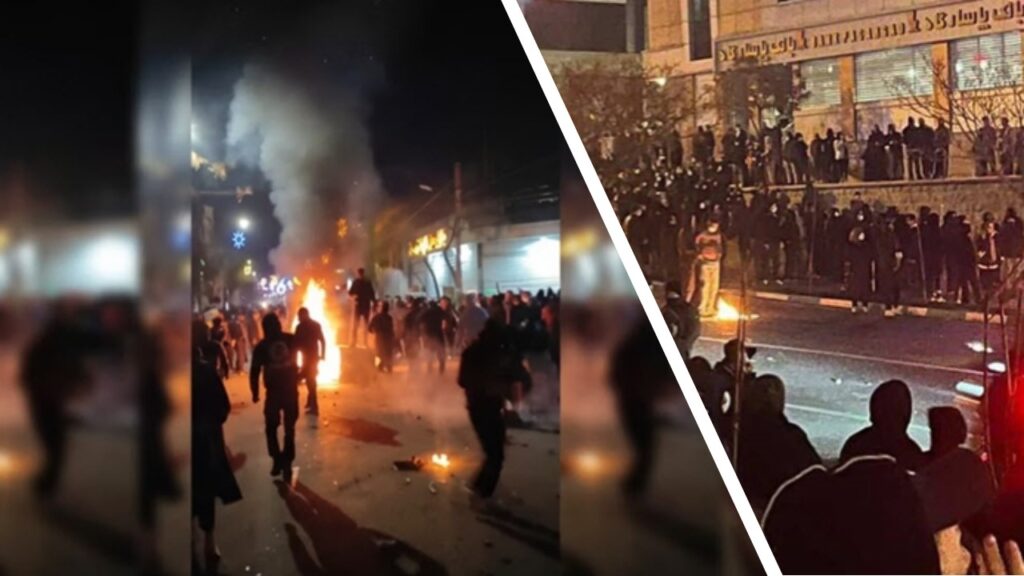
Day 31 of Iran Protests Live Report: Student protests expand in Tehran, clashes reported in multiple cities, and the number of identified martyrs reaches 700 Key Highlights from Day 31 of Iran Protests Martyrs of the Uprising: New Names Released The People’s Mojahedin Organization of Iran announced on Monday, January 26, 2026, the names of 69 additional martyrs of the nationwide uprising after verification. This brings the total number of identified martyrs to 700, including 84 women and at least 40 children and teenagers. Urban Clashes and Confrontations Across Iran Tehran (Ariashahr) – Friday, January 9, 2026 Skirmishes and running confrontations erupted in the streets of Ariashahr, forcing special units to retreat amid widespread street unrest. Karaj (Azimieh) – Thursday, January 8, 2026 Protesters set fire to the municipality building of District 1 in Azimieh. Video footage recorded voices stating that the building had been taken over before crowds moved toward nearby security facilities. Shahriar (Qods / Qal‘eh Hassan Khan) – Wednesday, January 7, 2026 The local municipality building was set ablaze during confrontations with security forces. Ramsar – Thursday, January 8, 2026 Clashes led to the takeover and burning of a police station. Security forces were forced to flee, and several police vehicles were set on fire. Footage showed officers surrendering with raised hands before retreating. University of Tehran: Student Protests and Sit-ins On Monday, January 26, 2026, students at the University of Tehran held multiple gatherings: Students later held a sit-in outside the hall, maintaining their protest stance. Rasht: From Economic Protest to Sustained Clashes In Rasht, protests evolved rapidly over several weeks: Throughout this period, chants such as “Don’t be afraid, we’re all together” and “Death to the dictator” echoed across Rasht. What Happened On Day 31 of the Iran Protests, the uprising showed its multi-layered strength: rising martyr numbers underscored the regime’s brutality, while students, urban protesters, and striking communities continued to challenge repression across Iran. From universities to city streets, the movement sustained pressure despite arrests, violence, and intimidation—demonstrating its persistence and nationwide character.

Iran Protests 2026, News

Live Report – Day 29 of Iran Protests: Resistance, Mass Protests, and Regime Executions

Day 29 Live Report: Rural armed resistance breaks IRGC sieges, Baluchistan erupts after Friday prayers, regime admits scale of uprising as executions accelerate Key Highlights from Day 29 of Iran Protests Dalahoo (Kermanshah Province): Rural Resistance Breaks Siege In the village of Qalakhani, in Dalahoo, on Thursday, January 22, 2026, residents and rebellious youth mounted armed and coordinated resistance against a violent siege by the IRGC and the regime’s Intelligence Ministry. The forces had surrounded the village to arrest five wounded protesters. During the confrontation: This marked a rare and significant armed defeat of regime forces in a rural area. Baluchistan: Mass Protests After Friday Prayers On Friday, January 23, 2026, large-scale demonstrations swept through Zahedan, Rask, and Khash following Friday prayers. Chants included: In Rask, protesters explicitly chanted: Nationwide Attacks on Repression Centers Arak – Thursday Night, January 22, 2026 In the Gerdou neighborhood of Arak, rebellious youth attacked Police Station No. 12 (Razavi) to prevent the transfer of detained protesters. After fierce clashes and incendiary attacks, security forces were forced to evacuate the station. Shiraz – Thursday, January 22, 2026 In Shiraz, rebellious youth confronted special-unit forces after agents fired indiscriminately at residential homes. Street battles followed, accompanied by chants of “Death to Khamenei” and “Death to the dictator.” Isfahan – Tuesday, January 19, 2026 In Isfahan, the Koohpaye Basij base—implicated in the killing of protesters—was hit with repeated Molotov attacks, leaving three Basij agents injured. Regime Officials Admit the Scale of the Uprising On Wednesday, January 21, 2026, regime security official Ali Akbar Pourjamshidian admitted publicly: Meanwhile, regime president Masoud Pezeshkian acknowledged: “These developments are no longer merely protests; they have become a project aimed at overthrow.” Martyrs of the Uprising: New Names Released The People’s Mojahedin Organization of Iran announced on Saturday, January 24, 2026, the names of 94 additional martyrs of the nationwide uprising. ➡️ Total identified martyrs: 543, including 65 women. Regime Executes 32 Prisoners in Four Days Between January 21 and January 24, 2026, the regime executed at least 32 prisoners in an attempt to terrorize society and suppress the uprising. What Happened On Day 29 of the Iran Protests, the uprising escalated on multiple fronts. Rural communities broke armed sieges, Baluchistan saw mass mobilization after Friday prayers, and repression centers were targeted nationwide. As executions surged, even regime officials admitted the scale of the revolt—confirming that the movement has evolved into a nationwide confrontation challenging the regime’s survival.

Iran Protests 2026, News

Live Report – Day 27 of Iran Protests: Street Battles Continue as European Parliament Condemns Regime Crimes

Day 27 Live Report: Fierce clashes in Shiraz and Isfahan, sweeping EU condemnation, and defiant voices from death-row political prisoners Key Highlights from Day 27 of Iran Protests Nationwide Resistance Operations – Day 27 🔴 Update – 10:00 PM CET | Arak Clashes Escalate as UN Human Rights Council Condemns Regime Crackdown Arak: Police Station Forced to Evacuate In Arak, on Thursday night (2 Bahman), rebellious youth carried out heroic street operations in the Gerdou neighborhood: BREAKING | UN Human Rights Council Takes Action on Iran During a Special Session in Geneva on Friday, January 23, 2026, the UN Human Rights Council adopted a resolution strongly condemning Iran’s violent crackdown on nationwide protests. Vote outcome:25 in favor | 7 against | 14 abstentions Key Elements of the Resolution The resolution was sponsored by numerous countries, including Austria, Belgium, Germany, Spain, Sweden, the United Kingdom, Norway, Denmark, Finland, and Luxembourg. 🗣️ Volker Türk urged Iranian authorities to end the brutal repression immediately, stressing the international community’s responsibility to pursue accountability. In Shiraz, on Thursday, 2 Bahman, rebellious youth engaged in intense street battles with special-unit forces, despite relentless live fire. Protesters responded with chants of “Death to Khamenei” and “Death to the dictator”, after regime agents opened fire on residential homes. In Isfahan, on Tuesday, 30 Dey, rebellious youth carried out a direct assault on the anti-people Basij base in Koohpaye, launching repeated Molotov attacks. During the operation, three Basij agents were injured, marking another blow to regime repression centers. European Parliament: Overwhelming Condemnation of Regime Crimes The European Parliament adopted a landmark resolution condemning the Iranian regime’s violent, systematic, and nationwide repression by an overwhelming majority—562 votes in favor, 9 against. The resolution: Statement by 12 Political Prisoners A powerful statement issued on January 18, 2026, by 12 political prisoners—six under death sentences for 14 months—from Qezel Hesar Prison declared the uprising nearing victory. The prisoners commemorated January 19, the anniversary of the liberation of Iranian Resistance leader Massoud Rajavi, calling it “a decisive and fateful turning point.” They emphasized: The prisoners called on the people to intensify relentless struggle, striking fear into the regime and hastening liberation. What Happened On Day 27 of the Iran Protests, street resistance continued despite brutal repression, while international pressure escalated sharply. The European Parliament’s sweeping resolution, combined with ongoing urban clashes and the defiant voices of political prisoners, underscores a widening gap between the regime’s violence and the people’s determination to bring the uprising to its conclusion.

Iran Protests 2026, News

Live Report – Day 25 of Iran Protests: Basij Base Attacked in Tehran as Nationwide Clashes Continue and European Parliament Voices Support

Day 25 Live Report: Street battles across Iran, regime bases torched in Tehran, and growing international backing for the uprising Key Highlights from Day 25 of Iran Protests Nationwide Protests and Street Battles – Day 25 🔴 Update – 6:30 PM CET | Luxembourg Parliament Unanimously Moves to Terror-List the IRGC In a major political development supporting the Iran Protests, the Parliament of Luxembourg on Tuesday, January 30, unanimously adopted a resolution—with all 60 members voting in favor—calling for the terrorist designation of the Islamic Revolutionary Guard Corps (IRGC). The resolution urges the European Union to take active and immediate steps toward formally listing the IRGC as a terrorist organization. The vote took place during an official parliamentary session attended by Luxembourg’s Foreign Minister Xavier Bettel. Key Points of the Resolution In Zahedan, on Tuesday night (30 Dey), rebellious youth blocked enemy access routes with fire, chanting “Death to the oppressor, whether Shah or Leader.” The action disrupted security movements despite continued repression. In Kermanshah, on Tuesday night, protesters engaged in intense street battles and running clashes with IRGC forces and special units across multiple districts of the city. In Rasht, on Tuesday, rebellious youth carried out a bold offensive against special units, engaging in street confrontations and pursuit battles in several areas. In Mashhad, on Tuesday, protesters fought street battles with heavily armed special-unit forces as clashes spread through urban neighborhoods. Tehran: Basij Base Targeted – Atabak Neighborhood In Tehran, on Tuesday (30 Dey), rebellious youth launched a bold attack on the anti-people Malek Ashtar Basij base in the Atabak neighborhood. The operation marked a significant blow to regime infrastructure in eastern Tehran. European Parliament: “Iran’s People Deserve Freedom” During a session of the European Parliament, its president, Roberta Metsola, paid tribute to those killed in Iran’s uprising: “The European Parliament pays tribute to the bravery of all those killed in Iran with a moment of applause, not silence.The people of Iran don’t need silence. They have been kept forcefully silent for 47 years.They deserve to be free.” In addition, numerous Members of the European Parliament spoke out in support of the Iranian people’s uprising, emphasizing: What Happened The Iran Protests, now in their 25th day, continue to expand in scale and intensity. Despite brutal repression, protesters across the country persist in street resistance, targeted actions against regime bases, and explicit rejection of both past and present dictatorships. At the same time, international support—particularly from European institutions—is becoming more vocal, reinforcing the legitimacy of the Iranian people’s struggle for freedom.

Iran Protests 2026, News

Live Report – Day 24 of Iran Protests: Tehran Hospitals Overwhelmed as Street Battles Spread Nationwide

Day 24 Live Report: Exclusive hospital testimony from Tehran, fierce clashes across major cities, and resistance exposed despite internet blackout Key Highlights from Day 24 of Iran Protests EXCLUSIVE – Tehran Hospital Testimony In an exclusive report obtained by Simay Azadi, a hospital shift worker in Tehran described scenes of mass casualties, stating that hospitals are overwhelmed with the dead and wounded. “Blood was flowing everywhere in the city… Everyone is mentally shattered. The death toll is extremely high.” According to the witness, regime forces opened a neighbor’s car and killed two of their sons and two grandchildren. The source further reported execution-style shootings of wounded protesters inside hospitals, highlighting the scale of violence being carried out against civilians. Tehran Street Battles – Monday Night, 29 Dey On Monday night (January 9, 2026), rebellious youth engaged in fierce street battles with heavily armed special units along Jomhouri Street in Tehran. Saadat Abad: Resistance Revealed After Internet Blackout Following the gradual reopening of internet access, newly published footage revealed the scale of resistance in Saadat Abad, Tehran. The video—recorded during the afternoon of Thursday, January 8, 2026—shows a woman providing a moment-by-moment live account as clashes unfold, counting burning vehicles: “One car, two cars, four cars…” Field reports and images show that after security forces responded to a public gathering with live fire and brutal violence, unarmed civilians launched courageous counter-attacks, setting fire to multiple vehicles and suppressive units.The scenes reflect accumulated public anger and legitimate resistance, demonstrating that repression has strengthened, not silenced, the uprising. Nationwide Clashes – Day 24 In Tabriz, on Monday night (January 9, 2026), rebellious youth carried out a bold offensive against special units, engaging in street battles and running clashes across several neighborhoods. In Izeh, on Monday night (29 Dey), protesters engaged in fierce clashes with IRGC and special-unit forces throughout the city, continuing resistance despite heavy repression. Mrs. Rajavi: Judiciary Threats Signal Mass Executions In a post published on X, Mrs. Maryam Rajavi warned that threats by the head of Khamenei’s judiciary calling for “swift punishment” are a clear signal of the regime’s intent to carry out mass executions. Mrs. Rajavi wrote that: together constitute Khamenei’s all-out war against the Iranian people. She emphasized that the anger and determination of the people and Iran’s rebellious youth are far stronger than repression, and that this resolve will ultimately overwhelm the ruling criminals. What Happened The Iran Protests, now in their 24th day, represent a nationwide uprising against decades of dictatorship, executions, and systemic repression. The regime’s escalation—from street massacres to hospital executions and judicial threats—has failed to suppress resistance. Instead, it has deepened public fury and reinforced the determination of a population resolved to overthrow the ruling system.

Iran Protests 2026, News

Live Report – Day 23 of Iran Protests: PMOI Resistance Units Member Martyred as Uprising Continues Nationwide and Abroad

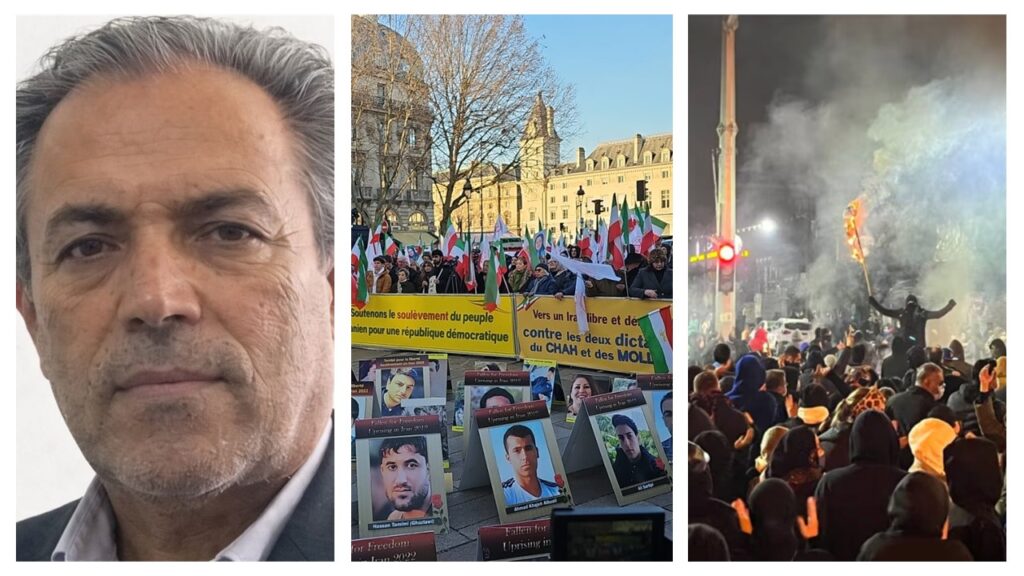
Day 23 Live Report: Martyrdom of Abbasali Ramazani, street battles across Iran, and international solidarity in Paris Key Highlights from Day 23 of Iran Protests UPDATE 9:00 AM CET Martyr of Day 23 – Abbasali Ramazani (PMOI Resistance Units) In Mashhad, Abbasali Ramazani, a 74-year-old member of the Resistance Units of the People’s Mojahedin Organization of Iran (PMOI/MEK), was martyred by direct fire from Khamenei’s IRGC forces on Vakilabad Boulevard during the uprising. Ramazani was a veteran political prisoner from the 1980s, repeatedly arrested and imprisoned in 1968, 1976, the 1990s, and again during the 2021–2022 uprising on charges related to his support for the PMOI. Released conditionally in August 2024 due to heart disease—with an electronic ankle monitor—Ramazani immediately resumed resistance activities, including financial support for needy families. In a recorded clip from Mashhad, he publicly pledged: “For the uprising and (the regime’s) overthrow, I am ready till the end.” 🚨 Iran Protests Update — Video of @Mojahedineng Martyr Abbasali Ramazani (Ramezani) “For the uprising and the regime’s overthrow, I am ready till the end.” These are the words of Abbasali Ramazani, spoken before he was killed by regime fire—now a martyr of Iran’s nationwide… https://t.co/ugBlxazaaG pic.twitter.com/3Wi1Wo8rMW — SIMAY AZADI TV (@en_simayazadi) January 18, 2026 In another video from August 2021, supporting the Khuzestan uprising, he chanted: “Death to the oppressor—no Shah, no Leader.” He remained steadfast until his martyrdom. Nationwide Protests and Street Battles – Day 23 In Kermanshah, on Sunday night, 28 Dey, rebellious youth engaged in intense street battles with special units and IRGC forces in Taq-e Bostan, continuing nightly confrontations. In Tehran, on Saturday night, 27 Dey, protesters launched a bold attack against special units along Valiasr Street, chanting “Death to Khamenei” and “Death to the dictator.” In Khoy, resistance actions escalated sharply: International Solidarity – Paris On Sunday, January 18, Iranian freedom supporters and Resistance activists gathered at Place Saint‑Michel, holding a solidarity demonstration with Iran’s uprising. The rally featured: French public figures, including Dominique Attias, joined the event in support of the Iranian people’s struggle. Demands raised by demonstrators: What Happened The Iran Protests, now in their 23rd day, represent a sustained nationwide uprising against decades of repression, executions, and dictatorship. The martyrdom of veteran PMOI Resistance members like Abbasali Ramazani underscores the continuity between past and present struggles, while ongoing street battles and international solidarity show a movement that is both deeply rooted inside Iran and increasingly echoed abroad.

Iran Protests 2026, News

Live Report – Day 21 of Iran Protests: Nationwide Street Battles, Tehran on Full Alert, and New Martyrs Identified

Day 21 of Iran Protests Live Report: Fierce clashes in multiple cities, regime mobilizes 52,000 forces in Tehran, Defiant Youth carry out 60 operations, and 32 more martyrs confirmed Key Highlights from Today’s Iran Protests Live Developments – Day 21 🔴 Update – 7:30 PM CET (Friday, January 16, 2026) Kermanshah – Thursday night (25 Dey): Rebellious youth fought bold street battles with armed special units and IRGC forces in the Anahita neighborhood.1 Tehran – Friday night (26 Dey): Rebellious youth engaged in street battles with special-unit forces along Soltani Street, confronting advancing security units. Qom – Friday night (26 Dey): Protesters blocked enemy access routes with fire and clashed with special-unit forces during nighttime confrontations. In Kermanshah, on Thursday night (25 Dey), rebellious youth continued intense street battles with special-unit forces. During armed clashes and reciprocal gunfire, Basij member Morteza Hashmati was killed. Update – 8:30 AM CET (Friday, January 16, 2026) In Tehran, clashes spread across the city. On Thursday night, protesters engaged in bold confrontations with special units in Imam Hossein Square. On Friday night (26 Dey), further street battles were reported in Tehranpars, with protesters confronting special units and regime forces in direct engagements. In Ilam, on Thursday night, protesters sustained running street battles with armed special units and IRGC forces, confronting security advances amid heavy repression. In Mashhad, on Thursday night, protesters engaged in fierce street battles with special units and IRGC forces across multiple streets. In Saveh, on Thursday night, rebellious youth clashed with armed special units on Motahari Street, as unrest expanded to additional provincial cities. Regime Forces on 100% High Alert in Tehran The Iranian Resistance urged vigilance among compatriots, especially rebellious youth in Tehran, as regime forces remain on full alert. 52,000 suppression forces deployed in Tehran, including: Key security measures reported: Defiant Youth Operations Despite the regime’s killing spree and internet blackout, Defiant Youth carried out 60 anti-oppression operations across Iran, targeting centers of repression and setting fire to regime symbols and banners, aimed at spreading resistance and morale nationwide. Martyrs of the Nationwide Uprising – New Names Released The People’s Mojahedin Organization of Iran (PMOI/MEK) announced on Friday, January 16 (26 Dey 1404) that it has released the names of 32 additional martyrs of the nationwide uprising after verification. Six of the martyrs are women.With this update, the total number of identified martyrs whose names have been published has reached 162. What Happened The Iran Protests are the continuation of a nationwide uprising rooted in decades of repression, economic hardship, and state violence. As the regime escalates militarization—especially in Tehran—protesters and organized resistance networks continue to confront armed forces, while verified reports of martyrs and mass repression underline the human cost of the uprising.

Scroll to Top