Simay Azadi English

News

Iran NCRI Syria
News

How the Iranian regime fueled Syria war?

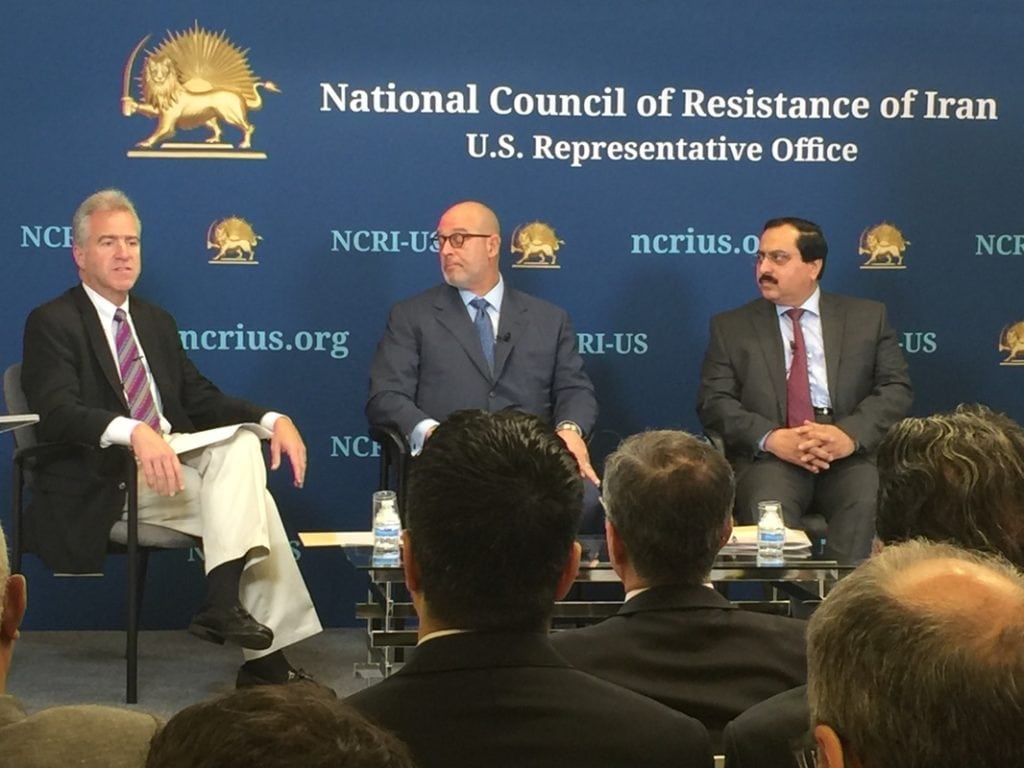
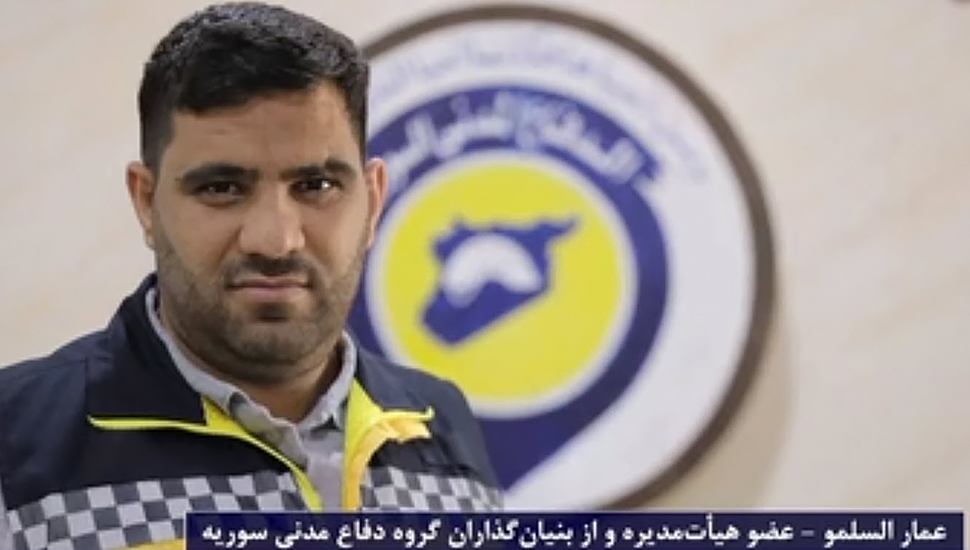
Following the victory of the revolution in Syria, many analysts and media outlets described the overthrow of Assad as a heavy and irreversible blow to the Iranian regime and its war-mongering policy in the region. The Iranian Resistance described it as the collapse of the Iranian regime’s “strategic depth” and called for the expulsion of this regime in Iraq and other countries in the region. The Iranian regime spent billions of dollars of the wealth of the Iranian people to maintain the Assad dictatorship in recent years; among others by sending thousands of foreign militias and forces of the IRGC Quds Force to various regions of Syria to kill the people of this country. Over the past years, the National Council of Resistance of Iran has exposed the mullahs’ regime interventions and the billions spent to keep Bashar al-Assad in power in a series of revelations. One of these detailed exposures was a book published in 2016 by the NCRI’s office in Washington. Alireza Jafarzadeh, NCRI-US Deputy Director, introduced a new book entitled How Iran Fuels Syria War in a panel discussion at the Washington Office of the National Council of Resistance of Iran on September 1, 2016. Jafarzadeh spoke about the Iranian regime’s military involvement in Syria, including its command structure and the expenses needed to back more than 70,000 Iranian and mercenary militias fighting in that country. In Simay Azadi’s exclusive interview with Ammar al-Salmo, board member and one of the founders of the Syrian Civil Defense (the White Helmets), he underlined that after the fall of the Assad’s regime, they realized that Syria has turned into  a “huge mass grave” and that the Syrian dictatorship not only arrested, tortured, and murdered people but also buried them in unmarked mass graves. He also underlined that they are still trying to determine the future of many people who have been forcefully disappeared.
No to Executions Iran
News

Iran: “No to Executions Tuesdays” Campaign Continued on its 49th Week

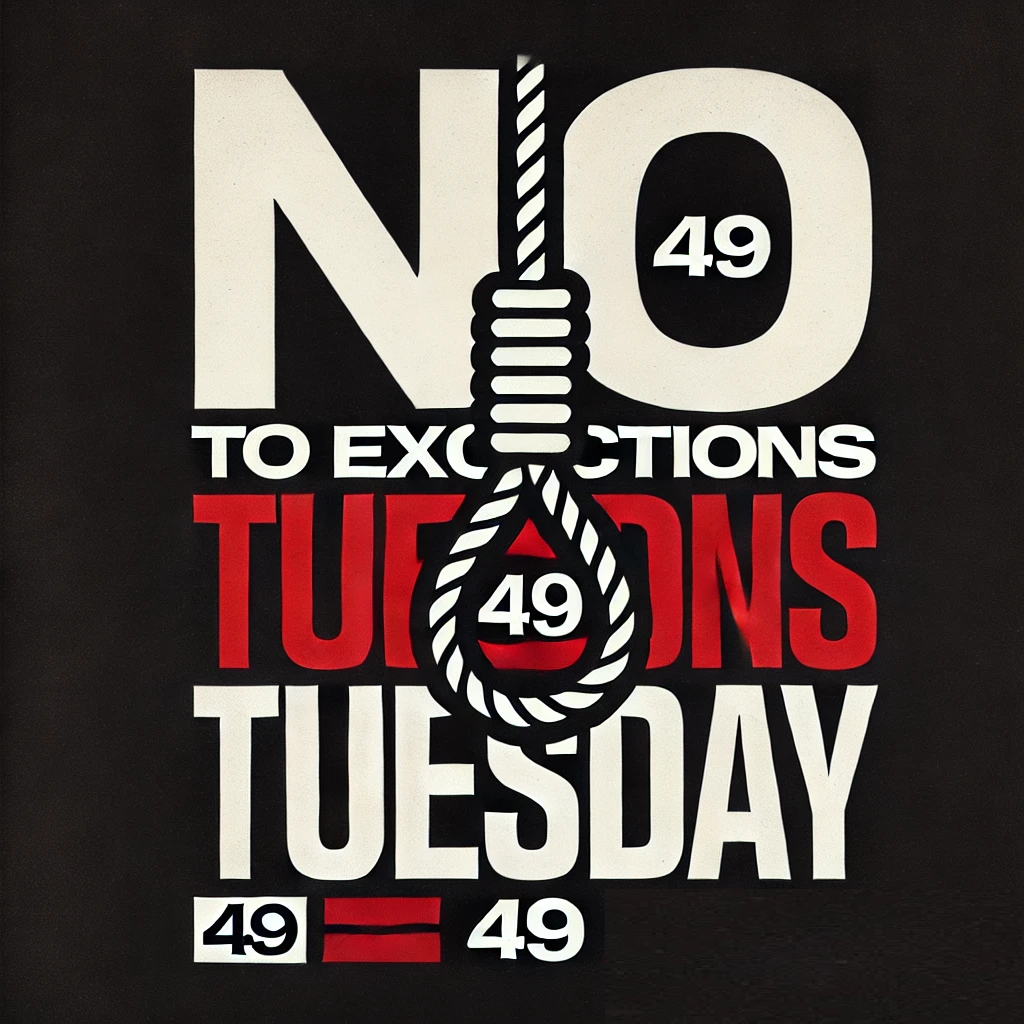
Tuesday December 31, marked the 49th week of the “No to Executions Tuesdays” campaign in 28 prisons across Iran. Launched in February 2024 by political prisoners to oppose the Iranian regime’s repeated use of the death penalty. Riddled with internal, regional and international crises, the Iranian regime has stepped up its killing spree in the last few years. According to the reports tallied by the Iranian Resistance, Tehran has executed at least 1,000 individuals in 86 prisons, including 34 women, seven juvenile offenders, and 119 Baluch minorities. Also, there have been four public hangings. In their statement on their 49th week of campaign, the participant prisoners in the “No to Executions Tuesdays,” wrote: “In a regime where we witness widespread daily executions in various prisons, at least 41 individuals were executed in the first ten days of the Iranian month of Dey (December 21-30), with 23 of them executed in just three days. Many death row prisoners have been transferred to solitary confinement in preparation for their executions.” The executions have increased since the regime’s so-called “moderate” president, Masoud Pezeshkian was selected by supreme leader Ali Khamenei, in a failed sham election that met an unprecedented popular boycott. Despite his claims of reformism, Pezeshkian’s tenure has witnessed hundreds of executions, confirming that as he claimed during his inauguration, that he follows the foot prints of his predecessor Ebrahim Raisi, aka “the Butcher of Tehran,” known for his role in the 1988 massacre of 30,000 political prisoners. While referring to the regime’s recent misogynistic and cruel act of sentencing several women to stoning under the alleged charges of “adultery” members of the “No to Executions Tuesdays” campaign underlined: “We believe that silence in the face of such atrocities amounts to complicity and that we must stand against this barbarism and savagery.” They urged the international community to hold the Iranian regime accountable for its crimes against humanity. “As we have repeatedly emphasized, it is evident that the regime resorts to suppression and executions to prevent public protests, and all executions in Iran have a political dimension. Therefore, the members of this campaign once again call on all grassroots and human rights organizations inside and outside the country to make serious efforts to stop executions in Iran,” members of the “No to Executions Tuesdays” campaign implored in their statement on December 24, 2024. In a similar development, political prisoner Saeed Masouri, who has spent 25 years behind bars, wrote a poignant open letter in December 2024, addressing world leaders and the United Nations Officials to take immediate action to stop Tehran’s “killing machine.” “The least that can be done in this regard is to bind this ‘execution government’ to humane and human rights standards by conditioning diplomatic and political interactions on halting this killing machine in hopes that the massacres will cease.”

Ammar al Salmo interview with Simay Azadi
Exclusive Interviews, News

Syrian White Helmets’ Ammar al-Salmo to Simay Azadi: Assad Survived Only with Iran’s Support

On December 29, 2024, Simay Azadi conducted an exclusive interview with Ammar al-Salmo, board member and one of the founders of the Syrian Civil Defense (the White Helmets) and asked him about the Syrian revolution and what the White Helmets have discovered in Assad’s prisons. The Syrian Civil Defense group was founded in 2013 with the aim of helping the Syrian people during the bombings and attacks by the Iran-backed Assad’s  regime. The White Helmets consist of 3,300 volunteers. Over the years, they have saved countless Syrians, including many children, during and after heavy bombings and their subsequent destruction. Since the fall of Assad, the White Helmets have dedicated themselves to rebuilding their country, while playing a key role in uncovering the atrocities that occurred in Assad’s prisons, such as the infamous Sednaya prison in Damascus. Before joining the White Helmets, Ammar al-Salmo, was an English teacher in eastern Aleppo. Yet, after witnessing the killing and suffering of the Syrian people, Ammar, like many of his colleagues, chose to dedicate himself to help his compatriots and save their lives. In his exclusive interview with Simay Azadi, al-Salmo said that the Syrian revolution was inevitable, adding that the Assad regime would not have survived a single day without the support of the Iranian regime’s militias in Syria. Concerning the new evidence of Assad’s crimes following his downfall, al-Salmo said that after the fall of the regime, they realized that Syria was like  a “huge mass grave” and that the regime not only arrested, tortured, and murdered people but also buried them in unmarked mass graves.

UK parliament backs Iran opposition leader Maryam rajavi
News

Over 250 UK MPs Support Maryam Rajavi’s Plan, Condemn Iran’s Executions

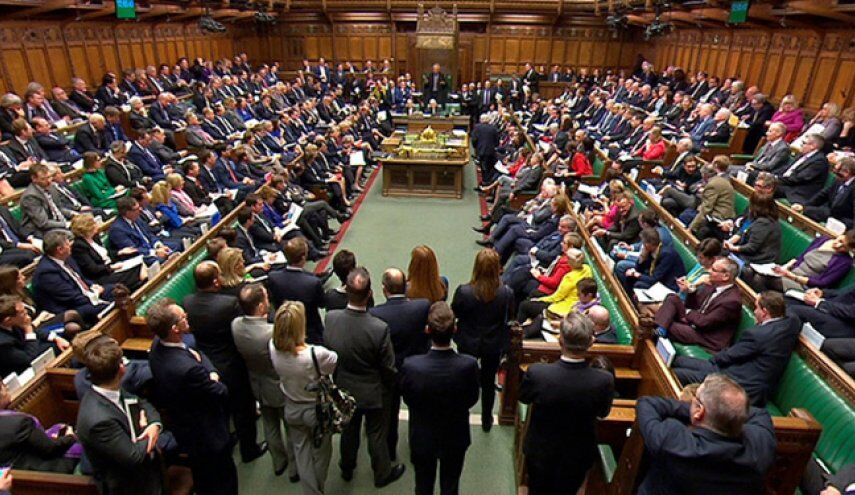
Over 250 British MPs and peers signed a statement condemning the ongoing human rights violations in Iran, particularly the horrifying rising trend of executions in recent months. They also endorsed the ten-point plan for the future of Iran proposed by Mrs. Maryam Rajavi, the President-elect of the National Council of Resistance of Iran (NCRI). The statement and its signatories underline that, “Executions in Iran are political in nature, as the ruling theocracy uses the death penalty to instill fear and terror to prevent future popular uprisings.” Referring to the landmark report of 17 July 2024 by Mr. Javaid Rehman, the UN Special Rapporteur on the situation of human rights in Iran, in which he described the 1988 massacre of 30,000 political prisoners as a “crime against humanity” and “genocide,” British lawmakers criticized the international community for failing to hold the Iranian regime accountable for its crimes. “The international community’s failure to address these atrocities has fostered a culture of impunity in Iran, emboldening the regime to intensify state repression and crackdowns,” they emphasized. In their statement, British lawmakers referred to the ongoing “No to Executions Tuesdays” campaign by political prisoners across Iran, during which prisoners go on hunger strike to oppose the death penalty. While underlining the need to hold the Iranian regime accountable for its decades of human rights violations, the statement and its signatories emphasized, “Against this backdrop, we endorse and support Iranian opposition leader Maryam Rajavi’s call to end executions in Iran and her long-standing commitment to abolishing the death penalty, as outlined in her Ten-Point Plan for Iran’s future.” It is worth noting that in June 2024, in a historic joint statement signed by 525 Members of Parliament, including representatives from all UK political parties, lawmakers supported Mrs. Rajavi’s ten-point plan.

Iranians deman acountability in Geneva
News, Resistance’s Activities Abroad

Iranians in Geneva Demand Accountability and Support Women\’s Resistance Against the Regime

On October 9, 2024, the Iranian community in Geneva staged a powerful protest calling for the immediate release of all political prisoners held by the Iranian regime. The demonstrators expressed unwavering solidarity with the Iranian Revolution and demanded global action to address the regime’s human rights violations. They urged the United Nations, the Human Rights Council, and its member states to refer Iran’s crimes against humanity to the United Nations Security Council, seeking justice for the victims of oppression. Supporters of the People’s Mojahedin Organization of Iran (PMOI/MEK) in Geneva called for the trial of Iran’s leaders in an international court for their role in crimes against humanity. They emphasized the Iranian people’s desire for a democratic republic and firmly rejected both the current mullahs\’ regime and any possibility of a return to the Shah’s dictatorship. Protesters also called for the recognition of the Iranian resistance, particularly the MEK Resistance Units operating within Iran, asserting their right to defend themselves against the regime’s brutal repression. The rally further condemned the Iranian regime’s systematic oppression of women, especially under the pretext of enforcing the mandatory hijab. Protesters voiced their support for the courage and resistance of Iranian women, chanting slogans of \”women, resistance, freedom.\” This demonstration underscored the Iranian people\’s ongoing fight for freedom, justice, and democracy, with a clear message to the international community: Stand with the Iranian people in their struggle against tyranny.

Scroll to Top