Simay Azadi English

Exclusive Interviews

Exclusive Interviews, News

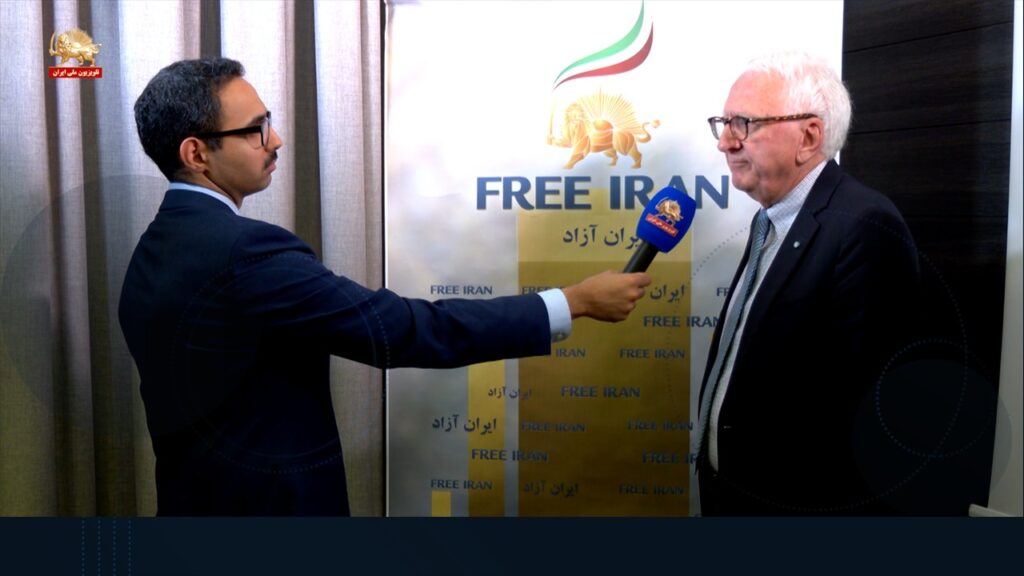
Robert Joseph: “The Iranian People Need a Democratic Republic”

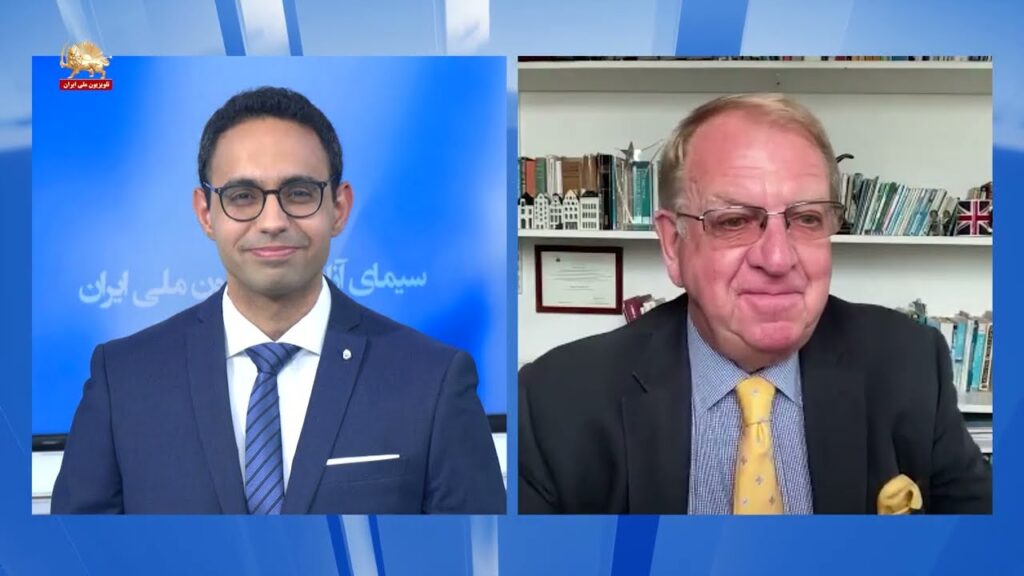
The former U.S. Under Secretary of State discusses Iran’s wave of executions, the alternative to the current regime, the NCRI’s Ten-Point Plan, and why he believes democratic change must come from the Iranian people. In an interview with Simay Azadi on the sidelines of the Free Iran World Summit in Paris, former U.S. Under Secretary of State for Arms Control and International Security Robert Joseph discussed the recent wave of executions in Iran, the regime’s response to growing internal pressure, the alternative to the current political system, international policy toward Tehran, and the cancellation of the Free Iran rally in Paris. During the interview, Joseph argued that the recent executions reflect the regime’s growing weakness rather than strength. He said the Iranian people reject both religious dictatorship and a return to monarchy, endorsed the National Council of Resistance of Iran’s (NCRI) Ten-Point Plan, criticized policies of appeasement toward Tehran, and emphasized that democratic change must come from the Iranian people themselves rather than through foreign intervention. Read the full text of the interview below (edited for clarity): Q: Thank you very much, Ambassador Joseph, for this interview with Simay Azadi. Let us begin with this question. We have witnessed a wave of executions in Iran in recent months, especially after the war. Eight members of the People’s Mojahedin Organization of Iran (PMOI/MEK) have been executed. Why do you think the regime has increased the number of executions at this time? Ambassador Robert Joseph: I think the executions reflect the current state of the regime. The regime is at its weakest point, and these executions are a means of intimidating the people of Iran. Anyone who resists—even in defense of the most basic human and civil rights—faces prosecution, torture in many cases, and execution. I believe this is a desperate regime that is on its last legs, and the international community must work together to stop these executions. Q: In recent months, we have also seen efforts to promote Reza Pahlavi, the son of Iran’s deposed Shah, as an alternative to the current regime. As someone who has spent many years in diplomacy and foreign affairs, what do you believe is an alternative to this regime, and what is not? Ambassador Robert Joseph: First of all, I have never understood the proposition that the Iranian people would want to replace one corrupt and brutal regime with another corrupt and brutal regime. The attraction of Reza Pahlavi is simply incomprehensible to me, and I believe it is equally incomprehensible to the Iranian people. The true alternative to both the religious dictatorship and the restoration of the monarchy is a democratic republic. That democratic republic is founded on the principles contained in Mrs. Rajavi’s Ten-Point Plan and represented by the NCRI and the MEK. That is the vision for a free, democratic, secular, and non-nuclear Iran. Q: You have supported the Iranian Resistance for many years. Why do you support the Ten-Point Plan and this movement? Ambassador Robert Joseph: My professional background is in nuclear affairs. When I was serving at the White House, I came to the conclusion that as long as this regime remains in power, the world will continue to face the threat of a nuclear-armed Iran. The only way to move beyond that threat is through regime change—not imposed by the United States or any outside power—but achieved by the Iranian people themselves. When I first reached that conclusion, I didn’t even know what the NCRI stood for. I looked at the opposition and asked who was capable of leading the Iranian people to end this religious dictatorship. The answer was clear. Mrs. Rajavi, the NCRI, and the Ten-Point Plan provide the principles for a modern, democratic, and secular society. Q: What should the international community do now? Some argue for military action, while others continue to advocate engagement with Tehran. How do you view those approaches? Ambassador Robert Joseph: The first principle is that we must not throw this regime another lifeline through policies of appeasement. We saw that under President Obama. We saw it again under President Biden. Those policies need to be reversed. The world must recognize that this regime has to go and support the Iranian people’s efforts. That is the only solution—not only to the nuclear challenge, but also to the regime’s support for terrorist proxies, its destabilizing regional activities, and its brutal repression of the Iranian people. If there is ever a moral imperative, it is to stand with the Iranian people. And I believe Mrs. Rajavi best represents Iran’s future. Q: Yesterday, a major Free Iran rally in Paris was canceled less than 24 hours before it was scheduled to begin, despite organizers expecting around 100,000 participants from across Europe. What message does that decision send, and what should the French government have done? Ambassador Robert Joseph: I believe the French court’s ruling betrays the fundamental principles of a democratic society. Freedom of assembly and freedom of speech are core principles rooted in France’s own Declaration of the Rights of Man and of the Citizen of 1789. That historic document has served as a model for democratic societies for nearly two and a half centuries. Those are the principles France should uphold—not blackmail or coercion by the Iranian regime, which I believe influenced this decision. In my view, this was a political decision that betrayed the principles of the French Republic. Q: Finally, what message would you like to send to the Iranian people, especially the Resistance Units who will be watching this interview on Simay Azadi? Ambassador Robert Joseph: First of all, I congratulate everyone involved in the Resistance at every level. My message is simple. This regime is at its weakest point in nearly half a century. Now is the time to seize the opportunity. Now is the time to consign this regime to the trash bin of history. It has shown that it cannot change and cannot reform. Its answer has always been repression, war against women, and
Exclusive Interviews, News

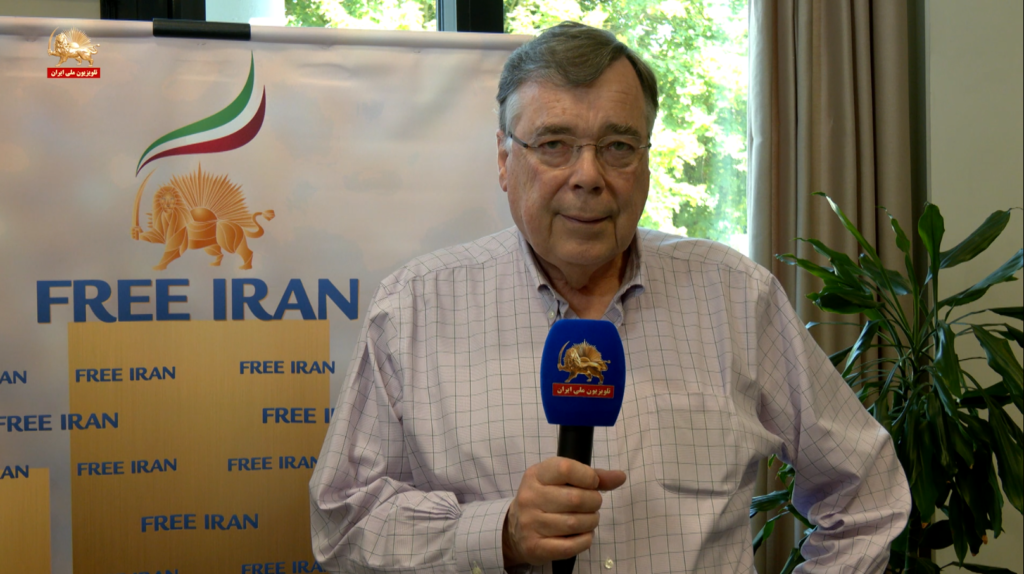
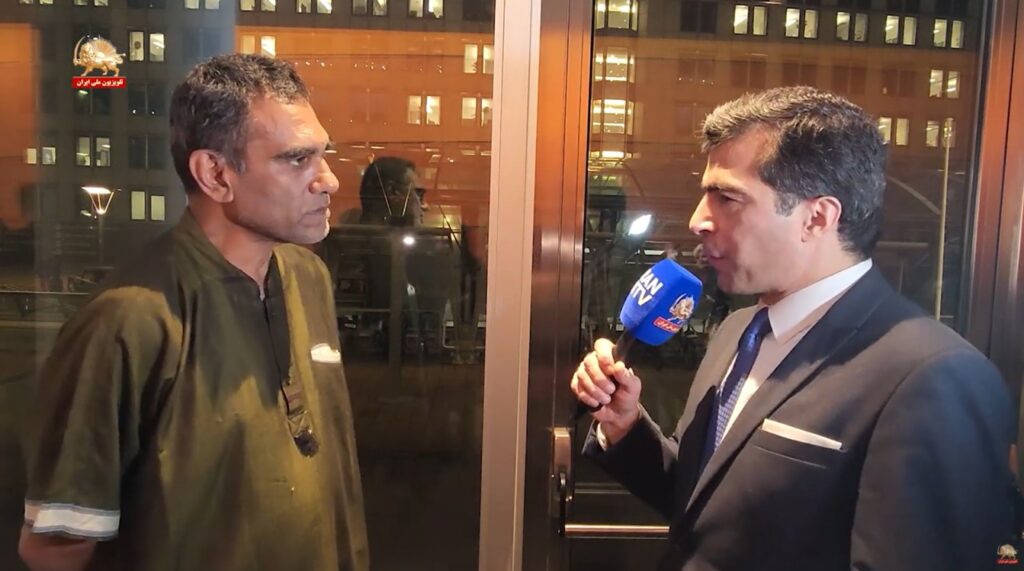
Geir Haarde: “Iran’s People Reject Both the Mullahs and the Shah” 

The former Icelandic prime minister discusses the Free Iran World Summit, executions in Iran, the NCRI’s Ten-Point Plan, and the alternative to the current regime.   In an interview with Simay Azadi on the sidelines of the Free Iran World Summit in Paris, former Icelandic Prime Minister Geir Haarde discussed the significance of this year’s gathering, the wave of executions in Iran, international support for the Iranian Resistance, the National Council of Resistance of Iran (NCRI), the cancellation of the Free Iran rally in Paris, and prospects for democratic change in Iran.  During the interview, Haarde argued that growing international support for the Iranian Resistance reflects a better understanding of the situation inside Iran. He said the Iranian people reject both the current religious dictatorship and a return to monarchy, endorsed the NCRI’s Ten-Point Plan, criticized the cancellation of the Paris rally, and reiterated that neither war nor appeasement offers a solution to Iran’s crisis.  Read the full text of the interview below (edited for clarity):  Q: Thank you very much, Mr. Haarde, for being with us. First of all, I wanted to hear your thoughts on this year’s gathering. What was your main message at the Free Iran World Summit?  Geir Haarde: First of all, I think this year’s conference was a great success, apart from the fact that the French authorities blocked the rally that was supposed to take place on Friday. That was a great shame.  I believe behavior like that by the authorities will only strengthen the Resistance movement and reinforce its determination.  As for the conference itself, many important points were raised and a great deal of valuable information was presented.  I emphasized the importance of rallying around the National Council of Resistance of Iran and its Ten-Point Plan.  I also spoke about the executions that take place regularly in Iran, where opponents of the regime are essentially executed without justice. It is a terrible thing to witness.  I have the greatest respect for those who have sacrificed their lives in this way.  There was also discussion about the current negotiations between the United States and the mullahs’ regime, as well as the recent memorandum of understanding.  I believe important issues are missing from that agreement, including a condemnation of the executions.  We must all understand that this cannot be the future government of Iran.  Q: How do you explain the growing number of dignitaries from Europe, the United States, and elsewhere who continue to support the Free Iran movement and participate in these annual gatherings?  Geir Haarde: I think it’s because more and more people understand what is happening in Iran and how the situation has evolved.  We believe the Iranian people do not want this theocracy to continue, but they also do not want a return to the Shah and that type of regime.  “No more dictatorship” is the message people are sending.  More and more current and former politicians in Europe, the United States, and elsewhere understand that the Iranian people need support.  Ultimately, the Iranian people should have the government they deserve and so clearly want.  Q: There have been campaigns promoting the son of the former Shah. What is your view of those efforts?  Geir Haarde: I think the people who promote that idea are on the wrong side of history.  That family belongs to the past, and I do not believe the Iranian people would support a return to a monarchy or a new dictatorship under another Shah.  Q: You have participated in many Free Iran gatherings over the years. On a personal level, what has impressed you the most, and what has motivated you to continue supporting this movement?  Geir Haarde: I began following this movement several years ago after being invited to attend some of its gatherings.  What has impressed me most is the endurance of the movement, the strength of its leadership, and the persistence of the people who work tirelessly for this cause.  It is also remarkable how many distinguished people participate.  Yesterday’s conference included experienced American politicians and former officials who contributed significantly to the discussion.  The same is true of our European colleagues, who know a great deal about the situation.  Coming from a country that has not been deeply involved in these issues, I have learned a great deal over the years about Iran and about the need for regime change.  Q: Based on your understanding of the situation in Iran, what would be your main advice to the international community and to policymakers?  Geir Haarde: I would repeat the words of Madam Rajavi.  First, war is not the answer.  Second, appeasement is not the answer.  The third option is an uprising by the Iranian people that ultimately brings down this deeply unpopular regime.  I believe that is the right path.  Taken together, I think the chances are greater today than they have been in recent years that Iran will eventually have a different government and no longer be ruled by a theocracy.  To the viewers inside Iran, I want to say this:  I admire your strength.  I admire your courage.  Remain persistent.  Remain courageous.  In the end, you will prevail. 

Exclusive Interviews, News

Kumi Naidoo: “The First Step Is to Stop the Killing in Iran”

On the sidelines of an event at the European Parliament marking the International Day of Human Rights, Simay Azadi spoke with Kumi Naidoo, former Secretary-General of Amnesty International.In the interview, Naidoo underscored the urgency of halting executions in Iran, highlighted the central role of women in the struggle for freedom, and drew a direct line between today’s executions and the 1988 massacre—described as crimes against humanity. He stressed that ending the killing of prisoners must be the immediate priority, while accountability for past and present crimes remains essential. Read the full text of the interview below. Exclusive Interview with Kumi Naido— Simay Azadi Simay Azadi: Thank you very much for this interview. How did you find the event at the European Parliament on the occasion of the International Day of Human Rights? Kumi Naidoo:I think this is a very positive event that is urging all countries around the world, especially the European Union, to put encouragement to stop the executions of the people that are in prison. So, I found that this is the most urgent thing. There are many bigger things that we need to do—to secure genuine democracy and all of that—but the first step is: stop the killing of human beings that are in prison. And that message was very loud. I also liked the fact that we celebrated women—women who are in prison, women who are facing death sentences, women who are rising up in the streets and villages and towns of Tehran on forced veiling and many other things. And I was very inspired by the presence of a large number of women here who have been struggling over the years. What we must recognize is that no struggle has ever succeeded without an equitable participation of women in those struggles. The image that Iran presents to the world right now is a completely male-dominated society, but that’s not the reality on the ground. It was also inspirational. The last thing I would say is that after so many years, something that I wanted to say and I didn’t say, which was I wanted to express my solidarity with the people who go through the pain of exile. I experienced only three years in exile as a young student between the ages of 22 and 25. I can tell you that was so painful—not being able to go home to your country. And I hope that events like this bring human rights back to the center of what we do, but also create the basis for the tens of thousands of Iranian exiles distributed across the world to finally be able to return home. So I hope that this event has contributed to that bigger agenda of a society that is governed on the basis of human rights, democracy, inclusion, gender equality, and so on. Thank you. Simay Azadi: Thank you very much for your remarks. You talked about the executions raised here. As we all know, you were the Secretary-General of Amnesty International when the report on the 1988 executions was released. How do you connect those executions—described as crimes against humanity—with the current wave, and what should be done? Kumi Naidoo:Obviously, if 30,000 people get killed in a very short time span, that figure shocks and horrifies people a lot. But what we have now is a legacy of that kind of practice. For me, one execution is one execution too many. And for that reason, we need to resist this pattern that is rebuilding. The reason this can happen on this scale—which is already high—is connected with that legacy. Government media recently said in Farsi that “we need another 1988.” What’s striking is that there isn’t even an attempt to deny the legacy. If state media says, “Let’s do this,” that speaks for itself. It’s true the report was released by Amnesty in 2018 or early 2019. I was very pleased with the work of colleagues who had researched this for almost three decades to ensure absolute factual accuracy. When state media now says we need another 1988, it is the strongest evidence that what we documented genuinely happened. My only regret is that the report didn’t come out 25 years earlier. It might have had more immediate impact then. There was significant media coverage when it was released, but earlier, we lacked the depth of research that later made it irrefutable. Simay Azadi: Thank you very much for your remarks. Thank you—it was a pleasure.

Exclusive Interviews, News

Insights on Iran’s Future: An Interview with Mr. Stevenson

An interview with Mr. Stevenson on Iran’s political landscape and the need for democratic change.


[TEXT]:
Welcome, Mr. Stevenson, and thank you for accepting our invitation for this interview with Seemai Azadi.

It’s a pleasure. It’s always a pleasure to speak to you.

So let’s start with the questions. You were one of the speakers at the recent event in the UK Parliament that brought together lawmakers from both houses to discuss developments in Iran and a possible path forward. Could you tell us, please, about the focus of that meeting, how it was received, and how you view its significance at this time?

The meeting was arranged by the British Committee for Iran Freedom. Now, I’ve been to many meetings arranged by that important organization. This meeting was in the House of Lords and was attended by more than 30 MPs and peers from the House of Lords. It was one of the biggest, best-attended meetings I’ve ever been at. The reason was the Committee for Iran Freedom; they were billing the meeting as looking at a third option for the future of Iran. Everybody knows now that we have reached the tipping point with the Mullah’s regime. The dictatorship is on the edge of a cliff. It’s about to tumble over into the abyss. After the 12-day conflict involving both Israel and America, and after the effective decapitation of the so-called axis of resistance that the mullahs always relied on, we have seen the mullahs now at the weakest point they have been since the 1979 Revolution. They have reached the tipping point. This has become of critical importance to the rest of the world because everybody recognizes that the dictatorship in Iran is the head of the snake. We have now reached this ceasefire, which is a fragile ceasefire between Iran, Israel, and America.

But we now can see that the mullahs are saying, “Oh, well, we’re going to go back to rebuilding our nuclear weapons.” It was a clandestine affair for many years, exposed by the recent top-level report to the UN Security Council by the UN nuclear watchdog, the International Atomic Energy Agency, and its boss, Rafael Grossi, who said, “The Iranians now have £900 worth of heavily enriched uranium, enriched to almost weapons-grade, 60% purity.” They could produce a number of nuclear bombs in a very rapid time. Clearly, the time has arrived for the world to take notice of this, to stop messing around with appeasement and dialogue and all the rest of it. This was the purpose of the meeting in the House of Lords. We were looking at the three options that have always been traditionally tabled. The three options include military intervention, which, of course, nobody wants. No one wants to see boots on the ground, which would effectively lead to an Iraq-style situation. The second option has traditionally been appeasement. For far too long, the EU, in some cases under the previous Biden administration and the UK, have said, “Oh, but we must try to talk to the moderates in the leadership of the mullahs’ dictatorship.”

This has never worked. Appeasement can lead to war. That’s the lesson we should have learned from history. And appeasement, certainly with the mullahs, has made no difference at all. They love to play for time and to pretend that they’re willing to negotiate. No negotiations ever take place. They take hostages. They say, “If you give us more freedom, if you lift more sanctions, we will return your hostages.” When we capitulate and give them what they ask for, they simply take more hostages again. So negotiation has come to an end. What we must look at is the third option. The third option is quite clearly backing the Iranian people and their democratic opposition and the resistance movement to overthrow this tyrannical regime and to restore peace, democracy, human rights, and women’s rights, end the death penalty, end the nuclear threat, and restore peace not only to the Middle East but to the whole world. That was the message coming across in the House of Lords meeting, and that was the message that the MPs and peers who attended were prepared to take back and to talk to ministers, to talk to the UK government, to try to implement these ideas.

You just spoke about the third option. Could you please elaborate on that? What are the core values of this option and how can it be realized by the Iranian people and their organized resistance, as you referred to?

Well, nobody wants to see boots on the ground. Nobody wants to see military intervention that would lead to a huge conflict and reduce Iran to what happened in Iraq. That is a lesson from history that we want to avoid. We also have to wake up to the fact that appeasement just doesn’t work. Those people who keep saying, “Oh, but we’re searching for a moderate within the leadership of the Iranian mullahs’ regime,” there is no such thing as a moderate. They said when Massoud Pzezkian was elected with a tiny proportion, the tiniest proportion ever of the common vote in the whole of Iran, when he was elected after Abraham Raisi’s death in the helicopter crash, everybody said, “He is a moderate figure. He is a heart surgeon. He is the person we could talk to.” Since his election, there has been a frenzy of executions, partly because the mullahs are so frightened of another massive uprising, a nationwide uprising that could drive them from power. They’re clinging on to power by their fingernails. They have authorized a frenzy of executions that’s leading to hangings; virtually five or six people are being executed every day.

The regime is waging war on its own people. Now, that’s why there has been a huge rise in the resistance movements, which are commanded by the National Council of Resistance of Iran and the Mujahideen-e Khalq, the MEK, and people in the West have to wake up to the fact that we need to show the Iranian resistance and the Iranian people that we back them morally; we support them. They have a right to overthrow this evil regime. They have a right to introduce the 10-point plan that Mrs. Maryam Rajavi, the charismatic leader of the National Council of Resistance of Iran, has proposed, which would restore peace, democracy, human rights, women’s rights, and end the death penalty and the nuclear threat. This is what the people of Iran want, and this is why the West has an imperative now at this tipping point in the numbered days of the mullahs’ regime. We have the opportunity now to push them over the edge and to give moral support to the people of Iran and their resistance to do this.

Thank you very much. So for our third question, you’ve been the author of several publications and books, but one of your most recent publications is a book called “Dictatorship and Revolution: Iran: A Contemporary History,” which traces more than a century of political developments in Iran, including the monarchy, Pahlavi’s regime, and the post-1979 system. It also discusses how different political currents have shaped the country’s direction. In that context, how do you assess the recent efforts by the remnants of the Shah’s regime to reenter the political landscape, including the reported outreach to parts of the IRGC? Do you see these efforts as part of a broader trend? And what perspective does your book offer in understanding how past systems of governance continue to influence the present debate about Iran’s future?

Well, when the people of Iran rose up in 1979 to overthrow the Shah, it was because the Shah was a hated figure; he had demolished democracy. He had gotten rid of all political parties except one, his own political party. His secret police, SAVAK, were well known for their brutality, for torturing, for tearing out fingernails and toenails to extract false confessions before people were then executed. This was a hated regime that the people of Iran rose up and overthrew. Sadly, the revolution was hijacked by Khomeini, who the world, again, stupidly thought, “Oh, he is a holy man. He is a religious leader. He must be a moderate. He will restore peace and justice to the people of Iran.” He was clearly a psychopath, as we discovered, with his fatwa against the MEK, which led to the execution of more than 30,000 political prisoners in the massacre of 1988—a horrific event that is still under close examination by the United Nations. But every time we have seen the signs of a nationwide uprising, and there have been quite a few recently, particularly the massive uprising after the death in custody of Mahsa Amini, when we saw millions of people take to the streets, every time there is an uprising, and it looks like there could be an opportunity to overthrow the mullahs, up pops the son of the Shah, Reza Pahlavi.

He has done absolutely nothing for 46 years. He has lived in luxury in his hugely affluent houses and palaces that he has all over the world, based on the estimated 25 to 30 billion dollars that his father looted from the people of Iran. The Pahlavi family is living in affluence and luxury, but he suddenly pops up and starts jetting around the world claiming he is the Crown Prince, saying he will be the savior of Iran after the mullahs are overthrown. He will come back and claim the Peacock throne. This is pathetic nonsense, quite frankly, for a man who has no credibility whatsoever and no support within Iran. During these protests, people are chanting, “No to the Crown, no to the turban.” They say, “No to the Shah, no to the mullahs.” He has no credibility. Worse still, recently, he has totally misread the situation. When Israel was attacking Iran directly during the 12-day conflict, he misread that situation by saying, virtually, that he supported Israel and calling on the people of Iran, “Now is your moment, rise up and overthrow the mullahs while the Israelis are attacking.” The Israelis were actually, some of their missiles and bombs were killing Iranian citizens.

For somebody who claims that he wants to be the king of Iran after the overthrow of the mullahs to say, “I am backing the Israelis for attacking us right now,” was a seriously damaging mistake, which shows his lack of imagination. Also, incredibly, he held a press conference in Paris last month in June, where he said he is in direct communication with leaders in the IRGC, the Islamic Revolutionary Guards. He says that he is inviting them because they want to be part of the national salvation. He’s inviting them to join him when they overthrow the mullahs. This sounds like, at the end of the Second World War, Winston Churchill saying, “We will need the help of the Gestapo to maintain peace after we get rid of Hitler’s Nazis.” This is just stupidity and incredible. He really has made himself into a joke figure. He’s the son of the naked Emperor trailing around Europe—the Emperor with no clothes—or indeed, the Clown Prince would be a more appropriate characterization.

So thank you very much for this enlightening answer. Let me ask you at the end of this interview about your message to the Iranian people, because you are one of the long-lasting supporters of this resistance. If you have any message for the Iranian people, please tell them right now.

Well, I’ve spent the last roundabout quarter of a century supporting Mrs. Rajavi and the Iranian resistance, the National Council of Resistance of Iran. I know that these people are like a government in exile. They have a perfect plan. They are saying it will be up to the Iranian people to produce a new constitution to elect the government that they want to lead them. But in the meantime, we’ve got to support them. We have to rely on the Iranian people themselves to rise up and do this, to back their resistance movement, these courageous people who are taking to the streets day and night to try to overthrow the current tyrannical regime. The West has to back them. The message for the West now is to ban the IRGC, blacklist the IRGC and the Basij, and introduce the snapback mechanism through the United Nations that reintroduces all of the sanctions that were put on hold. The regime is at its last legs. We now need to give it that final push over the edge of the cliff.

Well, thank you very much for accepting this interview with Seemai Azadi. It was indeed a pleasure to have you with us.

It’s been a pleasure, as always, to speak to you.

Thank you.

Exclusive Interviews, News

Simay Azadi’s Interview with Ambassador Stephen J. Rapp on Iran’s Situation

Simay Azadi’s Interview with Ambassador Stephen J. Rapp on Iran’s Situation On July 31, 2025, just before the Free Iran Summit in Rome, I spoke with Ambassador Stephen J. Rapp, 4th United States Ambassador-at-Large for War Crimes Issues who has long campaigned for justice for victims of political repression. Ambassador Rapp is among more than 300 international figures who signed a recent statement urging urgent action to stop the execution of Iranian political prisoners. In this interview, he spoke about the recent execution of two People’s Mojahedin Organization of Iran (PMOI/MEK) supporters, Behrouz Ehsani and Mehdi Hassani, the 1988 massacre, the need for international accountability, and his strong support for the President-elect of the National Council of Resistance of Iran (NCRI), Mrs. Maryam Rajavi’s Ten-Point Plan for a democratic Iran. Question: Thank you very much, Mr. Ambassador, for accepting this interview with Simay Azadi. Recently, two political prisoners, PMOI supporters Behrouz Ehsani and Mehdi Hassani, were executed. And at least 14 other PMOI supporters are on death row. You are among over 300 personalities who signed a statement urging the international community to stop their execution, and you later condemned these executions. Can you elaborate about this situation? Ambassador Rapp: Well, what we see in Iran these days is almost massacres in plain sight. Using this judicial system—five-minute trials behind closed doors, false evidence, charges like “enemy of God” or terms that don’t mean anything in terms of people’s actual conduct or criminal conduct—resulting in executions. The UN rapporteur said we may see the largest number this year since the horrendous 30,000 executions that occurred back in 1988. Clearly, this regime is using the threat of death through these processes to intimidate and to try to silence the opposition. They’re not going after even their foreign enemies. They’re going after the domestic opposition—the people that would be elected if Iran was a democracy. It’s absolutely essential that the international community speaks strongly, but goes beyond words to effective action, to show that there will be accountability for these crimes and that the prospect of justice for the survivors of these victims won’t be swept under the carpet. There must be the expectation that those responsible for these mass murders are held to account. Question: You mentioned the 1988 massacre. We had, was the landmark report by Professor Javaid Rehman about this massacre, and he specifically underlined that these crimes against PMOI supporters back in the 1980s amount to crimes against humanity and genocide. As an expert, what is your opinion about this report? And what should the international community have done since this report was published? Question: Well, it’s essential to hold the people responsible for those crimes to account. Obviously, we had people like President Raisi, who led those executions, who is no longer with us. But there are thousands of others who have moved into positions in this regime that are responsible for those crimes, and some who may be abroad, and some who may have assets abroad. They need to be held accountable. The professor is clear: these are international crimes. In many countries of the world, crimes can be prosecuted even if they’re not committed in those countries, if they are international crimes—even for crimes committed in 1988, because they were international crimes at that time. What we’ve done in other situations—for instance in Syria—we had a regime under Assad strongly supported by Iran and its militia Hezbollah. One reason that a vicious dictator was able to stay in power so long, to kill half a million of his own people, destroy half the country, drive off half the population, and engage in mass murder, mass disappearance, torture, and use of chemical weapons, was because of that support. Even while that regime lasted—and of course we know it fell thanks to the Syrian people themselves last December—we were able to hold some of his torturers to account in courtrooms in Germany, in France, in Scandinavia, and other cases are pending around the world, even one against Assad himself. Now we have a chance for justice in Syria by the Syrian people, and I strongly support that. But you can begin cases like that and you can prosecute them. It’s very important that countries assist each other and also resist the kind of pressure, for instance, that Sweden faced when it was forced to give up one of those executioners it convicted. That’s the kind of resolution it takes if we’re going to achieve justice in this situation and send a clear message to the leaders of Iran that if they commit these kinds of crimes again, they will not have a day of rest in this life. Question:  You just mentioned that the regime has ramped up suppression since the end of the12-day war. How do you perceive that, and can you elaborate, because you have written about the regime’s recent rampant executions? Ambassador Rapp: Well, clearly the regime is using its own weakness not to go after its external enemies but rather to turn its attention on people who support a free Iran. Those are the people it is vulnerable to. The possibility of external intervention would be a disaster for Iran; it is the people of Iran who need to make the change. As we’ve seen in the demonstrations of 2019 and 2022, and in the government’s failure to even run the electricity and provide necessities to its population, there’s enormous opposition to it. That’s what the regime fears. It uses foreign enemies as an excuse to go after people who have nothing to do with those enemies, who support Iran and want democracy. Change is always possible. It’s happened in many countries. Regimes seem permanent until they’re not. Sometimes even people within the regime realize it’s not serving the country. The only permanent regime change that serves the people’s interests is when they do it themselves. External intervention, as we’ve seen, has enormous negative consequences and often allows bad regimes to wrap

Exclusive Interviews, News

Interview with Ehsan Aminroaya – Iran’s Future: The Third Option Explained

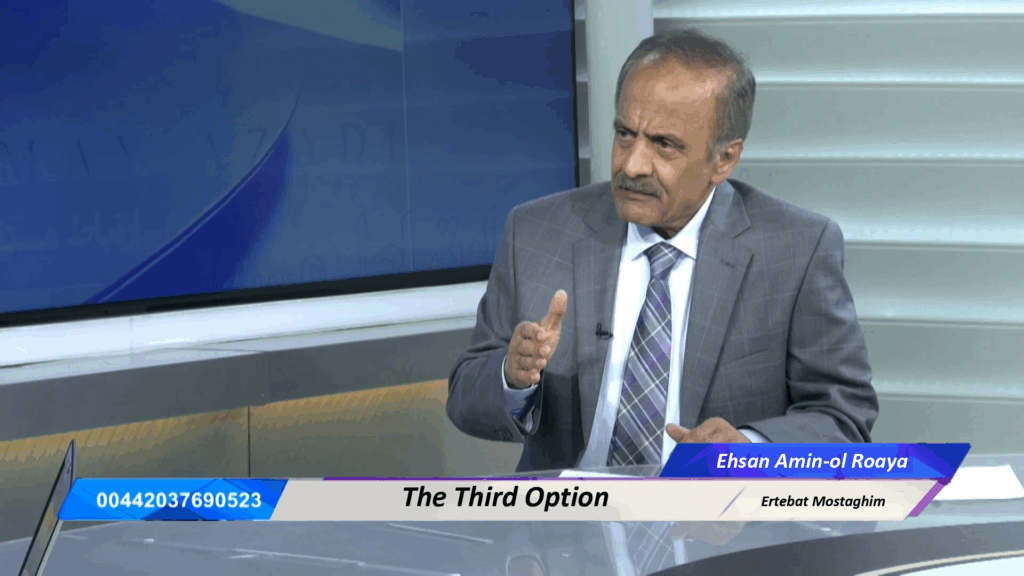
Simay Azadi’s interview with Ehsan Amin-ol-Roaya, a member of the National Council of Resistance of Iran (NCRI). Introduction The 12-day war, which ended with the ceasefire on June 24th, remains the most critical issue for Iran and the world. What are the key takeaways from this war as it pertains to Iran, the ruling regime, and the Iranian people? Now that we are in a ceasefire period, where are events heading? And what is the meaning of the Iranian Resistance’s policy—the “Third Option”—which was reiterated by its President-elect during the war? Perhaps at no time in the past four decades have we faced such a sensitive and perilous moment in our country. We recall that at the beginning of this Iranian year, in March, the leader of the Resistance, Massoud Rajavi, clearly described this situation, stating, “We have entered the most important, sensitive, critical, and turbulent phase: the phase of final determination, where the fate of our people will be decided in their confrontation with the Velayat-e Faqih regime and its accomplices.” He added, “The multiplicity, intensity, and speed of events in this stormy sea are the hallmarks of a volatile revolutionary situation.” We are now in the heart of these conditions. Speculation about the future is rampant. For this very reason, it is essential to focus on the perspective and policy of the Iranian Resistance, which will serve as a guide for action moving forward. We will examine this topic in this week’s “Ertebat Mostaghim” program (live TV discussion). Question 1: Let’s start with the 12-day war. What were the most significant results and effects of this war as they relate to the people of Iran and the nation’s destiny? Ehsan Aminroaya:You speak of destiny—the destiny and future of the Iranian people. While this is a fundamental and paramount issue in this conflict, it is also the question that received the clearest answer. Many of the political and tactical details of this war remain ambiguous and unresolved. But on this great question, a definitive answer emerged from the throes of a horrific experience. What was proven—what became clear and is beyond doubt—is that destiny is shaped by the Iranian people themselves, by their sons and daughters, and by their Resistance, through their own suffering and struggle. Nothing else, nothing else, nothing else. No other factor, no other power, neither wants to nor can turn this dark, blood-soaked page in favor of the millions of oppressed people. It was proven that war is not the answer to the Iran problem. It was proven that bombing cannot overthrow the regime. It was proven that the appeasing Western governments, which for years nursed a viper in their bosom—meaning they strengthened the regime and blocked the path to change—betrayed global peace. Twenty-one years ago, Maryam Rajavi told them loudly in the European Parliament that this appeasement would unleash war upon the world, but they did not listen. #Breaking an excerpt of @Maryam_Rajavi's speech underlining that a dangerous new phase began Friday in Iran and the region—but the real war has raged for 44 years between the Iranian people and the ruling religious fascism. The solution: regime change by the people and their… pic.twitter.com/WDhJIe5RBt — SIMAY AZADI TV (@en_simayazadi) June 18, 2025 And it was proven that those contemptible Iranian factions and individuals—and I don’t mean truly Iranian, but merely Persian-speaking—those phony reformists within the government who praised the Supreme Leader, who congratulated Khamenei on his warmongering in the region, and who opposed the regime’s overthrow, they betrayed the Iranian people and paved the way for this very war. In contrast, it was proven that the only real solution is the Third Option, which the President-elect of the Resistance announced 21 years ago: change by the hands of the people and their organized Resistance. This means neither foreign war nor the appeasement policies of Western governments, but overthrow by the hands of the people and their Resistance. Question 2: During the war, Mrs. Rajavi reiterated the Third Option in a speech at the European Parliament. She stated that the Iranian people welcome an end to the war and, in the first moments of the ceasefire, she welcomed it, saying, “The ceasefire and the end of the foreign war is an advancement for the Third Option.” What does this phrase mean? Ehsan Aminroaya War is not the arena for the people and their Resistance to play a role. War is an arena where governments and ruling powers take control, and the people’s ability to act is stripped away. We welcome the proposal for ceasefire and end of foreign war which we hope will be maintained.This is a step forward for the ultimate solution to this crisis which is regime change by the people of Iran and the organized resistance. pic.twitter.com/j3hCPawBOL — Maryam Rajavi (@Maryam_Rajavi) June 25, 2025 Consequently, war paves the way for anti-popular, dependent, and colonial alternatives—for those who have no substance or merit other than to ride into power on the tanks of foreign, occupying forces. We have seen this in the experience of other countries, but we have also seen it in Iran’s own history. In 1921, when Reza Shah was brought to power, the situation was that British forces had occupied parts of Iran, and as they were preparing to withdraw, they shaped an alternative that suited their own interests, and we saw the result. Two decades before that, Tsarist Russian forces occupied Tabriz, captured Sattar Khan and Bagher Khan (leaders of Iran’s Constitutional Revolution), and prevented them from participating in the liberation of Tehran, effectively blocking the path for a popular alternative. Wherever war and military solutions have receded, the Third Option has been genuinely strengthened. Question 3: If you agree, let’s dissect the Third Option. What are its aspects? What are its foundations, and on what precedents in the positions of the Mojahedin (PMOI/MEK) and the National Council of Resistance is it built? Ehsan Aminroaya In terms of the PMOI’s core principles, the Third Option arises from this movement’s commitment to independence and

Exclusive Interviews, International Gatherings, News

Conference At the European Parliament: The Real War in Iran and Its Solution  

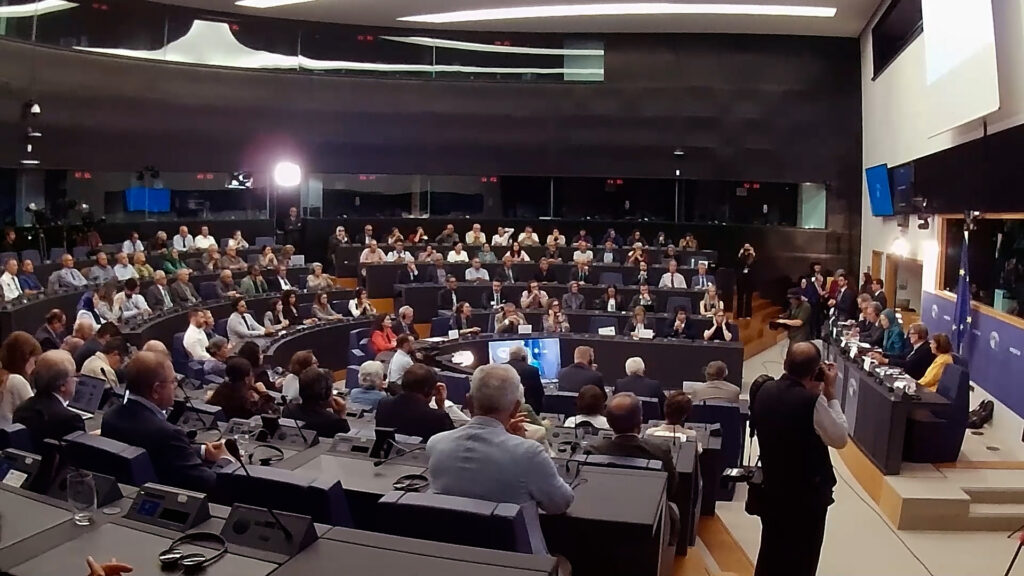
By Amir Pasha Borjkhani On June 13, 2025, war erupted between Israel and the Iranian regime. While many analysts speculated about the conflict, the true struggle soon became undeniable: Iran people’s enduring battle against the ruling theocratic regime, led by their organized Resistance. This was the central focus of two significant conferences held at the European Parliament on June 18. My colleagues and I were also in Strasbourg to cover this event.  There, Mrs. Maryam Rajavi, president-elect of the National Council of Resistance of Iran (NCRI), spoke alongside MEPs such as Javier Zarzalejos, Antonio López-Istúriz White, Petras Auštrevičius, and Pekka Toveri as well as distinguished European figures including Guy Verhofstadt, former Belgian Prime Minister and MEP, Enda Kenny, and former Prime Minister of Ireland. Their speeches shed light on Iran’s escalating crisis. Mrs. Rajavi, the keynote speaker, delivered a captivating and insightful address. She declared that the “crisis of overthrow has now engulfed the entire clerical dictatorship” and described the war as “the beginning of a critical new chapter—both in Iran’s internal crisis and in the broader dynamics of the region.” Yet, she emphasized that the core conflict, spanning 44 years since June 20, 1981, remains the Iranian people’s struggle against the theocratic regime. For decades, the NCRI, led by Mrs. Rajavi, has championed the “Third Option”: regime change driven by the Iranian people, rejecting both war and appeasement. Recalling her 2004 address to the European Parliament, Rajavi reminded the audience of her warning that “the policy of appeasement encourages the clerical regime to persist in its policies and, ultimately, imposes war upon Western nations.” Setting the record straight, she stated, “From the outset, our Resistance made it clear: a viper never gives birth to a dove, and a religious dictatorship is inherently incapable of reform.” Instead of requesting material support, Mrs. Rajavi appealed to the MEPs: “We do not seek money, nor do we ask for weapons. What we have always wanted is to resist—just as Europeans once did—against theocratic tyranny. We only ask that this Resistance be recognized. Nothing more.” She criticized the international community for denying the Iranian people and their Resistance “this most basic right.” European speakers amplified Rajavi’s call for the Third Option, emphasizing the Iranian people’s role in achieving regime change. “The regime in Tehran has managed for years to deceive those who viewed it as a potential partner for stability in the Middle East. It has always been the temptation to exchange democracy and freedom for stability,” said MEP Zarzalejos, who presided the first conference in this regard. “In the end, you get no stability and you get no democracy. Today, we must face reality. The time for illusions is over. The threats posed by this regime can no longer be deferred. And this is why Mrs. Rajavi’s vision is important,” he added. MEP Antonio López-Istúriz White praised the NCRI’s democratic vision, saying, “Madam Rajavi, you noted the council will dissolve once Iran’s elected assembly is formed. Few organizations make such a promise. That gives reassurance.” MEP Petras Auštrevičius highlighted Mrs. Rajavi’s proactive role, stating, “Madam Rajavi’s 10-point plan proves you shape Iran’s events, not just follow them. This upheaval could lead to regime change and a democratic future.” MEP Pekka Toveri urged EU support, declaring, “Iranians lead their future, but the EU has means and must find the will to act. A democratic Iran ensures our safety.” In an interview afterward, he elaborated, “There was a lot of discussion and very strong support from EU parliament members to continue support to Iran. We know that the fight is not in the end. This is probably the beginning of the end, but we have a good chance to create a free, democratic Iran.” Former Prime Minister Enda Kenny commended Mrs. Rajavi’s self-reliance, noting, “Madam Rajavi, you want Iran’s people to overthrow the regime, not foreign entities. This parliament must offer coherence and understanding.” In a post-conference interview with Simay Azadi, he reinforced this, saying, “The solution to the problem in Iran lies with the Iranian people. It’s been made perfectly clear that there is no wish to have an outside change imposed upon Iran, nor is there a seeking of financial assistance to bring this about. It will happen, as happened in every case since the overthrow of Marcos in the Philippines so many years ago.” Guy Verhofstadt linked democracy to security, asserting, “A democratic Iran prevents a nuclear threat. We must recognize the NCRI as the Iranian people’s true representative.” In an interview following the event, he stressed, “Western leaders, American and European, can do a lot now in this existential moment for the Iranian people. And that is to recognize the democratic opposition as the only legal representative of Iran and the Iranian people. That would give enormous courage to the Iranian people because they will know that there is a future without the mullah regime.” As I left the conferences, I couldn’t shake the weight of what I’d heard. Mrs. Rajavi’s vision, echoed by these European leaders, painted a path forward driven by the Iranian people themselves. Their words lingered, leaving me to wonder how the world might respond to this call for change.

Exclusive Interviews, News

Simay Azadi’s Exclusive Interview with Sebastián Basso: Iran’s Supreme Leader Ordered AMIA Bombing, Must Face Justice

Recently, Prosecutor Sebastián Basso, head of the investigation into the bombing of the AMIA center in Buenos Aires, the capital of Argentina, requested that the judge issue both domestic and international arrest warrants for the Iranian regime’s supreme leader, Ali Khamenei. International experts and media outlets described this move as unprecedented and a significant shift in the stance previously taken by the investigative panel, which until now had considered Khamenei, as the regime’s Supreme Leader, to have “immunity.” Simay Azadi had an interview with Prosecutor Sebastián Basso to ask him about this decision and the ongoing investigation into the regime’s terrorist bombing of the AMIA. This bombing, which occurred on July 18, 1994, left 85 people dead and 300 injured. The full transcription of this interview is below: Welcome, Dr. Basso, and thank you for being with us.Thank you very much for reaching out to Argentina. Doctor, can you explain what the investigation has concluded so far about who carried out the AMIA bombing and who gave the orders?In Buenos Aires, Argentina, on July 18, 1994, there was a bombing, a car bombing, targeting a building representative of the Jewish community in Buenos Aires.That bombing resulted in the deaths of more than 80 people, countless injuries, and extensive material damage to buildings in the city. The judicial and police investigation into the attack made it possible to determine that the perpetrators were individuals linked to an organization that Argentina considers terrorist, associated with Hezbollah in Lebanon.These individuals came from outside Argentina, basically from a region in the north near the border with Brazil and Paraguay known as the Tri-Border Area.These are the people who carried out the attack, and the Argentine investigation identified a Lebanese national, Salman Raouf Salman, as the main coordinator of this bombing in Buenos Aires. The investigation in Buenos Aires determined that Salman Raouf Salman at that time had very close ties with an official at the Iranian Embassy in Buenos Aires, who served as a cultural attaché and had connections with a Shiite community in Buenos Aires named Moshen Rabbani.It was proven in the Argentine case that Rabbani, in addition to his cultural and religious activities, carried out espionage and intelligence operations for the political regime governing Iran. The investigation concluded that Hezbollah carried out the AMIA bombing under the orders of the regime that sponsors it—that is, the regime that provides weapons, money, and social and cultural support to Hezbollah’s members.That regime has governed Iran from 1979 until today. It was determined that the decision to plant a bomb at the AMIA headquarters was made in Iran, in the city of Mashhad, approximately one year earlier, during a meeting attended by the regime’s highest leader and senior government officials linked to security, defense, and foreign policy.Precisely because these individuals decided and authorized the attack that caused many deaths in Argentina, the Argentine Prosecutor’s Office believes that the Supreme Leader, Khamenei, and the senior officials who participated in that meeting and decided to carry out the bombing at AMIA, must answer to Argentine judges and sit as defendants before the courts of the Republic of Argentina. Doctor, on what grounds did you request an arrest warrant for Khamenei last week?Over the 30 years of investigation, we have gathered evidence, including testimonies from former members of the Iranian regime. Among them is a person who also testified in German courts about a terrorist attack against Iranian dissidents that took place in 1992 at the Mykonos restaurant.This individual is considered highly credible by both the German and Argentine justice systems and explained how the Iranian regime operates and why that meeting in Mashhad occurred a year earlier. In addition to that testimony, we also have statements and documents from Iranian regime dissidents, primarily located in Europe—specifically from the Iranian Mojahedin section—who, through intelligence reports, were able to confirm that a meeting indeed took place on August 14 in Mashhad.It was in that meeting that the decision was made to bomb Buenos Aires, motivated by the foreign policy interests of the Iranian regime. You also stated that Khamenei is the only person who could have authorized this attack. Can you elaborate on that?From Argentina, we needed to understand the political and legal system in Iran, which is very different from Western systems.We had to study how Iran is governed and how its legal system works, where political, legal, and religious decisions are intertwined. As a result of this study, we concluded that the only way to authorize such a heinous act—a terrorist bombing—is through the decision of a leader who simultaneously holds religious, political, and judicial authority.At this moment, the only person who fits that description is Khamenei. Therefore, we believe this was his decision, through what we interpret as a “fatwa,” and we consider that this was the only way the attack could have been executed.That is why the Prosecutor’s Office believes Khamenei must explain his role and responsibility in the bombing—whether it is as the Argentine justice system has shown, or whether he has something else to say. Doctor, we know the AMIA attack was not the only one. In 2018, for example, there was another attempted bombing in Paris targeting an event held by the National Council of Resistance of Iran. Did these similar cases strengthen your commitment to the AMIA case?To strengthen the AMIA case, we examined and studied other attacks linked to the Iranian regime that occurred in the 1980s and 1990s.Due to the timeframe, we focused only on those incidents.As I mentioned earlier, one emblematic case is the Mykonos restaurant attack in Germany. We also analyzed other attacks in France here at the Prosecutor’s Office, and additional attacks in Latin America and Asia—for example, in Panama and in Bangkok—where, under similar circumstances, we observed the presence of this Lebanese-origin group, Hezbollah.Hezbollah consistently operates under the protection of the Iranian regime and follows its orders, as Hezbollah members themselves frequently acknowledge. Do you believe pressure from the Iranian regime on the Argentine

Exclusive Interviews, News

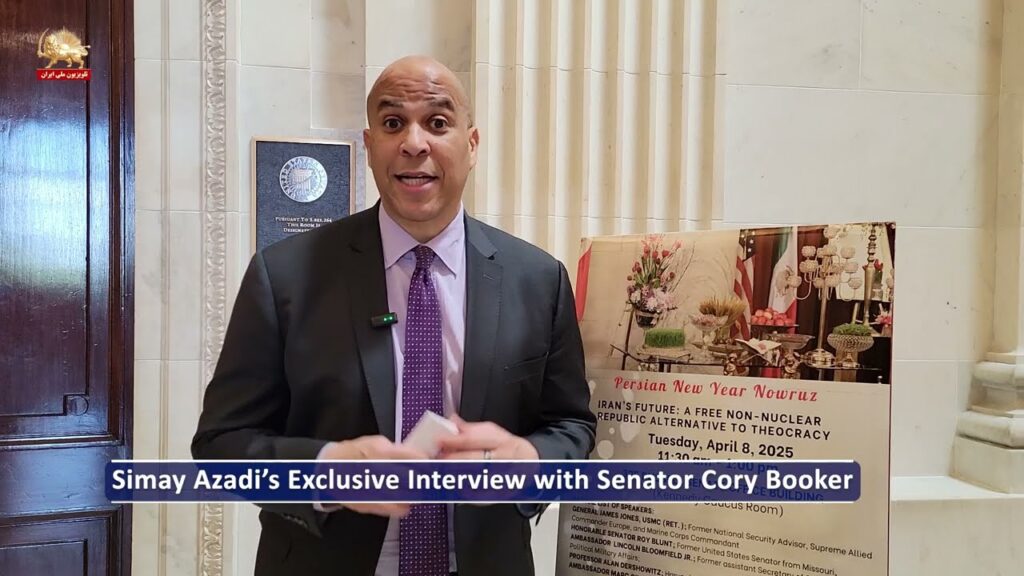
U.S. Senator Cory Booker: “You Are Not Alone—We Will Bend the Arc Toward Justice”

On April 8, 2025 in Washington D.C., in a powerful show of bipartisan resolve, senior U.S. lawmakers,  military leaders, and national security experts gathered in the U.S. Senate for a high-level policy luncheon titled “Iran Policy.” The event highlighted growing congressional support for the Iranian people’s right to resist dictatorship and marked the formal introduction of Senate Resolution 145, co-sponsored by Senators Thom Tillis (R-NC) and Jeanne Shaheen (D-NH), recognizing the fundamental rights of freedom of expression and assembly and legal political activities and the protection of residents of Ashraf 3, home to the organized Iranian Resistance in Albania. Speaking with Simay Azadi on the sidelines of the event, Senator Cory Booker (D-NJ) delivered a direct message to the people of Iran: “Really, I just want to say to the people of Iran, you are not alone,” he said. “There are freedom-loving people all around the world, especially here in the United States that stand with you in the larger cause for democracy, for freedom, and for justice. And so, please, keep your faith, keep your understanding that you’re on the right side of history, and that together, we will bend the arc of the moral universe more towards the justice that you seek.” Offering a message of unity and solidarity, he added: “Because the justice you seek is fully in the interests of free people around the world. We’re all in this together. And I wish you the best. Inshallah, we will see peace and justice in the future for everyone.” Addressing the gathering earlier that day, Senator Booker emphasized the cross-party consensus on Iran policy and paid tribute to the strength of the Iranian-American community. “It is so good to be here, and really to be amongst a community that has so much bipartisan support,” he said. “This is one of those issues that’s not right or left, it’s right or wrong.” Senator Booker highlighted the importance of shared values between the American people and the Iranian people in their quest for justice and democracy. “Our relationship with the Iranian people and their calls for justice, and the very values which we all adhere to, are crucial,” he said. “More than that, the cultural traditions… these ideals that are universal are what America strives for and yearns for.” Calling for a unified response to the regime’s repression and regional aggression, he added: “We must stand for a non-nuclear Iran, an end to what Iran is doing through its proxies, the suppression of freedom and human rights not just in Iran, but for the Ashraf 3 community and others.” Senator Booker closed his remarks with a vision of hope: “What I really will be proud of… is that one day we will all stand and celebrate that the people of Iran are free again… a nation with a democratic north star, and a people who enjoy the blessings of liberty.”

Exclusive Interviews, News

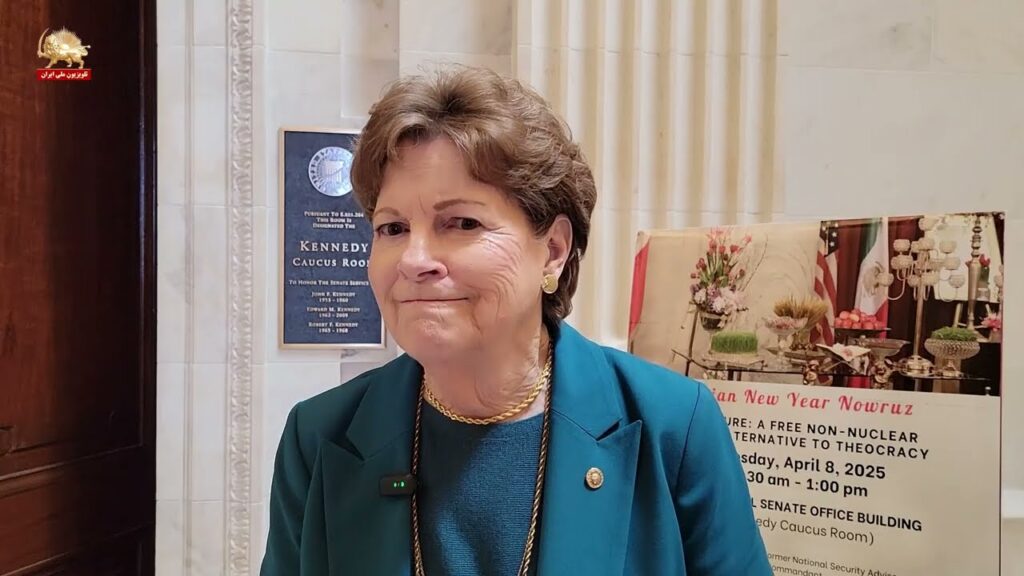
U.S. Senator Jeanne Shaheen: “The Iranian Regime Is Weaker Than It Has Been in Decades”

On April 8, 2025 in Washington, D.C., in a powerful show of bipartisan support for the Iranian people’s struggle for freedom, senior U.S. lawmakers, diplomats, and national security experts convened on Capitol Hill for a high-level policy luncheon titled “Iran Policy.” The event marked the formal unveiling of Senate Resolution 145, introduced by Thom Tillis (R-NC) and Senators Jeanne Shaheen (D-NH), recognizing the rights of the Iranian Resistance and affirming support for the residents of Ashraf 3 in Albania. Speaking with Simay Azadi on the sidelines of the event, Senator Shaheen underscored the unprecedented vulnerability of the Iranian regime. “Well, we’re seeing the regime in Iran weaker than they have been… really since I can remember in… decades,” she said. “And so this is an opportunity for us to think about how we continue to support the people of Iran who are looking for freedom and democracy and the ability to make their own choices about their futures. So that’s why we’re here. We’re trying to make sure that everybody is paying attention to what’s happening there.” Earlier that day addressing the gathering, Senator Shaheen expressed gratitude for the Iranian-American community’s steadfast advocacy: “I’m so pleased that I could join all of you again this year for the celebration of spring and Nowruz. It’s always fun to be here because you make me feel so welcome, and I so appreciate that,” she said. Senator Shaheen formally announced Senate Resolution 145 on her behalf and of her colleague Senator Tillis. “We are introducing a bipartisan resolution again this year, recognizing the people of Ashraf 3 camp in Albania,” she stated. “We have 14 co-sponsors as we introduced it, so we’re looking forward to all of you helping us get lots more co-sponsors both in the House and the Senate.” Pointing to shifting dynamics in the Middle East, she remarked, “We are looking at an Iranian regime that’s in retreat. Just a few months ago, it would have been hard to imagine that Iran would be almost entirely out of Syria, or the possibility that the Syrian people could determine their own future.” She also noted political developments in Lebanon and urged continued vigilance: “We must not allow actions to take place that permit Iran to rebuild in the region.” Senator Shaheen called on Americans to stand with the Iranian dissidents: We must continue our efforts to ensure a nuclear-free Iran… and we must uphold our promises to those in Ashraf 3. Closing her remarks with a message of hope and determination to the Iranian people, she added: “Despite oppression, despite threats, despite indifference, you’ve not given up on human rights, on democracy, or on changing Iran for the better. Let’s recommit to a free and democratic Iran.”

Scroll to Top