Simay Azadi English

Author name: News Desk

News

UK Proscribes Iran’s IRGC as Terrorist Organization: “A long overdue Action” 

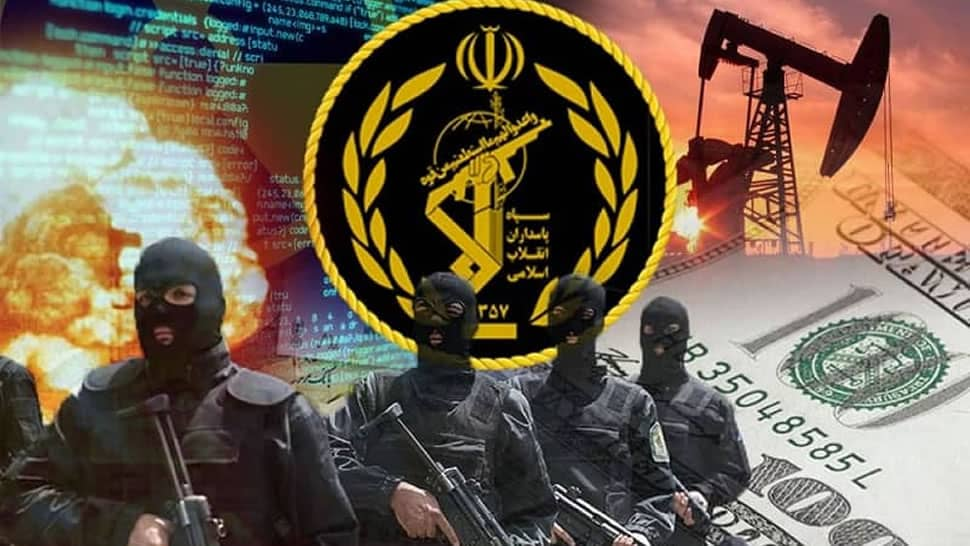
Britain’s designation of the Revolutionary Guards marks a major policy shift following years of campaigning by the Iranian Resistance and cross-party parliamentarians.  The United Kingdom announced on July 13, 2026, that it has proscribed Iran’s Revolutionary Guards (IRGC) as a terrorist organization, using new powers under the National Security Act to target what the government described as state-sponsored proxy activity on British soil. The move follows years of warnings by British security agencies about IRGC-linked operations in the UK.   According to Reuters, the British government concluded that the IRGC had been linked to threats against individuals in Britain. Prime Minister Keir Starmer said the new measures would make it easier to “prosecute and lock up anyone carrying out their dirty work here in Britain.”    It will be a criminal offence under the National Security Act to express support or have any relations with the IRGC or its related organizations, and one could be sentenced to 14 years in prison. The legislation bans the IRGC and its front companies activities in the UK.   In a statement issued on July 13, the British Committee for Iran Freedom called the designation “a crucial, long-overdue step” against “one of the world’s most dangerous instruments of state-sponsored terrorism, domestic repression, and regional destabilisation.”  The cross-party committee said the IRGC is “the principal apparatus through which Iran’s ruling theocracy exports extremism, finances hostile proxy militias, and seeks to intimidate democratic societies far beyond its borders.” It urged the British government to treat the proscription as “the beginning of a robust, comprehensive policy toward the Iranian regime,” including dismantling IRGC front companies operating in Britain, expelling individuals acting on its behalf under diplomatic or commercial cover, and ending commercial activities that financially benefit the organization.   The committee also paid tribute to Mrs. Rajavi and the NCRI, stating that through “detailed disclosures, sustained international advocacy, and extensive documentation of the IRGC’s covert operations and financial empire,” the Iranian Resistance had made “an invaluable contribution” to informing lawmakers and governments about the organization’s true nature. It concluded by calling on Britain “to stand with the people of Iran in their endeavour for freedom and democracy and to recognise the right of the Iranian people and their Resistance to confront the IRGC and bring an end to the dictatorship.”   The decision was also welcomed by Mrs. Maryam Rajavi, President-elect of the National Council of Resistance of Iran (NCRI), who described the proscription as “long overdue” and “essential for regional and global peace, stability, and security.”  “From the very outset, the Iranian Resistance has identified the IRGC as the principal organ of coercion and repression of the religious fascism ruling Iran.”  Mrs. Rajavi also expressed appreciation for more than four decades of efforts by members of both the House of Commons and the House of Lords, particularly those in the British Committee for Iran Freedom (BCFIF), for consistently advocating the proscription of the IRGC and exposing its crimes.   It is worth noting that the NCRI, has held dozens of conferences exposing the IRGC’s destructive role both inside and outside of Iran. In addition to holding conferences, the NCRI’s U.S. Representative Office published several books since 2016. These books include: IRAN: Islamic Revolutionary Guard Corps (IRGC) The Machinery of Terrorism, IRGC’s Rising Drone Threat, IRAN: Exposing the Latest Terrorist Game Plan of the IRGC-Quds Force, IRAN: The Rise of the Revolutionary Guards’ Financial Empire, Terrorist Training Camps in Iran, How Iran Fuels Syria War, Iran’s Emissaries of Terror, IRAN: Cyber Repression  In an exclusive interview with Simay Azadi conducted before the government’s announcement, Bob Blackman MP, Co-Chair of the British Committee for Iran Freedom, said the National Security Act would finally enable Britain to take the action “we’ve been calling for for many years, namely, the proscription of the Iranian Revolutionary Guard Corps (IRGC) as a terrorist organisation.”  Blackman said the designation would allow authorities to act not only against the IRGC itself but also “all of the front organisations, whether they be media, whether they be charities, or other types of organisation.” He added that the UK should go further by dismantling networks acting on Tehran’s behalf, deporting individuals involved in regime activities, and standing with the Iranian people.  “The only solution that is feasible is a regime change, so that Madame Rajavi, with her Ten-Point Plan, can restore democracy and freedom to the people of Iran.”  He added that the plan would allow Iranians to choose their government through free elections within six months, placing power in the hands of the Iranian people.   The British government’s decision marks one of the most significant actions taken by London against the IRGC and follows years of advocacy by members of Parliament, the British Committee for Iran Freedom, and the Iranian Resistance, which has consistently identified the IRGC as the regime’s primary instrument of domestic repression and international terrorism.  
News

Iran: Student Group Takes Cyber Action Against 900 University Webpages

Simay Azadi– Part One: English translations of internal Iranian government documents dated January 14, 2026, reportedly obtained during the cyber operation. A student group identifying itself as Sarbedaran 1405, supporting the People’s Mojahedin Organization of Iran (PMOI), announced that it had temporarily replaced the homepages of more than 900 webpages across the websites of K. N. Toosi University of Technology, Tarbiat Modares University, Islamic Azad University, and the University of Isfahan, in addition to eight more. According to the group, the operation displayed messages rejecting both monarchy and the ruling theocracy while commemorating the July 9, 1999 student uprising. Alongside the website defacements, the group also released what it says are internal Iranian government documents obtained during the operation. This article is the first in a series presenting English translations of those documents. Part One covers a document classified “Top Secret,” dated January 14, 2026, sent by Iran’s Passive Defense Organization to the Minister of Interior, concerning heightened security and protective measures in response to anticipated threats. First Letter: No.: 111/1211/2/105 Date: January 14, 2026 Classification: Highly Confidential Attachment: None In the Name of God, the Most High Immediate Islamic Republic of Iran General Staff of the Armed Forces National Passive Defense Organization “Investment for Production” From: National Passive Defense Organization To: Honorable Minister of Interior Subject: Intensification of Security, Protective, and Countermeasures Against Possible Threats Ahead “The issue of passive defense is a very important matter, and with each passing day, the importance of passive defense increases.” Imam Khamenei — may his shadow endure Greetings; with blessings upon Muhammad and the family of Muhammad; Respectfully, following the Executive Directive for Passive Defense named after Martyr Major General Abbas Nilforoushan, No. 1604/1/307, dated January 13, 2025, issued by the Permanent Committee of the National Passive Defense Organization, and in view of the recent hostile actions by American and Zionist terrorists and their trained, self-serving rioter agents, who over the past several days have carried out acts of sabotage and destruction against various economic, cultural, religious, urban infrastructure, and industrial centers, there is a possibility of renewed hostile actions and attacks against various state institutions. Furthermore, hybrid attacks by the enemy and renewed military aggression by the enemy are also conceivable. Therefore, it is requested that, while briefing the honorable provincial governors and managers of national agencies, they adopt preventive measures, raise the level of alertness, intensify security and protective actions, and maintain readiness to confront a military attack and urban warfare. Once again, Article 4 of the Executive Directive for Passive Defense named after Martyr Major General Abbas Nilforoushan is hereby communicated as follows, so that, on this basis, each agency or infrastructure body may prepare and implement its own defense plan. 1. Establish an emergency management and command system under the management of the head of the agency, the head of security, the Basij official, and the passive defense official of the agency. 2. Take additional measures to intensify the physical protection of important infrastructure, warehouses of strategic goods, and key centers. 3. The heads of executive agencies and infrastructure bodies shall take urgent action regarding the following immediate measures: a. Prepare and be ready to implement the agency’s incident response and countermeasure plan; Second Letter: No.: 2221/3/210/03205 Date: January 14, 2024 Classification: Highly Confidential Attachment: None Islamic Republic of Iran General Staff of the Armed Forces Immediate National Passive Defense Organization b. Prepare and be ready to implement the plan for continuity of essential functions; c. Prepare and be ready to implement the plan for optimizing interdependencies; d. Prepare and be ready to implement the recovery and resilience plan; e. Prepare and be ready to implement the plan for protecting critical assets; f. Update and upgrade control systems and video surveillance systems; g. Brief the personnel of agencies and infrastructure bodies regarding the enemy’s psychological operations in the media sphere; The honorable officials of the agencies, within the framework of the defense-security policies and programs communicated by the Organization and the Permanent Committee of Passive Defense, shall take action to secure, protect, and enhance infrastructure readiness in order to safeguard the lives and property of the people against conceivable threats. This shall be carried out through planning, preparing and issuing operational directives, guidance and training, supervision and control, and by making use of infrastructure capabilities and capacities. They shall also ensure the readiness of the relevant infrastructure through inspections and operational supervision. Announce a state of alert, communicate the situation, and determine the enemy’s possible scenario for the relevant bodies; Preserve and guarantee the continuity of the essential and necessary functions of provincial service-providing infrastructure for the people under threat conditions; Direct and guide the provincial executive agencies in order to provide the people’s basic and essential needs and to ensure strategic reserves during the threat period, including water, bread, medicine, hygiene, healthcare, electricity, gas, fuel, shelters, and other necessities; Review, update, direct, and implement operational plans for organization, equipment, training, drills, exercises, and enhancement of readiness by the provincial executive agencies; Develop and strengthen the capability of infrastructure to recover from incidents and threats and return to its initial condition, and prepare alternative operational plans for the people’s essential services in the event that such services are lost as a result of possible attacks by enemy agents; Create calm in society through accurate, precise, and timely information dissemination, management of media outlets and social networks, and guidance in preparing provincial operational plans and passive defense responses in population centers, according to emergency conditions such as rescue and relief, The Third Letter In the Name of God, the Most High Islamic Republic of Iran General Staff of the Armed Forces National Passive Defense Organization Immediate No.: 3231/3/210/04405 Date: January 14, 2024 Classification: Highly Confidential Attachment: None (…search and rescue, evacuation, temporary shelter, medical treatment, etc.): Ensure the continuous operational presence of managers and key personnel during crisis situations across subordinate infrastructure. Direct and oversee the implementation of intensified security and protective measures within provincial executive agencies and

News

Doha Talks Show Progress as Iran Focuses on Oppression

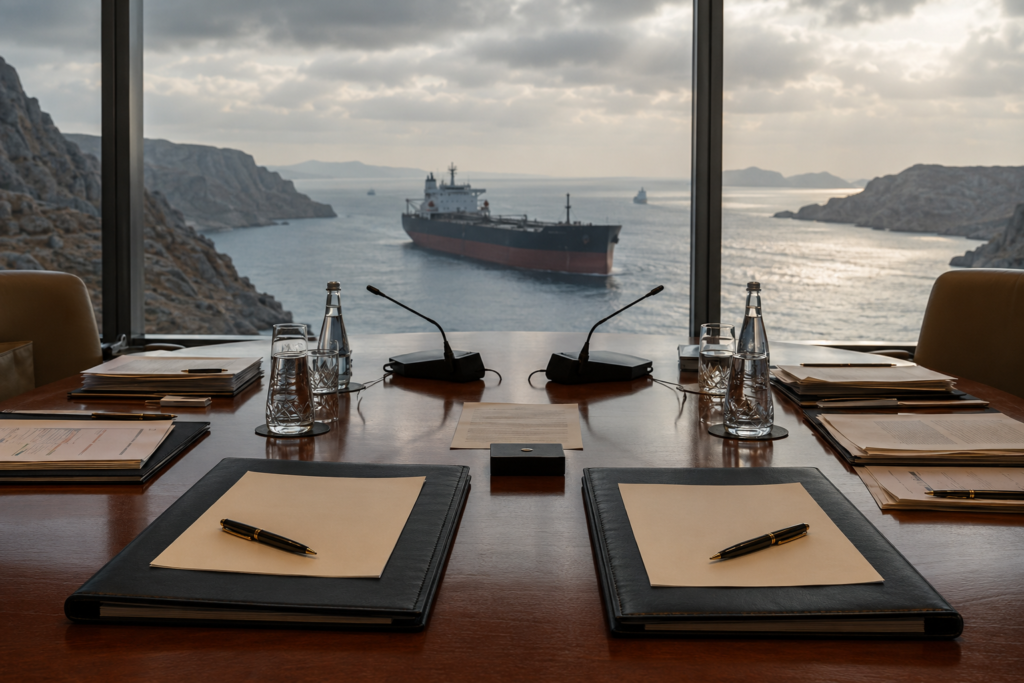
While U.S.-Iran negotiations in Qatar reported limited progress on maritime issues, recent developments inside Iran suggest the authorities remain equally focused on controlling the restive society.   Simay Azadi – Indirect negotiations between Iran and the United States concluded in Doha, Qatar, with mediators describing the discussions as constructive, even as major differences remain over broader issues such as Iran’s nuclear program and regional security.  According to Reuters, the talks focused primarily on maritime traffic through the Strait of Hormuz and the release of frozen Iranian assets. Negotiators from both countries spent two days discussing shipping arrangements and financial issues rather than Iran’s nuclear program.  Qatar’s Foreign Ministry described the negotiations as showing “positive progress,” a characterization echoed by Pakistani officials. According to CBS News, both mediators said progress had been made on issues related to the recently signed memorandum of understanding between Tehran and Washington.  Speaking after the talks, U.S. Vice President JD Vance indicated that Washington continues to prioritize Iran’s nuclear activities.  “Obviously, we’re worried about the nuclear issue. We’re going to start talking about that.”  Vance also cautioned that U.S. policy could change if Iran resumes activities that Washington considers destabilizing.  “If Iran tries to rebuild its nuclear program and starts shooting at ships again, our calculations change.”  The discussions also had an immediate impact on energy markets.  According to Reuters, Brent crude fell 77 cents to $70.80 per barrel after investors reacted positively to signs of progress in the Doha negotiations and the continued reopening of shipping through the Strait of Hormuz.  On the Iranian side, Deputy Foreign Minister Kazem Gharibabadi, who headed Tehran’s delegation, reiterated Iran’s position regarding the strategic waterway.  He boasted that the Strait of Hormuz “is defined under Iran’s authority, not CENTCOM,” and said that part of Iran’s frozen assets in Qatar would be released in the form of goods.  While diplomacy continued abroad, developments inside Iran pointed to a parallel emphasis on domestic oppression.  Iranian state media reported that the regime’s Supreme Leader Mojtaba Khamenei has allegedly reappointed Judiciary Chief Gholamhossein Mohseni-Ejei to another five-year term, extending the tenure of the official who has repeatedly called for the acceleration of judicial proceedings in security-related cases.  The reappointment comes after Mohseni-Ejei publicly urged judges to expedite decisions in cases involving individuals accused of cooperating with hostile actors—a position that coincides with an ongoing wave of arrests, political prosecutions, and executions reported in recent months.  Taken together, the developments highlight two parallel tracks shaping Iran’s current political landscape. While negotiators continue indirect discussions with the United States over maritime security, frozen assets, and broader regional issues, the regime’s authorities have simultaneously reinforced the leadership of the judiciary and continued to emphasize the regime’s security, underscoring the importance the establishment places on controlling Iran’s restive society 

News

Iran Peace Talks Face New Obstacles as Internal Divisions Deepen 

Reports from U.S. and Iranian officials point to growing uncertainty over the future of Tehran-Washington negotiations as disagreements inside Iran and disputes over the Strait of Hormuz complicate diplomatic efforts.  Simay Azadi News Desk – The future of negotiations between Iran and the United States remains uncertain despite the signing of a recent memorandum of understanding (MOU), as officials on both sides signal new disagreements over the next phase of talks. At the same time, reports indicate that internal divisions within Iran’s ruling establishment are increasingly complicating the diplomatic process.  According to Reuters, Iranian Foreign Ministry spokesperson Esmaeil Baghaei said that “no meeting at any level with the U.S. side has been scheduled for the coming days,” clouding prospects for reaching a broader peace agreement.  Meanwhile, U.S. Vice President JD Vance indicated that Washington remains focused on Iran’s actions rather than its public statements.  “We care much more about what Iran does than what Iran says.”  Vance also said President Donald Trump had instructed his team to continue pursuing diplomacy while assessing where negotiations ultimately lead.  ۰”What the President has told us is to work on the problem and see where the negotiations lead.”  Despite ongoing tensions, Vance noted that oil exports through the Strait of Hormuz have largely recovered.  “Oil flows through the Strait of Hormuz have returned to pre-war levels, and on some days have even exceeded them.”  The negotiations come as The Wall Street Journal reported that President Trump recently held multiple discussions with Defense Secretary Pete Hegseth and Chairman of the Joint Chiefs of Staff Gen. Dan Caine about the possibility of resuming military strikes against Iran before deciding—for now—to continue diplomatic efforts.  According to the newspaper, the current diplomatic deadlock has also prompted Washington to examine alternative shipping arrangements should negotiations over the Strait of Hormuz fail. At the same time, The Wall Street Journal reported that internal power struggles inside Iran are threatening the U.S.-Iran peace talks, with competing priorities among political leaders and the Islamic Revolutionary Guard Corps complicating Tehran’s negotiating position.  The issue of the Strait of Hormuz has become one of the central points of disagreement.  Speaking on Iranian state television, Parliament Speaker Mohammad Bagher Ghalibaf said that sovereignty over the Strait belongs to Iran and Oman and argued that transit through the waterway is subject to arrangements determined by Tehran. He also stated that Iran would hold no further negotiations with the United States until implementation of the memorandum of understanding begins and claimed that toll-free passage through the Strait under the agreement would last only 60 days.  At the same time, Ghalibaf acknowledged the economic importance of keeping the shipping lane open.  “We should not turn the Strait against itself. The Strait is valuable when traffic through it increases day by day, not when it decreases.”  He also warned:  “If we are prevented from selling our oil, then no one will benefit from oil.”  The controversy surrounding Ghalibaf’s remarks deepened after the Parliament’s Media Center accused Iran’s state broadcaster of cutting short a pre-recorded interview before it aired. According to the parliamentary statement, the interview had been delivered to state television two hours before broadcast, but the program was interrupted midway without coordination. The statement said the omitted portions included Ghalibaf’s response to what it described as false claims regarding inspections of Iran’s nuclear facilities and details about efforts to release frozen Iranian assets.  Meanwhile, Reuters reported that Iran’s refusal to hold talks with U.S. representatives has further complicated efforts to transform the temporary understanding into a permanent agreement.  Separately, Germany’s domestic intelligence service said in its latest assessment that the Iranian regime continues to focus a significant portion of its intelligence activities on monitoring and targeting opposition groups and individuals abroad, underscoring Tehran’s continuing emphasis on suppressing dissent beyond its borders.

Uncategorized

3,000 Global Leaders Call for Halt to Executions in Iran 

A statement signed by more than 3,000 former presidents, prime ministers, ministers, parliamentarians, jurists, diplomats, academics, and human rights advocates from 55 countries calls for urgent action to stop political executions and support democratic change in Iran.  More than 3,000 international figures from 55 countries, including former presidents, prime ministers, ministers, parliamentarians, Nobel laureates, diplomats, jurists, academics, and human rights advocates, have issued a statement expressing concern over developments in Iran, calling for an immediate halt to political executions and voicing support for a democratic transition led by the Iranian people and their organized resistance.  The statement opens with a warning about the current situation in Iran:  “Iran stands at a historic crossroads.”  The signatories express concern over the recent wave of executions and arrests.  “We are deeply concerned by a new wave of political executions in Iran. In recent weeks, a number of prisoners have been executed for their membership in the People’s Mojahedin Organization of Iran or for participating in last January’s uprising.”  They also accuse the  regime’s authorities of using the recent wartime atmosphere to intensify repression.  “In addition, the regime has exploited the wartime atmosphere to completely shut down the internet and has arrested thousands of people. The aim is to prevent uprisings and to stop young people from joining resistance units.”  Referring to recent statements by judicial authorities, the signatories write:  “The head of the judiciary has called on judges to expedite their decisions and the issuance of death sentences. The world’s silence is unjustifiable. We call on the UN and its member states to take immediate action to halt these executions.”  The statement also addresses the broader political aspirations of the Iranian people.  “We commend the courageous struggle of the Iranian people for freedom and democracy.”  “As demonstrated in their nationwide uprisings, the people of Iran seek a future founded on a democratic republic. They reject both the current religious dictatorship and the authoritarian rule of the Shah. The people of Iran aspire to progress, not a return to the past.”  The signatories describe the future of Iran as a matter to be determined by Iranians themselves.  “Regime change in Iran, with its far-reaching implications for global peace and security, particularly in the Middle East, can only be achieved by the Iranian people and their organized resistance. Determining the country’s political future remains exclusively the right and responsibility of the Iranian people.”  The statement specifically welcomes the program put forward by the National Council of Resistance of Iran (NCRI).  “We welcome the National Council of Resistance of Iran (NCRI)‘s announcement of a provisional government tasked with organizing free elections within maximum six months to transfer sovereignty to the people and to establish a democratic republic based on Maryam Rajavi’s Ten-Point Plan.”  The signatories note that the plan calls for“freedom of expression and assembly, separation of religion and state, gender equality, abolition of the death penalty, recognition of autonomy for oppressed nationalities within a united Iran, and a non-nuclear Iran.”  “It merits our full support and has already been endorsed by more than 4,000 legislators on both sides of the Atlantic.”  The statement further emphasizes that the NCRI seeks a democratic transition led by Iranians themselves.  “The NCRI, as the oldest democratic and independent coalition in Iran, has consistently affirmed that it seeks neither financial assistance nor the presence of foreign forces on Iranian soil.”  It adds that the coalition’s program is committed to“facilitating a peaceful transfer of power to the Iranian people through free and fair elections within six months of the regime’s fall.”  Concluding their appeal, the signatories endorse efforts to unite democratic forces opposed to the current government. “We also welcome the NCRI’s call for the formation of a solidarity front that brings together all political forces committed to overthrowing the regime and establishing a republic based on the separation of religion and state.”  The statement represents one of the largest international declarations on Iran in recent years, bringing together thousands of political leaders, lawmakers, legal experts, academics, and human rights advocates in a call to stop political executions and support what they describe as a democratic future determined by the Iranian people. 

News

Political Prisoner Parisa Kamali Calls for End to Executions in Iran 

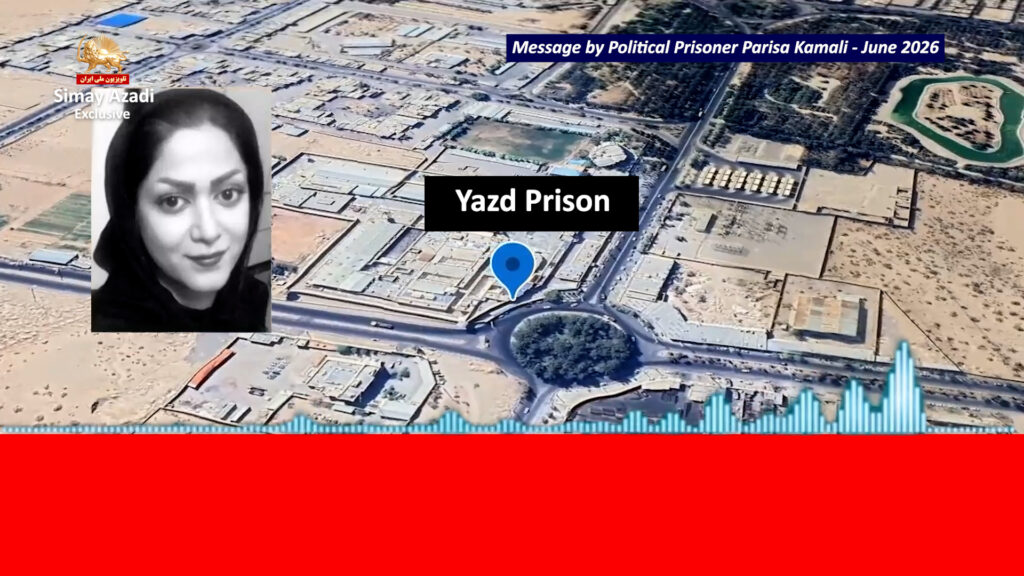
In a recent audio message from Yazd Central Prison, political prisoner Parisa Kamali condemned Iran’s use of the death penalty and appealed for the lives of prisoners currently facing execution.  Parisa Kamali, a political prisoner serving an eight-and-a-half-year prison sentence in Iran, has released an audio message from Yazd prison condemning the use of executions and calling for the death sentences of several political prisoners to be overturned. Kamali is a mother of one child.   Kamali is imprisoned on charges that include insulting Supreme Leader Ali Khamenei, propaganda against the state, and membership in the People’s Mojahedin Organization of Iran (PMOI/MEK). Her message comes amid growing concern over the number of political prisoners facing execution and reports of deteriorating prison conditions.  Opening her message, Kamali described what she sees as a climate of repression inside Iran.  “Greetings to the martyrs of the path of freedom and their families. Here, cardboard rulers govern. This is a place where one is stunned by the endless crimes. Cries are answered with bullets and the noose. There is not a day that passes without an execution, without lives being taken.”  Referring to the execution of political prisoners, she continued:  “Our fellow countrymen are victims of hands stained with blood—hands that use their pens to sign death sentences. For years, the rule of the mullahs, together with the systematic brutality of the Revolutionary Guards, has committed crimes beyond imagination.”  Kamali repeatedly called for an end to capital punishment.  “No to executions, because they are a tool for creating fear and repression.”  “No to executions, because they are essential to the survival of the mullahs’ rule and destructive of humanity.”  Addressing those who carry out executions, she said:  “You execute in the hope of ending us. You have miscalculated. We are countless.”  She then invoked the names of recently executed political prisoners and protesters:  “We are Vahid Baniamerian, Mohammad Taghavi, Babak Alipour, Pouya Ghobadi, Abolhassan Montazer, Shahrokh Daneshvarkar, Mohammad Amin Biglari, Amir Hossein Hatami, Ali Fahim, Shahin Vahedparast, Sasan Azadvar, Abbas Akbari, and all those whom you wanted to silence through execution.”  “We are grains of wheat. One by one, we become a thousand harvests.”  Kamali also appealed for the lives of prisoners currently facing execution, naming Manouchehr Fallah, Amin (Peyman) Farahavar, Zahra Tabari, Karim Khojasteh, Alireza Merdasi, Farshad Etemadi-Far, Reza Abdali, Massoud Jamei, and Mohammad Javad Vafaei-Sani.  “I call for the death sentences against my sisters and brothers to be overturned.”  She concluded:  “I hope for the day when there is no trace of execution in my homeland Iran, or anywhere else in the world.”  The message comes as concerns grow over the treatment of Kamali herself. According to reports published on February 5, 2025, prison authorities in Isfahan Prison had denied her access to medication required for a thyroid condition. Reports indicate that despite needing specialized treatment and medical supervision, she has been prevented from visiting medical facilities and has not been provided with necessary medication.  Her message also comes amid increasing concern over the use of the death penalty in political cases. In recent months, courts have issued or reaffirmed death sentences against several political prisoners, while human rights groups have warned that the number of executions carried out in Iran remains among the highest in the world. 

News

Religious Leaders Urge Action Against Political Executions in Iran 

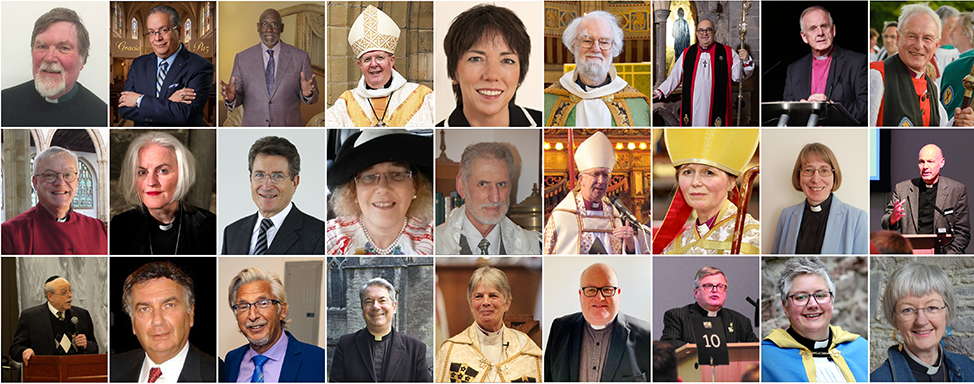
Thirty bishops and religious leaders from around the world have issued a joint statement calling for an end to political executions in Iran and greater protection for religious minorities, particularly Christians.  A group of 30 bishops and religious leaders from multiple countries has issued a joint statement titled “To Stop the Wave of Political Executions in Iran – In Support of the Rights of Religious Minorities,” warning of a worsening human rights situation in Iran and calling for international action to halt political executions and defend religious freedom.  Among the signatories is Rowan Williams, who wrote:  “There can be no doubt that the aggressive violence of the Iranian regime towards its own people is increasing steadily at the moment. I have heard for myself the evidence sent from within Iranian jails of the cruelties and illegalities suffered by so many, and of the profound and selfless courage exhibited by these witnesses to a more hopeful future.”  He added:  “We cannot be silent in the face of this situation.”  The statement warns that Iranian authorities have intensified repression under the cover of recent military tensions.  “Iranian authorities have exploited the climate of war as a cover for intensifying repression and suppressing growing dissent inside the country, with dozens executed following unfair trials and coerced confessions. The head of the judiciary has publicly called for expedited rulings and, by setting aside legal safeguards and due process, has accelerated the issuance and implementation of death sentences.”  The religious leaders specifically highlighted the situation of prisoners linked to the People’s Mojahedin Organization of Iran (PMOI/MEK).  “A significant number of those executed have been targeted because of their affiliation with the opposition organization, the People’s Mojahedin Organization of Iran (PMOI). Many other detainees associated with this organization remain on death row. The victims were young protesters arrested during the January uprising.”  The statement also focuses on the treatment of religious minorities, particularly Christians.  “Meanwhile, the Iranian regime continues to impose various forms of pressure and restrictions on religious minorities, particularly Christians.”  The signatories cited the December 2025 United Nations General Assembly resolution on human rights in Iran, which expressed:  “serious concern about ongoing severe limitations and increasing restrictions on the right to freedom of thought, conscience, religion or belief, restrictions on the establishment of places of worship, undue restrictions on burials carried out in accordance with religious tenets, attacks against places of worship and burial sites, as well as any other restrictions or attacks involving human rights violations or abuses, including but not limited to increased harassment, intimidation, persecution, arbitrary arrest and detention of, and incitement to hatred that can lead to violence against, persons belonging to recognized and unrecognized religious minorities, including Christians…”  The statement further referred to the June 2025 report of the United Nations Secretary-General on the situation of human rights in Iran, noting:  “The United Nations Secretary-General’s June 2025 report on the situation of human rights in Iran highlighted numerous cases of Christians being arrested, even while gathering to celebrate Christmas.”  It added:  “Over the years, many Christian pastors in Iran have been arrested—or even murdered—for preaching Christianity or insisting on the free practice of Christian worship.”  The religious leaders also expressed support for a major international gathering scheduled for June 20, 2026, in Paris.  According to the statement: “The goals of the rally are to draw global attention to the wave of executions and widespread human rights abuses in Iran, including severe restrictions imposed on religious minorities, Christians and others, and to call on the international community to take urgent action to halt this trend and support the rights of all the people of Iran.”  The signatories also voiced support for democratic change in Iran.  “The rally also expresses support for the establishment of a democratic republic (as outlined in the Ten-Point Plan advanced by Mrs. Maryam Rajavi, President of the NCRI).”  Concluding their appeal, the religious leaders called for broader international solidarity.  “Support from other voices in civil society and religious leadership is crucial for such a vision to be realized. Please consider adding your voice in solidarity with all who are suffering and struggling in Iran and adding your support for the objectives of the rally.”

News

Iran: Ex-IRGC Commander Acknowledges Impact of PMOI Nuclear Revelations 

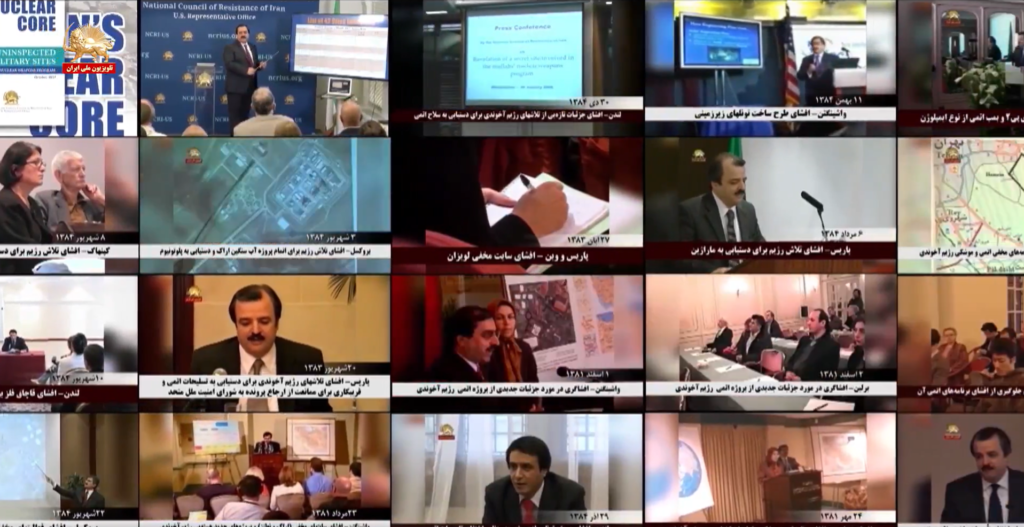
Simay Azadi – Hossein Alaei says PMOI disclosures led to international scrutiny of Iran’s nuclear program and the 2003 Saadabad negotiations.  In an interview published by the regime-affiliated Iran Talk channel on June 3, 2026, former Islamic Revolutionary Guard Corps (IRGC) commander Hossein Alaei acknowledged that disclosures by the People’s Mojahedin Organization of Iran (PMOI/MEK) regarding Iran’s nuclear activities triggered international scrutiny and eventually led to negotiations between Tehran and European powers.  Alaei, the first commander of the IRGC Navy and a former chief of the IRGC Joint Staff, referred to the period when Iran’s nuclear program first came under international attention.  “Around 2001, when the nuclear work began, the PMOI disclosed information about it and created sensitivity that eventually led to the Saadabad negotiations in 2003,” he said.  The remarks are notable because they come from a senior former commander of the Revolutionary Guards and constitute a public acknowledgment of the role played by the PMOI’s nuclear revelations in shaping the international response to Iran’s nuclear program.  Alaei argued that Tehran could have chosen a different path at the time.  “If Iran had made economic development its strategy at that point, many things could have changed.”  He added:  “At the very least, it would not have provided them with that pretext.”  The Saadabad negotiations, held in October 2003 between Iran and the foreign ministers of Britain, France, and Germany, followed mounting international concern over previously undisclosed nuclear activities. The talks resulted in Tehran agreeing to temporarily suspend uranium enrichment and cooperate more closely with international inspectors.  The PMOI’s disclosures regarding secret nuclear facilities in the early 2000s played a central role in bringing the issue to international attention. The revelations ultimately triggered investigations by the International Atomic Energy Agency (IAEA) and years of diplomatic disputes over the nature and purpose of Iran’s nuclear program.  #Thread 1- 📅 August 14 marks 23 years since the Iranian Resistance first blew the whistle on the regime’s clandestine nuclear weapons program.On this day in 2002, @iran_policy’s @A_Jafarzadeh revealed details of the regime’s Natanz uranium enrichment site and the Arak heavy… pic.twitter.com/KPCFo0VSQJ — SIMAY AZADI TV (@en_simayazadi) August 14, 2025 Alaei’s comments are not the first acknowledgment by regime insiders of the impact of those disclosures.  In a televised interview in April 2022, former Deputy Speaker of Parliament Ali Motahari stated:  “From the very beginning, when we started with the nuclear activity, our goal was to build a bomb and reinforce our deterrence powers, but we were unable to maintain confidentiality as confidential reports were leaked by the hypocrites’ group.”  In April 2022, Ali Motahari, former Deputy Speaker of Iran’s Parliament, admitted that the regime had intended to build a nuclear weapon from the beginning but was stopped by the MEK.When asked how they accessed the top-secret intelligence, he said:“They are everywhere.” pic.twitter.com/5ZwdXcWhZa — Ehsan Eghbal Eslami (@Ehsaneghbale) December 5, 2025 “Hypocrites” is the regime’s pejorative term for the PMOI.  Similarly, senior IRGC officials have previously blamed the organization for exposing the nuclear program. In a televised speech on September 7, 2013, then-IRGC commander Hossein Salami said:  “They were the ones who, through espionage in our nuclear environment, created an atmosphere in the international system regarding our nuclear activities.”  More than two decades after the PMOI first revealed information about Iran’s nuclear activities, Iran’s pursuit of nuclear weapons stays serious international concern.  

Uncategorized

Italian Parliament Conference Condemns Rising Executions in Iran

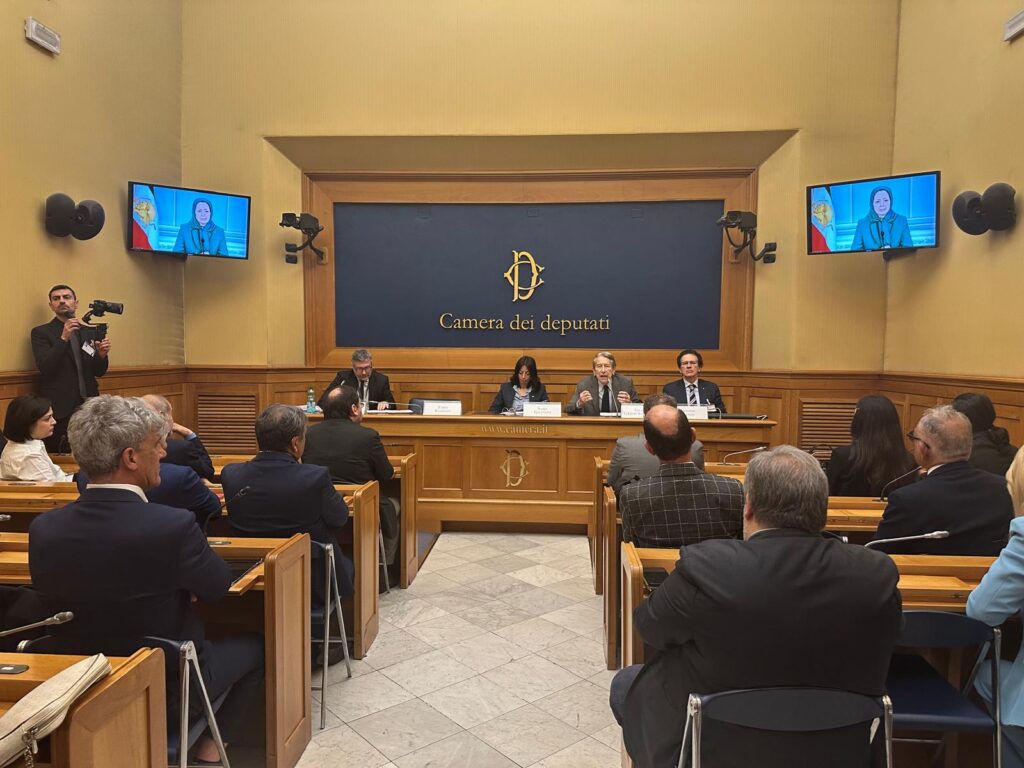
At a conference held on May 21, 2026 at La Stampa Hall at the Italian Chamber of Deputies , Italian lawmakers and human rights advocates warned over rising executions in Iran and called for stronger international action. Mrs. Maryam Rajavi delivered the keynote address online, while speakers included Senator Giulio Terzi, chair of the Italian Senate’s European Policies Committee and former foreign minister; MP Naike Gruppioni; Antonio Stango, president of the Italian Federation for Human Rights; and a message from Senator Marco Scurria.   Delivering the keynote speech, Mrs. Maryam Rajavi said Iran and the wider region had reached a dangerous turning point and urged European governments to change course.  “The European Union must break its silence regarding the tragedy of political executions. This ongoing silence grants the regime a free hand to perpetuate its atrocities.”  Conference at the Italian Parliament: Support human rights and condemn executions in IranThe Iranian people are moving toward establishing a society free from all forms of tyranny.#StopExecutionsInIranhttps://t.co/OeYM4c6hnk pic.twitter.com/O6a1sGaQuB — Maryam Rajavi (@Maryam_Rajavi) May 21, 2026 Mrs. Rajavi added:  “Peace and freedom in Iran are two sides of the same coin. If the European Union is truly serious in its calls for peace, it must simultaneously recognize the right of the Iranian people and their resistance to overthrow this regime.”  She concluded by saying:  “The people of Iran are closer than ever to transforming their own destiny, and they expect defenders of freedom and human rights around the world… to stand beside them.”  Naike Gruppioni focused her remarks on political executions and repression inside Iran, saying:  “Freedom is never guaranteed. Its importance is truly understood only when it is denied, repressed and suffocated.”  Italian MP @naike_gruppioni: “The Iranian people have rejected both dictatorships and want a democratic republic.” During a conference at Italy’s Chamber of Deputies, MP Gruppioni stressed: “We cannot limit ourselves to routine declarations. The Iranian issue does not only… https://t.co/tf1qefrR0z pic.twitter.com/VXLcamDyAh — SIMAY AZADI TV (@en_simayazadi) May 23, 2026 Referring to Iran’s prisons, she said:  “Men and women are arrested, tortured and sentenced to death for their ideas, for having demanded rights, dignity and democracy.”  Gruppioni pointed to what she described as a dramatic escalation in political executions and referenced Vahid Baniamerian, quoting his reported final message:  “Even if you kill us, we will multiply.”  She added:  “You can hide bodies, censor the news and fill prisons, but you cannot extinguish a people’s desire for freedom.”  Giulio Terzi said any long-term solution for Iran must come from the Iranian people themselves rather than temporary political arrangements.  “The problem can only be solved by Mrs. Rajavi, her great organization, and the Iranian people—without new false alternatives.”  Terzi paid tribute to political prisoners executed in Iran and referred to PMOI members who publicly expressed support for the resistance while on death row.  He also cited execution figures, stating:  “There were 2,159 death sentences in 2025… and around 700 executions in 2026.”  Calling the situation a test of democratic values, Terzi said:  “At the heart of all this is freedom… the struggle for human rights, human dignity, equality between men and women.”  Antonio Stango argued that sustainable peace in the region requires an end to Tehran’s current system of governance.  “There is only one possible solution for Middle Eastern conflicts: zero ayatollah regime.”  Stango added:  “It is unfortunately not possible to reach compromises with those who have administered death from Tehran for 47 years.”  In a written message read at the conference, Marco Scurria condemned executions and repression, saying:  “One cannot remain silent in the face of repression and killings affecting men, women and even children.”  He added:  “The wind of freedom cannot be stopped… no repressive apparatus, however powerful, can erase a people’s deep desire to live free.”  The conference comes amid growing international concern over executions in Iran. Earlier this month, more than 300 global legal experts, former UN officials, judges and Nobel laureates warned that executions in Iran had reached levels “not seen in nearly four decades.” 

News

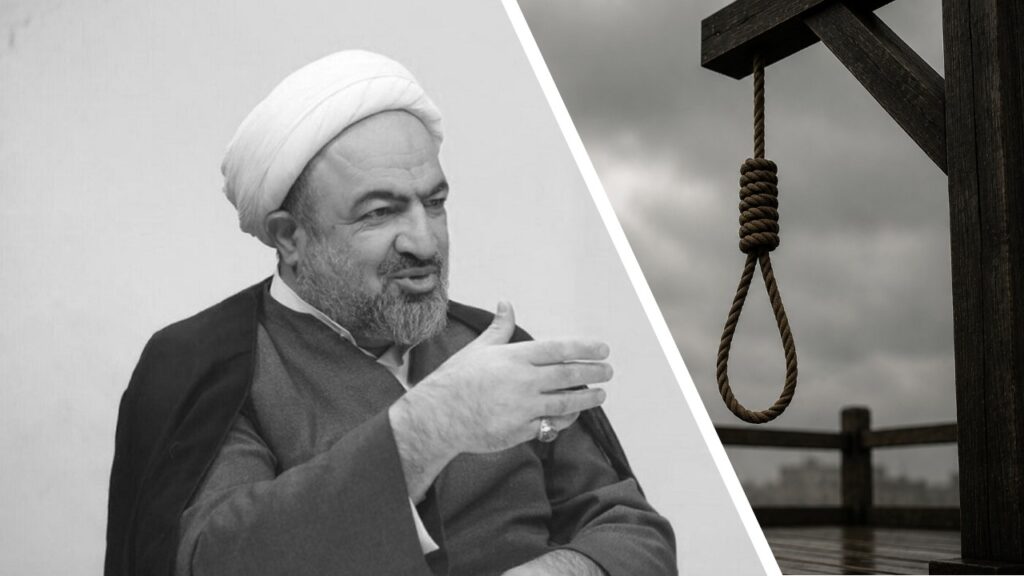
Iran: MP Calls for Public Floggings and Executions as Hangings Continue

In remarks on May 21, Hamid Rasaei, a member of Iran parliament, in a state-staged rally, urged Judiciary Chief Gholam-Hossein Mohseni Eje’i to establish wartime-style courts and accelerate punishments, including public executions and floggings.  🚨Iranian MP Demands Public Executions and Floggings: “Your Launcher Must Fire” Hamid Rassaei urged Chief Justice Mohseni-Eje’i to establish wartime “field courts” and bypass normal trial procedures so that public floggings and hangings can be carried out quickly in city… pic.twitter.com/yB6ioo412j — Ehsan Eghbal Eslami (@Ehsaneghbale) May 22, 2026 Addressing Eje’i, Rasaei said:  “Mr. Mohseni-Eje’i, your launcher must fire!”  He called for what he described as “field courts” to bypass normal judicial procedures and argued that punishments should be carried out rapidly and publicly in city squares.  “Bring your courts here to the fields, here in public. Tell the people what is the stage of the case…. If the outcome is flogging do it, if it is hanging, do it right there. Mr. Mohseni-Eje’i, your launcher must fire! It means you should do ” The comments mark one of the most explicit recent calls by a serving official for visible and accelerated punishment, but they follow months of increasingly hardline rhetoric by senior judiciary, police, and parliamentary figures.  On April 28, 2026, Judiciary Chief Gholam-Hossein Mohseni Eje’i urged courts to accelerate rulings and implementation of punishments in security-related cases, saying delays reduce deterrence. Earlier, he instructed judges to show “no mercy” in protest-related prosecutions.  On May 18, Police Commander Ahmad-Reza Radan said authorities had arrested more than 6,500 people, including hundreds accused of links to opposition activity. Earlier, on March 10, Radan said protesters would be treated as “enemies,” while on April 20 he announced 1,200 arrests in a single wave.  Iran's Police Chief admits to 6,500 arrestsIn this Video Iran Police Chief, Ahmad-Reza Radan confirms:• 6,500 citizens detained in recent weeks.• 567 linked to the MEK and other opposition groups.• Vows to hunt every January protester: “We won’t let them go.” https://t.co/pkB41BvjoR pic.twitter.com/99DmAS1Jsw — Pasha Borjkhani (@BorjkhaniP1847) May 18, 2026 On May 20, judiciary-linked Mizan News Agency quoted another regime MP, Majid Doustali, defending severe punishment and stating:  “The judiciary today is acting correctly… our demand is that this path continue seriously because this is a public and popular demand.”  The rhetoric has coincided with a rise in executions and prosecutions involving political prisoners, protesters, and dissidents.  According to rights groups and monitoring organizations, at least 50,000 people were arrested following the nationwide protests beginning in 2022, while executions linked to political activity have continued to draw international concern.  In recent months, Iranian authorities have executed Kurdish political prisoners, upheld death sentences against detainees accused of opposition links, and expanded prison terms for political prisoners.  At least eight PMOI members have been executed since March 30, 2026, including Vahid Baniamerian, Pouya Ghobadi, Babak Alipour, Mohammad Taghavi, Akbar Daneshvarkar, Abolhassan Montazer, and others executed between March 30 and April 4, 2026. Two others, Hamed Validi and Mohammad Massoud-Shahi were hanged on April 21. Several of the six PMOI prisoners executed between March 30 to April 4 had sent messages or recordings from prison before their executions.  International legal experts have also warned of a broader escalation. In an open letter released in May, more than 300 former UN officials, judges, Nobel laureates, and legal experts said executions in Iran had reached levels “not seen in nearly four decades.” The letter stated that at least eight political prisoners had been executed over affiliation with the PMOI, while additional detainees remain at risk.  The latest surge has unfolded alongside months of regional conflict, internet restrictions, and mass arrests. Rights advocates and observers have argued that wartime conditions and heightened security tensions have increasingly coincided with executions, accelerated sentencing, and reduced public scrutiny of political cases.  The chronology of statements—from calls for “no mercy,” to accelerated punishments, to demands for public executions—has unfolded alongside a documented increase in arrests, executions, and harsher treatment of political prisoners in Iran. 

Scroll to Top