Simay Azadi English

Author name: Ehsan Eslami

Uncategorized

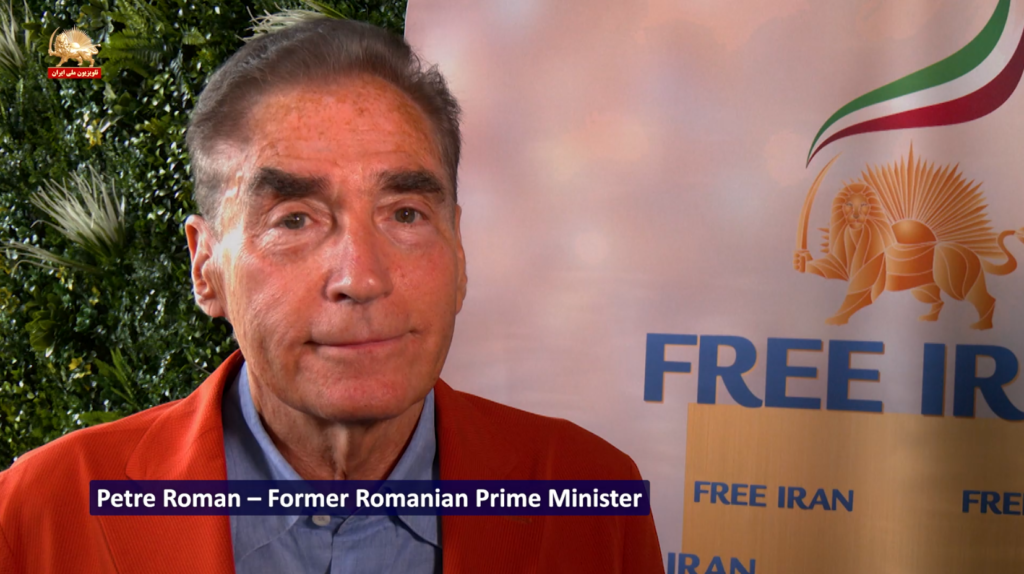
Petre Roman: “Iran Needs Democracy, Not More Dictatorship” 

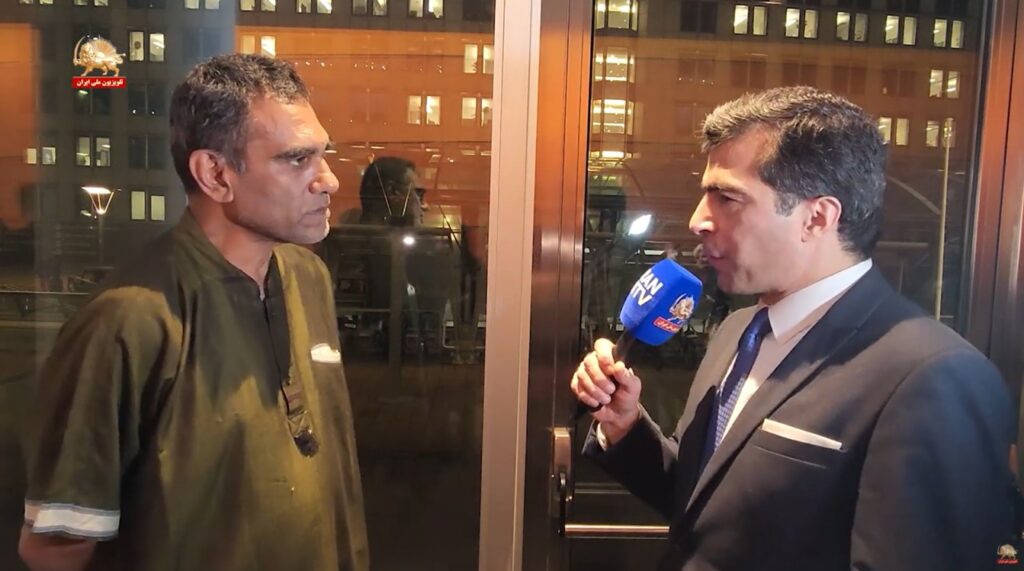
Romania’s first prime minister after the fall of Nicolae Ceaușescu’s regime discusses Iran’s human rights crisis and compares it to the fall of Ceaușescu.   In an interview with Simay Azadi on the sidelines of the Free Iran World Summit in Paris, Petre Roman, Romania’s first prime minister after the fall of Nicolae Ceaușescu in 1989, discussed the worsening human rights situation in Iran, the wave of political executions, lessons from Romania’s democratic transition, the role of the National Council of Resistance of Iran (NCRI), and his message to the Iranian people.  During the interview, Roman described Iran as one of the world’s most repressive regimes, compared its current crackdown to the final days of Ceaușescu’s regime, argued that a democratic alternative is both possible and necessary, and said the NCRI’s political program could provide a viable future for Iran.  Read the full text of the interview below (edited for clarity):  Q: What are your thoughts about the situation of human rights in general and specifically about the executions of political prisoners?  Petre Roman: Well, to talk about human rights in Iran right now is almost a nonsense, because there are no human rights.  The regime doesn’t respect any human rights.  The brutality and cruelty of the executions—I mean, people are being massacred, not just executed—is beyond any human consideration.  This should be one of the most important issues before the international community, for everyone who cares not only about human rights but about the simple meaning of being human.  What is happening today is even more striking than before.  Under the pressure of the war and the attacks, the Iranian regime decided to suppress every form of protest by using every possible means, including the most brutal ones—massacres.  That is the reality in Iran today.  Nobody should indulge in propaganda or try to justify it.  There is no explanation that can excuse these actions.  I believe this is perhaps the most repressive regime in the world today, and one of the most repressive in modern history.  I speak from experience because I was the first Prime Minister of Romania after the fall of the dictatorship.  In the final days of that dictatorship, the Romanian dictator was also massacring and killing people.  Q: He had also traveled to Iran shortly before.  Petre Roman: Yes, just before.  At that time, however, we did not consider the regime in Iran to be as brutal and cruel as it has become today.  I know what dictatorship looks like.  Ceaușescu unleashed terrible violence and ordered people to be killed.  The Romanian people rose up against him.  I was there at the barricades in Bucharest.  I don’t know why I survived—I can only believe God helped me stay alive.  Only twelve hours after the massacre at the barricades, the regime collapsed completely.  [Video insert: News footage of the Romanian Revolution]  Romanian Newscaster: “…the trial of Nicolae Ceaușescu and Elena Ceaușescu…”  English Translation: The execution of the deposed Romanian leader and his wife was announced tonight on state television. The newscaster said the Ceaușescus had been tried on Christmas Day. They were charged with genocide, murdering 60,000 people, abusing their power, destroying public property, and undermining the national economy. Nicolae Ceaușescu was also accused of transferring one billion dollars of Romania’s wealth into foreign bank accounts.  Romanian Newscaster: “…for these grave crimes…”  English Translation: The newscaster said that on all charges, Nicolae and Elena Ceaușescu were found guilty and sentenced to death.  Petre Roman: Iran is a great country with a great culture and a well-educated population.  I believe a democratic government is possible in Iran.  It can take care of its people and build a modern economy.  The Iranian people are fully capable of doing that.  The alternative is defined by the opposition to this regime, and I am speaking specifically about the National Council of Resistance of Iran.  Today, the opposition—the Free Iran movement—is more important than ever.  That is my view.  Q: Could you tell us about your own experience meeting the Iranian Resistance in Paris and participating in these conferences over the years?  Petre Roman: Absolutely.  I first came here about seven years ago.  By now, I suppose I’m a veteran of these gatherings.  From the very beginning, I felt a warm and sincere spirit.  I met brave, brave fighters.  I also believe the political program offered by the NCRI has real substance.  It is a serious political program.  I believe it could work.  I truly feel that it offers a path that could benefit both Iran and its people.  Q: Finally, if you could speak directly to the Iranian people watching this interview, what would your message be?  Petre Roman: It is more than a message.  It is my profound feeling of solidarity with the Iranian people—the brave, brave fighters for freedom in Iran.  I deeply feel that solidarity.  From the bottom of my heart, I wish to see you victorious.  I wish to see you governing your own country and holding the destiny of your nation in your own hands.  Free Iran!  Q: We wish you and the people of Romania all the best. Thank you very much.  Petre Roman: Thank you very much. 
Exclusive Interviews, News

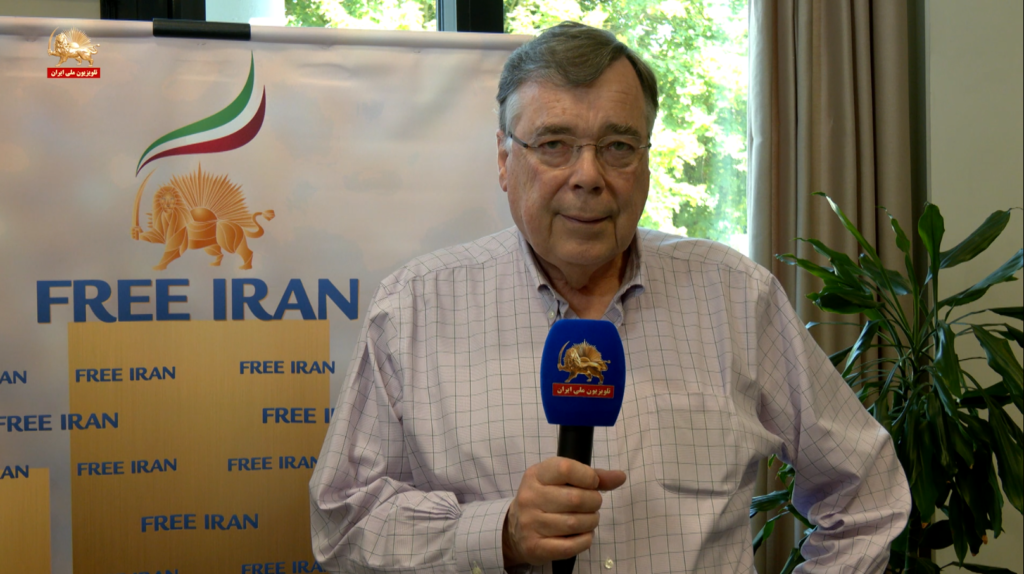
Geir Haarde: “Iran’s People Reject Both the Mullahs and the Shah” 

The former Icelandic prime minister discusses the Free Iran World Summit, executions in Iran, the NCRI’s Ten-Point Plan, and the alternative to the current regime.   In an interview with Simay Azadi on the sidelines of the Free Iran World Summit in Paris, former Icelandic Prime Minister Geir Haarde discussed the significance of this year’s gathering, the wave of executions in Iran, international support for the Iranian Resistance, the National Council of Resistance of Iran (NCRI), the cancellation of the Free Iran rally in Paris, and prospects for democratic change in Iran.  During the interview, Haarde argued that growing international support for the Iranian Resistance reflects a better understanding of the situation inside Iran. He said the Iranian people reject both the current religious dictatorship and a return to monarchy, endorsed the NCRI’s Ten-Point Plan, criticized the cancellation of the Paris rally, and reiterated that neither war nor appeasement offers a solution to Iran’s crisis.  Read the full text of the interview below (edited for clarity):  Q: Thank you very much, Mr. Haarde, for being with us. First of all, I wanted to hear your thoughts on this year’s gathering. What was your main message at the Free Iran World Summit?  Geir Haarde: First of all, I think this year’s conference was a great success, apart from the fact that the French authorities blocked the rally that was supposed to take place on Friday. That was a great shame.  I believe behavior like that by the authorities will only strengthen the Resistance movement and reinforce its determination.  As for the conference itself, many important points were raised and a great deal of valuable information was presented.  I emphasized the importance of rallying around the National Council of Resistance of Iran and its Ten-Point Plan.  I also spoke about the executions that take place regularly in Iran, where opponents of the regime are essentially executed without justice. It is a terrible thing to witness.  I have the greatest respect for those who have sacrificed their lives in this way.  There was also discussion about the current negotiations between the United States and the mullahs’ regime, as well as the recent memorandum of understanding.  I believe important issues are missing from that agreement, including a condemnation of the executions.  We must all understand that this cannot be the future government of Iran.  Q: How do you explain the growing number of dignitaries from Europe, the United States, and elsewhere who continue to support the Free Iran movement and participate in these annual gatherings?  Geir Haarde: I think it’s because more and more people understand what is happening in Iran and how the situation has evolved.  We believe the Iranian people do not want this theocracy to continue, but they also do not want a return to the Shah and that type of regime.  “No more dictatorship” is the message people are sending.  More and more current and former politicians in Europe, the United States, and elsewhere understand that the Iranian people need support.  Ultimately, the Iranian people should have the government they deserve and so clearly want.  Q: There have been campaigns promoting the son of the former Shah. What is your view of those efforts?  Geir Haarde: I think the people who promote that idea are on the wrong side of history.  That family belongs to the past, and I do not believe the Iranian people would support a return to a monarchy or a new dictatorship under another Shah.  Q: You have participated in many Free Iran gatherings over the years. On a personal level, what has impressed you the most, and what has motivated you to continue supporting this movement?  Geir Haarde: I began following this movement several years ago after being invited to attend some of its gatherings.  What has impressed me most is the endurance of the movement, the strength of its leadership, and the persistence of the people who work tirelessly for this cause.  It is also remarkable how many distinguished people participate.  Yesterday’s conference included experienced American politicians and former officials who contributed significantly to the discussion.  The same is true of our European colleagues, who know a great deal about the situation.  Coming from a country that has not been deeply involved in these issues, I have learned a great deal over the years about Iran and about the need for regime change.  Q: Based on your understanding of the situation in Iran, what would be your main advice to the international community and to policymakers?  Geir Haarde: I would repeat the words of Madam Rajavi.  First, war is not the answer.  Second, appeasement is not the answer.  The third option is an uprising by the Iranian people that ultimately brings down this deeply unpopular regime.  I believe that is the right path.  Taken together, I think the chances are greater today than they have been in recent years that Iran will eventually have a different government and no longer be ruled by a theocracy.  To the viewers inside Iran, I want to say this:  I admire your strength.  I admire your courage.  Remain persistent.  Remain courageous.  In the end, you will prevail. 

News

Iran: Two January Protesters Executed in Tehran on Monday 

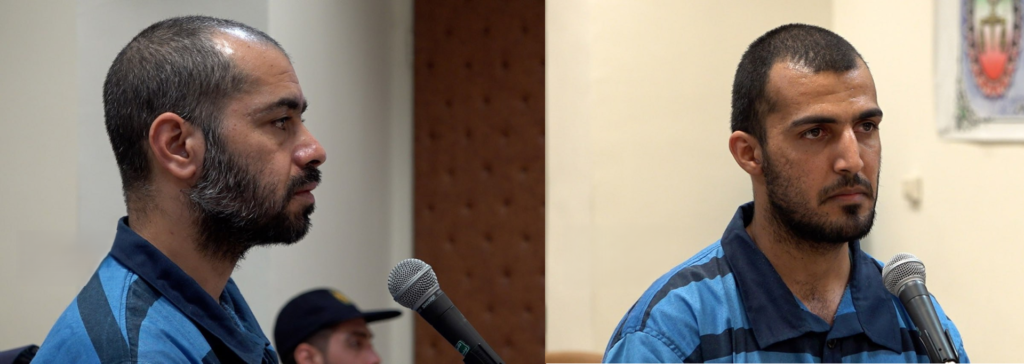
Mehrdad Mohammadinia and Ashkan Maleki, two January 2026 protesters were executed in Tehran on Monday 1 June 2026 with Iran’s judiciary describing them as “leaders of the unrest”.  • Mehrdad Mohammadinia and Ashkan Maleki were executed by the Iranian regime in Tehran on Monday 1 June 2026.    • The executions come amid a wave of repression ordered by Chief Justice Mohseni-Eje’i and calls from regime hardliners for public hangings and floggings.  Iran Executes Two More January Protesters as Repression Intensifies  The Iranian regime executed two protesters, Mehrdad Mohammadinia and Ashkan Maleki, in Tehran on Monday 1 June 2026. This raises the number of January protesters executed since 19 March 2026 (the eve of the Persian New Year) to at least 17.  Iran’s judiciary announced the executions through its official Mizan News Agency, describing the two men as “leaders of the unrest.” It claimed they were involved in setting fire to a Basij centre at Jafari Mosque in Tehran’s Kouy-e Nasr (Gisha) district, clashing with security forces, blocking roads, preventing the movement of security personnel, burning two Basij motorcycles, and attacking a religious seminary.  State Media Video of Sham Trial  State media published a video titled “The End of Two Leaders of the January Coup” showing the men during their trial.  On 21 February 2026, state media had already aired footage of the sham trial of three January protesters — including Mehrdad Mohammadi-Nia and Ashkan Maleki — accusing them of burning a mosque and a seminary in Tehran’s Nasr neighborhood. The third protester, Arman Ma’refati, has been sentenced to death and remains at risk of execution.  Mizan News Agency claimed that Mehrdad Mohammadi-Nia and Ashkan Maleki were the “main culprits” in burning the Jafari Mosque, which served as a center for IRGC Basij forces in western Tehran. The mosque was reportedly under the control of former Iranian President Ebrahim Raisi for 20 years. The state-run newspaper Hamshahri wrote on  22 April 2025 that the mosque had been in Raisi’s possession for two decades. Raisi who was killed in a helicopter crash in 2024, was one of the key perpetrators of the 1988 mass executions in which tens of thousands of political prisoners were killed across Iran.  Executions Across Multiple Cities  With the execution of these two protesters on Monday, the number of January protesters executed since 19 March has risen to at least 17. Since the eve of the Persian New Year, and amid the record internet blackout, these protesters have been executed in Tehran, Karaj, Isfahan, Rasht, Mashhad, and Naein following sham trials that lacked any due process.  The two men executed on Monday were sentenced to death by Branch 15 of the Tehran Revolutionary Court. Presiding over these trials is Judge Abolqasem Salavati, widely known as the “Judge of Death.” He is notorious for issuing hundreds of executions and long prison sentences based on fabricated charges.  In 2022, Salavati issued the death warrant for Mohsen Shekari (23), the first protester executed during the uprising triggered by the death of Mahsa Amini. Shekari was hanged just 2.5 months after his arrest following a sham trial.  Salavati has also been one of the regime’s primary tools for hostage diplomacy, presiding over the sham trials and sentencing of American and other Western citizens detained on fabricated espionage charges to be used as political bargaining chips.  Judicial Mobilization and Calls for Public Executions  The wave of executions of January protesters and other political prisoners comes against the backdrop of explicit calls by top regime officials for the speedy execution of dissidents.  On 19 April 2026, Iran’s Chief Justice Gholam-Hossein Mohseni-Eje’i issued an unprecedented directive ordering a total mobilization of the courts to crush dissent. Comparing judges to “combatants,” he demanded they work nights and Fridays with no holidays. He ordered prosecutors to fast-track interrogations directly inside prisons such as Evin and issue indictments within hours rather than days.  🚨 IRAN: CHIEF JUSTICE EJEI DECLARES JUDICIAL WARIn an unprecedented directive, Mohseni-Ejei has ordered a total mobilization of the courts to crush dissent. Comparing judges to "combatants," he demanded they work nights and Fridays with no holidays.He ordered prosecutors to… pic.twitter.com/gqMVBHy81T — Ehsan Eghbal Eslami (@Ehsaneghbale) April 19, 2026 Moreover, an Iranian MP recently demanded that Mohseni-Eje’i carry out public executions and floggings. Hamid Rassaei urged him to establish wartime “field courts” and bypass normal trial procedures so that public floggings and hangings could be carried out quickly in city squares. Praising the regime’s execution record, he declared: “Mr. Mohseni-Eje’i, your launcher must fire!” 

News

Iran Restores Internet After Record 2,093-Hour Blackout 

Iran partially restored international internet access on 26 May 2026 after 88 days and 2,093 hours of near-total blackout  Power Struggle Over Iran’s Internet  On Tuesday 26 May 2026, the Iranian regime began partially restoring international internet connectivity after the longest nationwide blackout in modern history.  Internet monitoring group NetBlocks confirmed the move on day 88, after 2,093 hours of near-total isolation from international networks. It described the shutdown as “the longest nationwide internet shutdown in modern history” and added: “It is unclear if the restoration will be sustained.”  State Media Announces Restoration  At midday Tuesday, the state-run ISNA news agency reported:    “With the issuance of the internet connection order by the Minister of Communications and Information Technology, the connection process is underway and this possibility will be provided for everyone within 24 hours.”  Later that afternoon (17:09 CET), the state-run ISNA News Agency claimed full restoration:    “Full international internet connection has been established in Iran’s telecommunications. Dear subscribers who use fixed broadband services (FTTH, VDSL and ADSL) are now fully connected to the global internet network without any restrictions and can fully benefit from all services and international websites.”  Pezeshkian’s Order  The move followed an order from  Pezeshkian to restore international internet access to its pre-January 2026 status.  Later, the Judiciary pushed back. The Media Centre of the Judiciary announced on Tuesday that the Administrative Justice Court had halted implementation of the Cyberspace Headquarters resolution:  “Following complaints seeking the annulment of the document establishing the Special Headquarters for Organizing and Leading the Country’s Cyberspace…, the Specialized Board of Industries and Commerce, having established necessity and urgency, issued an order to suspend implementation of this resolution until final adjudication.”  The court clarified it had not ruled on the actual issue of cutting or restoring the internet itself — only on the legality of the Cyberspace Headquarters’ structure.  Gradual Reconnection Begins  Despite the judicial order, internet access began gradually returning later in the day. By tonight, state media reported that international internet access had returned to its pre-January 2026 status.  Context of the Blackout  The near-total international blackout began in late February 2026, shortly after the outbreak of war. It followed an earlier, shorter internet shutdown imposed during the nationwide uprising in January. That initial blackout was partially lifted after the protests, but the February escalation triggered the 88-day near-total isolation recorded by NetBlocks.  During the nearly three-month blackout, the regime faced accusations of hiding the scale of repression and executions. The economic cost to businesses and ordinary Iranians has been enormous, leaving millions completely cut off from the outside world. 

Iran Protests 2026, News

Iran Arms Children in Public Weapons Drills

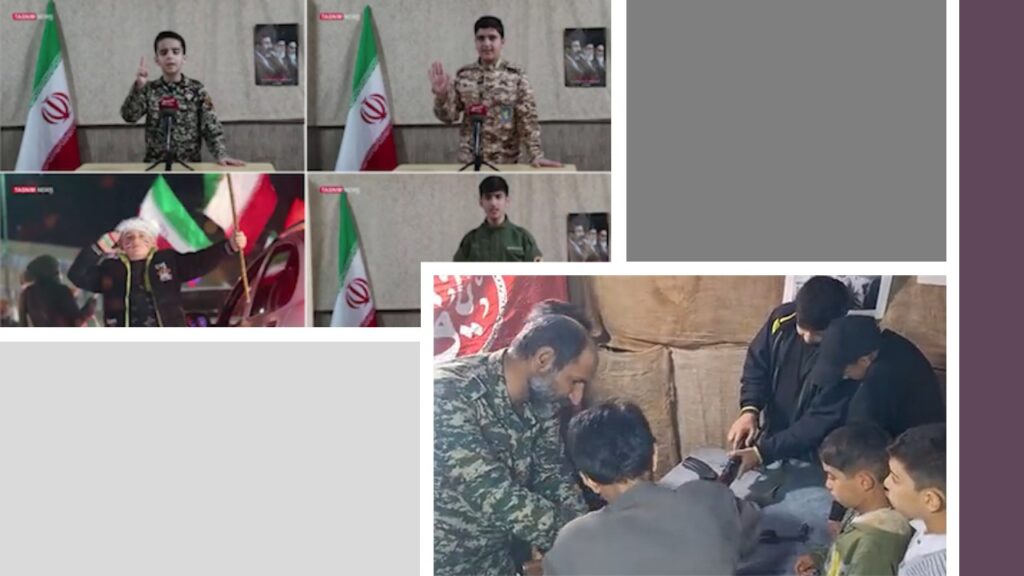
Iran Regime Trains Children as Child Soldiers in Public Weapons Drills and Propaganda Rallies  • Iranian regime is openly training children and teenagers in weapons handling during nighttime street rallies across the country    • State media are releasing multiple videos showing kids in IRGC uniforms learning to use guns, reciting “Destroy the enemy” slogans    • Latest footage released features young children in military uniforms delivering scripted threats    • Amnesty International has warned that recruiting children as young as 12 into the IRGC’s campaign is a war crime    • The regime is reviving the same “one-time-use soldiers” tactics used during the Iran-Iraq War, when thousands of children were sent to clear minefields    As weapons training takes place during nighttime street rallies across Iran, the regime has simultaneously staged public spectacles featuring children and young teenagers.  State-affiliated media outlets — including Fars News Agency (affiliated to the IRGC) and Tasnim News Agency (affiliated with the IRGC’s Qods Force) — have released multiple video clips showing children being taught to handle weapons, interviewed on camera, and made to repeat regime slogans such as “We will destroy the enemy” while praising the IRGC. In some gatherings, children have been fitted with banners reminiscent of the widespread deployment of child soldiers during the eight-year Iran-Iraq War.  On 12 April 2026, Amnesty International warned that the recruitment of children as young as 12 into the IRGC’s military campaign constitutes a war crime under international law.  One video published by Tasnim from Eslamshahr shows a military parade of three Shahed-136 drones — the same model used extensively in the war in Ukraine — alongside interviews with children repeating the regime’s talking points.  Another clip, released in mid-May by the state-run Student News Agency from Shahrekord, depicts Basij forces conducting weapons training in a public area while children are visibly present.  Subsequently, Fars News Agency aired footage from Bojnūrd in which military personnel are seen actively training children and teenagers in weapons handling.  In on the latest examples, released by Tasnim News Agency, young children dressed in military and IRGC uniforms were filmed imitating regime press conferences and reciting scripted threats related to the ongoing conflict.  The regime’s exploitation of children for its political and military objectives is not new. During the Iran-Iraq War under the rule of Khomeini, children were used as “one-time-use soldiers,” including being sent ahead to clear minefields. Mohsen Rezaei, then Commander-in-Chief of the IRGC, explicitly stated the need for such disposable soldiers.  Years later, Akbar Hashemi Rafsanjani — who served eight years as president of the Islamic Republic — acknowledged the scale of these losses. In his Friday prayer sermon in Tehran on 31 October 1997, he said:  “The student Basijis who went to the slaughterhouse of the battlefields during the Sacred Defense numbered 36,000 — and that is truly a large figure.”  Brigadier General Eskandar Beiranvand, former commander of the 84th Infantry Brigade in Khorramabad, described one such operation involving the “Lovers of Hussein” battalion:  “They informed us that the Lovers of Hussein battalion was on its way to clear a minefield. Until that day I had never heard of this battalion and was not familiar with their methods. Within an hour, two Rio vehicles arrived… The young men had not even stepped out of the vehicles when they embraced and kissed one another. It was a strange scene. Everyone started crying because of their intense weeping. We still did not know what these boys were going to do… They lined up beside the minefield, their faces full of tears, staring at the field. The area fell silent and everyone watched them with excitement and anxiety. A young man, about 20 years old, turned to the others and said: ‘May our bodies be torn to pieces for the sake of Agha Ababdullah [Imam Hussein]. All our souls belong to him. Agha is waiting. Do not keep Agha waiting any longer.’ He shouted ‘Ya Hussein!’ and stepped into the minefield. A hellish series of explosions created a wall of fire in front of everyone. Their cries of ‘Ya Hussein’ were lost in the sound of the blasts.”    (Islamic Republic newspaper Ettelaat, 27 September 1997)  The current wave of public weapons training and the prominent role given to children in ongoing street rallies have heightened concerns about the regime’s renewed use of child soldiers to advance its own objectives. 

Iran Protests 2026, News

Iran Hangs Karate Champ Sasan Azadvar  as 10+ Protesters Executed

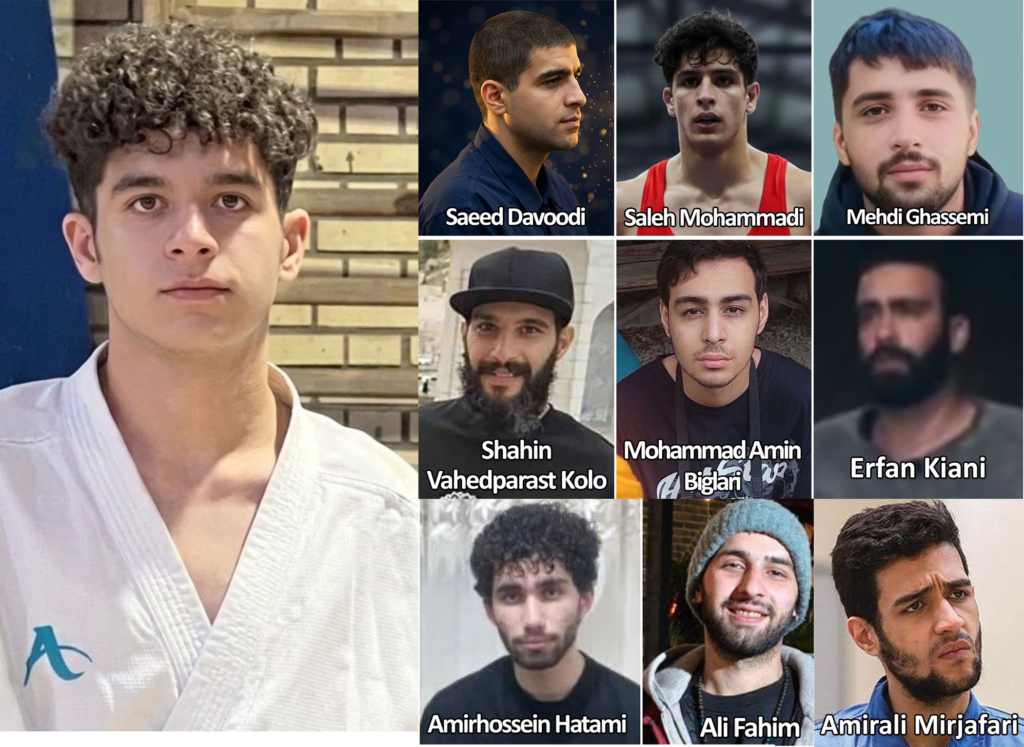
On April 30, 2026, Iranian authorities executed 21-year-old karate champion Sasan Azadvar at dawn, bringing the number of January 2026 protesters put to death to at least ten since the eve of the Persian New Year. The execution was announced hours after Iran’s Judiciary Chief Gholam-Hossein Mohseni-Eje’i publicly ordered the judiciary to accelerate the issuance and implementation of death sentences, openly dismissing international calls to halt the executions. 🚨 Iran Judiciary Calls for Rapid "Enforcement of Sentences"In recent remarks, Iran’s judiciary chief Gholamhossein Mohseni-Eje’i called for accelerating judicial proceedings and enforcement of sentences. “I emphasize again: these cases must be handled quickly, accurately, and… pic.twitter.com/M6yd7Un1eW — SIMAY AZADI TV (@en_simayazadi) April 30, 2026 Eje’i Orders “Speedy” Implementation of Death Sentences In a video published on April 30, Mohseni-Eje’i rejected criticism from abroad over Iran’s hanging spree and demanded faster verdicts and executions.“Who are you to say there should be no executions?” he asked, before declaring: “Sentences should be issued sooner and implemented according to the law.” Pattern of Protesters Executions Since March 19 Since March 19, the Iranian regime has carried out a rapid series of executions of young protesters arrested during the January 2026 uprising. The ten confirmed cases are: • March 19: Saleh Mohammadi (19, champion wrestler), Mehdi Ghasemi and Saeed Davoudi• April 2: Amir Hossein Hatami (18)• April 5: Shahin Vahedparast (31) and Mohammad Amin Biglari (19)• April 6: Ali Fahim (23)• April 21: Amirali Mirjafari• April 25: Erfan Kiani• April 30: Sasan Azadvar (21, provincial karate champion) All ten were convicted on charges of “Moharebeh” (enmity against God) or related offences for their roles in the protests. The cases were tried in closed-door proceedings widely criticized by human rights organizations for lacking due process. These executions exclude other political prisoners put to death during the same period. Human rights groups stress that the exact number of executions remains unknown, and many more January protesters are still at imminent risk of execution. Protesters Crackdown Rooted in the January Uprising The wave of executions follows the January 2026 protests, during which the regime faced one of its most serious challenges in years. In the immediate aftermath, state television broadcast staged forced confessions, some personally overseen by Mohseni-Eje’i — a figure already known internationally for his role in the 1988 massacre of tens of thousands of political prisoners. One example from January 15 shows Eje’i questioning a female detainee in a forced confession broadcast by IRIB: Eje’i: You were throwing blocks toward the crowd.Detainee: It was officers. They were in their military uniforms. 🚨 In a staged forced confession aired by IRIB, Iran's Chief Justice appears to attempt to frame a female detainee for attacking ordinary citizens. Her exchange: Eje'i: You were throwing blocks toward the crowd. Detainee: It was officers. They were in their military uniforms. https://t.co/3UC1gWueVP pic.twitter.com/VRPbJScTrO — Ehsan Eghbal Eslami (@Ehsaneghbale) January 15, 2026 Infamous Judges and Sham Trials Some of the death sentences, including those of Hatami, Vahedparast, Biglari and Fahim, were issued by Branch 15 of the Tehran Revolutionary Court under Judge Abolqasem Salavati, widely known as the “Hanging Judge.” Judicial Mobilization During the War The pace of executions intensified during the recent conflict. On April 19 and 20, Mohseni-Eje’i issued directives ordering courts to treat all acts of dissent as threats linked to “US and Israeli agendas,” demanding immediate verdicts and round-the-clock judicial work, including nights and Fridays. 🚨 IRAN: CHIEF JUSTICE EJEI DECLARES JUDICIAL WARIn an unprecedented directive, Mohseni-Ejei has ordered a total mobilization of the courts to crush dissent. Comparing judges to "combatants," he demanded they work nights and Fridays with no holidays.He ordered prosecutors to… pic.twitter.com/gqMVBHy81T — Ehsan Eghbal Eslami (@Ehsaneghbale) April 19, 2026 Human rights groups report that detainees are subjected to torture and denied fair trials, with many convictions based on forced confessions obtained under duress. 🚨IRAN – PRETEXT FOR PURGE: Eje'i's command for “Immediate Verdicts” In a new directive, the regime’s Chief Justice Mohseni-Eje'i has moved to equate all acts of dissent with the agendas of the US and Israel. In the video below (published on Monday), Ejei orders the Prosecutor… https://t.co/mUvXctFgt4 pic.twitter.com/t8If0bllYS — Ehsan Eghbal Eslami (@Ehsaneghbale) April 20, 2026 On Feb 20, Amnesty International warned that 30 January protesters are at risk of execution. Some of them undergoing “a fast-tracked, torture-tainted grossly unfair trial before Branch 26 of the Revolutionary Court of Tehran for alleged involvement in an 8 January 2026 fire” at a Basij base in Tehran province, “that killed two Basij agents.”

Exclusive Interviews, News

Kumi Naidoo: “The First Step Is to Stop the Killing in Iran”

On the sidelines of an event at the European Parliament marking the International Day of Human Rights, Simay Azadi spoke with Kumi Naidoo, former Secretary-General of Amnesty International.In the interview, Naidoo underscored the urgency of halting executions in Iran, highlighted the central role of women in the struggle for freedom, and drew a direct line between today’s executions and the 1988 massacre—described as crimes against humanity. He stressed that ending the killing of prisoners must be the immediate priority, while accountability for past and present crimes remains essential. Read the full text of the interview below. Exclusive Interview with Kumi Naido— Simay Azadi Simay Azadi: Thank you very much for this interview. How did you find the event at the European Parliament on the occasion of the International Day of Human Rights? Kumi Naidoo:I think this is a very positive event that is urging all countries around the world, especially the European Union, to put encouragement to stop the executions of the people that are in prison. So, I found that this is the most urgent thing. There are many bigger things that we need to do—to secure genuine democracy and all of that—but the first step is: stop the killing of human beings that are in prison. And that message was very loud. I also liked the fact that we celebrated women—women who are in prison, women who are facing death sentences, women who are rising up in the streets and villages and towns of Tehran on forced veiling and many other things. And I was very inspired by the presence of a large number of women here who have been struggling over the years. What we must recognize is that no struggle has ever succeeded without an equitable participation of women in those struggles. The image that Iran presents to the world right now is a completely male-dominated society, but that’s not the reality on the ground. It was also inspirational. The last thing I would say is that after so many years, something that I wanted to say and I didn’t say, which was I wanted to express my solidarity with the people who go through the pain of exile. I experienced only three years in exile as a young student between the ages of 22 and 25. I can tell you that was so painful—not being able to go home to your country. And I hope that events like this bring human rights back to the center of what we do, but also create the basis for the tens of thousands of Iranian exiles distributed across the world to finally be able to return home. So I hope that this event has contributed to that bigger agenda of a society that is governed on the basis of human rights, democracy, inclusion, gender equality, and so on. Thank you. Simay Azadi: Thank you very much for your remarks. You talked about the executions raised here. As we all know, you were the Secretary-General of Amnesty International when the report on the 1988 executions was released. How do you connect those executions—described as crimes against humanity—with the current wave, and what should be done? Kumi Naidoo:Obviously, if 30,000 people get killed in a very short time span, that figure shocks and horrifies people a lot. But what we have now is a legacy of that kind of practice. For me, one execution is one execution too many. And for that reason, we need to resist this pattern that is rebuilding. The reason this can happen on this scale—which is already high—is connected with that legacy. Government media recently said in Farsi that “we need another 1988.” What’s striking is that there isn’t even an attempt to deny the legacy. If state media says, “Let’s do this,” that speaks for itself. It’s true the report was released by Amnesty in 2018 or early 2019. I was very pleased with the work of colleagues who had researched this for almost three decades to ensure absolute factual accuracy. When state media now says we need another 1988, it is the strongest evidence that what we documented genuinely happened. My only regret is that the report didn’t come out 25 years earlier. It might have had more immediate impact then. There was significant media coverage when it was released, but earlier, we lacked the depth of research that later made it irrefutable. Simay Azadi: Thank you very much for your remarks. Thank you—it was a pleasure.

News

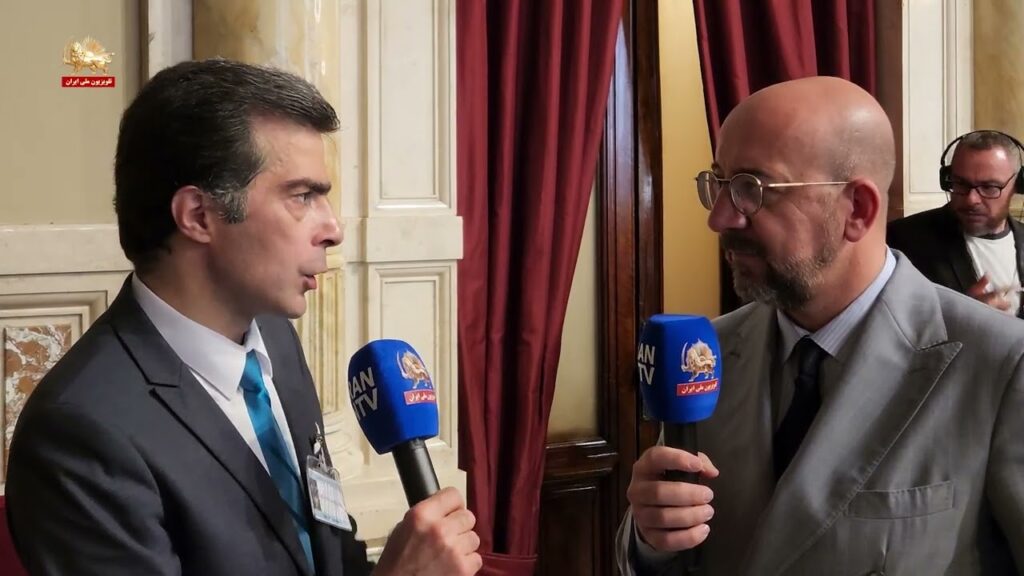
Charles Michel to Simay Azadi: “Appeasement Has Not Worked with Iran, Silence Is Complicity”

On July 30, 2025, immediately after the high-profile Italian parliamentary conference titled “Iran Crisis: The Third Option for Change,” featuring Maryam Rajavi I spoke with Charles Michel, the former President of the European Council and ex-Prime Minister of Belgium. He offered an assessment of the meeting and the path forward for Iran. Full Q&A Interview Simay Azadi: Mr. Michel, thank you very much for being with us. First, could you summarize how the meeting went, what was said and the message conveyed during the Parliament session with Mrs. Rajavi? Charles Michel: We all agree that it’s an exceptional moment because the regime is weaker than ever. But as they weaken, they become more brutal and aggressive. That’s why we must be absolutely clear: defend and promote peace and fairness, and most importantly, learn the lessons of the past. Appeasement has not worked—and will not work. We must be stronger and unwavering in promoting the values we stand for. Silence, in this context, is a form of complicity. That’s why we need to make it clear: we are determined to support this “Third Option” and Maryam Rajavi’s Ten-Point Plan, the right path toward a democratic Iran anchored in freedom and human dignity. Simay Azadi: There was also significant discussion and condemnation of the executions of the two political prisoners (Behrouz Ehsani and Mehdi Hassani). What’s your view on the duty of the international community and the EU, which you once led, in response? Charles Michel: We are seeing a disturbing increase in executions and violent repression aimed at women, students, activists, and resistance supporters across Iran. The European Union is founded on democratic principles and fundamental values. We have a role and a duty to support those who courageously fight politically inside Iran, and also to assist the active diaspora in promoting our shared principles of freedom and human dignity. Simay Azadi: Regarding Iran’s nuclear program, some talk of resuming talks, others propose different strategies. What’s your perspective? Charles Michel: I fully agree that the nuclear option pursued by this regime is a grave mistake. Appeasement has failed. We must be strong and unwavering. We cannot allow this regime, with its dangerous worldview, to acquire a nuclear weapon. Everything must be done to halt this nuclear race. The best way forward is to support the Iranian opposition, the people who believe in a different, democratic future. Simay Azadi: You mentioned the people in Ashraf 3 and resistance fighters. Charles Michel: Those at Ashraf 3 are incredibly resilient and represent a vital asset for Iran’s future. It’s essential we acknowledge their role now and going forward. Simay Azadi: Finally, what message would you like to send to the Iranian people watching your interview? Charles Michel: One message: you are not alone. Many across Europe believe your fight is legitimate, your fight is our fight. We will do everything possible to support you because we want you to be free.

Scroll to Top