Simay Azadi English

News

News

UK Proscribes Iran’s IRGC as Terrorist Organization: “A long overdue Action” 

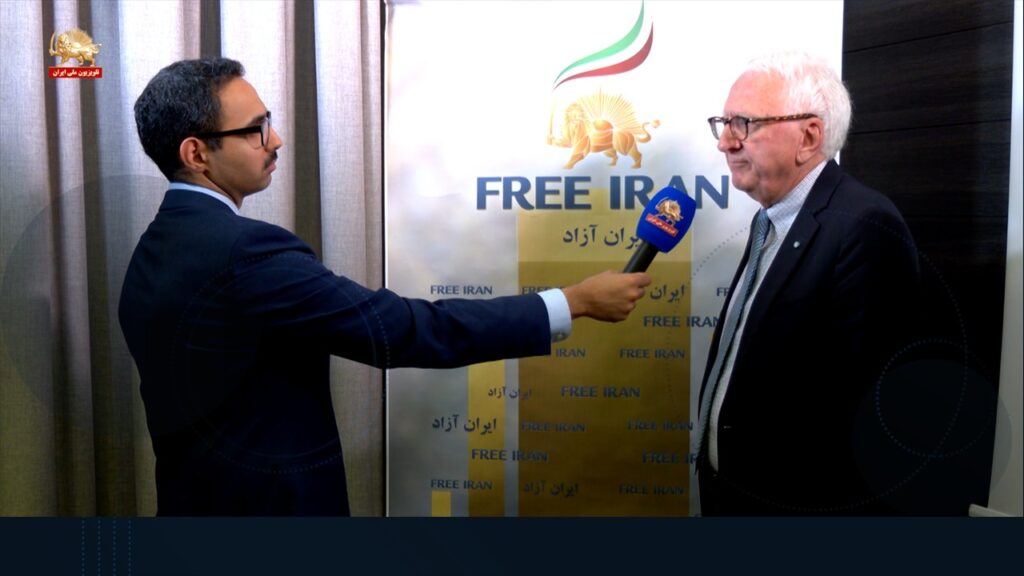
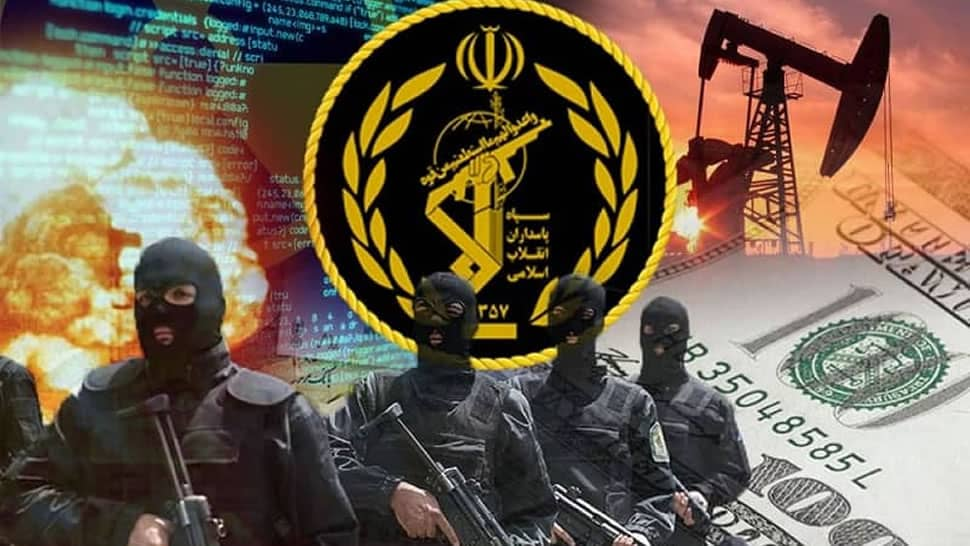
Britain’s designation of the Revolutionary Guards marks a major policy shift following years of campaigning by the Iranian Resistance and cross-party parliamentarians.  The United Kingdom announced on July 13, 2026, that it has proscribed Iran’s Revolutionary Guards (IRGC) as a terrorist organization, using new powers under the National Security Act to target what the government described as state-sponsored proxy activity on British soil. The move follows years of warnings by British security agencies about IRGC-linked operations in the UK.   According to Reuters, the British government concluded that the IRGC had been linked to threats against individuals in Britain. Prime Minister Keir Starmer said the new measures would make it easier to “prosecute and lock up anyone carrying out their dirty work here in Britain.”    It will be a criminal offence under the National Security Act to express support or have any relations with the IRGC or its related organizations, and one could be sentenced to 14 years in prison. The legislation bans the IRGC and its front companies activities in the UK.   In a statement issued on July 13, the British Committee for Iran Freedom called the designation “a crucial, long-overdue step” against “one of the world’s most dangerous instruments of state-sponsored terrorism, domestic repression, and regional destabilisation.”  The cross-party committee said the IRGC is “the principal apparatus through which Iran’s ruling theocracy exports extremism, finances hostile proxy militias, and seeks to intimidate democratic societies far beyond its borders.” It urged the British government to treat the proscription as “the beginning of a robust, comprehensive policy toward the Iranian regime,” including dismantling IRGC front companies operating in Britain, expelling individuals acting on its behalf under diplomatic or commercial cover, and ending commercial activities that financially benefit the organization.   The committee also paid tribute to Mrs. Rajavi and the NCRI, stating that through “detailed disclosures, sustained international advocacy, and extensive documentation of the IRGC’s covert operations and financial empire,” the Iranian Resistance had made “an invaluable contribution” to informing lawmakers and governments about the organization’s true nature. It concluded by calling on Britain “to stand with the people of Iran in their endeavour for freedom and democracy and to recognise the right of the Iranian people and their Resistance to confront the IRGC and bring an end to the dictatorship.”   The decision was also welcomed by Mrs. Maryam Rajavi, President-elect of the National Council of Resistance of Iran (NCRI), who described the proscription as “long overdue” and “essential for regional and global peace, stability, and security.”  “From the very outset, the Iranian Resistance has identified the IRGC as the principal organ of coercion and repression of the religious fascism ruling Iran.”  Mrs. Rajavi also expressed appreciation for more than four decades of efforts by members of both the House of Commons and the House of Lords, particularly those in the British Committee for Iran Freedom (BCFIF), for consistently advocating the proscription of the IRGC and exposing its crimes.   It is worth noting that the NCRI, has held dozens of conferences exposing the IRGC’s destructive role both inside and outside of Iran. In addition to holding conferences, the NCRI’s U.S. Representative Office published several books since 2016. These books include: IRAN: Islamic Revolutionary Guard Corps (IRGC) The Machinery of Terrorism, IRGC’s Rising Drone Threat, IRAN: Exposing the Latest Terrorist Game Plan of the IRGC-Quds Force, IRAN: The Rise of the Revolutionary Guards’ Financial Empire, Terrorist Training Camps in Iran, How Iran Fuels Syria War, Iran’s Emissaries of Terror, IRAN: Cyber Repression  In an exclusive interview with Simay Azadi conducted before the government’s announcement, Bob Blackman MP, Co-Chair of the British Committee for Iran Freedom, said the National Security Act would finally enable Britain to take the action “we’ve been calling for for many years, namely, the proscription of the Iranian Revolutionary Guard Corps (IRGC) as a terrorist organisation.”  Blackman said the designation would allow authorities to act not only against the IRGC itself but also “all of the front organisations, whether they be media, whether they be charities, or other types of organisation.” He added that the UK should go further by dismantling networks acting on Tehran’s behalf, deporting individuals involved in regime activities, and standing with the Iranian people.  “The only solution that is feasible is a regime change, so that Madame Rajavi, with her Ten-Point Plan, can restore democracy and freedom to the people of Iran.”  He added that the plan would allow Iranians to choose their government through free elections within six months, placing power in the hands of the Iranian people.   The British government’s decision marks one of the most significant actions taken by London against the IRGC and follows years of advocacy by members of Parliament, the British Committee for Iran Freedom, and the Iranian Resistance, which has consistently identified the IRGC as the regime’s primary instrument of domestic repression and international terrorism.  
News

Iran: Student Group Takes Cyber Action Against 900 University Webpages

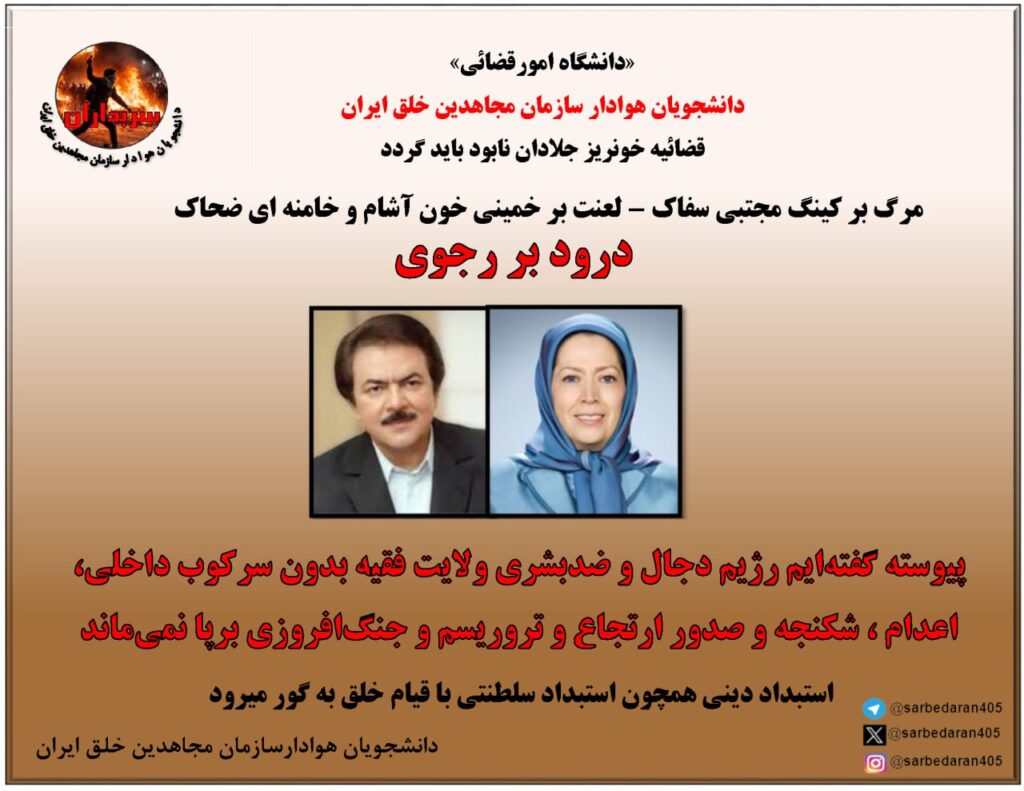
Simay Azadi– Part One: English translations of internal Iranian government documents dated January 14, 2026, reportedly obtained during the cyber operation. A student group identifying itself as Sarbedaran 1405, supporting the People’s Mojahedin Organization of Iran (PMOI), announced that it had temporarily replaced the homepages of more than 900 webpages across the websites of K. N. Toosi University of Technology, Tarbiat Modares University, Islamic Azad University, and the University of Isfahan, in addition to eight more. According to the group, the operation displayed messages rejecting both monarchy and the ruling theocracy while commemorating the July 9, 1999 student uprising. Alongside the website defacements, the group also released what it says are internal Iranian government documents obtained during the operation. This article is the first in a series presenting English translations of those documents. Part One covers a document classified “Top Secret,” dated January 14, 2026, sent by Iran’s Passive Defense Organization to the Minister of Interior, concerning heightened security and protective measures in response to anticipated threats. First Letter: No.: 111/1211/2/105 Date: January 14, 2026 Classification: Highly Confidential Attachment: None In the Name of God, the Most High Immediate Islamic Republic of Iran General Staff of the Armed Forces National Passive Defense Organization “Investment for Production” From: National Passive Defense Organization To: Honorable Minister of Interior Subject: Intensification of Security, Protective, and Countermeasures Against Possible Threats Ahead “The issue of passive defense is a very important matter, and with each passing day, the importance of passive defense increases.” Imam Khamenei — may his shadow endure Greetings; with blessings upon Muhammad and the family of Muhammad; Respectfully, following the Executive Directive for Passive Defense named after Martyr Major General Abbas Nilforoushan, No. 1604/1/307, dated January 13, 2025, issued by the Permanent Committee of the National Passive Defense Organization, and in view of the recent hostile actions by American and Zionist terrorists and their trained, self-serving rioter agents, who over the past several days have carried out acts of sabotage and destruction against various economic, cultural, religious, urban infrastructure, and industrial centers, there is a possibility of renewed hostile actions and attacks against various state institutions. Furthermore, hybrid attacks by the enemy and renewed military aggression by the enemy are also conceivable. Therefore, it is requested that, while briefing the honorable provincial governors and managers of national agencies, they adopt preventive measures, raise the level of alertness, intensify security and protective actions, and maintain readiness to confront a military attack and urban warfare. Once again, Article 4 of the Executive Directive for Passive Defense named after Martyr Major General Abbas Nilforoushan is hereby communicated as follows, so that, on this basis, each agency or infrastructure body may prepare and implement its own defense plan. 1. Establish an emergency management and command system under the management of the head of the agency, the head of security, the Basij official, and the passive defense official of the agency. 2. Take additional measures to intensify the physical protection of important infrastructure, warehouses of strategic goods, and key centers. 3. The heads of executive agencies and infrastructure bodies shall take urgent action regarding the following immediate measures: a. Prepare and be ready to implement the agency’s incident response and countermeasure plan; Second Letter: No.: 2221/3/210/03205 Date: January 14, 2024 Classification: Highly Confidential Attachment: None Islamic Republic of Iran General Staff of the Armed Forces Immediate National Passive Defense Organization b. Prepare and be ready to implement the plan for continuity of essential functions; c. Prepare and be ready to implement the plan for optimizing interdependencies; d. Prepare and be ready to implement the recovery and resilience plan; e. Prepare and be ready to implement the plan for protecting critical assets; f. Update and upgrade control systems and video surveillance systems; g. Brief the personnel of agencies and infrastructure bodies regarding the enemy’s psychological operations in the media sphere; The honorable officials of the agencies, within the framework of the defense-security policies and programs communicated by the Organization and the Permanent Committee of Passive Defense, shall take action to secure, protect, and enhance infrastructure readiness in order to safeguard the lives and property of the people against conceivable threats. This shall be carried out through planning, preparing and issuing operational directives, guidance and training, supervision and control, and by making use of infrastructure capabilities and capacities. They shall also ensure the readiness of the relevant infrastructure through inspections and operational supervision. Announce a state of alert, communicate the situation, and determine the enemy’s possible scenario for the relevant bodies; Preserve and guarantee the continuity of the essential and necessary functions of provincial service-providing infrastructure for the people under threat conditions; Direct and guide the provincial executive agencies in order to provide the people’s basic and essential needs and to ensure strategic reserves during the threat period, including water, bread, medicine, hygiene, healthcare, electricity, gas, fuel, shelters, and other necessities; Review, update, direct, and implement operational plans for organization, equipment, training, drills, exercises, and enhancement of readiness by the provincial executive agencies; Develop and strengthen the capability of infrastructure to recover from incidents and threats and return to its initial condition, and prepare alternative operational plans for the people’s essential services in the event that such services are lost as a result of possible attacks by enemy agents; Create calm in society through accurate, precise, and timely information dissemination, management of media outlets and social networks, and guidance in preparing provincial operational plans and passive defense responses in population centers, according to emergency conditions such as rescue and relief, The Third Letter In the Name of God, the Most High Islamic Republic of Iran General Staff of the Armed Forces National Passive Defense Organization Immediate No.: 3231/3/210/04405 Date: January 14, 2024 Classification: Highly Confidential Attachment: None (…search and rescue, evacuation, temporary shelter, medical treatment, etc.): Ensure the continuous operational presence of managers and key personnel during crisis situations across subordinate infrastructure. Direct and oversee the implementation of intensified security and protective measures within provincial executive agencies and

Arghavan Fallahi
News

25-Year-Old Arghavan Fallahi Sentenced to Death in Iran 

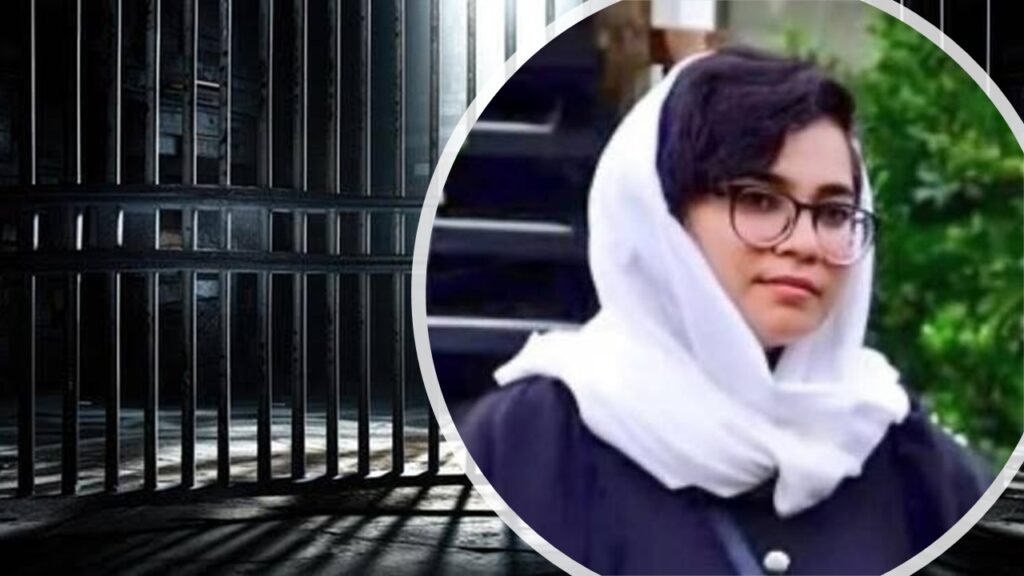
The latest death sentence against Arghavan Fallahi, a supporter of the People’s Mojahedin Organization of Iran comes amid an escalating campaign of executions and prosecutions targeting political prisoners.  Arghavan Fallahi, a 25-year-old political prisoner and supporter of the People’s Mojahedin Organization of Iran (PMOI/MEK), has been sentenced to death by Branch 15 of Tehran’s Revolutionary Court, according to information conveyed to her lawyer on July 1, 2026. The court is presided over by Judge Abolqasem Salavati, who has overseen numerous high-profile political cases.   Salavai, aka “hanging judge” has issued many   Fallahi was arrested on January 25, 2025, in the city of Parand and transferred to Ward 241 of Evin Prison, which is controlled by the Judiciary’s Intelligence Protection Organization. According to available reports, she spent approximately five months in solitary confinement, where she was subjected to prolonged interrogation as well as physical and psychological torture. Following the evacuation of Evin Prison after the conflict earlier this year, she was transferred to solitary confinement in Fashafouyeh (Greater Tehran) Prison before eventually being returned to the women’s ward of Evin Prison, where she remains detained.  This is not the first time Fallahi has faced imprisonment. On November 4, 2022, she was arrested in Shiraz together with her father, Nasrollah Fallahi, a former political prisoner from the 1980s who is currently serving a five-year prison sentence in Ward 7 of Evin Prison.  The sentence comes amid a broader escalation in the use of the death penalty against political prisoners, particularly individuals accused of supporting the People’s Mojahedin Organization of Iran. In recent months, Iranian authorities have issued multiple new death sentences against PMOI supporters, including Zahra Tabari, Amin (Peyman) Farahavar, and five political prisoners held in Sheiban Prison—Masoud Jamei, Alireza Mardasi, Farshad Etemadifar, Reza Abdali, and Hassan Mosallavi—who remain at risk of execution.  The recent crackdown has also been accompanied by executions. On April 20, 2026, political prisoners Hamed Validi and Mohammad Massoum-Shahi, both affiliated with the PMOI, were executed. Earlier, between March 30 to April 4, 2026, authorities executed six other PMOI members—Vahid Baniamerian, Mohammad Taghavi, Akbar (Shahrokh) Daneshvarkar, Pouya Ghobadi, Babak Alipour, and Abolhassan Montazar—following what human rights organizations called sham trials. At the same time, Iranian authorities have continued to carry out executions of detainees arrested during the January 2026 nationwide protests, bringing the number of confirmed executed protesters to at least 20.  Human rights organizations have repeatedly expressed concern over Iran’s increasing use of capital punishment against political opponents, warning that death sentences are being issued following proceedings that fall short of international fair trial standards. Fallahi’s case adds to a growing list of political prisoners currently facing execution as pressure on opposition supporters continues to intensify. 

Exclusive Interviews, News

Robert Joseph: “The Iranian People Need a Democratic Republic”

The former U.S. Under Secretary of State discusses Iran’s wave of executions, the alternative to the current regime, the NCRI’s Ten-Point Plan, and why he believes democratic change must come from the Iranian people. In an interview with Simay Azadi on the sidelines of the Free Iran World Summit in Paris, former U.S. Under Secretary of State for Arms Control and International Security Robert Joseph discussed the recent wave of executions in Iran, the regime’s response to growing internal pressure, the alternative to the current political system, international policy toward Tehran, and the cancellation of the Free Iran rally in Paris. During the interview, Joseph argued that the recent executions reflect the regime’s growing weakness rather than strength. He said the Iranian people reject both religious dictatorship and a return to monarchy, endorsed the National Council of Resistance of Iran’s (NCRI) Ten-Point Plan, criticized policies of appeasement toward Tehran, and emphasized that democratic change must come from the Iranian people themselves rather than through foreign intervention. Read the full text of the interview below (edited for clarity): Q: Thank you very much, Ambassador Joseph, for this interview with Simay Azadi. Let us begin with this question. We have witnessed a wave of executions in Iran in recent months, especially after the war. Eight members of the People’s Mojahedin Organization of Iran (PMOI/MEK) have been executed. Why do you think the regime has increased the number of executions at this time? Ambassador Robert Joseph: I think the executions reflect the current state of the regime. The regime is at its weakest point, and these executions are a means of intimidating the people of Iran. Anyone who resists—even in defense of the most basic human and civil rights—faces prosecution, torture in many cases, and execution. I believe this is a desperate regime that is on its last legs, and the international community must work together to stop these executions. Q: In recent months, we have also seen efforts to promote Reza Pahlavi, the son of Iran’s deposed Shah, as an alternative to the current regime. As someone who has spent many years in diplomacy and foreign affairs, what do you believe is an alternative to this regime, and what is not? Ambassador Robert Joseph: First of all, I have never understood the proposition that the Iranian people would want to replace one corrupt and brutal regime with another corrupt and brutal regime. The attraction of Reza Pahlavi is simply incomprehensible to me, and I believe it is equally incomprehensible to the Iranian people. The true alternative to both the religious dictatorship and the restoration of the monarchy is a democratic republic. That democratic republic is founded on the principles contained in Mrs. Rajavi’s Ten-Point Plan and represented by the NCRI and the MEK. That is the vision for a free, democratic, secular, and non-nuclear Iran. Q: You have supported the Iranian Resistance for many years. Why do you support the Ten-Point Plan and this movement? Ambassador Robert Joseph: My professional background is in nuclear affairs. When I was serving at the White House, I came to the conclusion that as long as this regime remains in power, the world will continue to face the threat of a nuclear-armed Iran. The only way to move beyond that threat is through regime change—not imposed by the United States or any outside power—but achieved by the Iranian people themselves. When I first reached that conclusion, I didn’t even know what the NCRI stood for. I looked at the opposition and asked who was capable of leading the Iranian people to end this religious dictatorship. The answer was clear. Mrs. Rajavi, the NCRI, and the Ten-Point Plan provide the principles for a modern, democratic, and secular society. Q: What should the international community do now? Some argue for military action, while others continue to advocate engagement with Tehran. How do you view those approaches? Ambassador Robert Joseph: The first principle is that we must not throw this regime another lifeline through policies of appeasement. We saw that under President Obama. We saw it again under President Biden. Those policies need to be reversed. The world must recognize that this regime has to go and support the Iranian people’s efforts. That is the only solution—not only to the nuclear challenge, but also to the regime’s support for terrorist proxies, its destabilizing regional activities, and its brutal repression of the Iranian people. If there is ever a moral imperative, it is to stand with the Iranian people. And I believe Mrs. Rajavi best represents Iran’s future. Q: Yesterday, a major Free Iran rally in Paris was canceled less than 24 hours before it was scheduled to begin, despite organizers expecting around 100,000 participants from across Europe. What message does that decision send, and what should the French government have done? Ambassador Robert Joseph: I believe the French court’s ruling betrays the fundamental principles of a democratic society. Freedom of assembly and freedom of speech are core principles rooted in France’s own Declaration of the Rights of Man and of the Citizen of 1789. That historic document has served as a model for democratic societies for nearly two and a half centuries. Those are the principles France should uphold—not blackmail or coercion by the Iranian regime, which I believe influenced this decision. In my view, this was a political decision that betrayed the principles of the French Republic. Q: Finally, what message would you like to send to the Iranian people, especially the Resistance Units who will be watching this interview on Simay Azadi? Ambassador Robert Joseph: First of all, I congratulate everyone involved in the Resistance at every level. My message is simple. This regime is at its weakest point in nearly half a century. Now is the time to seize the opportunity. Now is the time to consign this regime to the trash bin of history. It has shown that it cannot change and cannot reform. Its answer has always been repression, war against women, and

News

Doha Talks Show Progress as Iran Focuses on Oppression

While U.S.-Iran negotiations in Qatar reported limited progress on maritime issues, recent developments inside Iran suggest the authorities remain equally focused on controlling the restive society.   Simay Azadi – Indirect negotiations between Iran and the United States concluded in Doha, Qatar, with mediators describing the discussions as constructive, even as major differences remain over broader issues such as Iran’s nuclear program and regional security.  According to Reuters, the talks focused primarily on maritime traffic through the Strait of Hormuz and the release of frozen Iranian assets. Negotiators from both countries spent two days discussing shipping arrangements and financial issues rather than Iran’s nuclear program.  Qatar’s Foreign Ministry described the negotiations as showing “positive progress,” a characterization echoed by Pakistani officials. According to CBS News, both mediators said progress had been made on issues related to the recently signed memorandum of understanding between Tehran and Washington.  Speaking after the talks, U.S. Vice President JD Vance indicated that Washington continues to prioritize Iran’s nuclear activities.  “Obviously, we’re worried about the nuclear issue. We’re going to start talking about that.”  Vance also cautioned that U.S. policy could change if Iran resumes activities that Washington considers destabilizing.  “If Iran tries to rebuild its nuclear program and starts shooting at ships again, our calculations change.”  The discussions also had an immediate impact on energy markets.  According to Reuters, Brent crude fell 77 cents to $70.80 per barrel after investors reacted positively to signs of progress in the Doha negotiations and the continued reopening of shipping through the Strait of Hormuz.  On the Iranian side, Deputy Foreign Minister Kazem Gharibabadi, who headed Tehran’s delegation, reiterated Iran’s position regarding the strategic waterway.  He boasted that the Strait of Hormuz “is defined under Iran’s authority, not CENTCOM,” and said that part of Iran’s frozen assets in Qatar would be released in the form of goods.  While diplomacy continued abroad, developments inside Iran pointed to a parallel emphasis on domestic oppression.  Iranian state media reported that the regime’s Supreme Leader Mojtaba Khamenei has allegedly reappointed Judiciary Chief Gholamhossein Mohseni-Ejei to another five-year term, extending the tenure of the official who has repeatedly called for the acceleration of judicial proceedings in security-related cases.  The reappointment comes after Mohseni-Ejei publicly urged judges to expedite decisions in cases involving individuals accused of cooperating with hostile actors—a position that coincides with an ongoing wave of arrests, political prosecutions, and executions reported in recent months.  Taken together, the developments highlight two parallel tracks shaping Iran’s current political landscape. While negotiators continue indirect discussions with the United States over maritime security, frozen assets, and broader regional issues, the regime’s authorities have simultaneously reinforced the leadership of the judiciary and continued to emphasize the regime’s security, underscoring the importance the establishment places on controlling Iran’s restive society 

News

Iran Peace Talks Face New Obstacles as Internal Divisions Deepen 

Reports from U.S. and Iranian officials point to growing uncertainty over the future of Tehran-Washington negotiations as disagreements inside Iran and disputes over the Strait of Hormuz complicate diplomatic efforts.  Simay Azadi News Desk – The future of negotiations between Iran and the United States remains uncertain despite the signing of a recent memorandum of understanding (MOU), as officials on both sides signal new disagreements over the next phase of talks. At the same time, reports indicate that internal divisions within Iran’s ruling establishment are increasingly complicating the diplomatic process.  According to Reuters, Iranian Foreign Ministry spokesperson Esmaeil Baghaei said that “no meeting at any level with the U.S. side has been scheduled for the coming days,” clouding prospects for reaching a broader peace agreement.  Meanwhile, U.S. Vice President JD Vance indicated that Washington remains focused on Iran’s actions rather than its public statements.  “We care much more about what Iran does than what Iran says.”  Vance also said President Donald Trump had instructed his team to continue pursuing diplomacy while assessing where negotiations ultimately lead.  ۰”What the President has told us is to work on the problem and see where the negotiations lead.”  Despite ongoing tensions, Vance noted that oil exports through the Strait of Hormuz have largely recovered.  “Oil flows through the Strait of Hormuz have returned to pre-war levels, and on some days have even exceeded them.”  The negotiations come as The Wall Street Journal reported that President Trump recently held multiple discussions with Defense Secretary Pete Hegseth and Chairman of the Joint Chiefs of Staff Gen. Dan Caine about the possibility of resuming military strikes against Iran before deciding—for now—to continue diplomatic efforts.  According to the newspaper, the current diplomatic deadlock has also prompted Washington to examine alternative shipping arrangements should negotiations over the Strait of Hormuz fail. At the same time, The Wall Street Journal reported that internal power struggles inside Iran are threatening the U.S.-Iran peace talks, with competing priorities among political leaders and the Islamic Revolutionary Guard Corps complicating Tehran’s negotiating position.  The issue of the Strait of Hormuz has become one of the central points of disagreement.  Speaking on Iranian state television, Parliament Speaker Mohammad Bagher Ghalibaf said that sovereignty over the Strait belongs to Iran and Oman and argued that transit through the waterway is subject to arrangements determined by Tehran. He also stated that Iran would hold no further negotiations with the United States until implementation of the memorandum of understanding begins and claimed that toll-free passage through the Strait under the agreement would last only 60 days.  At the same time, Ghalibaf acknowledged the economic importance of keeping the shipping lane open.  “We should not turn the Strait against itself. The Strait is valuable when traffic through it increases day by day, not when it decreases.”  He also warned:  “If we are prevented from selling our oil, then no one will benefit from oil.”  The controversy surrounding Ghalibaf’s remarks deepened after the Parliament’s Media Center accused Iran’s state broadcaster of cutting short a pre-recorded interview before it aired. According to the parliamentary statement, the interview had been delivered to state television two hours before broadcast, but the program was interrupted midway without coordination. The statement said the omitted portions included Ghalibaf’s response to what it described as false claims regarding inspections of Iran’s nuclear facilities and details about efforts to release frozen Iranian assets.  Meanwhile, Reuters reported that Iran’s refusal to hold talks with U.S. representatives has further complicated efforts to transform the temporary understanding into a permanent agreement.  Separately, Germany’s domestic intelligence service said in its latest assessment that the Iranian regime continues to focus a significant portion of its intelligence activities on monitoring and targeting opposition groups and individuals abroad, underscoring Tehran’s continuing emphasis on suppressing dissent beyond its borders.

Exclusive Interviews, News

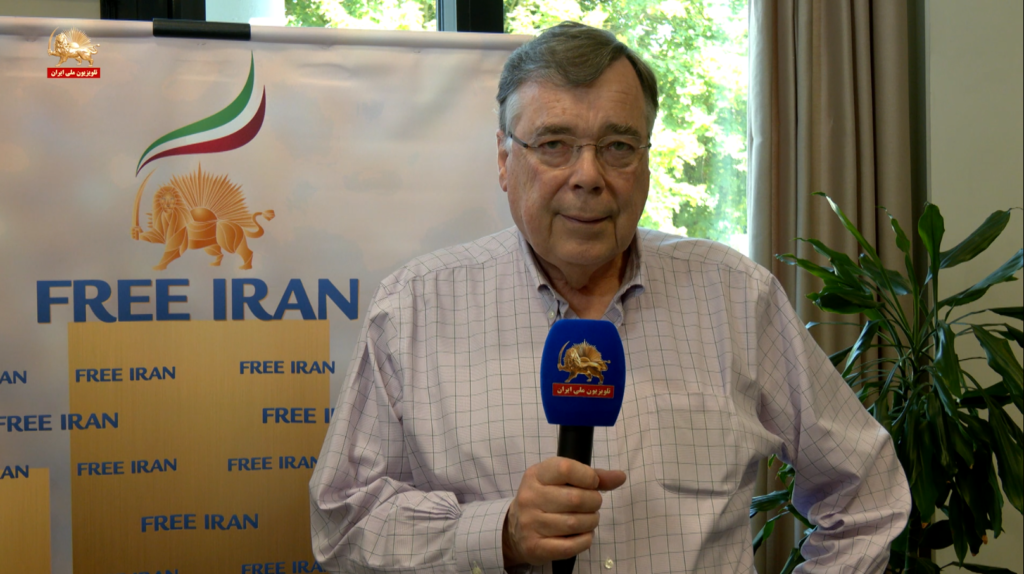
Geir Haarde: “Iran’s People Reject Both the Mullahs and the Shah” 

The former Icelandic prime minister discusses the Free Iran World Summit, executions in Iran, the NCRI’s Ten-Point Plan, and the alternative to the current regime.   In an interview with Simay Azadi on the sidelines of the Free Iran World Summit in Paris, former Icelandic Prime Minister Geir Haarde discussed the significance of this year’s gathering, the wave of executions in Iran, international support for the Iranian Resistance, the National Council of Resistance of Iran (NCRI), the cancellation of the Free Iran rally in Paris, and prospects for democratic change in Iran.  During the interview, Haarde argued that growing international support for the Iranian Resistance reflects a better understanding of the situation inside Iran. He said the Iranian people reject both the current religious dictatorship and a return to monarchy, endorsed the NCRI’s Ten-Point Plan, criticized the cancellation of the Paris rally, and reiterated that neither war nor appeasement offers a solution to Iran’s crisis.  Read the full text of the interview below (edited for clarity):  Q: Thank you very much, Mr. Haarde, for being with us. First of all, I wanted to hear your thoughts on this year’s gathering. What was your main message at the Free Iran World Summit?  Geir Haarde: First of all, I think this year’s conference was a great success, apart from the fact that the French authorities blocked the rally that was supposed to take place on Friday. That was a great shame.  I believe behavior like that by the authorities will only strengthen the Resistance movement and reinforce its determination.  As for the conference itself, many important points were raised and a great deal of valuable information was presented.  I emphasized the importance of rallying around the National Council of Resistance of Iran and its Ten-Point Plan.  I also spoke about the executions that take place regularly in Iran, where opponents of the regime are essentially executed without justice. It is a terrible thing to witness.  I have the greatest respect for those who have sacrificed their lives in this way.  There was also discussion about the current negotiations between the United States and the mullahs’ regime, as well as the recent memorandum of understanding.  I believe important issues are missing from that agreement, including a condemnation of the executions.  We must all understand that this cannot be the future government of Iran.  Q: How do you explain the growing number of dignitaries from Europe, the United States, and elsewhere who continue to support the Free Iran movement and participate in these annual gatherings?  Geir Haarde: I think it’s because more and more people understand what is happening in Iran and how the situation has evolved.  We believe the Iranian people do not want this theocracy to continue, but they also do not want a return to the Shah and that type of regime.  “No more dictatorship” is the message people are sending.  More and more current and former politicians in Europe, the United States, and elsewhere understand that the Iranian people need support.  Ultimately, the Iranian people should have the government they deserve and so clearly want.  Q: There have been campaigns promoting the son of the former Shah. What is your view of those efforts?  Geir Haarde: I think the people who promote that idea are on the wrong side of history.  That family belongs to the past, and I do not believe the Iranian people would support a return to a monarchy or a new dictatorship under another Shah.  Q: You have participated in many Free Iran gatherings over the years. On a personal level, what has impressed you the most, and what has motivated you to continue supporting this movement?  Geir Haarde: I began following this movement several years ago after being invited to attend some of its gatherings.  What has impressed me most is the endurance of the movement, the strength of its leadership, and the persistence of the people who work tirelessly for this cause.  It is also remarkable how many distinguished people participate.  Yesterday’s conference included experienced American politicians and former officials who contributed significantly to the discussion.  The same is true of our European colleagues, who know a great deal about the situation.  Coming from a country that has not been deeply involved in these issues, I have learned a great deal over the years about Iran and about the need for regime change.  Q: Based on your understanding of the situation in Iran, what would be your main advice to the international community and to policymakers?  Geir Haarde: I would repeat the words of Madam Rajavi.  First, war is not the answer.  Second, appeasement is not the answer.  The third option is an uprising by the Iranian people that ultimately brings down this deeply unpopular regime.  I believe that is the right path.  Taken together, I think the chances are greater today than they have been in recent years that Iran will eventually have a different government and no longer be ruled by a theocracy.  To the viewers inside Iran, I want to say this:  I admire your strength.  I admire your courage.  Remain persistent.  Remain courageous.  In the end, you will prevail. 

News

Iran MOU Sparks Open Infighting Within Regime Ranks

As Tehran and Washington move toward a new memorandum of understanding, criticism from regime insiders and supporters is increasingly spilling into public view, exposing growing divisions within the Iranian establishment. The announcement of a new memorandum of understanding (MOU) between Tehran and Washington has triggered a wave of criticism and public infighting within Iran’s ruling establishment, with regime supporters, hardline media outlets, and senior political factions openly attacking government officials involved in the negotiations. The controversy intensified after U.S. President Donald Trump announced that Washington and Tehran had reached an understanding and suggested that negotiations were continuing over issues including Iran’s nuclear activities and regional security arrangements. While Iranian authorities have released few details about the agreement, the lack of transparency has fueled criticism from hardline factions and prompted an increasingly public confrontation between rival camps within the regime. One of the sharpest attacks came from Hossein Shariatmadari, the Supreme Leader’s representative at Kayhan. In a June 15 editorial titled “Memorandum of Understanding or a Gift to Trump?”, Shariatmadari complained that the Supreme National Security Council had provided almost no information about the contents of the agreement. Referring to Trump’s public comments about the negotiations, he wrote: “If Trump is telling the truth, then the memorandum in question should be considered a birthday gift to Trump.” Shariatmadari added that if Trump’s statements were inaccurate, Iranian authorities had a duty to publicly deny them without delay. The criticism reflects a broader debate inside the regime over whether the negotiations amount to a strategic retreat by Tehran. State-affiliated outlet Rouydad24 reported that pressure from the Paydari Front, linked to Saeed Jalili, and its allies has moved beyond media criticism and taken the form of organized gatherings and increasingly direct slogans against senior officials. According to the report: “The provocations of the Paydari Front and its allies have gone beyond media criticism and appeared in the form of organized gatherings and explicit slogans against senior officials.” The growing tensions have also been acknowledged by senior officials within the regime. Speaking on June 15, Ebrahim Rezaei, spokesperson for the Iranian Parliament’s National Security and Foreign Policy Commission, warned against internal divisions while criticizing the agreement. “We must preserve unity and avoid falling into discord, especially regarding an understanding whose details are still unclear. I myself am among the critics of this understanding.” Rezaei also suggested that concerns over internal unrest are influencing the debate surrounding the negotiations. “The enemy has plans to create division and, in fact, to provoke an internal conflict inside Iran. This is a reality they have invested in. They hope that in the coming months there will once again be unrest and disturbances.” His remarks are notable because they combine criticism of the agreement with an explicit warning about factional divisions and the possibility of renewed domestic unrest. They also reflect growing concern among regime officials that disputes over the negotiations could deepen existing political tensions at a time of economic difficulties and continuing public dissatisfaction. The divisions have also become visible on the streets. In recent days, multiple videos circulating on social media have shown groups of regime supporters openly attacking senior officials associated with the negotiations. One video showed demonstrators chanting: “Ghalibaf, Araghchi, resign now!” The slogan targeted Parliament Speaker Mohammad Bagher Ghalibaf and Foreign Minister Abbas Araghchi, two of the most prominent figures associated with the regime’s diplomatic efforts. Another video, reportedly filmed outside the Foreign Ministry’s representative office in Mashhad, showed demonstrators chanting: “Death to Araghchi, the dishonorable compromiser!” The protesters also directed slogans against Ghalibaf. A separate video circulated on June 13 showed supporters of the regime chanting: “Ghalibaf, Araghchi, what about the blood of our Leader?” The slogan appeared to reference Supreme Leader Ali Khamenei and reflected accusations by hardline supporters that officials involved in negotiations are compromising principles associated with the regime’s leadership. The public nature of the criticism is particularly notable because such demonstrations have traditionally been directed at external adversaries or opposition groups rather than senior figures within the ruling establishment itself. The growing infighting comes at a sensitive moment for the regime. Iran continues to face economic difficulties, political unrest, and international pressure, while questions remain about the future direction of its foreign and nuclear policies. As details of the MOU remain unclear, rival factions appear increasingly willing to challenge one another publicly. Whether the agreement ultimately leads to a broader understanding between Tehran and Washington remains uncertain. What is already visible, however, is that the prospect of such an agreement has exposed significant divisions within the regime, with critics and supporters of the negotiations increasingly confronting each other in public.

News

Iran’s Food Costs Surge as State Media Warn of Growing Class Divide 

For an Iranian family of four, the cost of basic food items now consumes 71.5 percent of the minimum wage. As Iran’s inflation persists, local publications are signaling that the country’s economy is approaching a threshold where the cost of daily survival may soon exceed the total income of a working-class household.  Reports published by Iran’s state-affiliated media on June 9 and June 10, 2026, provide a stark look at this decline, documenting soaring prices and the rapid erosion of government-provided safety nets.  The Shrinking Safety Net  The government’s ““food basket“” program—a metric used to track the cost of essential calories—has become a primary indicator of the crisis. According to Eghtesad News, the cost of a single-person basket rose from 2.576 million tomans (approx. $14.75) in December 2025 to 5.034 million tomans (approx. $28.83) in May 2026.  Eghtesad News highlighted the growing gap between government promises and the reality on the ground:  “The final price of the food basket in May 2026 was 2.457 million tomans [approx. $14.07] higher than the price of the same basket in late December 2025, and the government covers only one million tomans of this price difference.”  The outlet further noted the rapid devaluation of that subsidy:  “The purchasing power of this one million toman credit bears no resemblance to the one million tomans of last winter, or even the value of the same credit this past April.”  While authorities had previously promised to increase food-basket credits to compensate for policy shifts, Eghtesad News reported that government spokespersons have cited “financial constraints” as the reason those commitments have not been honored.  Price Shocks at the Grocery Store  The impact of these rising costs is most visible in dairy, a staple of the Iranian diet. Donya-e-Eqtesad reported that producers are facing simultaneous shocks to their supply chain.  “The dairy industry has faced two waves of rising costs in recent months; on one hand, the price of raw materials and packaging supplies has more than doubled compared to before the war, and on the other, the rise in raw milk prices has placed the main pressure on production costs.”  According to inflation data from the Iran’s Statistical Center, year-on-year price increases as of May 2026 include:  Pasteurized milk: 135 percent.  Yogurt: 126.2 percent.  Doogh: 110 percent.  Cream: 83.7 percent.  The Threshold of Sustainability  Beyond food, housing is placing an unsustainable burden on families. In a report published on June 9, 2026, Donya-e-Eqtesad noted that in parts of Tehran, rent alone can consume 60 percent of the minimum wage, while the government-approved housing allowance remains fixed at 3 million tomans (approx. $17.18) per month.  The outlet warned of the broader societal implications if these trends hold:  “If the current inflationary trend continues and the minimum wage remains unchanged in 2026, in the coming months the entire minimum wage could be spent on food expenses.”  The publication attributed these pressures to three primary drivers: the devaluation of the currency, which has spiked the cost of imported goods; disruptions in maritime trade that have limited supply; and the degradation of domestic infrastructure due to the recent conflict.  The report concluded with a somber assessment of how households are attempting to cope:  “To cover these costs, in many households two or more people are forced to work, or the head of the household is forced to work multiple shifts; otherwise, they must forgo their daily caloric intake.”  Editor’s Note: Currency conversions are calculated based on the approximate free-market exchange rate of 174,600 tomans to $1 USD as of June 12, 2026. Data is derived from state-affiliated media reports. 

News

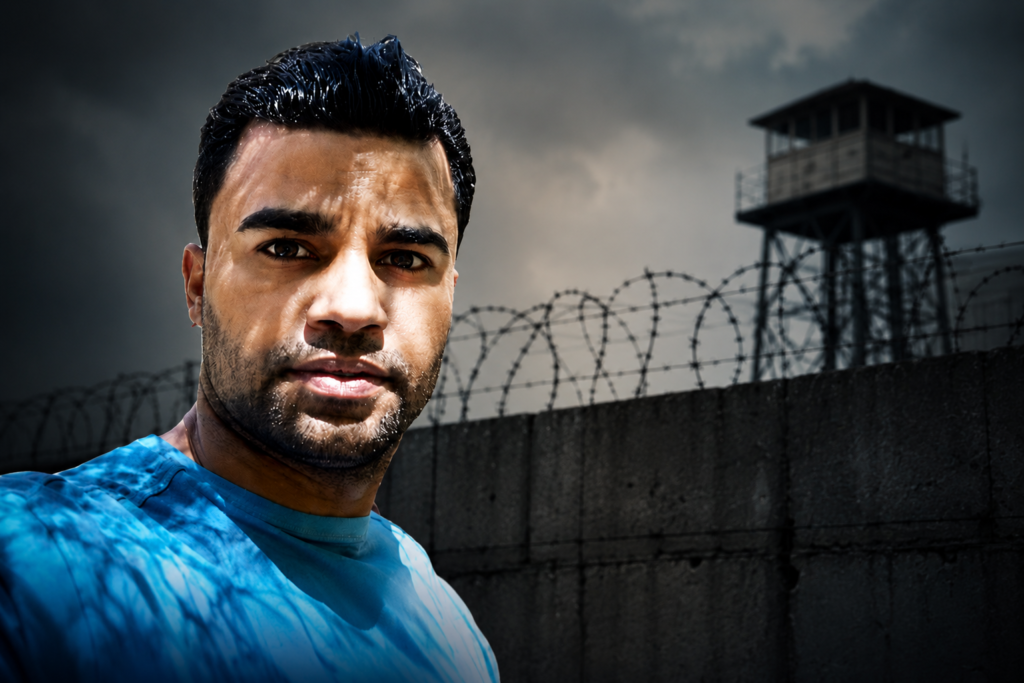
Death Row Boxer Mohammad Javad Vafaei Sani Reaffirms Support for PMOI 

In a message from Mashhad’s Vakil Abad prison, death row prisoner and boxing champion Mohammad Javad Vafaei Sani says he will continue his resistance and remain committed to what he describes as the path of freedom and justice.  Mohammad Javad Vafaei Sani, an Iranian boxing champion, coach, and political prisoner sentenced to death, has sent a new message from prison reaffirming his support for the People’s Mojahedin Organization of Iran (PMOI/MEK) and expressing his determination to continue resisting despite facing execution.  Vafaei Sani was arrested in March 2020 and later sentenced to death. His case has drawn international attention from athletes, human rights advocates, and political figures. In recent years, numerous athletes and sports figures have voiced support for him and called for the death sentence against him to be overturned, citing concerns over due process and the treatment of political prisoners in Iran.  On June 5, a group of international athletes and Olympians condemned the wave of executions in Iran and voiced support for prisoners facing execution.  The appeal by athletes included tennis legend Martina Navratilova, Olympic medalist Sharron Davies, former Australian national football team captain Craig Foster, and other sports figures.  In a personal note accompanying his latest message, Vafaei Sani wrote:  “You didn’t broadcast my previous messages. I beg you, in the most sensitive moments of my life, let this one be broadcast.”  The following is the full text of his letter:  In the Name of God,  I praise the flawless Creator for His endless blessings, and peace be upon Prophet Muhammad and his family, whose radiant light of prophethood saved us from the ultimate darkness of the nights of disbelief.  In the name of my homeland, Iran, whose greatest pride and hardest choice in the darkest periods of history is the path of Imam Ali and his teachings.  And in the name of my Mojahed brothers and sisters, who are symbols of pride, hope, and sacrifice. They have suffered for years to achieve independence, freedom, and to defend the oppressed masses of the country, and at the cost of their lives, they cry out for justice and freedom. I learned from them that my life and existence must align with the words of Imam Ali, who says:  “By God, I will not rest until I establish the truth and overthrow falsehood.”  In the hardest and most sensitive moments of my life, nothing remains for me but faith in the words of the Quran at the end of Verse 4 of Surah Al-Hadid:  “And He is with you wherever you are, and Allah sees well all that you do.”  I raise my hands in prayer, and simply and briefly, I ask Him to increase my will and courage at this time, and to accept from me my loyalty to the oppressed, to the truth, and to the freedom of the people of my land.  We, the deprived of the most transcendent human heritage of our land, who have been oppressed for a long time, now have no choice but to stand up to defend our people, our future, and our freedom.  We will not surrender, and we have proven that we possess the most formidable weapon possible, which is our faith and righteousness. Our existence is but one belief, and our life is but one word. Without a doubt, the will of God is above all wills, and life and death are only by His will.  Our presence on the path of truth and honor is the very path of the People’s Mojahedin Organization of Iran, which is a blessing and a grace from our Lord. With faith in this goal, and a greater faith that God is with us on this path, we will continue our resistance.  I wish health and victory for Mrs. Maryam Rajavi, Massoud Rajavi, and all the Mojahedin.  Hoping for the day of freedom and pride for the people of my homeland.  Long live the Democratic Republic of Iran – Salute to Rajavi.  May God grant us success.  May 18, 2026  Vafaei Sani remains on death row as international concern continues over the growing number of political prisoners facing execution in Iran. Human rights organizations have repeatedly called for his sentence to be overturned and for greater scrutiny of political prosecutions and death penalty cases in the country. 

Scroll to Top