Who was Iran’s Dictator Ali Khamenei?
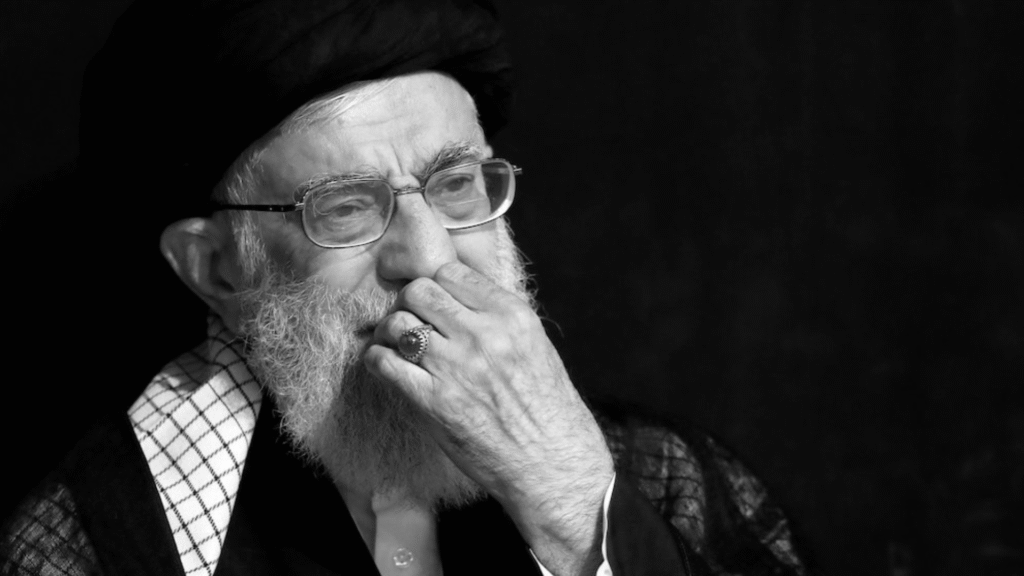
Simay Azadi April 2026 – April 8, marked the 40th day since the death of Ali Khamenei, the Iranian regime’s supreme leader. Khamenei’s final days were defined by the January 2026 uprising, where his final act of domestic policy was the “black bag” strategy—broadcasting images of dead protesters in industrial bags to terrorize the public. It was the closing chapter for a leader whose transition from a minor cleric to a multi-billionaire dictator left Iran on the brink of ruin. Roots and the “Superficial” Scholar Born in Mashhad on April 19, 1939, Khamenei was the son of Javad Khamenei, a cleric born in Najaf, Iraq. His education began in traditional Maktab-khanehs and progressed through various seminaries in Mashhad and Qom. However, his religious credentials were long disputed; his brother-in-law, Sheikh Ali Tehrani, described his studies in Qom as “superficial and unfocused,” noting that he spent only four years in serious study and lacked the focus required for high-level jurisprudence. His political activities occurred at age 23, not through a pursuit of democracy, but in opposition to the Shah’s “White Revolution.” Alongside Khomeini, Khamenei opposed land reforms and women’s suffrage, viewing these changes as a threat to the feudal class interests of the mullahs. During the Shah’s reign, he was arrested six times, with his longest stint being an eight-month imprisonment in 1975. The Path to Absolute Power Following the 1979 Revolution, Khamenei moved rapidly through the regime’s hierarchy, serving as a representative to the Defense Ministry, the Imam of Friday Prayers in Tehran, and eventually President from 1981 to 1989. His path to the Supreme Leadership was somehow cleared by the 1988 massacre of 30,000 political prisoners. Hussein-Ali Montazeri, the designated successor to Khomeini, was ousted and placed under house arrest after protesting the execution . Following Khomeini’s death in 1989, Khamenei was elevated to Supreme Leader with the help of Akbar Hashemi Rafsanjani, despite lacking the constitutional requirement of being a high-ranking mujtahid (jurist). At the time, Khamenei himself admitted his own inadequacy, stating, “We should weep tears of blood for the nation for which even the possibility of someone like me becoming the leader is proposed.” As the Iranian regime marks 40 days since Khamenei’s death, it is worth remembering his own words before taking power in 1989: “One should weep tears of blood to even consider me for leadership.”Tens of thousands of killings and executions later, he was proven right.#IranWar pic.twitter.com/y6eyU9Rt2F — Ehsan Eghbal Eslami (@Ehsaneghbale) April 9, 2026 A Governance of Blood: Domestic and Foreign Terror Khamenei’s 37-year reign as Supreme Leader was marked by the systematic elimination of dissent: The $200 Billion Shadow Empire While a 2018 Gallup poll ranked him as the world leader least attentive to his people’s welfare, Khamenei amassed a fortune estimated by the U.S. Embassy in Iraq and reported by Reuters at $200 billion. This wealth was managed through the “Setad” (Execution of Imam Khomeini’s Order) and various foundations like Bonyad Mostazafan and Astan Quds Razavi, which own thousands of companies in shipping, dairy, and oil. His personal life stood in stark contrast to his public image of a “pious ascetic”: The Cost of “Strategic Depth” Khamenei’s foreign policy funneled the nation’s wealth into regional chaos: The Final Failure The regime’s supreme leader consistently preached a doctrine of “No war, no negotiation.” Yet, his strategic blindness led to both. By early 2026, his provocations resulted in the direct military confrontation that claimed his life. He died leaving behind an Iran scarred by 47 years of clerical rule—a period that began with a “superficial student” and ended with a billionaire dictator whose final legacy was the “black bags” of his own citizens. In 2018, Ali Khamenei, as the Iranian regime’s supreme leader, said: “There will be no war, and we will not negotiate.”Eight years later, after major changes in Iran and across the region, negotiations have taken place, war has broken out, and he himself has been killed. https://t.co/Q8KEjdP64h pic.twitter.com/qBXUJlmfMd — Ehsan Eghbal Eslami (@Ehsaneghbale) March 29, 2026