Simay Azadi English

News

News

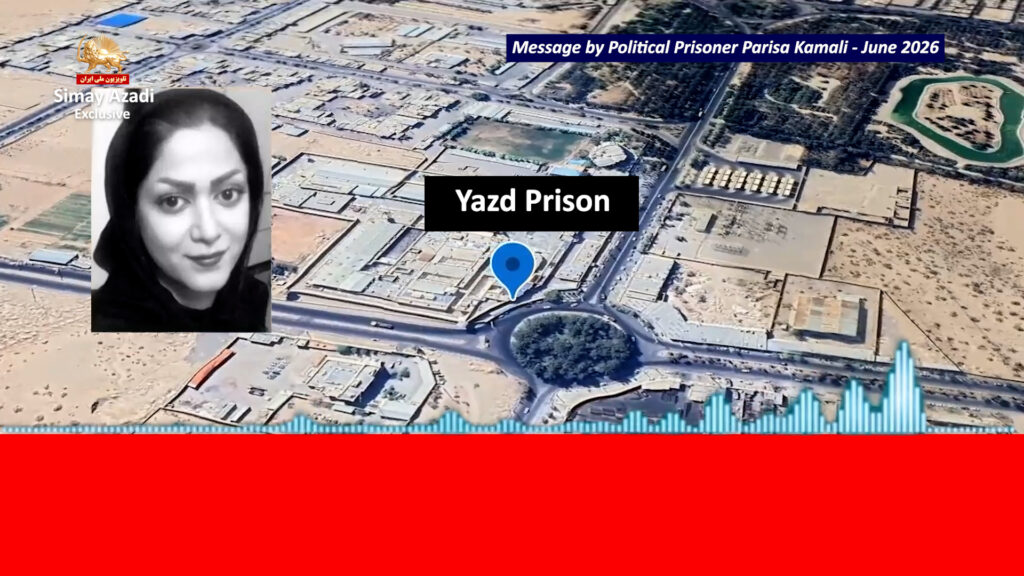
Political Prisoner Parisa Kamali Calls for End to Executions in Iran 

In a recent audio message from Yazd Central Prison, political prisoner Parisa Kamali condemned Iran’s use of the death penalty and appealed for the lives of prisoners currently facing execution.  Parisa Kamali, a political prisoner serving an eight-and-a-half-year prison sentence in Iran, has released an audio message from Yazd prison condemning the use of executions and calling for the death sentences of several political prisoners to be overturned. Kamali is a mother of one child.   Kamali is imprisoned on charges that include insulting Supreme Leader Ali Khamenei, propaganda against the state, and membership in the People’s Mojahedin Organization of Iran (PMOI/MEK). Her message comes amid growing concern over the number of political prisoners facing execution and reports of deteriorating prison conditions.  Opening her message, Kamali described what she sees as a climate of repression inside Iran.  “Greetings to the martyrs of the path of freedom and their families. Here, cardboard rulers govern. This is a place where one is stunned by the endless crimes. Cries are answered with bullets and the noose. There is not a day that passes without an execution, without lives being taken.”  Referring to the execution of political prisoners, she continued:  “Our fellow countrymen are victims of hands stained with blood—hands that use their pens to sign death sentences. For years, the rule of the mullahs, together with the systematic brutality of the Revolutionary Guards, has committed crimes beyond imagination.”  Kamali repeatedly called for an end to capital punishment.  “No to executions, because they are a tool for creating fear and repression.”  “No to executions, because they are essential to the survival of the mullahs’ rule and destructive of humanity.”  Addressing those who carry out executions, she said:  “You execute in the hope of ending us. You have miscalculated. We are countless.”  She then invoked the names of recently executed political prisoners and protesters:  “We are Vahid Baniamerian, Mohammad Taghavi, Babak Alipour, Pouya Ghobadi, Abolhassan Montazer, Shahrokh Daneshvarkar, Mohammad Amin Biglari, Amir Hossein Hatami, Ali Fahim, Shahin Vahedparast, Sasan Azadvar, Abbas Akbari, and all those whom you wanted to silence through execution.”  “We are grains of wheat. One by one, we become a thousand harvests.”  Kamali also appealed for the lives of prisoners currently facing execution, naming Manouchehr Fallah, Amin (Peyman) Farahavar, Zahra Tabari, Karim Khojasteh, Alireza Merdasi, Farshad Etemadi-Far, Reza Abdali, Massoud Jamei, and Mohammad Javad Vafaei-Sani.  “I call for the death sentences against my sisters and brothers to be overturned.”  She concluded:  “I hope for the day when there is no trace of execution in my homeland Iran, or anywhere else in the world.”  The message comes as concerns grow over the treatment of Kamali herself. According to reports published on February 5, 2025, prison authorities in Isfahan Prison had denied her access to medication required for a thyroid condition. Reports indicate that despite needing specialized treatment and medical supervision, she has been prevented from visiting medical facilities and has not been provided with necessary medication.  Her message also comes amid increasing concern over the use of the death penalty in political cases. In recent months, courts have issued or reaffirmed death sentences against several political prisoners, while human rights groups have warned that the number of executions carried out in Iran remains among the highest in the world. 
News

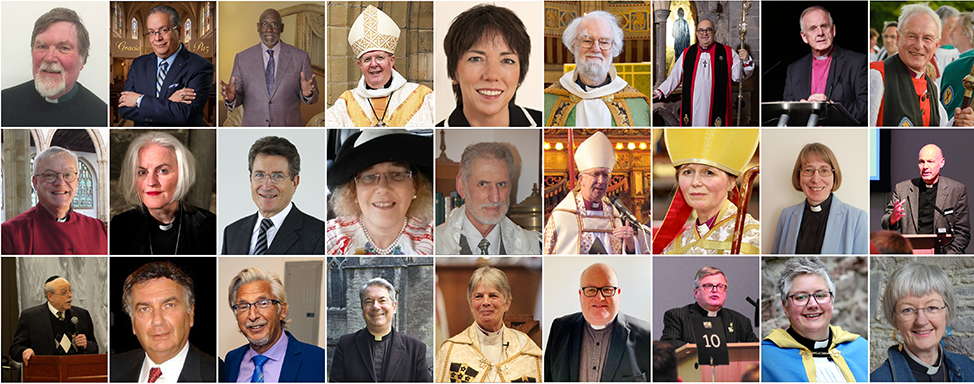
Religious Leaders Urge Action Against Political Executions in Iran 

Thirty bishops and religious leaders from around the world have issued a joint statement calling for an end to political executions in Iran and greater protection for religious minorities, particularly Christians.  A group of 30 bishops and religious leaders from multiple countries has issued a joint statement titled “To Stop the Wave of Political Executions in Iran – In Support of the Rights of Religious Minorities,” warning of a worsening human rights situation in Iran and calling for international action to halt political executions and defend religious freedom.  Among the signatories is Rowan Williams, who wrote:  “There can be no doubt that the aggressive violence of the Iranian regime towards its own people is increasing steadily at the moment. I have heard for myself the evidence sent from within Iranian jails of the cruelties and illegalities suffered by so many, and of the profound and selfless courage exhibited by these witnesses to a more hopeful future.”  He added:  “We cannot be silent in the face of this situation.”  The statement warns that Iranian authorities have intensified repression under the cover of recent military tensions.  “Iranian authorities have exploited the climate of war as a cover for intensifying repression and suppressing growing dissent inside the country, with dozens executed following unfair trials and coerced confessions. The head of the judiciary has publicly called for expedited rulings and, by setting aside legal safeguards and due process, has accelerated the issuance and implementation of death sentences.”  The religious leaders specifically highlighted the situation of prisoners linked to the People’s Mojahedin Organization of Iran (PMOI/MEK).  “A significant number of those executed have been targeted because of their affiliation with the opposition organization, the People’s Mojahedin Organization of Iran (PMOI). Many other detainees associated with this organization remain on death row. The victims were young protesters arrested during the January uprising.”  The statement also focuses on the treatment of religious minorities, particularly Christians.  “Meanwhile, the Iranian regime continues to impose various forms of pressure and restrictions on religious minorities, particularly Christians.”  The signatories cited the December 2025 United Nations General Assembly resolution on human rights in Iran, which expressed:  “serious concern about ongoing severe limitations and increasing restrictions on the right to freedom of thought, conscience, religion or belief, restrictions on the establishment of places of worship, undue restrictions on burials carried out in accordance with religious tenets, attacks against places of worship and burial sites, as well as any other restrictions or attacks involving human rights violations or abuses, including but not limited to increased harassment, intimidation, persecution, arbitrary arrest and detention of, and incitement to hatred that can lead to violence against, persons belonging to recognized and unrecognized religious minorities, including Christians…”  The statement further referred to the June 2025 report of the United Nations Secretary-General on the situation of human rights in Iran, noting:  “The United Nations Secretary-General’s June 2025 report on the situation of human rights in Iran highlighted numerous cases of Christians being arrested, even while gathering to celebrate Christmas.”  It added:  “Over the years, many Christian pastors in Iran have been arrested—or even murdered—for preaching Christianity or insisting on the free practice of Christian worship.”  The religious leaders also expressed support for a major international gathering scheduled for June 20, 2026, in Paris.  According to the statement: “The goals of the rally are to draw global attention to the wave of executions and widespread human rights abuses in Iran, including severe restrictions imposed on religious minorities, Christians and others, and to call on the international community to take urgent action to halt this trend and support the rights of all the people of Iran.”  The signatories also voiced support for democratic change in Iran.  “The rally also expresses support for the establishment of a democratic republic (as outlined in the Ten-Point Plan advanced by Mrs. Maryam Rajavi, President of the NCRI).”  Concluding their appeal, the religious leaders called for broader international solidarity.  “Support from other voices in civil society and religious leadership is crucial for such a vision to be realized. Please consider adding your voice in solidarity with all who are suffering and struggling in Iran and adding your support for the objectives of the rally.”

News

Iran Cuts Communications for Female Political Prisoners 

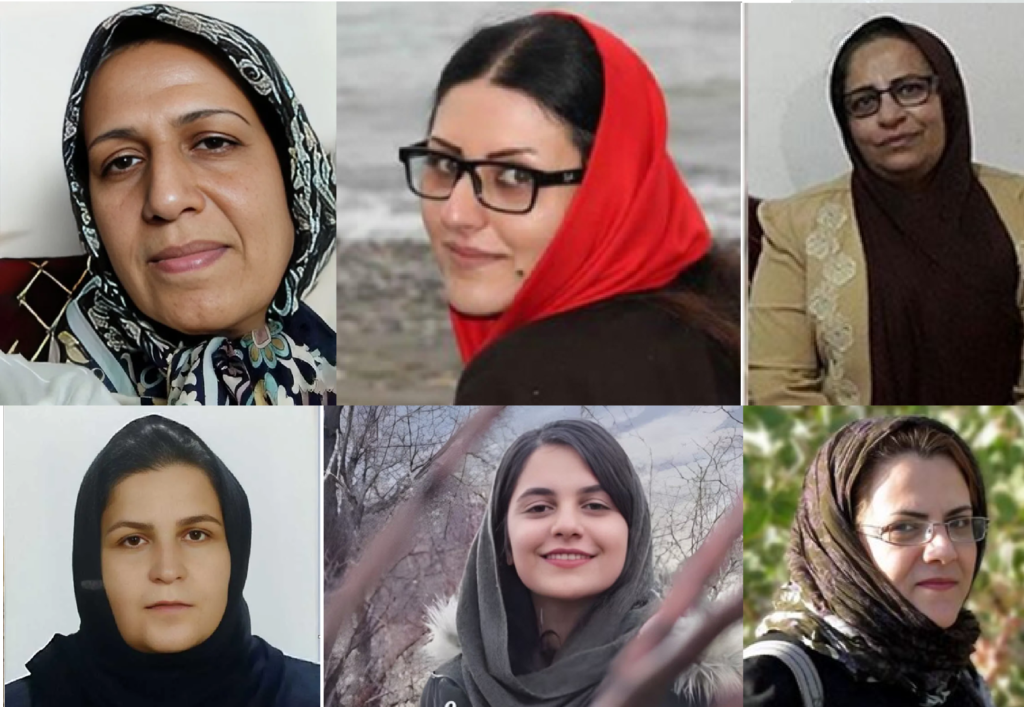
Authorities have reportedly severed telephone access for several female political prisoners in Evin Prison as pressure on political detainees continues to intensify across Iran’s prison system.  Iranian authorities have cut telephone communications for a number of female political prisoners held in Evin Prison, according to reports received this week, in what appears to be the latest measure targeting political detainees and their families.  The affected prisoners reportedly include Shiva Esmaili, Marzieh Farsi, Forough Taghipour, Zahra Safaei, Elaheh Fooladi, Golrokh Iraee, and Sakineh Parvaneh, all of whom are serving prison sentences on political charges.  Among them, Shiva Esmaili, 60, was arrested in Tehran in March 2023 and sentenced to 10 years and six months in prison. Marzieh Farsi, 59, was arrested in August 2023 and sentenced to six years. Forough Taghipour, 32, was arrested for a second time in August 2023 and sentenced to six years in prison.  Golrokh Iraee was arrested in October 2022 and sentenced to six years. She had previously spent six years in prison following an earlier arrest in 2016 and was rearrested shortly after her release. Sakineh Parvaneh was arrested in April 2023 and sentenced to six years after previously serving a three-year prison term following her 2020 arrest.  Zahra Safaei, 63, was arrested in September 2023 and sentenced to five years in prison. It is her third imprisonment; she previously spent eight years in prison during the 1980s because of her support for the People’s Mojahedin Organization of Iran (PMOI/MEK). Elaheh Fooladi was arrested in December 2023 and sentenced to five years.  The reported communication restrictions come amid broader concerns about conditions facing political prisoners throughout Iran. Reports from Ghezel Hesar Prison indicate that detainees arrested during the January 2026 uprising are being held in overcrowded conditions in Wards 35 and 37 of Unit 3, where many reportedly suffer from untreated injuries, including broken bones and dental trauma sustained during arrest and interrogation.  According to the reports, Ward 37 houses approximately 200 prisoners and lacks any cooling system despite high temperatures. Water shortages are reportedly frequent, and prisoners have been pressured to pay for water supplied by tanker trucks.  In a separate development, former political prisoner Milad Sajadian, 32, was reportedly arrested in Shiraz. After launching a hunger strike in protest, he was hospitalized after seven days and later transferred to Adelabad Prison. Reports indicate that he has recently been moved from the prison to an undisclosed location, and no information has been released regarding his whereabouts or condition. Sajadian had previously been arrested in January 2022 and again in September 2023, serving a total of three years in prison because of support for the PMOI.  The latest reports come amid a wider crackdown on political prisoners and their families. In recent weeks, relatives of political detainees and PMOI supporters have reportedly been summoned and interrogated by intelligence authorities, while courts have continued issuing and upholding death sentences against political prisoners. Human rights advocates have also expressed concern over Iran’s continued use of the death penalty, noting that the number of executions in the country remains among the highest in the world.  The reported restrictions on communication, deteriorating prison conditions, new arrests, and continued pressure on detainees and their families have added to concerns about the treatment of political prisoners across Iran’s prison system. 
News

Iran: Ex-IRGC Commander Acknowledges Impact of PMOI Nuclear Revelations 

Simay Azadi – Hossein Alaei says PMOI disclosures led to international scrutiny of Iran’s nuclear program and the 2003 Saadabad negotiations.  In an interview published by the regime-affiliated Iran Talk channel on June 3, 2026, former Islamic Revolutionary Guard Corps (IRGC) commander Hossein Alaei acknowledged that disclosures by the People’s Mojahedin Organization of Iran (PMOI/MEK) regarding Iran’s nuclear activities triggered international scrutiny and eventually led to negotiations between Tehran and European powers.  Alaei, the first commander of the IRGC Navy and a former chief of the IRGC Joint Staff, referred to the period when Iran’s nuclear program first came under international attention.  “Around 2001, when the nuclear work began, the PMOI disclosed information about it and created sensitivity that eventually led to the Saadabad negotiations in 2003,” he said.  The remarks are notable because they come from a senior former commander of the Revolutionary Guards and constitute a public acknowledgment of the role played by the PMOI’s nuclear revelations in shaping the international response to Iran’s nuclear program.  Alaei argued that Tehran could have chosen a different path at the time.  “If Iran had made economic development its strategy at that point, many things could have changed.”  He added:  “At the very least, it would not have provided them with that pretext.”  The Saadabad negotiations, held in October 2003 between Iran and the foreign ministers of Britain, France, and Germany, followed mounting international concern over previously undisclosed nuclear activities. The talks resulted in Tehran agreeing to temporarily suspend uranium enrichment and cooperate more closely with international inspectors.  The PMOI’s disclosures regarding secret nuclear facilities in the early 2000s played a central role in bringing the issue to international attention. The revelations ultimately triggered investigations by the International Atomic Energy Agency (IAEA) and years of diplomatic disputes over the nature and purpose of Iran’s nuclear program.  #Thread 1- 📅 August 14 marks 23 years since the Iranian Resistance first blew the whistle on the regime’s clandestine nuclear weapons program.On this day in 2002, @iran_policy’s @A_Jafarzadeh revealed details of the regime’s Natanz uranium enrichment site and the Arak heavy… pic.twitter.com/KPCFo0VSQJ — SIMAY AZADI TV (@en_simayazadi) August 14, 2025 Alaei’s comments are not the first acknowledgment by regime insiders of the impact of those disclosures.  In a televised interview in April 2022, former Deputy Speaker of Parliament Ali Motahari stated:  “From the very beginning, when we started with the nuclear activity, our goal was to build a bomb and reinforce our deterrence powers, but we were unable to maintain confidentiality as confidential reports were leaked by the hypocrites’ group.”  In April 2022, Ali Motahari, former Deputy Speaker of Iran’s Parliament, admitted that the regime had intended to build a nuclear weapon from the beginning but was stopped by the MEK.When asked how they accessed the top-secret intelligence, he said:“They are everywhere.” pic.twitter.com/5ZwdXcWhZa — Ehsan Eghbal Eslami (@Ehsaneghbale) December 5, 2025 “Hypocrites” is the regime’s pejorative term for the PMOI.  Similarly, senior IRGC officials have previously blamed the organization for exposing the nuclear program. In a televised speech on September 7, 2013, then-IRGC commander Hossein Salami said:  “They were the ones who, through espionage in our nuclear environment, created an atmosphere in the international system regarding our nuclear activities.”  More than two decades after the PMOI first revealed information about Iran’s nuclear activities, Iran’s pursuit of nuclear weapons stays serious international concern.  

News

Iran’s Inflation Crisis Reaches a New Stage, State Media Warn 

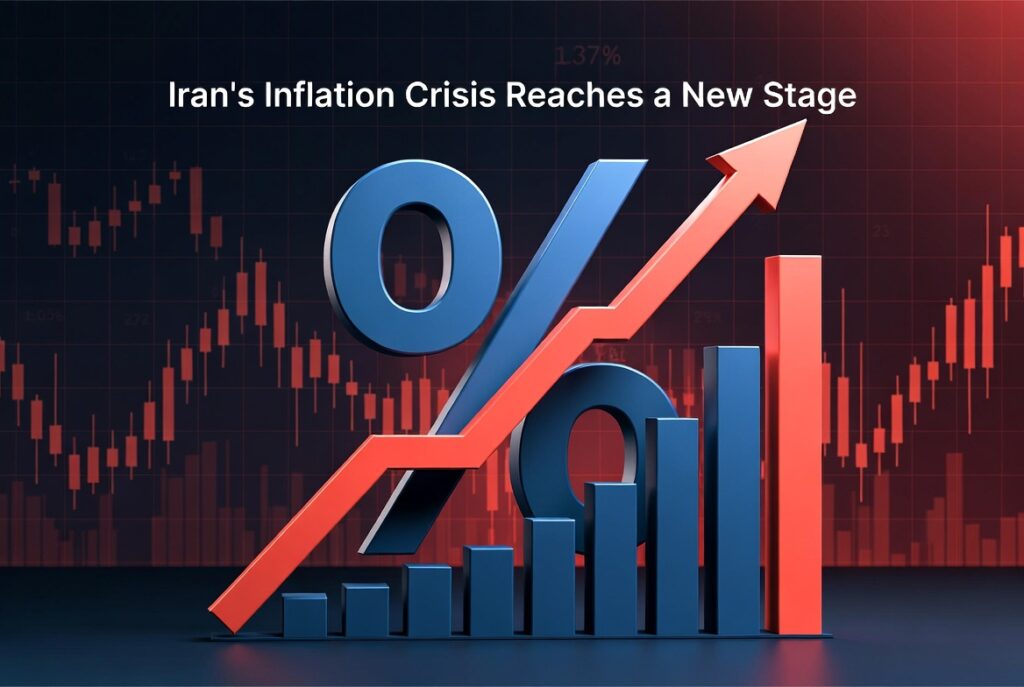
State-affiliated economists say soaring prices, collapsing purchasing power, and structural failures have pushed many Iranian workers beyond inflation and into what they describe as a “survival crisis.”  Two reports published by state-affiliated newspapers on June 2, 2026, reveal growing concern among Iranian economists over the country’s worsening economic conditions. While official figures show inflation already running at some of the highest levels in decades, analysts quoted by the regime’s own media warn that the crisis has evolved beyond rising prices and is increasingly threatening the basic livelihood of millions of Iranians.  According to Jahan-e Sanat, citing data from the Statistical Center of Iran, annual inflation reached 50.6 percent, while point-to-point inflation in April 2026 reached 67 percent compared to April 2025. More strikingly, prices in the goods sector increased by 95.7 percent, while services rose by 39.1 percent over the same period.  The newspaper noted that the real concern among economists is not only the overall inflation rate but the speed at which service-sector prices are rising.  According to the official figures:  Point-to-point inflation (April 2026 vs. April 2025):  Monthly inflation (April 2026 vs. March 2026):  Yet, the real figure, can be much higher, according to independent experts. The newspaper emphasized that while goods inflation remains higher overall, economists are increasingly alarmed by the 38 percent monthly jump in service inflation, describing it as a figure that cannot be ignored.  “The service price index increased by 38 percent in April compared with the previous month,” the report stated, noting that the costs of haircuts, home repairs, vehicle repairs, doctor visits, restaurants, and similar services rose by more than one-third in a single month.  To illustrate the impact on ordinary households, the report translated the statistics into everyday expenses. A washing-machine repair that cost 400,000 tomans increased to more than 550,000 tomans. At the current market rate of roughly 174,800 tomans per U.S. dollar, those increases represent jumps from about $2.86 to $3.95 and from $2.29 to $3.15, respectively.  The sharpest monthly increases were recorded in the categories of miscellaneous services, transportation, and communications, which rose by 88 percent, 85 percent, and 20.6 percent, respectively. According to the newspaper, any service dependent on transportation, energy, labor, or imported components experienced substantial price increases.  A separate report published by Tosee Irani on the same day focused on the deteriorating condition of workers and low-income households. Economist Farshad Delangizan argued that inflation is no longer the central problem facing many Iranians.  “The worker’s problem is not inflation; it is survival,” he said.  Delangizan argued that many discussions about inflation fail to reflect how working families actually spend their income. While food accounts for only about 28 percent of the official inflation basket of 470 to 480 goods and services, he noted that for many workers nearly all income is spent on food.  “When food prices increase by more than 100 percent, wage increases not only fail to improve purchasing power, they can actually reduce it,” he said.  The economist also highlighted the extent of the hardship facing low-income families.  “If a person wants to consume only dry bread and use the most basic transportation, they must spend at least 100,000 tomans per day.”  That amounts to approximately 3 million tomans per month for one person and 12 million tomans per month for a family of four—roughly $17 and $69 per month, respectively, at the current exchange rate.  He warned: “If these people are not helped and if the government does not define a support basket, we will face a survival crisis.”  Significantly, the newspapers themselves pointed to the roots of the problem. According to Jahan-e Sanat, economists identify three key requirements for controlling inflation: stabilizing the exchange rate, ending government money creation to finance budget deficits, and preventing rent-seeking through greater transparency in the allocation of foreign currency resources. The report explicitly stated that repeated government borrowing from the Central Bank and printing money to cover budget shortfalls continue to fuel inflation.  Taken together, the reports published by Iran’s own state-affiliated media depict an economy struggling under the weight of chronic inflation, currency instability, budget deficits, and declining purchasing power. While officials often attribute economic difficulties solely to sanctions and external pressures, the figures and analysis presented by the regime’s own economists repeatedly point to structural mismanagement, monetary expansion, rent-seeking networks, and failed economic policies as major drivers of the crisis.  For many Iranians, the issue is no longer simply inflation. As one economist quoted by state-affiliated media put it, the question has become one of survival.  The constant warning by the state-run media and officials is due to their fear that the ongoing economic crunch could trigger another uprising like the ones in 2019 and 2026.  

News

Iran: Regime Analyst Acknowledges PMOI Operation Near Khamenei Compound 

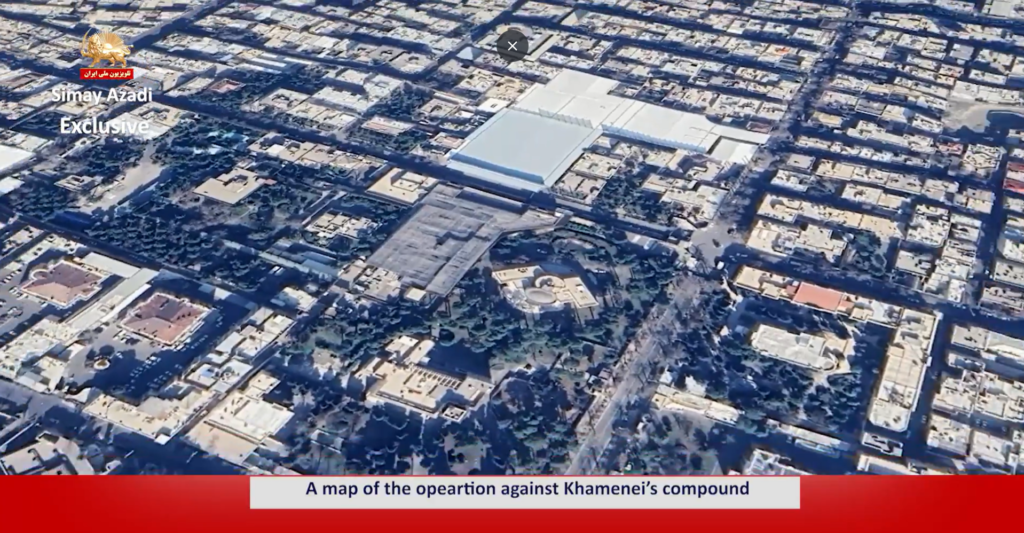
After a long time of denial and downgrading the situation, a regime-affiliated political analyst publicly referred to the People’s Mojahedin Organization of Iran (PMOI/MEK) operation near Supreme Leader Ali Khamenei’s compound in Tehran days before the outbreak of war, offering one of the clearest acknowledgments by a figure linked to the Iranian establishment of the February 23 clashes.  After long time of denial and downplaying the news, a regime-affiliated political analyst has publicly referred to a PMOI/MEK operation near Iran's now-dead Supreme Leader Ali Khamenei’s compound in Tehran just days before the outbreak of war. The remarks amount to one of the… https://t.co/zHFgs9WoXz pic.twitter.com/tT8VAYvKy9 — SIMAY AZADI TV (@en_simayazadi) June 3, 2026 In remarks published in recent days on the Iran Talk channel, regime analyst Mehdi Kharatian referred to what he described as an operation carried out by the People’s Mojahedin Organization of Iran (PMOI/MEK) against Khamenei’s compound on February 23, 2026, just days before the start of the war.  Kharatian said:  “You can see that three or four days before the war, we had the PMOI attack on the Leader’s compound. An attack took place four or five days before the war.”  The comments appear to refer to the large-scale clashes reported on February 23 around the Motahari Complex in central Tehran, which houses Khamenei’s headquarters along with the offices of several key state institutions, including the office of Mojtaba Khamenei, the Supreme National Security Council, the Guardian Council, and other senior government bodies.  During the discussion, host Mohammad Fazeli noted that only fragmented reports had initially emerged about the incident.  “Some incomplete reports came out,” Fazeli said.  Kharatian replied:  “Yes, the organization itself announced it.”  He then claimed that many participants had been captured or killed before they could leave the area.  “Before they could get out, they were immediately dealt with—arrested or killed. The system had understood what was happening and reacted immediately.”  The remarks are notable because Iranian authorities have largely avoided publicly discussing the details of the February 23 operation.  At the time, the PMOI announced that hundreds of its members had participated in an operation targeting Khamenei’s heavily fortified headquarters. The organization said more than 100 members were killed, wounded, or detained during clashes with security forces, while others managed to withdraw from the area. It later released the names of detainees and missing individuals and said the information had been submitted to the United Nations Special Rapporteur and international human rights organizations.  The PMOI also called on UN officials and international observers to seek access to detainees and verify reports of those killed during the operation. According to the organization, additional names of arrested, missing, and deceased participants were later submitted to international bodies as documentation efforts continued.  Kharatian’s comments come amid a broader crackdown on individuals accused of links to the PMOI. In recent weeks, families of political prisoners and PMOI supporters have reportedly been summoned and interrogated by Iran’s Ministry of Intelligence, while relatives of executed prisoners have faced threats and pressure.  Since July 2025,  ten PMOI members have been executed, including Hamed Validi and Mohammad Massoum-Shahi on April 20, 2026, as well as Vahid Baniamerian, Pouya Ghobadi, Babak Alipour, Mohammad Taghavi, Akbar Daneshvarkar, and Abolhassan Montazer.  Kharatian’s remarks represent one of the most direct acknowledgments by a regime-affiliated commentator that a significant confrontation took place around Khamenei’s compound shortly before the outbreak of war, an event that Iranian authorities have largely refrained from discussing publicly. 

News

Iran: Two January Protesters Executed in Tehran on Monday 

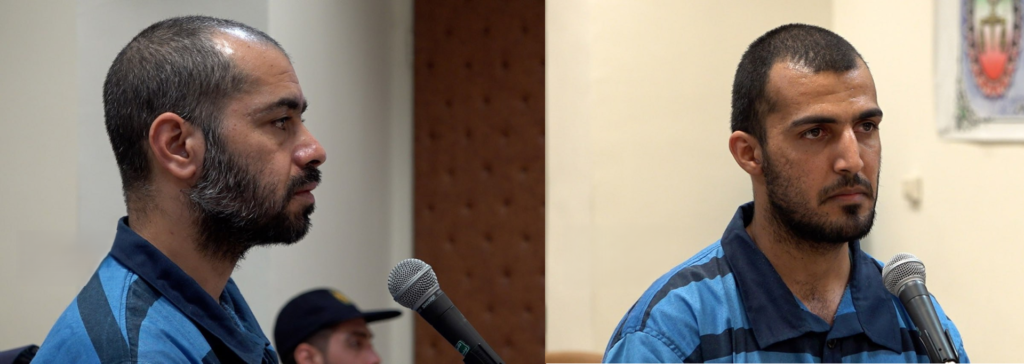
Mehrdad Mohammadinia and Ashkan Maleki, two January 2026 protesters were executed in Tehran on Monday 1 June 2026 with Iran’s judiciary describing them as “leaders of the unrest”.  • Mehrdad Mohammadinia and Ashkan Maleki were executed by the Iranian regime in Tehran on Monday 1 June 2026.    • The executions come amid a wave of repression ordered by Chief Justice Mohseni-Eje’i and calls from regime hardliners for public hangings and floggings.  Iran Executes Two More January Protesters as Repression Intensifies  The Iranian regime executed two protesters, Mehrdad Mohammadinia and Ashkan Maleki, in Tehran on Monday 1 June 2026. This raises the number of January protesters executed since 19 March 2026 (the eve of the Persian New Year) to at least 17.  Iran’s judiciary announced the executions through its official Mizan News Agency, describing the two men as “leaders of the unrest.” It claimed they were involved in setting fire to a Basij centre at Jafari Mosque in Tehran’s Kouy-e Nasr (Gisha) district, clashing with security forces, blocking roads, preventing the movement of security personnel, burning two Basij motorcycles, and attacking a religious seminary.  State Media Video of Sham Trial  State media published a video titled “The End of Two Leaders of the January Coup” showing the men during their trial.  On 21 February 2026, state media had already aired footage of the sham trial of three January protesters — including Mehrdad Mohammadi-Nia and Ashkan Maleki — accusing them of burning a mosque and a seminary in Tehran’s Nasr neighborhood. The third protester, Arman Ma’refati, has been sentenced to death and remains at risk of execution.  Mizan News Agency claimed that Mehrdad Mohammadi-Nia and Ashkan Maleki were the “main culprits” in burning the Jafari Mosque, which served as a center for IRGC Basij forces in western Tehran. The mosque was reportedly under the control of former Iranian President Ebrahim Raisi for 20 years. The state-run newspaper Hamshahri wrote on  22 April 2025 that the mosque had been in Raisi’s possession for two decades. Raisi who was killed in a helicopter crash in 2024, was one of the key perpetrators of the 1988 mass executions in which tens of thousands of political prisoners were killed across Iran.  Executions Across Multiple Cities  With the execution of these two protesters on Monday, the number of January protesters executed since 19 March has risen to at least 17. Since the eve of the Persian New Year, and amid the record internet blackout, these protesters have been executed in Tehran, Karaj, Isfahan, Rasht, Mashhad, and Naein following sham trials that lacked any due process.  The two men executed on Monday were sentenced to death by Branch 15 of the Tehran Revolutionary Court. Presiding over these trials is Judge Abolqasem Salavati, widely known as the “Judge of Death.” He is notorious for issuing hundreds of executions and long prison sentences based on fabricated charges.  In 2022, Salavati issued the death warrant for Mohsen Shekari (23), the first protester executed during the uprising triggered by the death of Mahsa Amini. Shekari was hanged just 2.5 months after his arrest following a sham trial.  Salavati has also been one of the regime’s primary tools for hostage diplomacy, presiding over the sham trials and sentencing of American and other Western citizens detained on fabricated espionage charges to be used as political bargaining chips.  Judicial Mobilization and Calls for Public Executions  The wave of executions of January protesters and other political prisoners comes against the backdrop of explicit calls by top regime officials for the speedy execution of dissidents.  On 19 April 2026, Iran’s Chief Justice Gholam-Hossein Mohseni-Eje’i issued an unprecedented directive ordering a total mobilization of the courts to crush dissent. Comparing judges to “combatants,” he demanded they work nights and Fridays with no holidays. He ordered prosecutors to fast-track interrogations directly inside prisons such as Evin and issue indictments within hours rather than days.  🚨 IRAN: CHIEF JUSTICE EJEI DECLARES JUDICIAL WARIn an unprecedented directive, Mohseni-Ejei has ordered a total mobilization of the courts to crush dissent. Comparing judges to "combatants," he demanded they work nights and Fridays with no holidays.He ordered prosecutors to… pic.twitter.com/gqMVBHy81T — Ehsan Eghbal Eslami (@Ehsaneghbale) April 19, 2026 Moreover, an Iranian MP recently demanded that Mohseni-Eje’i carry out public executions and floggings. Hamid Rassaei urged him to establish wartime “field courts” and bypass normal trial procedures so that public floggings and hangings could be carried out quickly in city squares. Praising the regime’s execution record, he declared: “Mr. Mohseni-Eje’i, your launcher must fire!” 

News

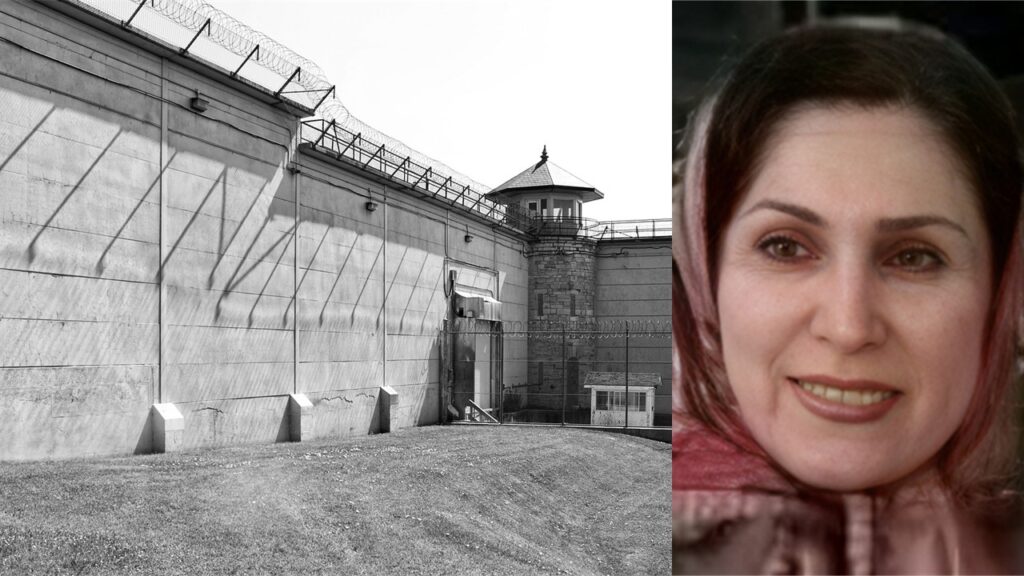
Iran: Death Sentence Reimposed on Zahra Tabari 

A court in Rasht, capital of Gilan Province in northern Iran, has again sentenced political prisoner Zahra Tabari to death, months after Iran’s Supreme Court ordered a review of her case following international condemnation of the original ruling.  Zahra Tabari, a 68-year-old political prisoner held in Iran, was again sentenced to death by a Revolutionary Court in Rasht, according to reports released this week. The ruling was recently communicated to Tabari after a retrial ordered by the Supreme Court.  Tabari was first sentenced to death in November 2025 by Branch One of the Revolutionary Court in Rasht, presided over by Judge Ahmad Darvish-Goftar. According to reports, she was convicted on charges of baghi (“rebellion”) for membership and activity in the People’s Mojahedin Organization of Iran (PMOI/MEK). The proceedings lasted only ten minutes, were conducted by video conference, and took place without her chosen lawyer present.  FoFllowing international condemnation of the sentence, Iran’s Supreme Court referred the case for review to Branch Two of the Revolutionary Court in Rasht, headed by Mohammad Ali Darvish-Goftar, the son of Ahmad Darvish-Goftar.  Iran's Regime has reaffirmed Zahra Tabari's death sentence. This is her last voice message from inside prison: "To me, it is not the matter of saving life of an individual, but of saving lives of many others."pic.twitter.com/dgpj92qZHE https://t.co/rBYIBlSAVB — SIMAY AZADI TV (@en_simayazadi) May 31, 2026 On April 14, 2026, the court reissued the death sentence on the same charges. The decision was formally delivered to Tabari in recent days.  Tabari, an electrical engineer and graduate of the University of Borås in Sweden with a master’s degree in sustainable energy, was arrested in April 2025 after security forces raided her home in Rasht. She had previously been arrested in June 2022 and sentenced to 18 months in prison.  On December 23, 2025, UN experts—including Mai Sato, the Special Rapporteur on the situation of human rights in the Islamic Republic of Iran—urged the Iranian authorities to halt Zahra Tabari’s execution.  In December 2025, more than 400 prominent women from around the world issued an urgent public statement calling for Zahra Tabari’s immediate release.  #Breaking #Iran News AlertJoint statement by more than 400 women politicians, leaders, parliamentarians, sports champions, and human rights activists, addressed to the international and human rights community, calling for urgent action to stop the execution of Zahra Tabari.… pic.twitter.com/zyyJOOp6Qm — SIMAY AZADI TV (@en_simayazadi) December 23, 2025 The new ruling comes amid increasing pressure on individuals accused of links to the PMOI and their families. In recent weeks, reports have indicated that relatives of political prisoners and PMOI supporters have been summoned and interrogated by Iran’s Ministry of Intelligence. Families of prisoners, including relatives of Marzieh Farsi, Sedigheh Moradi, Azar Karvandi, and executed PMOI member Akbar Daneshvarkar, have faced questioning, threats, and pressure to participate in proceedings linked to a mass trial involving PMOI members and other opposition figures.  The case also follows a wave of executions involving PMOI members. Since July 2025, ten members of PMOI/MEK have been executed, including Hamed Validi and Mohammad Massoum-Shahi on April 20, 2026, as well as Vahid Baniamerian, Pouya Ghobadi, Babak Alipour, Mohammad Taghavi, Akbar Daneshvarkar, and Abolhassan Montazer, who were executed between March 30 and April 4, 2026.  The renewed death sentence against Zahra Tabari comes as concerns continue to grow over political prosecutions, death penalty cases, and the treatment of prisoners accused of links to opposition organizations in Iran. 

News

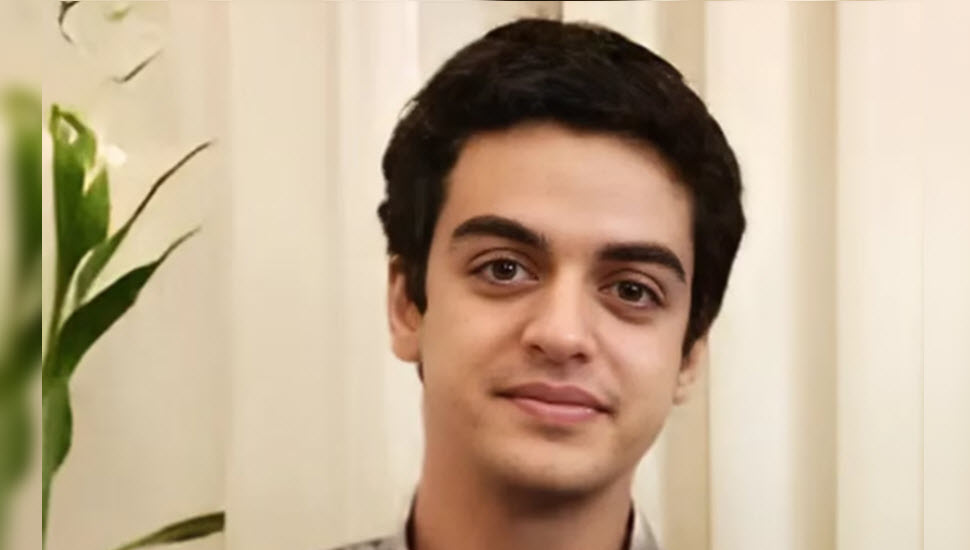
Ali Younesi Defines His Political Position in Prison Statement 

In a statement released from Ghezel Hesar Prison on May 26, imprisoned elite student Ali Younesi responded misuse of his image by remnants of the Shah’s regime; and  reaffirmed his political views on dictatorship, democracy, and Iran’s future.  “In recent days, I and my statement have been supported by some of the creators and users of the slogan ‘Death to the Three Corrupt……’ It seems that after receiving the Leader’s pardon, I have now also received a royal pardon!”  Younesi referrers to the slogan used by supporters of Reza Pahlavi at their rallies abroad, which is: Death to the three corrupts, mullahs, Mojahedin (PMOI) and leftist  #Iran News Alert On the eve of universities reopening, imprisoned elite students Amirhossein Moradi & Ali Younesi wrote:“Universities have become prisons, and prisons have become universities.”They vowed:“Our unbreakable resolve will shape Iran’s destiny—free, republican &… pic.twitter.com/WCUJ9llAlv — SIMAY AZADI TV (@en_simayazadi) September 20, 2025 Younesi then turned to the issue of political prisoners and those executed in recent months. Identifying himself as a supporter of the People’s Mojahedin Organization of Iran (PMOI/MEK), he wrote:  “As a small supporter of the PMOI, I have my role models: six proud cellmates who were sent to the gallows.”  The reference was to Vahid Baniamerian, Pouya Ghobadi, Babak Alipour, Mohammad Taghavi, Akbar Daneshvarkar, and Abolhassan Montazar, six PMOI members executed between March 30 and April 4, 2026 after convictions on security-related charges.  Younesi also invoked the memory of Mohammad Hanifnejad, founder of the PMOI, and his fellow founders, who were executed by the Shah’s government on May 25, 1972.  “If the blood of these six and other freedom-seekers leaves no room for forgiveness between us and the mullahs, then the blood of Hanif and his companions — whose banner these six carried — leaves no room for unity between us and the Shah and his SAVAK.”  “The Shah, through the killing of freedom-seekers, paved the way for this regime to come to power.”  Read the full-text of his letter’s translation Ghezel Hesar Prison – May 26, 2026 In recent days, I and my statement have been supported by some of the creators and users of the slogan “Death to the Three Corrupt Figures…” It seems that after receiving the Leader’s pardon, I have now also been granted a royal pardon! As a small supporter of the People’s Mojahedin Organization of Iran (PMOI/MEK), I have my role models: my six proud cellmates who were sent to the gallows. If the blood of these six and other freedom-seekers leaves no room for forgiveness between us and the Sheikh, then the blood of Hanif and his companions—whose banner these six carried—also leaves no room for unity between us and the Shah and his SAVAK. The Shah, through the killing of freedom-seekers, paved the way for this regime to come to power. And today, the remnants of the Shah, through the slogan “Death to the Three Corrupt Figures…”, are effectively calling on the Mullahs to repay their favor by helping them reach power through executions, so that they may ride the wave of the bloodshed of the January uprising and, by begging foreign governments for power, once again sit upon the throne. But never. There is a border between us and them—a blood-soaked border; the border between dictatorship and freedom. These boundaries must never be blurred. And I stand on this side of that border, alongside the people and for the people, under the slogan: “Death to the oppressor, whether the Shah or the Supreme Leader.” And this stand will not stop until freedom, democracy, and a democratic republic have been established. Ali YounesiQezel Hesar PrisonMay 26, 2026

News

Iran Internet Dispute Deepens Amid Ongoing Blackout Crisis 

Conflicting statements by Iranian officials and state-linked media on May 28 highlighted growing internal divisions over internet restrictions, as millions in Iran continue to face disruptions following the world’s longest nationwide internet blackouts.  The latest dispute erupted after members of parliament and state-aligned media criticized attempts by the administration of President Massoud Pezeshkian to partially restore internet access through a newly formed digital oversight body.  According to comments published by the state-run Mehr News Agency on May 28, Ahmad Rastineh, spokesperson for the Cultural Commission of Iran’s parliament, said reopening unrestricted international internet access would be “against the law” and urged Pezeshkian to reverse the decision.  Rastineh argued that the newly formed “Headquarters for Organizing Cyberspace,” created by presidential order, overlaps with the authority of Iran’s Supreme Council of Cyberspace, the body ultimately overseen by Supreme Leader.   “The reopening of international internet access beyond the approved framework is illegal,” Rastineh said, according to Mehr.  He also claimed unrestricted internet access had contributed to unrest during the January uprising, claiming that some detained teenagers had faced “identity and ideological challenges” because of “hostile media and cyberspace.”  At the same time, Morteza Mahmoudi, another member of parliament, criticized what he described as contradictory policies inside the government. In remarks published on May 28 by the Telegram channel of the state-linked newspaper Arman-e Melli, he said the Supreme National Security Council, chaired by Pezeshkian himself, had approved internet shutdowns, while the same administration later attempted to reverse the restrictions through another body.  “The result of this game of cutting and reconnecting the internet is nothing except manufacturing achievements for themselves,” Mahmoudi said.  The dispute widened further after the hardline newspaper Kayhan, known as the mouthpiece of Iran’s Supreme Leader, criticized the Ministry of Communications for refusing to defend the legality of the new internet body during a live television debate broadcast on May 27. According to Kayhan’s Telegram channel, a legal expert argued the body contradicted both Khamenei’s directives and Iran’s constitutional framework.  Meanwhile, the state-run ISNA News Agency published comments on May 28 from a lawyer defending the legality of the new structure, saying decisions made by the body remain valid unless formally dissolved by competent authorities.  The conflicting statements come as ordinary users across Iran continue reporting slow speeds, unstable mobile connections, and outages even after partial restoration efforts. On May 27, the state-linked website Khabar Online published complaints from users asking why internet shutdowns can be imposed “within minutes” while restoration takes far longer.  Iran’s internet crisis intensified after the outbreak of regional conflict in late February 2026, when authorities imposed sweeping restrictions that monitoring group NetBlocks later described as the longest nationwide internet shutdown in modern history. Rights groups and digital freedom advocates say the blackout severely affected businesses, students, medical access, and communication for millions of Iranians.  The shutdown also followed the January 2026 uprising, during which authorities imposed major internet restrictions while security forces carried out  deadly crackdowns and mass arrests. Since then, the regime has continued expanding internet controls, while different factions inside the political establishment increasingly blame each other over the economic and political fallout of the blackout. 

Scroll to Top