Simay Azadi English

News

News

Iran Upholds Death Sentence for Amin Farahavar 

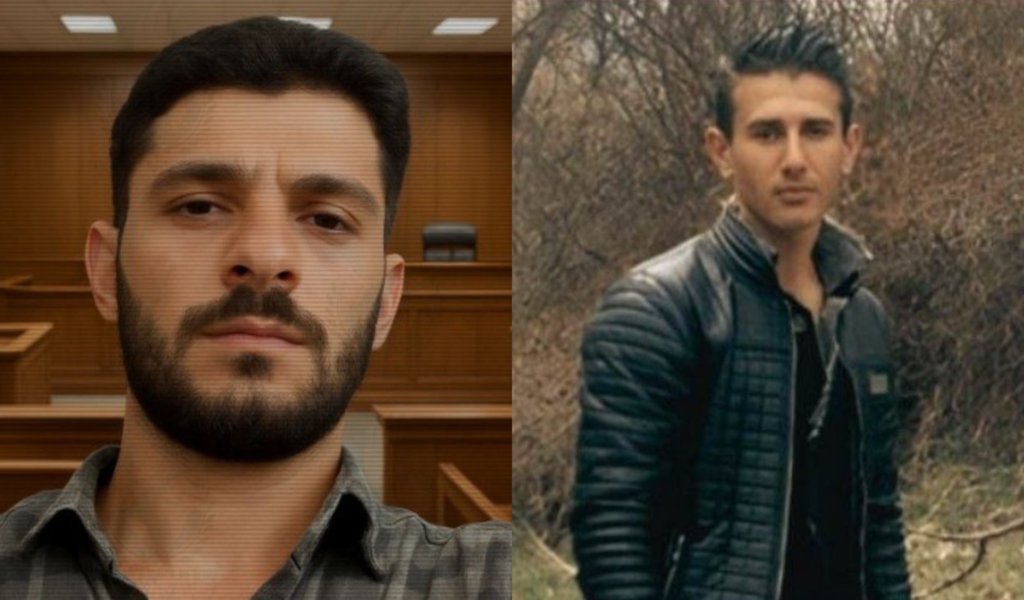
Amin (Peyman) Farahavar, a 38-year-old political prisoner held in Lakan Prison in Rasht, faces imminent execution after Iran’s Supreme Court again upheld his death sentence and rejected his lawyer’s request for retrial.  Farahavar, a poet from Gilan Province known by the pen name Peyman, was sentenced to death on charges including baghi (“armed rebellion”) and moharebeh (“enmity against God”), according to reports. The latest decision by the Supreme Court leaves him at immediate risk of execution.  Farahavar was sentenced to death on May 1, 2025, by the Revolutionary Court in Rasht, reportedly without the presence of legal counsel, under Judge Ahmad Darvish-Goftar. The sentence was later upheld by Branch 39 of the Supreme Court, while a request for judicial review was rejected during the second week of April 2026.  Reports say Farahavar suffers from complications following gallbladder surgery and experiences severe pain, while also being denied adequate medical treatment. During interrogations, he reportedly suffered internal bleeding.  The case comes amid continued concern over executions of political prisoners and detainees accused of links to opposition activity. Since July 2025, ten members of the People’s Mojahedin Organization of Iran (PMOI/MEK) have been executed, including Hamed Validi and Mohammad Massoum-Shahi on April 20, 2026, as well as Vahid Baniamerian, Pouya Ghobadi, Babak Alipour, Mohammad Taghavi, Akbar Daneshvarkar, and Abolhassan Montazer. Several were executed between March 30 and April 4, 2026.  Separately, at least 20 January uprising protesters have reportedly been executed since March 19, according to compiled monitoring, excluding other political prisoner cases.  The executions have coincided with increasingly explicit calls by Iranian officials for faster punishments and harsher sentencing. On April 28, Judiciary Chief Gholam-Hossein Mohseni Eje’i urged courts to accelerate rulings in security cases, arguing delays weaken deterrence, after previously calling for judges to show “no mercy” in protest-related prosecutions. On May 21, regime MP Hamid Rasaei called for wartime “field courts,” public floggings, and rapid executions, telling Eje’i: “Mr. Mohseni-Eje’i, your launcher must fire.” Days later, another regime MP described harsher punishment as a “public demand.” The remarks have unfolded alongside rising executions, expanded arrests, and continued sentencing of political prisoners in Iran. 

News

Iran Restores Internet After Record 2,093-Hour Blackout 

Iran partially restored international internet access on 26 May 2026 after 88 days and 2,093 hours of near-total blackout  Power Struggle Over Iran’s Internet  On Tuesday 26 May 2026, the Iranian regime began partially restoring international internet connectivity after the longest nationwide blackout in modern history.  Internet monitoring group NetBlocks confirmed the move on day 88, after 2,093 hours of near-total isolation from international networks. It described the shutdown as “the longest nationwide internet shutdown in modern history” and added: “It is unclear if the restoration will be sustained.”  State Media Announces Restoration  At midday Tuesday, the state-run ISNA news agency reported:    “With the issuance of the internet connection order by the Minister of Communications and Information Technology, the connection process is underway and this possibility will be provided for everyone within 24 hours.”  Later that afternoon (17:09 CET), the state-run ISNA News Agency claimed full restoration:    “Full international internet connection has been established in Iran’s telecommunications. Dear subscribers who use fixed broadband services (FTTH, VDSL and ADSL) are now fully connected to the global internet network without any restrictions and can fully benefit from all services and international websites.”  Pezeshkian’s Order  The move followed an order from  Pezeshkian to restore international internet access to its pre-January 2026 status.  Later, the Judiciary pushed back. The Media Centre of the Judiciary announced on Tuesday that the Administrative Justice Court had halted implementation of the Cyberspace Headquarters resolution:  “Following complaints seeking the annulment of the document establishing the Special Headquarters for Organizing and Leading the Country’s Cyberspace…, the Specialized Board of Industries and Commerce, having established necessity and urgency, issued an order to suspend implementation of this resolution until final adjudication.”  The court clarified it had not ruled on the actual issue of cutting or restoring the internet itself — only on the legality of the Cyberspace Headquarters’ structure.  Gradual Reconnection Begins  Despite the judicial order, internet access began gradually returning later in the day. By tonight, state media reported that international internet access had returned to its pre-January 2026 status.  Context of the Blackout  The near-total international blackout began in late February 2026, shortly after the outbreak of war. It followed an earlier, shorter internet shutdown imposed during the nationwide uprising in January. That initial blackout was partially lifted after the protests, but the February escalation triggered the 88-day near-total isolation recorded by NetBlocks.  During the nearly three-month blackout, the regime faced accusations of hiding the scale of repression and executions. The economic cost to businesses and ordinary Iranians has been enormous, leaving millions completely cut off from the outside world. 

News

Iran Sentences Political Prisoner Bizan Kazemi To 37 Years in Prison 

Iran May 26, 2026 – Bijan Kazemi was sentenced to more than 37 years in prison after 16 months in detention, while reports say the brother of an executed PMOI member has been transferred to a psychiatric facility amid continued pressure on prisoners’ families.  Bijan Kazemi, a 45-year-old political prisoner, was sentenced by Branch 15 of Tehran’s Revolutionary Court, presided over by Judge Abolghasem Salavati, to a total of 37 years and six months in prison after 16 months of detention, interrogation, and alleged torture, according to reports released this week.  Kazemi was arrested on January 20, 2025, in Kuhdasht and transferred to Ward 209 of Evin Prison, where reports say he was subjected to prolonged interrogation and torture. After the evacuation of Evin Prison in July 2025, he was moved to Fashafouyeh Prison before being transferred back to Evin in October.  A statement published in July 2025 said interrogators accused Kazemi of providing weapons connected to an attack targeting two senior judiciary officials. Kazemi had previously been arrested in April 2020 and spent more than two years imprisoned in Khorramabad.  In a separate development, Mojtaba Taghavi, 58, was transferred from prison to Aminabad psychiatric hospital, according to reports. Taghavi is the brother of Mohammad Taghavi, a PMOI member executed on March 31, 2026.  Mojtaba Taghavi had reportedly been arrested in March 2024 because of ties to his brother and was later sentenced to six years and seven months in prison. Reports say authorities repeatedly disrupted his access to medication and intensified pressure after his brother’s execution.  The cases come months after a wave of executions involving PMOI members and other political prisoners. Since July 2025, ten PMOI members have been executed, including Hamed Validi and Mohammad Massoum-Shahi on April 20, 2026, as well as Vahid Baniamerian, Pouya Ghobadi, Babak Alipour, Mohammad Taghavi, Akbar Daneshvarkar, and Abolhassan Montazer, several of whom were executed between March 30 and April 4, 2026.  More broadly, at least 20 January uprising protesters have been executed since March 19, according to compiled reports, while international legal experts recently warned that executions in Iran have reached levels “not seen in nearly four decades.”  The sentencing of Bijan Kazemi and transfer of Mojtaba Taghavi add to growing concerns over lengthy prison terms, treatment of detainees’ families, and continued pressure on political prisoners in Iran.  Salavati, known as the “Judge of Death,” is notorious for using fabricated charges to issue hundreds of execution and prison orders. He has also been one of the regime’s primary tools for hostage diplomacy, presiding over the sham trials and sentencing of American and Western citizens. He has been sanctioned by the EU (2011) and the US (2019) for gross human rights violations. 

Iran Protests 2026, News

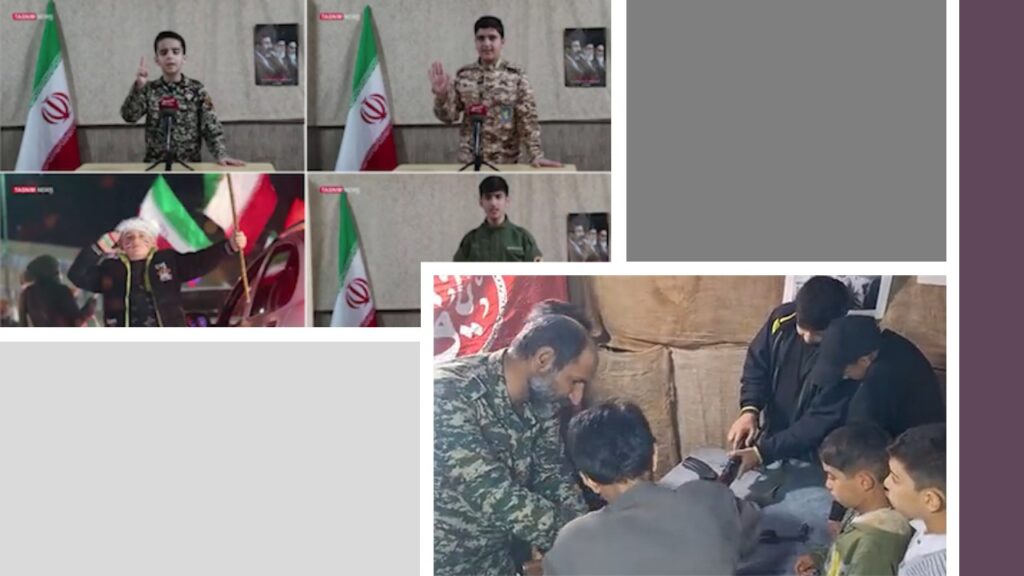
Iran Arms Children in Public Weapons Drills

Iran Regime Trains Children as Child Soldiers in Public Weapons Drills and Propaganda Rallies  • Iranian regime is openly training children and teenagers in weapons handling during nighttime street rallies across the country    • State media are releasing multiple videos showing kids in IRGC uniforms learning to use guns, reciting “Destroy the enemy” slogans    • Latest footage released features young children in military uniforms delivering scripted threats    • Amnesty International has warned that recruiting children as young as 12 into the IRGC’s campaign is a war crime    • The regime is reviving the same “one-time-use soldiers” tactics used during the Iran-Iraq War, when thousands of children were sent to clear minefields    As weapons training takes place during nighttime street rallies across Iran, the regime has simultaneously staged public spectacles featuring children and young teenagers.  State-affiliated media outlets — including Fars News Agency (affiliated to the IRGC) and Tasnim News Agency (affiliated with the IRGC’s Qods Force) — have released multiple video clips showing children being taught to handle weapons, interviewed on camera, and made to repeat regime slogans such as “We will destroy the enemy” while praising the IRGC. In some gatherings, children have been fitted with banners reminiscent of the widespread deployment of child soldiers during the eight-year Iran-Iraq War.  On 12 April 2026, Amnesty International warned that the recruitment of children as young as 12 into the IRGC’s military campaign constitutes a war crime under international law.  One video published by Tasnim from Eslamshahr shows a military parade of three Shahed-136 drones — the same model used extensively in the war in Ukraine — alongside interviews with children repeating the regime’s talking points.  Another clip, released in mid-May by the state-run Student News Agency from Shahrekord, depicts Basij forces conducting weapons training in a public area while children are visibly present.  Subsequently, Fars News Agency aired footage from Bojnūrd in which military personnel are seen actively training children and teenagers in weapons handling.  In on the latest examples, released by Tasnim News Agency, young children dressed in military and IRGC uniforms were filmed imitating regime press conferences and reciting scripted threats related to the ongoing conflict.  The regime’s exploitation of children for its political and military objectives is not new. During the Iran-Iraq War under the rule of Khomeini, children were used as “one-time-use soldiers,” including being sent ahead to clear minefields. Mohsen Rezaei, then Commander-in-Chief of the IRGC, explicitly stated the need for such disposable soldiers.  Years later, Akbar Hashemi Rafsanjani — who served eight years as president of the Islamic Republic — acknowledged the scale of these losses. In his Friday prayer sermon in Tehran on 31 October 1997, he said:  “The student Basijis who went to the slaughterhouse of the battlefields during the Sacred Defense numbered 36,000 — and that is truly a large figure.”  Brigadier General Eskandar Beiranvand, former commander of the 84th Infantry Brigade in Khorramabad, described one such operation involving the “Lovers of Hussein” battalion:  “They informed us that the Lovers of Hussein battalion was on its way to clear a minefield. Until that day I had never heard of this battalion and was not familiar with their methods. Within an hour, two Rio vehicles arrived… The young men had not even stepped out of the vehicles when they embraced and kissed one another. It was a strange scene. Everyone started crying because of their intense weeping. We still did not know what these boys were going to do… They lined up beside the minefield, their faces full of tears, staring at the field. The area fell silent and everyone watched them with excitement and anxiety. A young man, about 20 years old, turned to the others and said: ‘May our bodies be torn to pieces for the sake of Agha Ababdullah [Imam Hussein]. All our souls belong to him. Agha is waiting. Do not keep Agha waiting any longer.’ He shouted ‘Ya Hussein!’ and stepped into the minefield. A hellish series of explosions created a wall of fire in front of everyone. Their cries of ‘Ya Hussein’ were lost in the sound of the blasts.”    (Islamic Republic newspaper Ettelaat, 27 September 1997)  The current wave of public weapons training and the prominent role given to children in ongoing street rallies have heightened concerns about the regime’s renewed use of child soldiers to advance its own objectives. 

Iran Protests 2026, News

Iran Executes January Protester Abbas Akbari 

Iran authorities executed Abbas Akbari Feyzabadi early Monday, May 25, according to judiciary-linked Mizan News Agency, making him one of the latest known detainees connected to the January 2026 uprising to be put to death.  According to Mizan News Agency,  Akbari had been arrested in Naein, Isfahan Province, accusing him of “leading armed unrest” during protests, attacking local government buildings and security centers, and opening fire toward security forces. Authorities also claimed:  “He was present in the streets while carrying a military handgun and opened fire toward security personnel.”  🚨 Iran State Media Releases CCTV Footage of Executed January Protester Iran’s state media has published what it describes as the “first CCTV footage” showing Abbas Akbari Feyzabadi, executed on May 25, allegedly carrying out armed actions and attacks in Naein, Isfahan during… https://t.co/jsdCYAHfBF pic.twitter.com/Lc6EGILJhR — SIMAY AZADI TV (@en_simayazadi) May 25, 2026 Iran Continues Executing Protesters The execution adds to growing concern over death sentences linked to the January unrest and broader political prosecutions. Since March 19, at least 15 January protesters have been executed in less than two months, following trials rights groups and activists say lacked due process. The known cases include Saleh Mohammadi (19), Mehdi Ghasemi, Saeed Davoudi, Amir Hossein Hatami (18), Shahin Vahedparast (31), Mohammad Amin Biglari (19), Ali Fahim (23), Amirali Mirjafari, Erfan Kiani, Sasan Azadvar (21), Mehdi Rasouli (25), Mohammadreza Miri (21), Ebrahim Dowlatabadi, Mohammad Abbasi, and now Abbas Akbari Feyzabadi. The figure covers only confirmed executions of January uprising participants and excludes other political prisoners executed during the same period.  These cases come in addition to the execution of at least eight PMOI members since March 30, 2026, including Vahid Baniamerian, Pouya Ghobadi, Babak Alipour, Mohammad Taghavi, Akbar Daneshvarkar, and Abolhassan Montazer, six of whom were executed between March 30 and April 4, 2026. Hamed Validi and Mohammad Masoum Shahi were executed on April 20 for PMOI membership.    Earlier this month, more than 300 former UN officials, judges, Nobel laureates and legal experts warned that executions in Iran had reached levels “not seen in nearly four decades,” while noting that more than 50,000 people were arrested following nationwide protests and additional detainees remain at risk.  The latest execution comes amid increasingly explicit calls by senior officials for harsher punishment. In mid-May, Judiciary Chief Gholam-Hossein Mohseni Eje’i urged courts to accelerate verdicts and implementation of sentences, arguing delays weaken deterrence, after previously calling for judges to show “no mercy” in protest-related cases.   On May 21, regime MP Hamid Rasaei called for wartime “field courts,” public floggings, and rapid executions, telling Eje’i: “Mr. Mohseni-Eje’i, your launcher must fire.” Days earlier, another regime MP described harsher punishment as a “public demand.” The rhetoric has unfolded alongside rising executions, expanded arrests, and continued sentencing of political prisoners in Iran. 
News

Iran: MP Calls for Public Floggings and Executions as Hangings Continue

In remarks on May 21, Hamid Rasaei, a member of Iran parliament, in a state-staged rally, urged Judiciary Chief Gholam-Hossein Mohseni Eje’i to establish wartime-style courts and accelerate punishments, including public executions and floggings.  🚨Iranian MP Demands Public Executions and Floggings: “Your Launcher Must Fire” Hamid Rassaei urged Chief Justice Mohseni-Eje’i to establish wartime “field courts” and bypass normal trial procedures so that public floggings and hangings can be carried out quickly in city… pic.twitter.com/yB6ioo412j — Ehsan Eghbal Eslami (@Ehsaneghbale) May 22, 2026 Addressing Eje’i, Rasaei said:  “Mr. Mohseni-Eje’i, your launcher must fire!”  He called for what he described as “field courts” to bypass normal judicial procedures and argued that punishments should be carried out rapidly and publicly in city squares.  “Bring your courts here to the fields, here in public. Tell the people what is the stage of the case…. If the outcome is flogging do it, if it is hanging, do it right there. Mr. Mohseni-Eje’i, your launcher must fire! It means you should do ” The comments mark one of the most explicit recent calls by a serving official for visible and accelerated punishment, but they follow months of increasingly hardline rhetoric by senior judiciary, police, and parliamentary figures.  On April 28, 2026, Judiciary Chief Gholam-Hossein Mohseni Eje’i urged courts to accelerate rulings and implementation of punishments in security-related cases, saying delays reduce deterrence. Earlier, he instructed judges to show “no mercy” in protest-related prosecutions.  On May 18, Police Commander Ahmad-Reza Radan said authorities had arrested more than 6,500 people, including hundreds accused of links to opposition activity. Earlier, on March 10, Radan said protesters would be treated as “enemies,” while on April 20 he announced 1,200 arrests in a single wave.  Iran's Police Chief admits to 6,500 arrestsIn this Video Iran Police Chief, Ahmad-Reza Radan confirms:• 6,500 citizens detained in recent weeks.• 567 linked to the MEK and other opposition groups.• Vows to hunt every January protester: “We won’t let them go.” https://t.co/pkB41BvjoR pic.twitter.com/99DmAS1Jsw — Pasha Borjkhani (@BorjkhaniP1847) May 18, 2026 On May 20, judiciary-linked Mizan News Agency quoted another regime MP, Majid Doustali, defending severe punishment and stating:  “The judiciary today is acting correctly… our demand is that this path continue seriously because this is a public and popular demand.”  The rhetoric has coincided with a rise in executions and prosecutions involving political prisoners, protesters, and dissidents.  According to rights groups and monitoring organizations, at least 50,000 people were arrested following the nationwide protests beginning in 2022, while executions linked to political activity have continued to draw international concern.  In recent months, Iranian authorities have executed Kurdish political prisoners, upheld death sentences against detainees accused of opposition links, and expanded prison terms for political prisoners.  At least eight PMOI members have been executed since March 30, 2026, including Vahid Baniamerian, Pouya Ghobadi, Babak Alipour, Mohammad Taghavi, Akbar Daneshvarkar, Abolhassan Montazer, and others executed between March 30 and April 4, 2026. Two others, Hamed Validi and Mohammad Massoud-Shahi were hanged on April 21. Several of the six PMOI prisoners executed between March 30 to April 4 had sent messages or recordings from prison before their executions.  International legal experts have also warned of a broader escalation. In an open letter released in May, more than 300 former UN officials, judges, Nobel laureates, and legal experts said executions in Iran had reached levels “not seen in nearly four decades.” The letter stated that at least eight political prisoners had been executed over affiliation with the PMOI, while additional detainees remain at risk.  The latest surge has unfolded alongside months of regional conflict, internet restrictions, and mass arrests. Rights advocates and observers have argued that wartime conditions and heightened security tensions have increasingly coincided with executions, accelerated sentencing, and reduced public scrutiny of political cases.  The chronology of statements—from calls for “no mercy,” to accelerated punishments, to demands for public executions—has unfolded alongside a documented increase in arrests, executions, and harsher treatment of political prisoners in Iran. 
News

Iran Executes Two Kurdish Political Prisoners as Pressure Mounts on Other Detainees 

On May 21, Iran’s authorities executed Ramin Zeleh and Karim Maroufpour, two Kurdish political prisoners, according to the state-run Mizan News Agency’s reports that accused the men of involvement in armed actions against security forces in Iran. The state-run Mizan News Agency, affiliated with the regime’s Judiciary claimed the two executed prisoners were accused of “The assassination of a commander of an IRGC base in one of the western counties, firing two magazines toward a vehicle carrying military forces, and filming the operation.”  The judiciary outlet also accused the two men of:  “Forming a group with the aim of disrupting security, armed rebellion through criminal groups, shooting, and attempted assassination.”  The executions come amid growing concern over political prisoners and detainees facing execution or additional prison sentences in Iran.  During the third week of May, a court in Rasht reaffirmed the death sentence of Manouchehr Fallah, a 36-year-old political prisoner held in Lakan Prison, over supporting the Iranian opposition group, People’s Mojahedin Organization of Iran (PMOI). Fallah was arrested in June 2023 after the Supreme Court referred his case back for review.  In a separate case, political prisoner Forough Taghipour,  received an additional one-year prison sentence over a message published for Student Day in 2025. Arrested in August 2023 and previously sentenced to 15 years, Taghipour had earlier spent years in prison over support for the PMOI. Several members of her family were killed in the 1980s, while relatives currently reside in Ashraf-3.  Meanwhile, Rouzbeh Alipour, brother of executed PMOI member Babak Alipour, remains in uncertain conditions in Qezel Hesar Prison after reportedly being subjected to torture and prolonged solitary confinement. Reports say he suffered fractures and serious injuries following his arrest in Tehran on January 26, 2026, and has faced continued physical abuse while denied adequate medical treatment.  His brother, Babak Alipour, was among eight PMOI members executed since March 30 2026, including Vahid Baniamerian, Pouya Ghobadi, Mohammad Taghavi, Akbar Daneshvarkar, Abolhassan Montazer, and Hamed Validi and Nima Massoum Shahi on security-related charges.  The latest cases come amid increasingly public calls by Iranian officials for harsher punishment and faster implementation of sentences. On several occasions, Iran’s Judiciary Chief Gholam-Hossein Mohseni Eje’i urged courts to accelerate rulings in security cases, arguing delays weaken deterrence. Earlier, he called for judges to show “no mercy” in protest-related cases. On May 18, Police Commander Ahmad-Reza Radan said more than 6,500 people had been arrested, including hundreds linked to opposition groups, after previously stating on March 10 that protesters would be treated as “enemies.” On May 20, judiciary-linked Mizan published comments by a regime MP describing harsh punishment against alleged spies as a “public demand.” The remarks come as executions, arrests, and security prosecutions continue to expand. 

News

Iran’s Judiciary Acknowledges PMOI Members’ Operations

On May 15, Mizan News Agency, linked to Iran’s Judiciary, provided new details regarding operations carried out by  four executed members of the Iranian opposition group, People’s Mojahedin Organization of Iran (PMOI/MEK) — Mohammad Taghavi, Akbar Daneshvarkar, Babak Alipour, and Pouya Ghobadi — including involvement in attacks targeting sensitive state institutions.  According to reports cited by Mizan and originally attributed to Mehr News Agency, the four men were accused of participating in multiple operations, including a launcher attack on a building belonging to Iran’s Ministry of Intelligence, as well as other actions involving homemade explosive devices.  The report stated that the men had participated in:  “Multiple operations — from firing a launcher at the Ministry of Intelligence building to bomb attacks.”  Authorities also alleged that the group intended to target additional “sensitive centers and locations” inside Iran.  The claims were published weeks after the executions of the four PMOI members and amid broader reporting by Iranian authorities outlining dozens of executions linked to security, espionage, and opposition-related charges.  According to Mizan, Mohammad Taghavi was accused of arranging safe houses in Tehran and Karaj and constructing launchers using funding allegedly connected to the PMOI. The report claimed that Taghavi, together with Akbar Daneshvarkar, Babak Alipour, and Pouya Ghobadi, took part in several operations targeting state institutions.  The allegations are notable because Iranian state and judiciary-linked outlets have rarely publicly acknowledged claims of direct operations against the Ministry of Intelligence itself.  The four men — Mohammad Taghavi, Akbar Daneshvarkar, Babak Alipour, and Pouya Ghobadi — were among six PMOI members executed between March 30 and April 4, 2026, alongside Vahid Baniamerian and Abolhassan Montazer, after convictions on charges including moharebeh (“enmity against God”) and security-related accusations.  Before their executions, videos smuggled from prison showed several of the men singing resistance songs and issuing messages from detention. Their cases drew attention from opposition groups and rights monitors, who raised concerns regarding due process and politically motivated prosecutions. 

News

Iran MP Defends Harsh Punishment as Executions Rise 

In an interview published on May 20 by judiciary-linked Mizan News Agency, Majid Doustali, a member of the regime’s parliament, defended harsh punishment against alleged spies and praised the judiciary’s current approach as executions and security-related prosecutions continue to rise in Iran.  Doustali told Mizan:  “The judiciary today is acting correctly and according to the law, and our demand is that this path continue seriously because this is a public and popular demand.”  The remarks come as Iranian authorities continue expanding security-related prosecutions following months of unrest and conflict.  On April 28, 2026, Judiciary Chief Gholam-Hossein Mohseni Eje’i called on courts to accelerate rulings and implementation of punishments in security-related cases, arguing that delays weaken the deterrent effect of sentences. Earlier, during the post-uprising crackdown, Eje’i had instructed judges to show “no mercy” in protest-related cases, according to international reporting.  Meanwhile, state-run Mehr News Agency’s article, published on May 15 2026, stated that authorities had carried out around 30 executions on charges linked to espionage, terrorism, or armed unrest, alongside dozens of lengthy prison sentences and confiscation of hundreds of properties.  On May 18, 2026, Police Commander Ahmad-Reza Radan said in an interview with state television that more than 6,500 people had been arrested since the start of the conflict period, including 567 cases linked to opposition groups. Earlier, on March 10, Radan said protesters would be treated as “enemies,” and on April 20 reported that 1,200 people had been arrested in a single wave, saying security forces would continue dealing with protesters as hostile actors.  Iran's Police Chief admits to 6,500 arrestsIn this Video Iran Police Chief, Ahmad-Reza Radan confirms:• 6,500 citizens detained in recent weeks.• 567 linked to the MEK and other opposition groups.• Vows to hunt every January protester: “We won’t let them go.” https://t.co/pkB41BvjoR pic.twitter.com/99DmAS1Jsw — Pasha Borjkhani (@BorjkhaniP1847) May 18, 2026 Recent months have also seen executions of political prisoners and dissidents, including eight PMOI members executed between March 30 and April 20, 2026, after convictions on security-related charges.  The latest remarks by lawmakers publicly supporting harsher punishment come amid a chronology of accelerated sentencing, mass arrests, and rising executions tied to security and protest-related cases in Iran. 

News

Over 300 Global Experts Urge UN Action as Concerns Grow Over Executions in Iran 

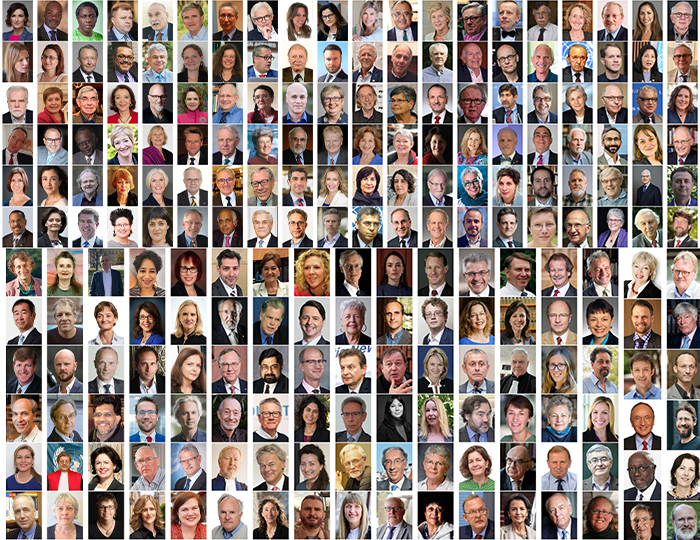
Simay Azadi– More than 300 international legal experts, former UN officials, Nobel laureates, judges, and human rights figures have signed an open letter to United Nations Secretary-General António Guterres warning of what they describe as an escalating wave of executions and political repression in Iran. The letter, dated May 18, 2026, calls for urgent international action and greater accountability measures.   Among the signatories are former presidents of international courts and UN bodies, including Joachim Rücker, former President of the UN Human Rights Council; Sang-Hyun Song, former President of the International Criminal Court; Javaid Rehman, former UN Special Rapporteur on Iran; and Nobel Peace Prize laureates including Oleksandra Matviichuk and Jody Williams.   In the letter addressed to Guterres, the signatories wrote:  “We write to express grave concern over the accelerating use of the death penalty in Iran as an instrument of political repression.”   The letter states that, since regional hostilities began on February 28, 2026, Iranian authorities have allegedly intensified a campaign involving “mass arrests, torture, and state sanctioned killing” while also “cut[ting] off internet access for the general population.”   The signatories further warned:  “The scale of executions has reached levels not seen in nearly four decades.”   Referring to political prisoners, the letter says:  “At least eight political prisoners have been executed solely due to affiliation with the People’s Mojahedin Organisation of Iran (PMOI or MEK), while at least 11 others currently face execution on similar grounds.”   The statement also links recent executions to broader protest-related cases, noting:  “Others have been put to death for taking part in protests on charges such as baghi (‘armed rebellion’) after summary trials.”   The letter cites findings by the Independent International Fact-Finding Mission on Iran, saying senior Iranian officials had encouraged harsher treatment of protesters. According to the document:  “The Prosecutor General declared that all protesters had committed moharebeh (‘enmity against God’), a capital offence, while the Head of the Judiciary instructed judges to show ‘no mercy’ in protest-related cases.”   The signatories also referenced estimates that more than 50,000 protesters have been arrested, according to the Fact-Finding Mission.   In one of the strongest passages of the letter, the experts argued that the current situation cannot be separated from earlier episodes in Iran’s history:  “This wave of executions cannot be separated from Iran’s long-standing culture of impunity, rooted in the 1988 massacre…”   The letter concludes by urging the United Nations and member states to press for an immediate halt to executions, release political prisoners, restore internet access, and consider international accountability mechanisms. The signatories warned:  “Silence in the face of these atrocities only reinforces impunity.”   The appeal comes amid recent statements by Iranian judiciary officials calling for faster implementation of sentences in security-related cases and after months marked by executions, internet restrictions, and mass arrests following unrest inside the country.

Scroll to Top