Simay Azadi English

Exclusive Interviews

MEP Petras Auštrevičius tells Simay Azadi that the EU sees Iran’s abuses and stands with the people’s fight for democracy and justice.
Exclusive Interviews, News

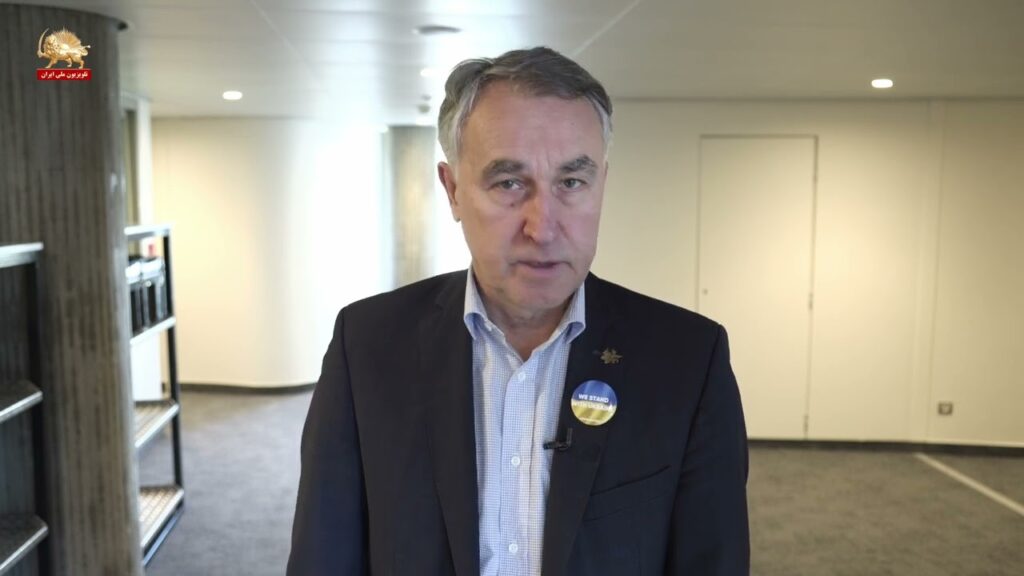
‘No Impunity for Mullahs’ Regime’: MEP Auštrevičius Discusses EU Resolution and Hope for Iran

On April 3, 2025, addressing the critical human rights situation in Iran, the European Parliament adopted a resolution. This document voices grave concerns over Tehran’s escalating use of the death penalty, its persecution of ethnic and religious minorities, and the ongoing detention of political activists, specifically referencing the cases of Behrouz Ehsani and Mehdi Hassani and calling for their freedom. The parliamentary session saw many members delivering strong condemnations of the Iranian regime’s practices. Amidst these discussions, Simay Azadi TV spoke with several MEPs, including Mr. Petras Auštrevičius. His full remarks are below, edited for clarity. By debating these most important issues for the Iranian people, such as persecutions, such as violation of human rights, including public executions and executions in general, we are sending a very strong message: Nothing is forgotten. We follow the policies of the Mullahs’ regime. We know about all the abuse of policy means they use against their own people, and so they have to be very vigilant, understanding that there must be no impunity for all those crimes, which will not necessarily be a pleasant end for the regime. Many families suffered, lost their beloved ones, but the regime is insisting on having this [the death penalty], perhaps as the last means, to keep control of power and to send a message of fear and, ‘You know, power is in our hands. You have to follow our orders.’ We do follow very closely all the events in Iran. The National Council of Resistance is a strong partner of ours, and they send us all possible messages and information about the situation. So that’s why my short message to Iranians who have a hope for a better future [is]: don’t give up. We know that sometimes before the dawn, there is the darkest period, but be hopeful. Remember, you have partners, you have those who wish you a better future, democratic development, and indeed a great country of your own.
Exclusive Interviews, News

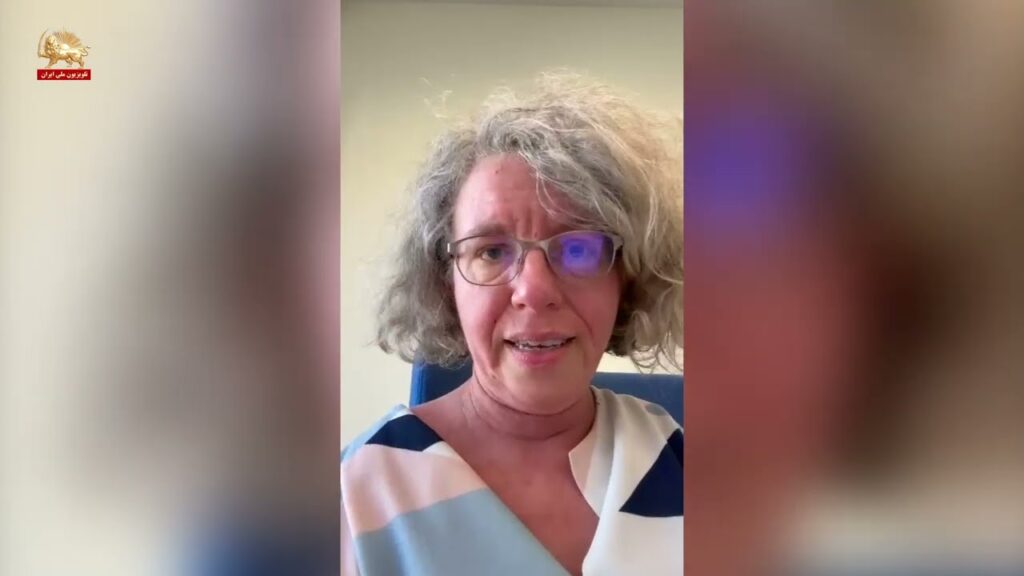
MEP Langensiepen Condemns ‘Execution-Driven Regime’ Following EU Resolution on Iran

On April 3, 2025, the European Parliament passed a resolution strongly condemning the worsening human rights situation in Iran. The resolution highlights the alarming rise in executions, the systemic targeting of minorities and political activists, and demands urgent action, including the release of political prisoners like Behrouz Ehsani and Mehdi Hassani. During the session where this resolution was adopted, numerous MEPs spoke out against the Iranian regime’s actions. On the sidelines, Simay Azadi conducted an interview with MEP  Katrien Langensiepen, The full-text of her remarks are below (edited for clarity) MEP  Katrien Langensiepen: The death sentence against Behrouz Ehsani and Mehdi Hassani is yet another attempt by the regime to crush dissent and intimidate Iranian society into silence. Both political prisoners, one 70 years old, father of two, the other 48, father of three, were sentenced to death in September [2024]. [This was] after a grossly unfair trial, which lasted just five minutes and was marred by allegations of torture and other ill-treatment to exact forced confession. The brave Iranian people, led by courageous women, girls, mothers, sisters, daughters, remain determined to overthrow this tyranny and establish a democratic republic. For decades, the people in Iran have been fighting for democracy against the regime, against the dictatorship, against torture and for freedom, life, participation, democracy. Behrouz Ehsani writes upon learning his death sentence – his words speak volumes –: ‘This execution-driven regime knows nothing else… bargain over my life. I am prepared to give my humble life for the freedom of the Iranian people.’ What a voice, what a strong man. I call [on] the Iranian government to free these two brave people. The people in Iran will not give up the fight for peace and democracy. And we, as a European Parliament, stay on the side of a democratic Iran.

Guy-Verhofstadt-to-Simay-Azad
Exclusive Interviews, News

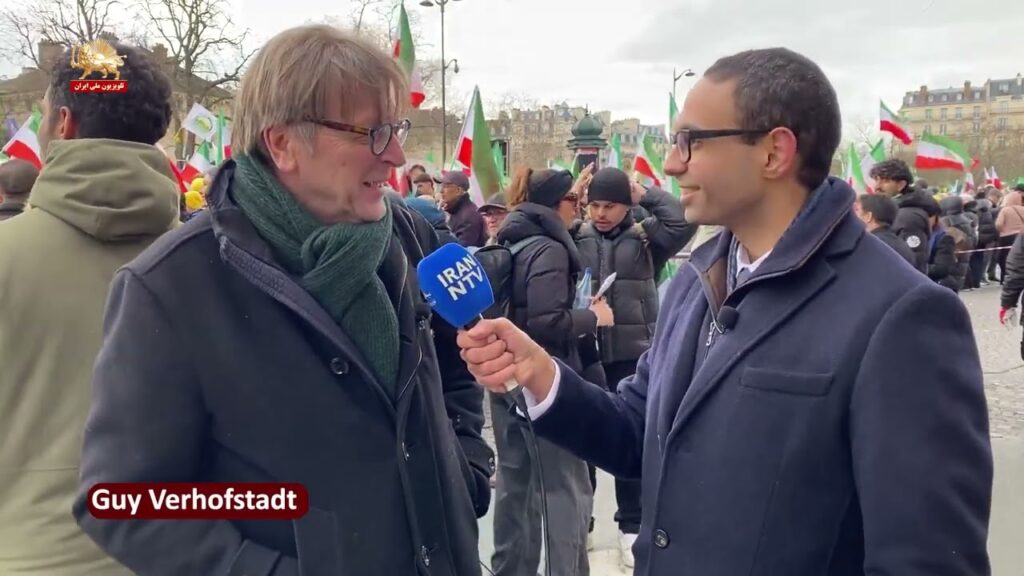
Guy Verhofstadt to Simay Azadi:  ‘It’s Time to End Complacency Toward Iran’s Regime 

Paris, February 8, 2025 – Thousands of Iranians and supporters of Iran’s Resistance gathered in Paris, demanding democratic change in Iran. Marking the anniversary of the 1979 revolution, the rally sent a strong message rejecting both monarchy and theocracy, calling for a secular, democratic republic.  Our reporter  spoke with several figures at the event, including former Belgian Prime Minister Guy Verhofstadt, who has long advocated for a firm European stance against the Iranian regime. In our conversation, he emphasized that the era of appeasement must end, and decisive action must be taken against the ruling clerics in Tehran.  “We have to stop the complacency strategy that we have followed for so many years and maybe now is a good moment to do that. Why? Because there is a new administration in Europe, a new High Representative, and a new Commission. At the same time, there is also a change in America with a new administration. So, I think it’s a good moment to get rid of this very wrong strategy of complacency and to start to have a real tough attitude towards the Mullahs’ regime, especially by applying the different sanctions that are foreseen in the different resolutions of the United Nations.”  Simay Azadi’s reporter pointed out that in 2024 alone, the Iranian regime executed nearly 1,000 people, many of them under the so-called “moderate” president. Verhofstadt dismissed the idea that moderation exists within the regime.  “Well, that doesn’t exist—a moderate president, I think, in Iran. I think for years they have told us, yeah, there can maybe be a split in the regime. But nobody can believe that. The executions continue with the actual president, and there is only one good solution. There’s a solution that arrives everywhere in the world… That is a democratic era. That is what we need, and the end of the theocracy that exists today.”  When asked about the message of the rally and the thousands gathered to reject dictatorship in all forms, Verhofstadt was clear in his response.  “I think it’s mainly a message to the European leadership to change their strategy the fastest as possible and to stop the complacency that we have seen the last years.”  His Message Echoed in His Speech at the Rally  Earlier in the day, Verhofstadt addressed the rally, reinforcing these points and drawing comparisons with other global struggles against dictatorship.  “2025 will be a pivotal year because it will be the year of change in Iran—the year of liberation from the totalitarian rule of the Mullahs.”  He pointed to broader shifts in the region and the world that signal an opportunity for real change.  “The Iranian people have had enough and continue to rise up against the Mullahs. In the region surrounding Iran, something has profoundly changed: it is the end of the proxies of the Mullahs.”  In his speech, as in his interview, he called for a complete shift in strategy, moving away from decades of European complacency.  “There is, in reality, only one solution for Iran: to give the Iranian people a voice, to let them shape their own future, and to recognize that the Iranian opposition and resistance are their true representatives.” 

Ammar al Salmo interview with Simay Azadi
Exclusive Interviews, News

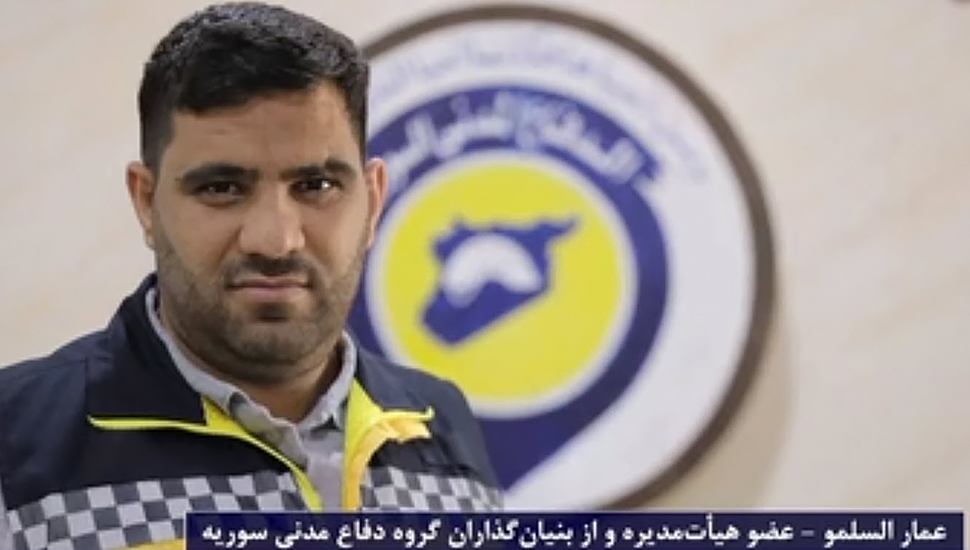
Syrian White Helmets’ Ammar al-Salmo to Simay Azadi: Assad Survived Only with Iran’s Support

On December 29, 2024, Simay Azadi conducted an exclusive interview with Ammar al-Salmo, board member and one of the founders of the Syrian Civil Defense (the White Helmets) and asked him about the Syrian revolution and what the White Helmets have discovered in Assad’s prisons. The Syrian Civil Defense group was founded in 2013 with the aim of helping the Syrian people during the bombings and attacks by the Iran-backed Assad’s  regime. The White Helmets consist of 3,300 volunteers. Over the years, they have saved countless Syrians, including many children, during and after heavy bombings and their subsequent destruction. Since the fall of Assad, the White Helmets have dedicated themselves to rebuilding their country, while playing a key role in uncovering the atrocities that occurred in Assad’s prisons, such as the infamous Sednaya prison in Damascus. Before joining the White Helmets, Ammar al-Salmo, was an English teacher in eastern Aleppo. Yet, after witnessing the killing and suffering of the Syrian people, Ammar, like many of his colleagues, chose to dedicate himself to help his compatriots and save their lives. In his exclusive interview with Simay Azadi, al-Salmo said that the Syrian revolution was inevitable, adding that the Assad regime would not have survived a single day without the support of the Iranian regime’s militias in Syria. Concerning the new evidence of Assad’s crimes following his downfall, al-Salmo said that after the fall of the regime, they realized that Syria was like  a “huge mass grave” and that the regime not only arrested, tortured, and murdered people but also buried them in unmarked mass graves.

Exclusive Interviews, Special Production

Experts Discuss Iran\’s Sham Election & U.S.-Iran Policy | Simay Azadi Panel

This video features a crucial panel discussion hosted by Simaye Azadi, where prominent U.S. policy experts analyze Iran’s recent election, its impact on Iranian-American relations, and the ongoing human rights situation. Judge Michael Mukasey, Linda Chavez, and Ambassador Kenneth Blackwell offer insights into Iran\’s tightly controlled election process, which restricts candidates and suppresses opposition. They examine how these elections reinforce authoritarianism rather than represent the will of the Iranian people. The experts also discuss ways the U.S. could support Iranian resistance movements without direct intervention, urging stronger diplomatic pressure for human rights. Ambassador Blackwell highlights the regime\’s attempts to delegitimize groups like the MEK and NCRI through propaganda. Meanwhile, Judge Mukasey and Linda Chavez emphasize the critical importance of rejecting these tactics to support genuine change. The experts conclude by affirming the resilience of the Iranian people and their quest for freedom, which remains a key element in challenging the regime\’s hold on power. Watch for a comprehensive understanding of how U.S. policy could impact Iran\’s future and amplify the voice of Iranian dissidents in the fight for democracy. For a deeper dive, check out the full discussion!

Exclusive Interviews, Special Production

Simay Azadi Exclusive: Ex- U.S. Officials Expose Iran Regime’s Sham Elections and Call for Democratic Support

In this insightful discussion, former U.S. officials, including Marc Short, Ambassador Lincoln Bloomfield, and Ambassador Robert Joseph, take a firm stand against Iran\’s recent elections, describing them as a “sham” designed to suppress genuine democracy. The panel, aired on Simaye Azadi, critiques the Iranian regime’s rigid control over candidates and its oppressive actions toward opposition movements. Panelists argue that Western nations should adopt a more assertive policy, offering substantial support to the NCRI and Iran\’s democratic opposition, highlighting the NCRI\’s advocacy for gender equality, justice, and freedom. Each expert stresses the need for a foreign policy that promotes human rights and amplifies the voices of Iranian dissidents rather than supporting a regime marked by election manipulation, human rights abuses, and propaganda. They advocate for robust international pressure and strategic, non-interventionist backing to empower Iranian activists and counter the regime’s narrative. Ambassador Bloomfield emphasizes the Iranian opposition’s vision for a free and democratic future, calling for the U.S. and allies to strengthen relations with groups committed to peaceful democratic change. Watch this compelling discussion for an in-depth look at U.S. policy perspectives on Iran’s elections, the path to a democratic future, and the global responsibility to support the Iranian people\’s fight for freedom and justice.

Exclusive Interviews

Iran: Simay Azadi\’s exclusive interview with Judge Michael Mukasey Former U S Attorney General

Iran: Simay Azadi\’s exclusive interview with Judge Michael Mukasey Former U S Attorney General Judge Michael Mukasey: Obviously, the policy of appeasement hasn\’t worked, and a large part of the reason it hasn\’t worked has been the Iranian people themselves, because the regime has been for decades in a situation where discontent among the people has grown, while dissension among the regime has grown as well. There was a famous economist who once said that trends that can\’t continue, won\’t. And this is a trend that can\’t continue and won\’t. So, the time is ripe for a different policy by the West and for a different result in Iran. Well, I think that following the death of Raisi, which I take as a blessed event, not a tragedy, there is dissent, competition, and friction within the regime, which presents an additional opportunity for the people who should be in control—namely, the Iranian people—to take control of their destiny and of their government. My message is, do not lose hope and do not lose momentum, because momentum is on your side, and eventually, the hope will be realized.

Exclusive Interviews

Simay Azadi Interview with Linda Chavez ex-Director of the White House Office of Public Engagement

Simay Azadi Interview with Linda Chavez ex-Director of the White House Office of Public Engagement Linda Chavez Former Director of the White House Office of Public Engagement: Well, I think it\’s important that democratic countries support the right of people for self-determination. Clearly, the people in Iran today do not have that. They are subject to a basically totalitarian regime, where it is not just that they don\’t have the right to select their own leaders, but their daily lives are, in fact, controlled by the regime—every aspect of their life. So, I think it is incumbent on those of us who live in free societies to do what we can to make sure that the Iranian people, number one, hear the message of our support, and number two, that our own elected leaders don\’t do anything to encourage the regime. I believe the regime should be treated like an outlaw rather than as a legitimate government. Clearly, many of the protests that have occurred in recent years have been driven by women, not just with the death of the young woman who was attacked, imprisoned, and died as a result of what the regime considered \”malveiling,\” but also the fight for control over the prices amid out-of-control shortages and inflation in the prices of goods. These affect women as mothers, as wives, and as people who have to keep a household together. So, I think the important thing is to give them support, and for governments, in particular, not to do anything that undercuts their efforts to speak out and protest against the current government.

Scroll to Top