Simay Azadi English

Uncategorized

Uncategorized

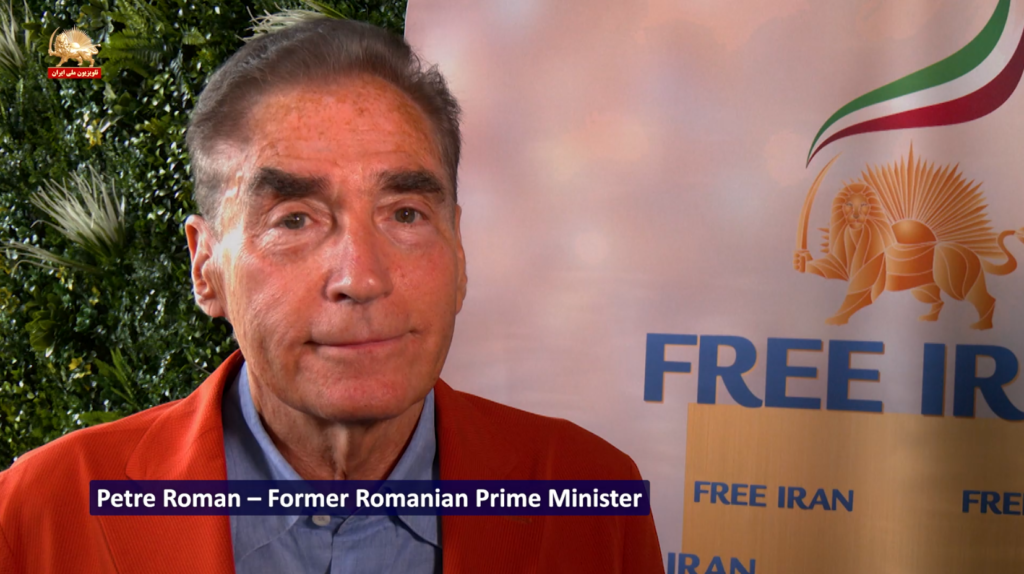
Petre Roman: “Iran Needs Democracy, Not More Dictatorship” 

Romania’s first prime minister after the fall of Nicolae Ceaușescu’s regime discusses Iran’s human rights crisis and compares it to the fall of Ceaușescu.   In an interview with Simay Azadi on the sidelines of the Free Iran World Summit in Paris, Petre Roman, Romania’s first prime minister after the fall of Nicolae Ceaușescu in 1989, discussed the worsening human rights situation in Iran, the wave of political executions, lessons from Romania’s democratic transition, the role of the National Council of Resistance of Iran (NCRI), and his message to the Iranian people.  During the interview, Roman described Iran as one of the world’s most repressive regimes, compared its current crackdown to the final days of Ceaușescu’s regime, argued that a democratic alternative is both possible and necessary, and said the NCRI’s political program could provide a viable future for Iran.  Read the full text of the interview below (edited for clarity):  Q: What are your thoughts about the situation of human rights in general and specifically about the executions of political prisoners?  Petre Roman: Well, to talk about human rights in Iran right now is almost a nonsense, because there are no human rights.  The regime doesn’t respect any human rights.  The brutality and cruelty of the executions—I mean, people are being massacred, not just executed—is beyond any human consideration.  This should be one of the most important issues before the international community, for everyone who cares not only about human rights but about the simple meaning of being human.  What is happening today is even more striking than before.  Under the pressure of the war and the attacks, the Iranian regime decided to suppress every form of protest by using every possible means, including the most brutal ones—massacres.  That is the reality in Iran today.  Nobody should indulge in propaganda or try to justify it.  There is no explanation that can excuse these actions.  I believe this is perhaps the most repressive regime in the world today, and one of the most repressive in modern history.  I speak from experience because I was the first Prime Minister of Romania after the fall of the dictatorship.  In the final days of that dictatorship, the Romanian dictator was also massacring and killing people.  Q: He had also traveled to Iran shortly before.  Petre Roman: Yes, just before.  At that time, however, we did not consider the regime in Iran to be as brutal and cruel as it has become today.  I know what dictatorship looks like.  Ceaușescu unleashed terrible violence and ordered people to be killed.  The Romanian people rose up against him.  I was there at the barricades in Bucharest.  I don’t know why I survived—I can only believe God helped me stay alive.  Only twelve hours after the massacre at the barricades, the regime collapsed completely.  [Video insert: News footage of the Romanian Revolution]  Romanian Newscaster: “…the trial of Nicolae Ceaușescu and Elena Ceaușescu…”  English Translation: The execution of the deposed Romanian leader and his wife was announced tonight on state television. The newscaster said the Ceaușescus had been tried on Christmas Day. They were charged with genocide, murdering 60,000 people, abusing their power, destroying public property, and undermining the national economy. Nicolae Ceaușescu was also accused of transferring one billion dollars of Romania’s wealth into foreign bank accounts.  Romanian Newscaster: “…for these grave crimes…”  English Translation: The newscaster said that on all charges, Nicolae and Elena Ceaușescu were found guilty and sentenced to death.  Petre Roman: Iran is a great country with a great culture and a well-educated population.  I believe a democratic government is possible in Iran.  It can take care of its people and build a modern economy.  The Iranian people are fully capable of doing that.  The alternative is defined by the opposition to this regime, and I am speaking specifically about the National Council of Resistance of Iran.  Today, the opposition—the Free Iran movement—is more important than ever.  That is my view.  Q: Could you tell us about your own experience meeting the Iranian Resistance in Paris and participating in these conferences over the years?  Petre Roman: Absolutely.  I first came here about seven years ago.  By now, I suppose I’m a veteran of these gatherings.  From the very beginning, I felt a warm and sincere spirit.  I met brave, brave fighters.  I also believe the political program offered by the NCRI has real substance.  It is a serious political program.  I believe it could work.  I truly feel that it offers a path that could benefit both Iran and its people.  Q: Finally, if you could speak directly to the Iranian people watching this interview, what would your message be?  Petre Roman: It is more than a message.  It is my profound feeling of solidarity with the Iranian people—the brave, brave fighters for freedom in Iran.  I deeply feel that solidarity.  From the bottom of my heart, I wish to see you victorious.  I wish to see you governing your own country and holding the destiny of your nation in your own hands.  Free Iran!  Q: We wish you and the people of Romania all the best. Thank you very much.  Petre Roman: Thank you very much. 
Uncategorized

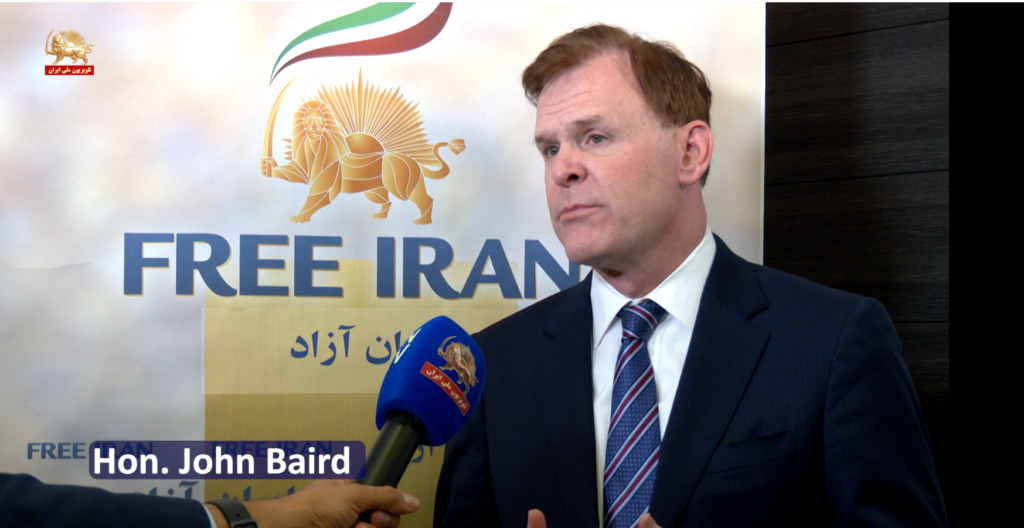
John Baird: “You Can’t Negotiate With Evil in Iran” 

Former Canadian foreign minister discusses executions in Iran, Western policy toward Tehran, the NCRI’s Ten-Point Plan, and the cancellation of the Free Iran gathering in Paris.  In an interview with Simay Azadi on the sidelines of the Free Iran World Summit in Paris, former Canadian Foreign Minister John Baird discussed the Iranian regime’s human rights record, the wave of executions in Iran, Western policy toward Tehran, democratic alternatives to the current regime, and the cancellation of the June 20 Free Iran gathering in Paris.  During the interview, Baird argued that the Iranian regime’s human rights abuses, support for terrorism, and nuclear ambitions make it impossible to negotiate or appease Tehran. He also discussed Canada’s past policy toward Iran, expressed support for the Iranian people’s aspirations for freedom, endorsed the National Council of Resistance of Iran’s Ten-Point Plan, and criticized the French authorities’ decision to cancel the Free Iran rally.  Read the full text of the interview below (edited for clarity):  Simay Azadi: Thank you very much, Mr. Minister, for accepting this interview with Simay Azadi. Let me begin with this question. Yesterday, in your speech at the Free Iran gathering, you said that Iran’s regime is evil and that nobody should negotiate with evil. Can you elaborate on that? Why do you consider this regime evil?  John Baird: I think its abysmal human rights record, its extensive use of the death penalty against political opponents, its nuclear program, and its material support for terrorism throughout the region make this regime evil.  You can’t negotiate with evil, you can’t appease evil, and you can’t work with evil.  Simay Azadi: You just referred to Iran’s ongoing human rights violations. We have witnessed a wave of executions in recent months, especially after the war broke out. Why do you think the regime has increased the number of executions, particularly targeting January protesters and members of the MEK? John Baird: Iran has shown massive political abuses and extensive use of the death penalty going back 40 years.  I think of 1988, and I think of what happened in the aftermath of January.  This regime only uses one tool against its political opponents: brutal force.  Whether it’s peaceful protesters, students, teachers, or resistance fighters, the regime responds with force.  The world has got to take note of this and recognize the true evil that we’re confronting.  Simay Azadi: When you were Canada’s foreign minister during Prime Minister Stephen Harper’s government, Canada recognized the 1988 massacre as a crime against humanity and cut diplomatic relations with the regime.  What do you think the world should do today when it comes to the Iranian regime? What should Canada, the United Kingdom, and European countries do in their relations with Tehran?  John Baird: They need to do two things.  First, realize what we’re dealing with and call it what it is: evil.  Second, understand that this regime only understands one thing: power. It understands a clear and consistent message.  You can’t appease them, you can’t negotiate with them, and you can’t trust them.  They understand strength and consistency, and you don’t back down.  In Canada, one of the things we were most concerned about was not only Iran’s abysmal human rights record but also its complete lack of respect for diplomacy.  Look at what happened to the British Embassy, the American Embassy, and the Saudi Embassy.  We were not confident that Iranian security officials would protect Canadian diplomats.  That’s why even dealing with these people diplomatically doesn’t work. They have no respect for diplomatic conventions such as the Vienna Convention.  Simay Azadi: In your opinion, what is an alternative to this regime, and what is not an alternative?  John Baird: I think people in Iran—and indeed people around the world—understand one thing: the people of Iran want to get rid of dictatorship.  Whether that’s the hereditary dictatorship that existed before the religious fascists took over in 1979, the Iranian people need something that gives them hope.  They need something that can rebuild Iran and improve their lives.  That’s why people should look at the Ten-Point Plan put forward by the NCRI under the leadership of Madam Rajavi.  If we gathered a group of constitutional experts and asked them to design a ten-point plan, I don’t think we could come up with a better one.  Take six months, hold an assembly, and move from dictatorship to freedom, diversity, equality between men and women, and a system without religious hierarchy.  Simay Azadi: You spoke about appeasement and about why we should not negotiate with this regime. Yet French authorities canceled the Free Iran gathering here in Paris while Iranians were traveling from around the world to attend.  What message does this send to the Iranian regime and to the Iranian people? What should have been done?  John Baird: It’s a victory for evil, and it’s a setback for freedom.  We were very disappointed by the French government’s decision to cancel the rally.  When people think of France, the first word that comes to mind is liberté.  I think the message sent here in Paris is a very negative one for the hopes, dreams, and aspirations of the Iranian people.  Simay Azadi: If you would like to send a message to the Iranian people, especially the Resistance Units who will be watching this interview on Simay Azadi, what would it be?  John Baird: We have your back.  We support you.  The world is watching.  I can speak for many millions of Canadians who dream of a better future for the Iranian people.  Canadians will continue to stand with them and support them in this great struggle.  Earlier this year, the regime was at its weakest point.  The regime remains in a very vulnerable position.  Freedom will come one day.  And hopefully we won’t have to return to Paris next year.  Hopefully we’ll hold the next Free Iran conference in Tehran.  Simay Azadi: We hope so too. Thank you very much for this interview with Simay Azadi.  John Baird: Thank you. 

Uncategorized

3,000 Global Leaders Call for Halt to Executions in Iran 

A statement signed by more than 3,000 former presidents, prime ministers, ministers, parliamentarians, jurists, diplomats, academics, and human rights advocates from 55 countries calls for urgent action to stop political executions and support democratic change in Iran.  More than 3,000 international figures from 55 countries, including former presidents, prime ministers, ministers, parliamentarians, Nobel laureates, diplomats, jurists, academics, and human rights advocates, have issued a statement expressing concern over developments in Iran, calling for an immediate halt to political executions and voicing support for a democratic transition led by the Iranian people and their organized resistance.  The statement opens with a warning about the current situation in Iran:  “Iran stands at a historic crossroads.”  The signatories express concern over the recent wave of executions and arrests.  “We are deeply concerned by a new wave of political executions in Iran. In recent weeks, a number of prisoners have been executed for their membership in the People’s Mojahedin Organization of Iran or for participating in last January’s uprising.”  They also accuse the  regime’s authorities of using the recent wartime atmosphere to intensify repression.  “In addition, the regime has exploited the wartime atmosphere to completely shut down the internet and has arrested thousands of people. The aim is to prevent uprisings and to stop young people from joining resistance units.”  Referring to recent statements by judicial authorities, the signatories write:  “The head of the judiciary has called on judges to expedite their decisions and the issuance of death sentences. The world’s silence is unjustifiable. We call on the UN and its member states to take immediate action to halt these executions.”  The statement also addresses the broader political aspirations of the Iranian people.  “We commend the courageous struggle of the Iranian people for freedom and democracy.”  “As demonstrated in their nationwide uprisings, the people of Iran seek a future founded on a democratic republic. They reject both the current religious dictatorship and the authoritarian rule of the Shah. The people of Iran aspire to progress, not a return to the past.”  The signatories describe the future of Iran as a matter to be determined by Iranians themselves.  “Regime change in Iran, with its far-reaching implications for global peace and security, particularly in the Middle East, can only be achieved by the Iranian people and their organized resistance. Determining the country’s political future remains exclusively the right and responsibility of the Iranian people.”  The statement specifically welcomes the program put forward by the National Council of Resistance of Iran (NCRI).  “We welcome the National Council of Resistance of Iran (NCRI)‘s announcement of a provisional government tasked with organizing free elections within maximum six months to transfer sovereignty to the people and to establish a democratic republic based on Maryam Rajavi’s Ten-Point Plan.”  The signatories note that the plan calls for“freedom of expression and assembly, separation of religion and state, gender equality, abolition of the death penalty, recognition of autonomy for oppressed nationalities within a united Iran, and a non-nuclear Iran.”  “It merits our full support and has already been endorsed by more than 4,000 legislators on both sides of the Atlantic.”  The statement further emphasizes that the NCRI seeks a democratic transition led by Iranians themselves.  “The NCRI, as the oldest democratic and independent coalition in Iran, has consistently affirmed that it seeks neither financial assistance nor the presence of foreign forces on Iranian soil.”  It adds that the coalition’s program is committed to“facilitating a peaceful transfer of power to the Iranian people through free and fair elections within six months of the regime’s fall.”  Concluding their appeal, the signatories endorse efforts to unite democratic forces opposed to the current government. “We also welcome the NCRI’s call for the formation of a solidarity front that brings together all political forces committed to overthrowing the regime and establishing a republic based on the separation of religion and state.”  The statement represents one of the largest international declarations on Iran in recent years, bringing together thousands of political leaders, lawmakers, legal experts, academics, and human rights advocates in a call to stop political executions and support what they describe as a democratic future determined by the Iranian people. 

Uncategorized

Iran: Five Political Prisoners Face Risk of Execution in Ahvaz 

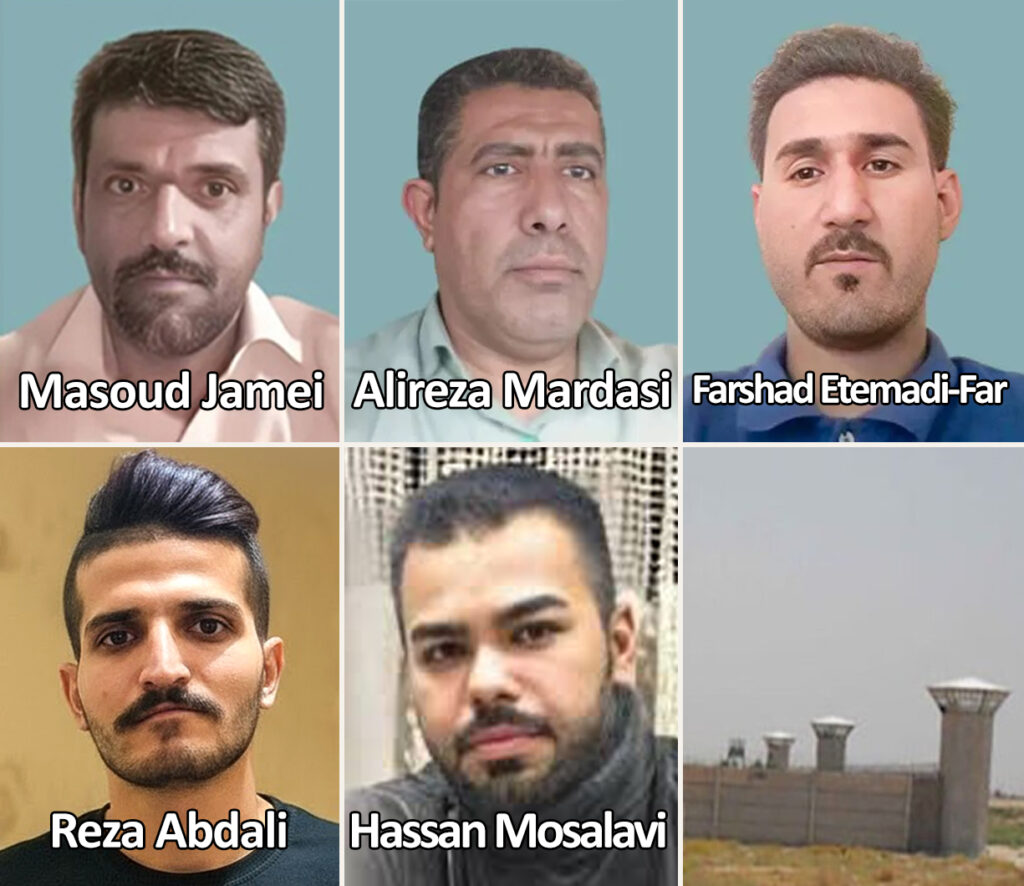
Reports indicate that five political prisoners held in Ahvaz Central Prison  could face imminent execution after their death sentences were upheld by Iran’s Supreme Court. Four of them are being sentenced to death for  supporting  the People’s Mojahedin Organization of Iran (PMOI). Reports from Iran indicate that five political prisoners — Massoud Jamei, Alireza Merdasi , Farshad Etemadi-Far, Reza Abdali, and Hassan Maslavi — face the risk of imminent execution in Ahvaz Central Prison , raising renewed concerns over the use of the death penalty in political cases.  According to the reports, Farshad Etemadi-Far, Alireza Merdasi (Hamidavi),and Massoud Jamei were arrested in the summer of 2023 and sentenced in July 2025 by Branch One of the Revolutionary Court in Ahvaz, presided over by Judge Adibi-Mehr. They were convicted on charges including moharebeh (“enmity against God”), “assembly and collusion against national security,” “membership in the People’s Mojahedin Organization of Iran (PMOI/MEK),” and “propaganda against the state.” They were sentenced to two death sentences and one year of imprisonment, and the ruling was upheld by Iran’s Supreme Court on November 14, 2025.  Reza Abdali, who was arrested in February 2025, was sentenced in July 2025 to death and 15 years in prison for support of the PMOI. His death sentence was also upheld by the Supreme Court in November 2025.  The prisoners come from diverse professional and ethnic backgrounds. Farshad Etemadi-Far, 31, is from Basht in Kohgiluyeh and Boyer-Ahmad Province and had previously served a 20-month prison sentence following an earlier arrest in 2018. Massoud Jamei, 49, worked for the oil industry, while Alireza Mardasi, 53, is a teacher. Both are members of Iran’s Arab community and were arrested in Ahvaz. Reza Abdali, 36, is also an Arab resident of Ahvaz and belongs to the Daghaghleh tribe.  The reports come amid growing concern over conditions inside Sheiban Prison, one of Iran’s most overcrowded detention facilities. Former prisoners and rights advocates have repeatedly reported severe shortages of water, inadequate sanitation, and living conditions far beyond the prison’s intended capacity. Reports indicate that prisoners face chronic shortages of drinking water and sanitary facilities due to overcrowding.  The threat of new executions comes amid a broader escalation in death penalty cases involving PMOI supporters. In recent weeks, courts have issued or reaffirmed death sentences against several political prisoners, including Zahra Tabari, whose death sentence was reimposed in Rasht, and Amin Farahavar, a political prisoner from Gilan whose death sentence was recently upheld by the Supreme Court. Manouchehr Fallah, another political prisoner accused of membership in the PMOI, also remains under a confirmed death sentence.  The cases follow a wave of executions involving PMOI members. Since July 2025, ten members of the People’s Mojahedin Organization of Iran (PMOI/MEK) have been executed. Among them were Hamed Validi and Mohammad Massoum-Shahi, who were executed on April 20, 2026, as well as Vahid Baniamerian, Pouya Ghobadi, Babak Alipour, Mohammad Taghavi, Akbar Daneshvarkar, and Abolhassan Montazar,who were executed between March 30 and April 4, 2026.  The reported risk of imminent executions in Ahvaz comes as concerns continue to grow over the increasing use of capital punishment in political cases and the growing number of prisoners facing execution because of their political activities and support for opposition organizations. 

Uncategorized

Families of Political Prisoners Face New Pressure in Iran 

Relatives of political prisoners and members of the People’s Mojahedin Organization of Iran (PMOI/MEK) have reportedly been summoned, interrogated, and threatened in recent weeks, as authorities increase pressure on families amid a continuing wave of executions and political prosecutions.  According to reports released this week, Iran’s Ministry of Intelligence summoned the family of political prisoner Marzieh Farsi, who is currently held in Evin Prison, on May 24. Family members were reportedly subjected to several hours of interrogation, threats, insults, and psychological pressure.  According to the reports, interrogators warned the family against maintaining contact with other families of political prisoners or PMOI members.  The reported interrogation is part of a broader pattern affecting relatives of political prisoners and opposition supporters. Over the past two weeks, the families of political prisoners and PMOI supporters, including the families of Sedigheh Moradi, Azar Karvandi, and executed PMOI member Akbar Daneshvarkar, have also reportedly been summoned and questioned by intelligence authorities.  Reports say some family members were threatened with the confiscation of property and inheritance rights, while others were warned that additional relatives could face arrest.  According to the reports, intelligence officials also pressured family members to participate in proceedings linked to a renewed mass trial involving the PMOI and 104 members of the Iranian opposition. Relatives were allegedly asked to appear in court and give statements against the organization, while being warned that refusal could result in the seizure of assets or further arrests within their families.  The reported pressure campaign comes amid a broader escalation in political prosecutions. Since July 2025, ten members of the PMOI have been executed, including Hamed Validi and Mohammad Massoum-Shahi on April 20, 2026, as well as Vahid Baniamerian, Pouya Ghobadi, Babak Alipour, Mohammad Taghavi, Akbar Daneshvarkar, and Abolhassan Montazer, several of whom were executed between March 30 and April 4, 2026.  At the same time, at least 20 protesters linked to the January 2026 uprising have been executed since March, according to compiled reports, while additional political prisoners remain under sentence of death. Rights advocates and legal experts have warned that more detainees arrested during the uprising could face execution.  The pressure on families has coincided with increasingly hardline rhetoric from senior officials. On April 28, Judiciary Chief Gholam-Hossein Mohseni Eje’i called for faster implementation of rulings in security-related cases, arguing that delays weaken deterrence. On May 21, regime MP Hamid Rasaei urged the judiciary to establish wartime-style courts, accelerate punishments, and expand public executions. The latest reports suggest that alongside arrests, executions, and prison sentences, authorities are also extending pressure to the relatives of political prisoners and opposition supporters. 

Uncategorized

Italian Parliament Conference Condemns Rising Executions in Iran

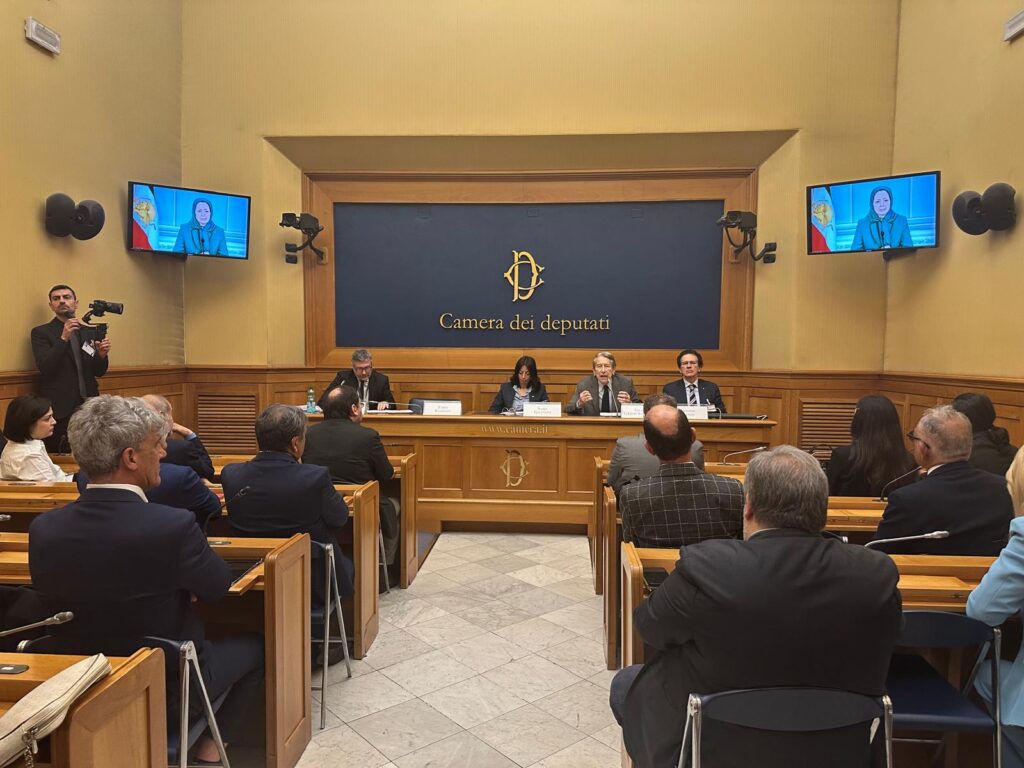
At a conference held on May 21, 2026 at La Stampa Hall at the Italian Chamber of Deputies , Italian lawmakers and human rights advocates warned over rising executions in Iran and called for stronger international action. Mrs. Maryam Rajavi delivered the keynote address online, while speakers included Senator Giulio Terzi, chair of the Italian Senate’s European Policies Committee and former foreign minister; MP Naike Gruppioni; Antonio Stango, president of the Italian Federation for Human Rights; and a message from Senator Marco Scurria.   Delivering the keynote speech, Mrs. Maryam Rajavi said Iran and the wider region had reached a dangerous turning point and urged European governments to change course.  “The European Union must break its silence regarding the tragedy of political executions. This ongoing silence grants the regime a free hand to perpetuate its atrocities.”  Conference at the Italian Parliament: Support human rights and condemn executions in IranThe Iranian people are moving toward establishing a society free from all forms of tyranny.#StopExecutionsInIranhttps://t.co/OeYM4c6hnk pic.twitter.com/O6a1sGaQuB — Maryam Rajavi (@Maryam_Rajavi) May 21, 2026 Mrs. Rajavi added:  “Peace and freedom in Iran are two sides of the same coin. If the European Union is truly serious in its calls for peace, it must simultaneously recognize the right of the Iranian people and their resistance to overthrow this regime.”  She concluded by saying:  “The people of Iran are closer than ever to transforming their own destiny, and they expect defenders of freedom and human rights around the world… to stand beside them.”  Naike Gruppioni focused her remarks on political executions and repression inside Iran, saying:  “Freedom is never guaranteed. Its importance is truly understood only when it is denied, repressed and suffocated.”  Italian MP @naike_gruppioni: “The Iranian people have rejected both dictatorships and want a democratic republic.” During a conference at Italy’s Chamber of Deputies, MP Gruppioni stressed: “We cannot limit ourselves to routine declarations. The Iranian issue does not only… https://t.co/tf1qefrR0z pic.twitter.com/VXLcamDyAh — SIMAY AZADI TV (@en_simayazadi) May 23, 2026 Referring to Iran’s prisons, she said:  “Men and women are arrested, tortured and sentenced to death for their ideas, for having demanded rights, dignity and democracy.”  Gruppioni pointed to what she described as a dramatic escalation in political executions and referenced Vahid Baniamerian, quoting his reported final message:  “Even if you kill us, we will multiply.”  She added:  “You can hide bodies, censor the news and fill prisons, but you cannot extinguish a people’s desire for freedom.”  Giulio Terzi said any long-term solution for Iran must come from the Iranian people themselves rather than temporary political arrangements.  “The problem can only be solved by Mrs. Rajavi, her great organization, and the Iranian people—without new false alternatives.”  Terzi paid tribute to political prisoners executed in Iran and referred to PMOI members who publicly expressed support for the resistance while on death row.  He also cited execution figures, stating:  “There were 2,159 death sentences in 2025… and around 700 executions in 2026.”  Calling the situation a test of democratic values, Terzi said:  “At the heart of all this is freedom… the struggle for human rights, human dignity, equality between men and women.”  Antonio Stango argued that sustainable peace in the region requires an end to Tehran’s current system of governance.  “There is only one possible solution for Middle Eastern conflicts: zero ayatollah regime.”  Stango added:  “It is unfortunately not possible to reach compromises with those who have administered death from Tehran for 47 years.”  In a written message read at the conference, Marco Scurria condemned executions and repression, saying:  “One cannot remain silent in the face of repression and killings affecting men, women and even children.”  He added:  “The wind of freedom cannot be stopped… no repressive apparatus, however powerful, can erase a people’s deep desire to live free.”  The conference comes amid growing international concern over executions in Iran. Earlier this month, more than 300 global legal experts, former UN officials, judges and Nobel laureates warned that executions in Iran had reached levels “not seen in nearly four decades.” 

Uncategorized

Iran Executes Two PMOI Members Mohammad Taghavi, Akbar Daneshvarkar – Report

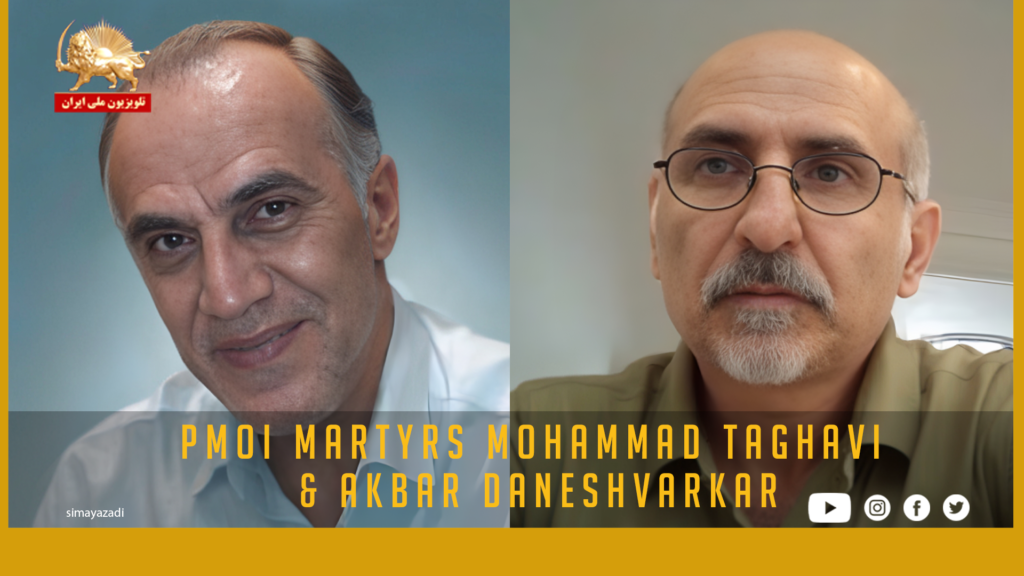
At dawn on March 30, 2026, the Iranian regime executed two members of the People’s Mojahedin Organization of Iran (PMOI), Mohammad Taghavi and Akbar Daneshvarkar, according to statements issued by the regime’s judiciary. The authorities claimed the two had been convicted of “membership in the PMOI” and “armed operations in Tehran,” along with charges of “assembly and collusion against national security” and “armed uprising against the state.” Mohammad Taghavi, 59, was a former political prisoner from the 1980s who had also been detained in 2020 and held for three years. In a message dated August 7, 2025, from Fashafouyeh Prison, he reaffirmed his position following the execution of Behrouz Ehsani and Mehdi Hassani. He wrote: “In these days, with the glorious steadfastness of our martyred brothers Mehdi and Behrouz—who said, ‘I do not bargain over my life’—the situation has taken on a very special character.” Introducing himself, he stated: “I, Seyed Mohammad Taghavi Sangdehi, in the struggle for the liberation of the oppressed people, and as a fighter for freedom… under the proud banner of the People’s Mojahedin Organization of Iran, where the desperate regime, with its coercive nature, takes the ‘will to survive’ hostage, it is time to turn to offensive approaches and say, ‘bring it on.’” He concluded with a vow: “I swear to fight with all my being until my last breath, to die standing… and with certainty in victory, I declare: I am Ready until the end.” Akbar Daneshvarkar, 60, a civil engineer, had been arrested in January 2024. He was sentenced to death in December 2024 by Tehran’s Revolutionary Court. In a letter written from Qezel Hesar Prison in February 2026, Daneshvarkar described the broader context of recent unrest in Iran. Referring to the nationwide protests in January, he wrote:“From months ago, it was clear and certain that an uprising in Iran was on the way. What happened in January was only a prelude, and the main earthquake… that will lead to the overthrow… is inevitable.” He also warned against efforts to divert the protests, writing:“The dictator’s son and his remnants tried to ride the wave of the Iranian people’s uprising, deliberately tying a purely domestic movement to foreign agendas.” Daneshvarkar further described the authorities’ response, stating:“Khamenei ordered that the protesters be put in their place… the repression apparatus labeled the freedom-seeking people as ‘terrorists’ and carried out killings, crimes against humanity, and mass arrests.” He added that detainees were subjected to pressure, including “brutal physical torture, false promises, and repeated threats… to extract forced confessions.” The executions of Taghavi and Daneshvarkar come amid growing concern over other PMOI prisoners facing death sentences, following the executions of Behrouz Ehsani and Mehdi Hassani in 2025.

Uncategorized

Dorien Rookmaker: “The Regime in Iran Is Pure Evil”

Exclusive Interview — Simay Azadi On the sidelines of a conference at the European Parliament marking the International Day of Human Rights, Simay Azadi spoke with Dorien Rookmaker, former Member of the European Parliament (Netherlands).In this interview, Ms. Rookmaker sharply condemned Tehran’s human rights record, called on the European Union to take concrete action, voiced explicit support for Maryam Rajavi’s plan for a secular and democratic Iran, and stressed that economic interests must never take precedence over human rights. She also delivered a message of solidarity and encouragement to the Iranian people, emphasizing that the regime is weak and nearing collapse. Read the full text of the interview below. Interview with Dorien Rookmaker — Simay Azadi Simay Azadi: Thank you very much for accepting this interview with Simay Azadi. We just heard your speech at the conference here at the European Parliament. Can you just tell us what you think about today’s conference and what was its message? And if you can, in several points, say your message that was in the powerful speech that you just gave—what was it? Dorien Rookmaker:First of all, today is the International Day for Human Rights, and it’s an important day for all humankind, I think. It’s important that we all respect human rights. And the regime in Iran is, unfortunately, one of the regimes that don’t respect human rights. I think the regime in Iran is pure evil. I think the UN is doing its part, but we’re here as guests in the European Parliament, and I addressed the European Parliament and I called upon them to take action. The magnificent and very good plan of Maryam Rajavi for the freedom of Iran, for a secular democratic Iran, is extremely good. And I think as a European Union, we have to follow up on that. And I proposed a 10-point plan for the European Union in support of Maryam Rajavi, and I think it went well—it went down well with the European Union members, that is. I think it’s important that we explicitly speak out our support for Maryam Rajavi and the PMOI. I think it’s very important that we mention and state that the IRGC is a terrorist organization. And I think it’s very important that we never, ever, ever prioritize economic interest above human rights, because what you don’t want others to do to you, you shouldn’t do upon others. And if other countries would let a prolific situation of human rights violations in Europe and Iranian people wouldn’t stand up for us, we would be furious. And I admire the Iranian people that they have so much courage to stand up against a regime that is ruthless, and I admire their patience with the European Union and the international community. We should step up and do far more than we do now. Thank you. Simay Azadi: Well thank you very much. If you have any message to the Iranian people, you can address them directly and tell them. Dorien Rookmaker:Well, to the Iranian people, I would like to say that the situation in Syria and the breakdown of the regime of Assad, but also the situation in Iran—which is awful, of course, because of shortages of water and fuel prices going up sky-high, etc.—these are all signs that the regime in Iran is weak and it is on the point of breakdown. And this is why it’s so important that the international community supports you, and it’s why it’s so important that you step up and have trust and faith, because this regime will fade away, will go, and we will charge all those people that have murdered—we will hold them accountable. Thank you.

John Bercow
Uncategorized

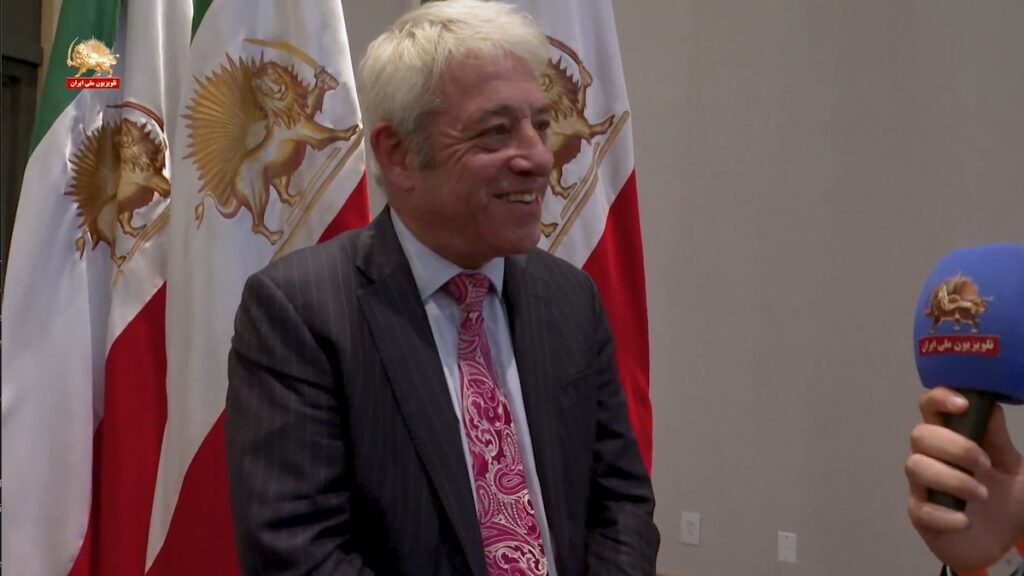
John Bercow: “The Iranian Regime Must Be Shamed, Not Appeased”

Exclusive Interview — Simay Azadi On the sidelines of the Free Iran Convention 2025: Defining the Roadmap for Iran’s Democratic Transition, held on November 15, 2025, in Washington D.C., Simay Azadi conducted an exclusive interview with the Rt. Hon. John Bercow, former Speaker of the UK House of Commons. In this interview, Mr. Bercow criticized the policy of appeasement towards the Iranian regime, calling for a firm, principled international strategy that treats Tehran as a “pariah failed state.” He also addressed MEK supporters inside Iran directly, praising their bravery and reaffirming his unwavering support for their struggle for democracy and freedom. The Washington convention brought together many Iranian American scholars, professionals, human rights advocates, youth, and community leaders from across the United States—joined virtually by supporters and dignitaries worldwide. The gathering examined Iran’s rapidly shifting internal landscape and the growing momentum for democratic transition, emphasizing the central role of youth, women, and organized Resistance units in shaping Iran’s future. Read the full text of the interview below. Interview Transcript — Simay Azadi INTV Reporter: Mr. Speaker, we’ve heard you in the past criticize the policy of appeasement towards the Iranian regime. What would the right policy be for the international community to follow? John Bercow: “The right policy is for the international community to shame the Iranian government, not to accord it respect, not to consider that it is an equal player on the field, but instead to treat it as a pariah failed state that is an abomination. So it should be subject to the most severe sanctions. It should be shamed in all international fora. And it should be, if necessary, diplomatically bludgeoned into accepting that the future must be decided by the Iranian people and no one else.” INTV Reporter: And if you have one message for MEK supporters in Iran, what would that be? John Bercow: “I say to MEK supporters across Iran, in all 31 provinces, I admire you, I revere you, I think of you constantly, and I will support you always. Every time I have the opportunity, I want to trumpet the message for democracy, freedom, and the rule of law in Iran. And I want you to know, as resistance fighters, that you are true heroes, that you will never be forgotten, and that nothing will ever succeed in stopping you, in destroying your will, or in crushing you. I know you guys well enough to know that the word bravery could have been invented to encapsulate what you do. You are very, very, very special people. You are homegrown. You are on the ground. You are in your communities. You believe in freedom. You will not rest until you achieve it. If I, coming from a very fortunate position, living in a democracy, can use my profile and voice to support you, that is what I want to do. My biggest ambition in relation to the freedom fighters of Iran and the NCRI—so magnificently, heroically, courageously, brilliantly, inspirationally led by Mrs. Maryam Rajavi—is to be able to go to Iran to join in the celebrations when this bestial dictatorship is relegated to the dustbin of history, and the people of Iran can choose who leads them.”

Simay Azadi TV Interview with Helen Carreiras
Uncategorized

Helene Carreiras to Simay Azadi: Iranian Women Empower the Global Fight for Justice

In an interview with Simay Azadi, Helene Carreiras, Portugal’s first female Minister of Defense (2022-2024), shared her powerful reflections on the “Women, Force for Change – Free Iran 2025” conference, held by the National Council of Resistance of Iran (NCRI) in Paris on February 22, 2025. The event, a prelude to International Women’s Day 2025, which brought global leaders together to honor Iranian women’s resistance against Tehran’s regime and rally support for their democratic vision. The conference had the NCRI President-elect Maryam Rajavi as the keynote speaker who explained her Ten-Point Plan for a secular, democratic Iran, endorsed by over 650 women leaders from 80 countries, including Ms. Carreiras. They condemned Iran’s systemic discrimination and called for the IRGC’s terrorist designation, hailing Iranian women as a global inspiration. I asked Ms. Carreiras how she assesses the role of women in the Iranian resistance and their situation in Iran. She replied, “We know from research that nations who fail women ultimately fail as well. The situation of women tells us a lot about the ability of a society to develop and give their citizens the basic rights to thrive. Women have been victims in many situations, and the case of Iran is particularly relevant because they’ve been so active, so protagonists in this fight. Their visibility is a force for change, really.” I then asked about the conference’s message and her feelings participating. “It was emotional for me because I could sense the determination, the courage, the cohesion behind this movement,” she said. “The courage, the determination of these women is an inspiration for us all. It also empowers us to fight the same fight we have in our own countries, because this is a fight about democracy, human rights, it’s a fight for justice. Iranian women are not alone fighting against tyranny, against a regime that has been depriving citizens of Iran—and women in particular—of the very basic rights they should be entitled to.” Carreiras closed with a heartfelt message to the Iranian women: “Thank you so much for what you’re doing, because you’re strong and we’ll be stronger together.”

Scroll to Top