
Iran – On Sunday afternoon, April 19, 2026, two political prisoners linked to the People’s Mojahedin Organization of Iran (PMOI/MEK), Hamed Validi and Nima Shahi, were hastily transferred from Karaj Central Prison to an undisclosed location. The abrupt move has raised severe alarms regarding the potential imminent execution of both men.
Validi, a 45-year-old civil engineer, and Shahi, a 38-year-old technical worker, were originally arrested in Tehran on May 13, 2025, alongside several of their relatives. Following their detention, both men were reportedly subjected to intense interrogation and torture. By late September 2025, the Iranian judiciary sentenced both men to death on charges of membership in the PMOI.
There are some contradictions in the state’s case against them. On September 27, 2025, the Chief Justice of Alborz Province accused the two men, along with two other detainees, of espionage related to the “12-day war.” However, records show that both men were arrested at least a month before that conflict even began.
Simay Azadi had previously reported on their arrests on September 7, 2025. The Iranian opposition PMOI had already submitted their names and details to the United Nations and various human rights organizations. In response to the charges, the Secretariat of the National Council of Resistance of Iran (NCRI) issued a statement on September 27 calling for the case to be investigated by the UN Independent International Fact-Finding Mission on Iran.
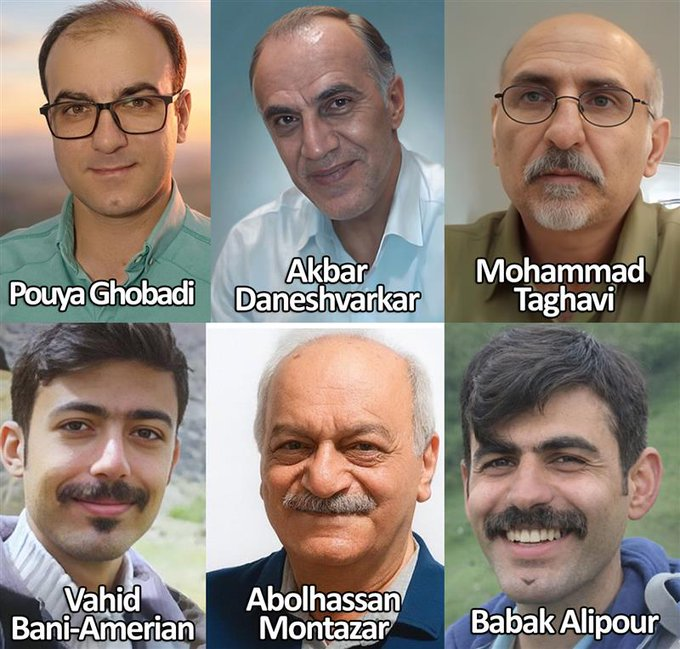
This alarming transfer comes amid a spike in capital punishment in the country. Since March 30, at least 13 individuals have been executed. This total includes six other PMOI members, including the elite physicist Vahid Baniamerian, as well as several individuals arrested during the recent 2026 nationwide protests in Iran.
The urgency of the situation is further compounded by remarks made today by Iran’s Judiciary Chief, Gholam-Hossein Mohseni-Eje’i. Addressing judicial officials on Sunday, Eje’i demanded an aggressive acceleration of legal procedures and verdicts, directing prosecutors and courts to bypass standard investigative timelines. Highlighting the pressure of ongoing nightly demonstrations across the country, Eje’i stated that officials must work through nights, weekends, and holidays to process cases rapidly.
🚨 Iran's Judiciary Chief: “If 'the case' is given in the morning, get the results by the afternoon.”
— Pasha Borjkhani (@BorjkhaniP1847) April 19, 2026
In a drastic escalation of summary justice, Iran’s Judiciary Chief Gholam Hossein Mohseni Eje'i has ordered prosecutors to bypass standard legal timelines and issue "immediate"… pic.twitter.com/cNzcxtxNyj
“Today, work must be entrusted to experts, moving faster and faster, both in the prosecutor’s office and the courts,” Eje’i declared. “Don’t just say, ‘We’ve handed the case to the investigator.’ If it’s given in the morning, get the results by the afternoon. Not a week later, nor ten days later. It used to be standard to allow ten days for an investigation… Go right now, complete the investigation immediately, and return.”
With fears mounting that Validi and Shahi could face execution as early as Monday morning, April 20, the Iranian opposition has appealed to the international community. They called on the UN High Commissioner for Human Rights, the UN Human Rights Council, the Special Rapporteur on Iran, the Independent International Fact-Finding Mission, and other international human rights authorities to take immediate, emergency action to save the lives of the two men.