
Simay Azadi – Iranian emergency officials announced on Wednesday, May 6, that at least 11 people were killed and 26 injured following a major fire at the Arghavan commercial complex in Shahriar, west of Tehran.
According to officials from Tehran’s northwestern emergency services, most of the injured suffered what authorities described as minor injuries and were treated at the scene, while one person was transferred to hospital care.
🚨 Iran News: Deadly Fire in Shahriar Kills At Least 11
— SIMAY AZADI TV (@en_simayazadi) May 6, 2026
Iranian emergency officials said on Wednesday, May 6, that at least 11 people were killed and 26 injured following a major fire at the Arghavan commercial complex in Shahriar, west of Tehran.
According to state media,… pic.twitter.com/5eIiGKLpOg
State-run Mehr news agency quoted local officials in Shahriar as confirming the deaths of 11 people. Authorities said 26 others had either been hospitalized or treated on an outpatient basis.
The fire reportedly began Tuesday afternoon. Videos published by state media and circulated on social media showed flames consuming large sections of the multi-story commercial complex.
Officials have not yet announced the cause of the fire.
Reports indicate the Arghavan complex housed more than 250 commercial units, several sports clubs, and approximately 50 office units.
The deadly incident is the latest in a long series of fires, explosions, and industrial disasters that have repeatedly raised questions in Iran over building safety, aging infrastructure, regulatory oversight, and the allocation of state resources.
The tragedy has revived memories of the January 2017 collapse of Tehran’s Plasco building, where a fire tore through the high-rise commercial center before the structure collapsed, killing firefighters and civilians. In the aftermath, merchants and victims’ families staged days of protests over delays, negligence allegations, and what many described as the authorities’ failure to enforce basic safety measures despite repeated warnings before the collapse.
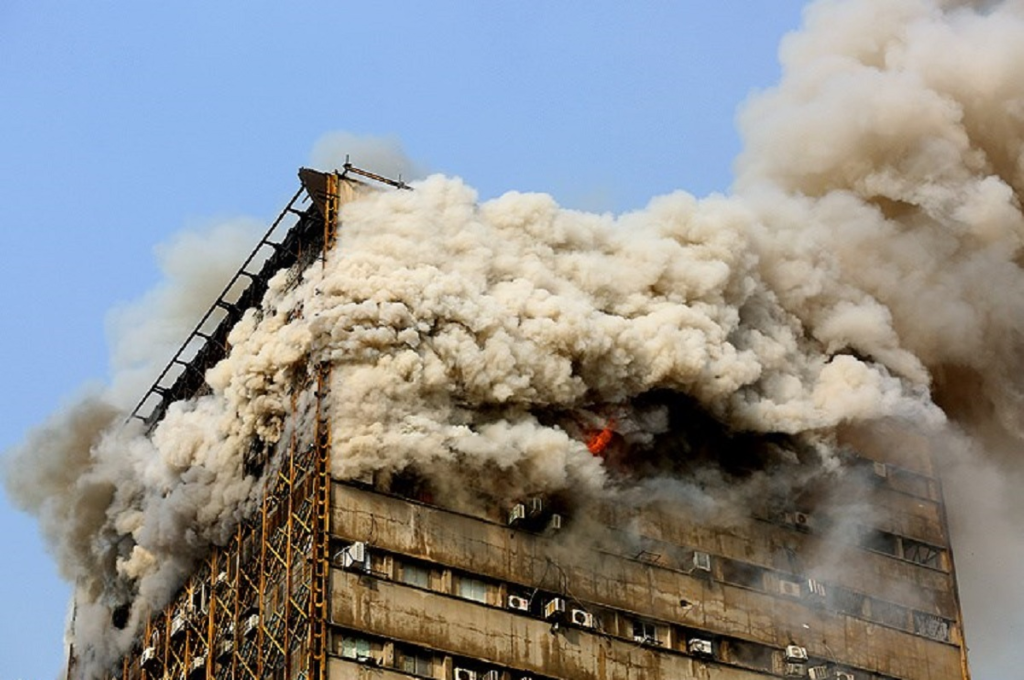
In recent years, similar incidents have continued across Iran.
In Bandar Abbas, a massive explosion at Rajaee Port earlier this year injured hundreds and caused widespread destruction at one of Iran’s key commercial hubs. Reports surrounding the blast pointed to serious concerns regarding the storage of hazardous materials and broader failures in safety management.
Another major fire erupted at the Abadan oil refinery, one of Iran’s largest refining facilities, sparking fears among local residents over environmental hazards, poor maintenance, and deteriorating industrial infrastructure.
Many analysts attribute Iran’s recurring domestic disasters with the vast resources spent by the Iranian regime on regional military operations, security institutions, and overseas terrorist activities, while many civilian sectors inside Iran face chronic underinvestment, outdated safety systems, and allegations of systemic corruption.
Although officials often describe these incidents as isolated accidents or technical failures, the growing number of deadly fires, industrial explosions, and infrastructure collapses has reinforces that real issue of governance, accountability, and national priorities in Iran.