Simay Azadi English

Iran Protests 2026

Latest on the Iran Protests 2026 and the revolution in making Iran.

Iran Protests 2026, News

Live Report – Day 20 of Iran Protests: Rafsanjan Erupts as PMOI Resistance Units Martyrs Confirmed

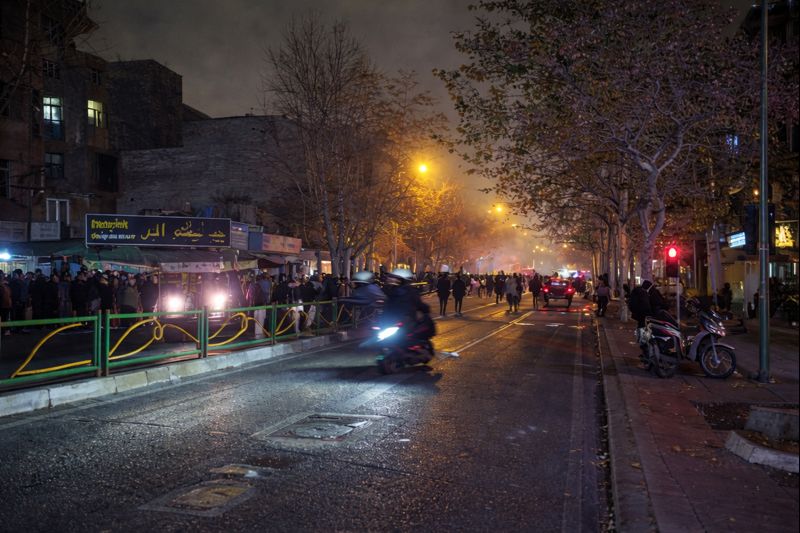
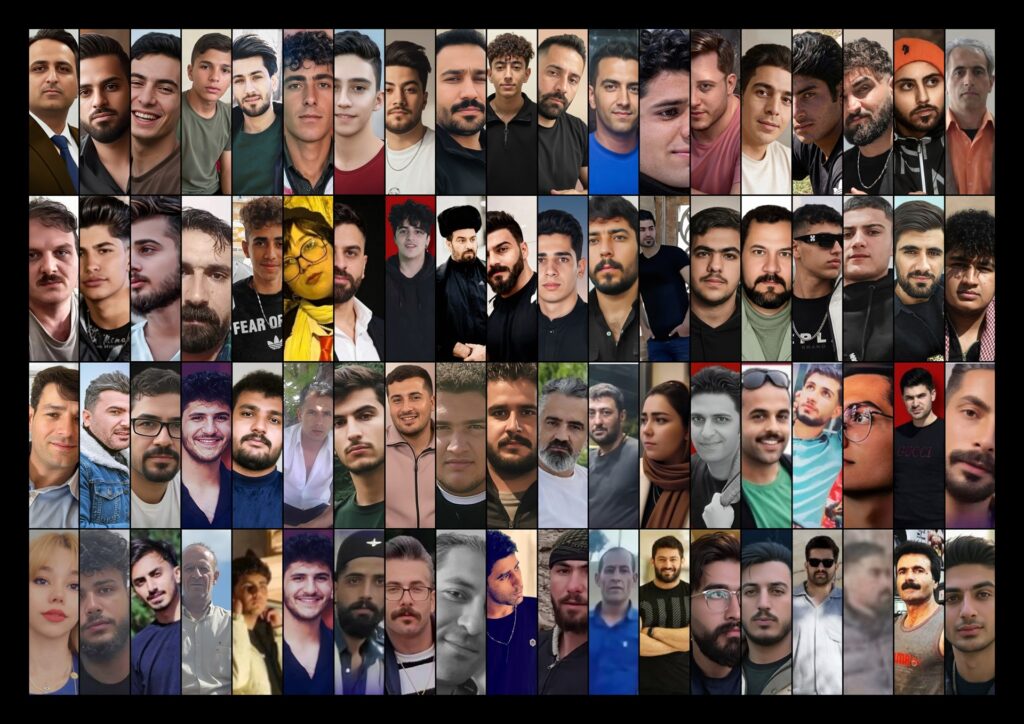
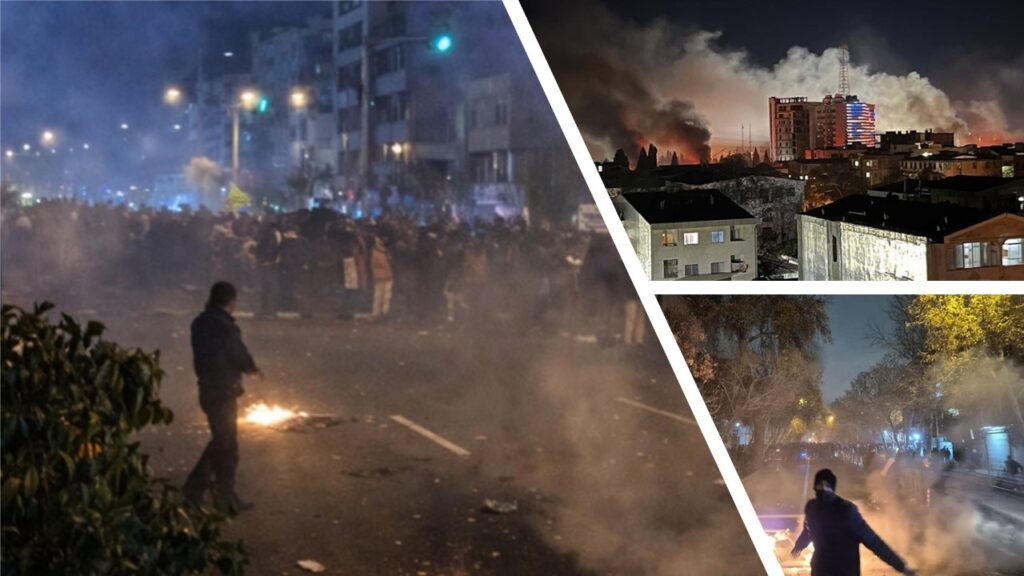
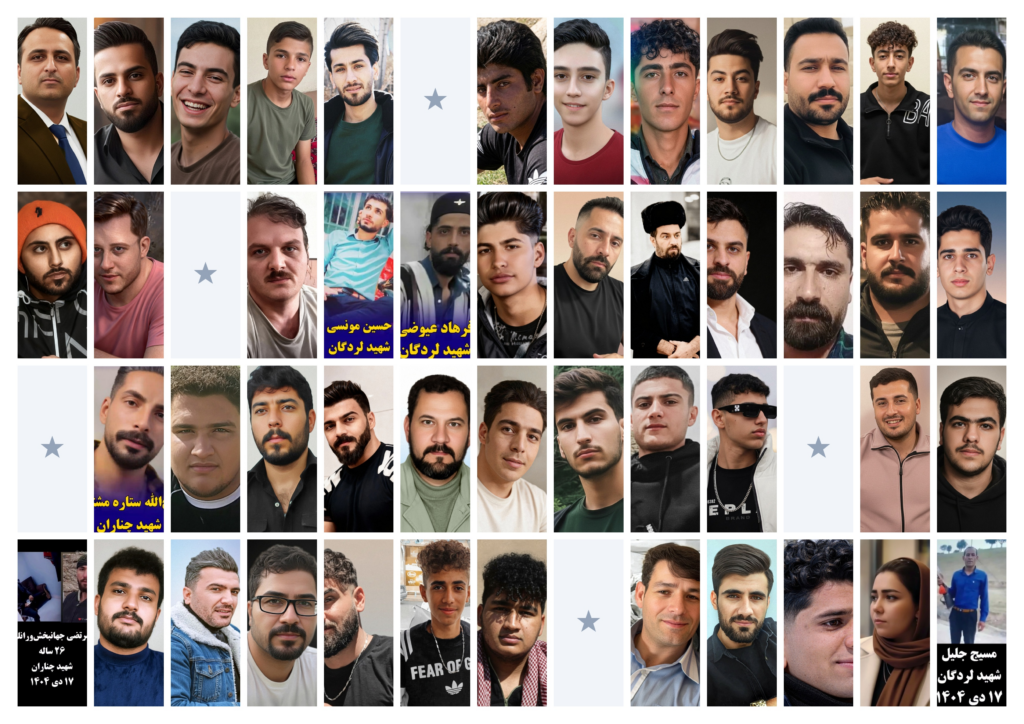
Day 20 Live Report: Arson attacks on regime institutions, street battles expand, and Resistance Units pay a heavy price Key Highlights from Today’s Iran Protests 🔴 Update – 6:30 PM CET (Thursday, January 16, 2026) In Zahedan, mass demonstrations erupted after Friday prayers, with protesters chanting “Death to Khamenei” and “Death to the dictator.”The protests took place despite the regime’s ongoing crackdown, underscoring continued public defiance in the city. 🔴 Update – 12:00 PM CET (Thursday, January 16, 2026) In Rafsanjan, on Thursday night (25 Dey), rebellious youth engaged in fierce street battles with heavily armed special units. During the confrontations, protesters set fire to a regime-linked bank, escalating attacks on institutions associated with repression and economic exploitation.The previous night, protesters in Rafsanjan also torched the regime’s post office and set fire to the Khomeini Relief Committee building, marking a sustained campaign against regime infrastructure. In Gonbad-e Kavus, on Wednesday night, protesters fought bold and sustained street battles with special units across multiple streets, confronting security forces despite heavy repression. In Gonbad-e Kavus, on Wednesday night, protesters fought bold and sustained street battles with special units across multiple streets, resisting advancing forces despite heavy repression. Martyrs of the Nationwide Uprising – PMOI Resistance Units The following individuals were members of the Resistance Units of the People’s Mojahedin Organization of Iran (PMOI/MEK) who were killed by direct fire during the uprising, according to verified reports: Related documentation and footage released by Simay Azadi: 🚨 BREAKING | Iran Protests — Resistance Units IdentifiedThe @Mojahedineng has identified members of its brave Resistance Units who were killed by regime fire during the nationwide uprising: • Zahra (Raha) Bohlouli-Pour, 18, University of Tehran student — shot dead on Jan 8,… pic.twitter.com/I0OcVTjRdG — SIMAY AZADI TV (@en_simayazadi) January 15, 2026 What Happened The Iran Protests erupted amid widespread anger over political repression, economic hardship, and decades of authoritarian rule. What began as localized demonstrations has evolved into a sustained nationwide uprising led largely by youth, workers, and organized Resistance Units. Despite lethal force, mass arrests, and escalating militarization, protesters continue to return to the streets, directly challenging regime institutions and security forces.

Iran Protests 2026, News

Live Report – Day 19 of Iran Protests: Street Battles Continue in Tehran, Mashhad, and Western Iran

Day 19 Live Report: Sustained urban clashes as protesters confront special units across multiple cities On Thursday, January 15, 2026 (25 Dey 1404), the nationwide uprising entered its nineteenth day, as Iran Protests continued with intense nighttime street battles in Tehran, Mashhad, and several western cities, marked by close-quarters confrontations with heavily armed security forces. Key Highlights from Today’s Iran Protests: Tehran Flashpoints: Fierce street battles erupted in Tehranpars, Yousef Abad, and Gorgan Street as protesters confronted special units across multiple districts. Mashhad Resistance: Protesters clashed with special units and IRGC forces across city streets during nighttime confrontations. Western Iran Battles: Sustained clashes continued in Eslamabad-e Gharb and Khoy despite heavy gunfire by security forces. Live Report – Day 19 Developments 🔴 Update – 9:30 PM CET (Thursday, January 15, 2026) Update 11:00 AM CET – Day 19 Developments In Tehran, on Wednesday night (January 14) and continuing into Thursday, protesters engaged in running street battles with armed special-unit forces in Gorgan Street. Additional clashes erupted in Tehranpars, where protesters launched attacks and forced security units into prolonged confrontations. Earlier, severe clashes were reported in First Square and Third Square of Tehranpars, as well as Rashid Street. In Yousef Abad, protesters fought trench-to-trench street battles against heavily armed special units. In Mashhad, protesters engaged in street-level battles across multiple neighborhoods, confronting special units and IRGC forces as clashes spread through city streets. In Eslamabad-e Gharb, protesters sustained bold confrontations with special units despite continuous live fire by security forces. In Khoy, protesters engaged in intense street battles with heavily armed special-unit forces across the city. A call received by Simay Azadi details a terrifying crackdown in Manzariyeh and Banafsheh Town: Regime forces swarmed residential buildings, beating residents. • Security agents are storming rooftops to confiscate or destroy satellite dishes. • Travel between Tehran and Karaj is reportedly strictly controlled. Regarding over 50,000 arrests made by the regime during the nationwide Iran protests, Mrs. Maryam Rajavi, the NCRI’s President-elect wrote: The mass killing of young people and the wave of arbitrary arrests are clear evidence of Khamenei’s desperation in the face of the people’s uprising. I call on the international community to take immediate action to secure the release of all detainees and to dispatch, without delay, an independent international fact-finding mission to inspect Iran’s prisons. What Happened The ongoing Iran Protests are rooted in deep public anger over political repression, economic hardship, and decades of authoritarian rule. What began as scattered demonstrations has evolved into a sustained nationwide uprising, with protesters repeatedly returning to the streets despite lethal force, mass arrests, and escalating militarization by state security forces.

Iran Protests 2026, News

Live Report – Day 18 of Iran Protests: Mass Public Backing, Street Battles, and New Victims Identified

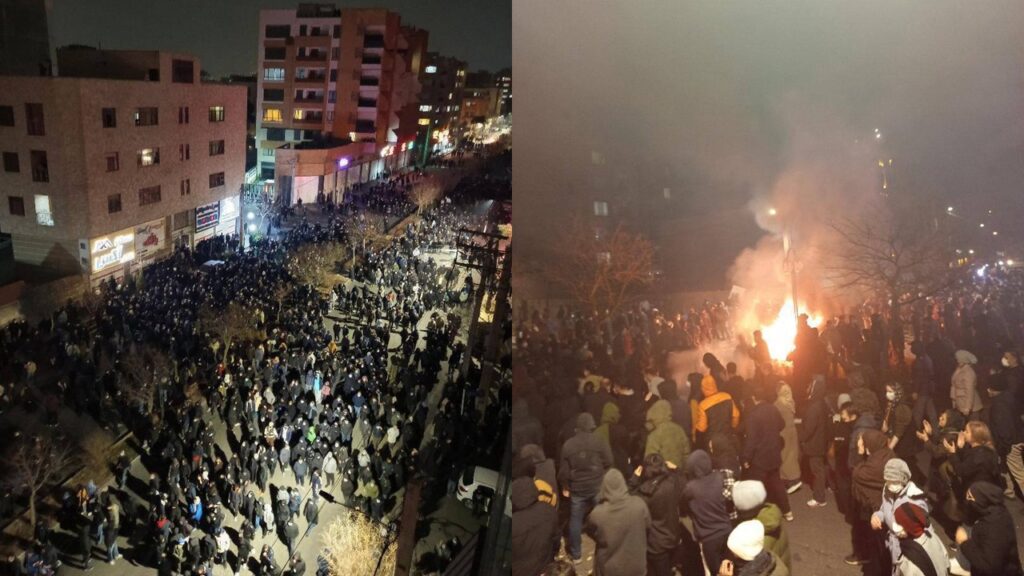
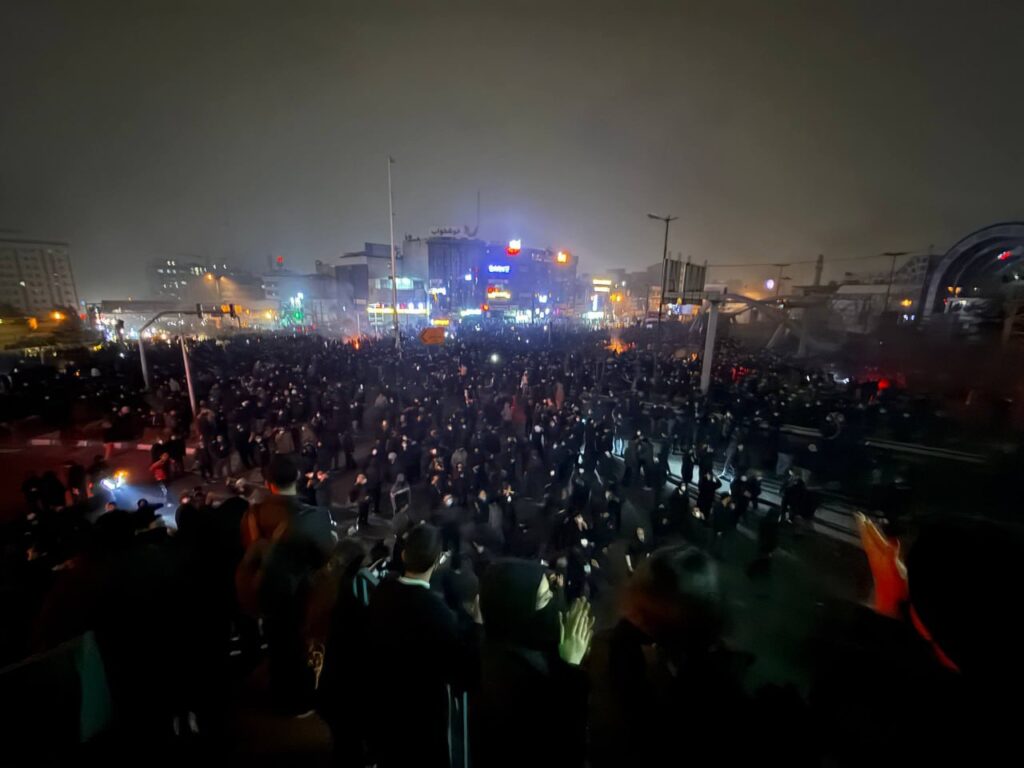
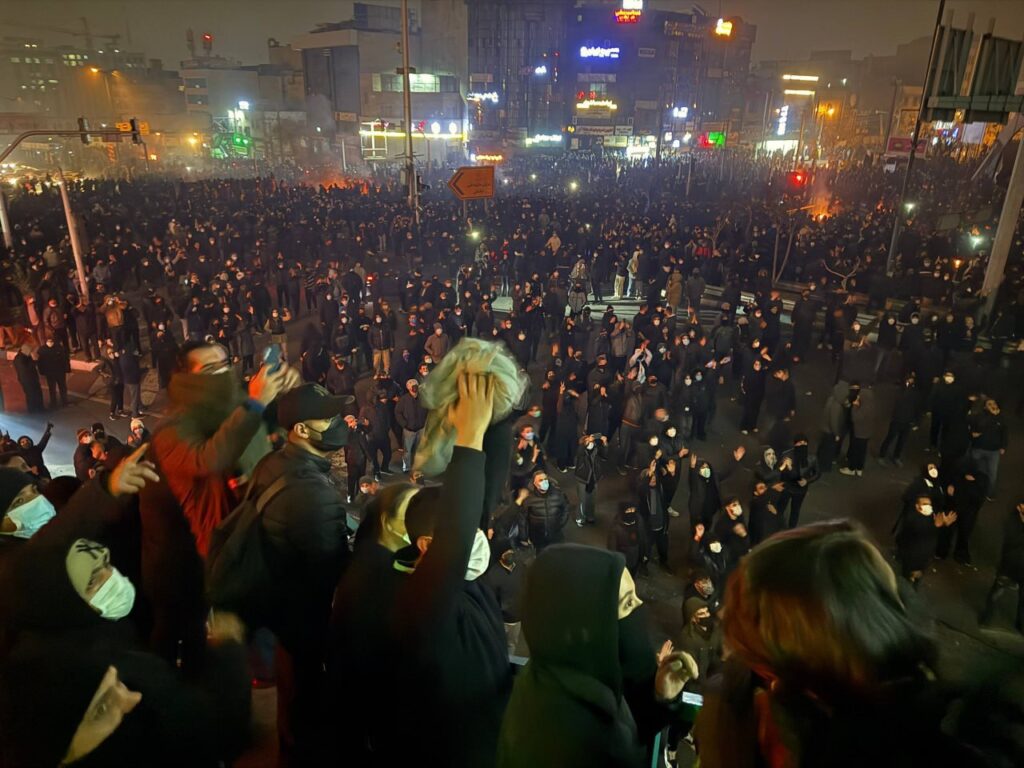
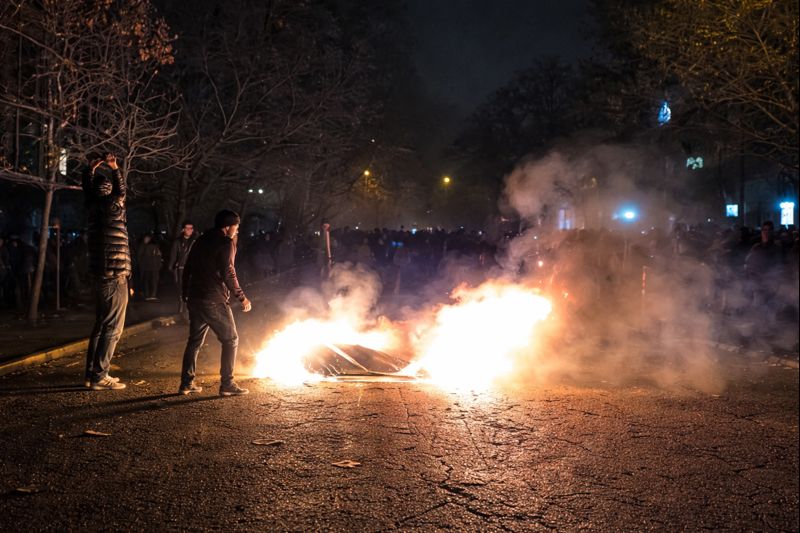
Day 18 Live Report: Widespread street confrontations, public support in Tehran, and confirmation of additional victims nationwide On Tuesday night, January 13, 2026 (23 Dey 1404), the nationwide uprising entered its eighteenth day, as Iran Protests continued with severe street battles, open public backing in major cities, and new confirmations of victims from across the country. Key Highlights from Today’s Iran Protests: Tehran Mobilization: Large crowds backed protesters during intense street battles in Sadeghieh, Theater City, and Ashrafi Esfahani. Nationwide Resistance: Sustained urban confrontations continued in Shiraz, Tabriz, Karaj, Ilam, Kermanshah, and Urmia. Victims Identified: Opposition sources confirmed the identities of 38 additional victims, including five women, as the nationwide death toll remains above 3,000. Live Report – Day 18 Developments 🔴 Update – 11:00 PM (Tuesday, January 13, 2026) Iran Protests – Arrests Nationwide Exceed 50,000, Opposition Says The People’s Mojahedin Organization of Iran announced that the total number of arrests and detentions linked to the nationwide uprising has exceeded 50,000 people across Iran from December 27, 2025, to January 14, 2026 (7 Dey to 24 Dey 1404). https://twitter.com/en_simayazadi/status/2011554532896203085 According to the statement, groups of detainees were arrested en masse at protest scenes, with some later released; however, the exact number of those released remains unknown. Surprise arrests and detentions carried out through raids on homes, neighborhoods, and shuttered workplaces are continuing. The figures are based on detailed investigations covering 144 cities, with additional inquiries conducted in 76 cities through eyewitnesses, families, local workers, and detainees. The organization emphasized that obtaining precise and comprehensive figures is only possible through an independent international fact-finding mission with access to all regime prisons and detention centers. The statement also recalled remarks made on May 6, 2025, by Gholamhossein Mohseni Ejei, the head of Iran’s judiciary, who admitted that during the 2022 uprising, authorities had opened “around 90,000 cases.” He acknowledged that those targeted included students, schoolchildren, teachers, workers, women, and men from across different social classes, warning at the time about the political consequences of mass prosecutions and imprisonments. 🔴 Update – 3:00 PM CET Iran Protests – Widespread Clashes and Funeral Rallies Across Multiple Cities On Tuesday, January 13 (23 Dey 1404), protests and confrontations between citizens and regime forces continued across Tehran and numerous cities nationwide. In Tehran, large crowds gathered Tuesday night in Sadeghieh, chanting “Death to the dictator.” Protesters engaged in street battles with special units in Haft-Hoz, Pirouzi, Theater City, Ashrafi Esfahani, Tehranpars, and Valiasr. Nighttime demonstrations were also reported in Ekbatan. In Nazi Abad, security forces fired pellet shots, injuring several protesters. Earlier Tuesday morning, funeral processions for fallen protesters were held at Behesht-e Zahra Cemetery, with chants of “Death to Khamenei.” In Mashhad, clashes between protesters and security forces resulted in the killing of one colonel and three Basij members who had opened fire on demonstrators. In Kermanshah, street battles continued throughout the night between rebellious youth and security forces. In the Taq-e Bostan area, forces fired directly at civilians. The regime reportedly deployed reinforcements to Kermanshah from Qasr-e Shirin, Ravansar, and Javanrud. In Shahr-e Babak, Kerman Province, a war-like situation prevailed, with hundreds arrested. Reports indicate the city’s intelligence chief had been wounded in earlier clashes. In Kerman, heavily armed security forces were deployed in the streets, and families were reportedly extorted large sums to recover the bodies of victims. Tuesday night clashes were also reported in Shiraz, Ilam, and Karaj, as protesters confronted special units across multiple neighborhoods. In Tabriz, Abarasan remained a flashpoint for continued street battles. In Isfahan, protesters set fire to Basij motorcycles during clashes. Additional reports from Tuesday night include: In Tehran, on Tuesday night, protesters engaged in severe and widespread street battles with special units in Sadeghieh, with large numbers of residents openly supporting the protesters and chanting “Death to the dictator.” Further confrontations erupted in Theater City and along Ashrafi Esfahani Boulevard, where protesters fought close-quarters street battles with IRGC forces across multiple intersections. In Shiraz, protesters maintained continuous street resistance against armed IRGC forces, extending unrest into the seventeenth consecutive day in the city. In Tabriz, rebellious youth fought fierce street battles with special units in the Abarasan district as security forces attempted to advance. In Karaj, protesters confronted armed special-unit forces during sustained nighttime clashes. In Ilam, protesters engaged in close-quarters street battles with armed IRGC and special-unit forces. In Kermanshah, street-to-street battles continued as protesters confronted IRGC forces across multiple neighborhoods. In Urmia, protesters maintained street-level resistance despite continuous live fire by special units. Additional Update – Victims of the Nationwide Uprising The People’s Mojahedin Organization of Iran announced on Tuesday, January 13, that it has identified 38 additional victims of the nationwide uprising following verification and confirmation. Five of the newly identified victims are women. Iran Uprising | 31 Martyrs IdentifiedThe @Mojahedineng has announced the names of 15 additional martyrs of Iran’s nationwide uprising, bringing the total number of identified martyrs to 31 so far. Among the newly identified victims are two teenagers aged 14 and 15, and two… https://t.co/a8jsZeX1mm pic.twitter.com/KjS7PZ3mUL — SIMAY AZADI TV (@en_simayazadi) January 6, 2026 The announcement follows a statement issued on January 12, confirming that the total number of victims nationwide has exceeded 3,000 since the uprising began on December 27, based on investigations conducted through local sources, hospitals, forensic medicine centers, and families across Iran. Identified Victims (38): Siamak Rashed (54) – Tehran – Jan. 11Mahmoud Mousavi (29) – Qeshm Island, Hormozgan – Jan. 10Javad Ganji (39) – Tehran – Jan. 9Ali Dehghan Jouqan (55) – Tehran – Jan. 9Bahram Zahedi (42) – Rasht, Gilan – Jan. 9Mojtaba Ghorbani (33) – Rasht, Gilan – Jan. 8Ako Mohammadi (22) – Qeshm Island, Hormozgan – Jan. 8Khaled Malaei – Bandar Abbas, Hormozgan – Jan. 8Mohammad Mohammadlou – Bandar Abbas, Hormozgan – Jan. 8Helako Ivani – Eslamabad-e Gharb, Kermanshah – Jan. 8Bayat Sobhani (40) – Paveh, Kermanshah – Jan. 8Amirali Heidari – Kermanshah – Jan. 8Sajjad Feyzi – Kermanshah – Jan. 8Mohammad Jafari – Kermanshah – Jan. 8Erfan Jameh-Shouraee

Iran Protests 2026, News

Live Report – Day 17 of Iran Protests: Undeclared Martial Law, Mass Killings, and Nationwide Resistance

Day 17 Live Report: Power blackouts, rooftop snipers, mass casualties, and street battles across Iran On Monday, January 12, 2026 (22 Dey 1404), the nationwide uprising entered its seventeenth day, as Iran Protests intensified amid undeclared martial law in major cities, widespread power and internet blackouts, mass casualties, and sustained street battles across multiple provinces. Key Highlights from Today’s Iran Protests: Isfahan Under De Facto Martial Law: Rooftop snipers deployed as protesters retained control of surrounding districts and torched banks and regime institutions. Mass Killings Exposed: Bodies reported stacked at forensic centers in Tehran and Karaj, with morgues overwhelmed nationwide. Nationwide Night Battles: Heavy clashes erupted across Tehran, Isfahan province, Khuzestan, Kermanshah, Kurdistan, and southern cities. Regime Centers Targeted: Banks, tax offices, police vehicles, and Basij bases were set ablaze across multiple provinces. Night Update – Tuesday Night, January 13, 2026 Live Report – Day 17 Developments In Tehran, on Monday night, protesters engaged in sustained street battles with special units and IRGC forces in Punak, Elahiyeh, Ariashahr, Haft-Hoz, and Sadeghieh, despite regime-imposed power outages. Protesters also set fire to a security-force gathering site on Kargar Street. Earlier the same day, funeral processions for fallen protesters were held, with crowds chanting “This year is the year of blood—Seyed Ali will be overthrown.” In Isfahan, reports indicate an undeclared state of martial law, with snipers positioned on rooftops of mosques and schools in central areas. Despite this, surrounding districts—from Najafabad and Falavarjan to Sepahan Shahr and Baharestan—remained under public control. Rebellious youth set fire to banks and a regime-backed city council building at Se-Rah-e Simin and Malekshahr, while running street battles continued across Chaharbagh, Shamsabadi, Shohada Street, and Hakim Nezami. In Kerman, close-quarters clashes persisted across multiple neighborhoods as protesters confronted special units and IRGC forces throughout the night. In Izeh and Ahvaz, nightfall brought renewed street battles between protesters and IRGC special units, with clashes spreading across central districts. In Kermanshah, widespread street clashes erupted Monday night, while in Mahidasht, sustained confrontations between protesters and IRGC forces continued. In Sanandaj, protesters carried out street-level confrontations, blocking enemy routes with fire. In Meshkan, Fars Province, protesters torched a law-enforcement vehicle. Earlier actions included the torching of a tax office in Kish, arson attacks on regime-linked banks in Bandar Abbas, and stone assaults forcing special units to retreat in Tehran. Further reports revealed mass casualty concealment. In Tehran and Karaj, large numbers of bodies were reportedly stacked inside and outside forensic medicine facilities, with families summoned for identification. In Bandar Abbas, bodies were transferred to a warehouse as the city was placed under heavy security lockdown. Reports from Kahrizak describe bodies transported by pickup trucks and families shown images on monitors, with reports of extortion for the release of bodies. Contextual developments from Sunday night, January 11, include the seizure of the governorate and torching of an IRGC base in Quchan, disarming of police in Babol, the killing of an IRGC commander in Ilam, and continued clashes in Mashhad, where a Basij base was set ablaze. What Happened The current wave of Iran Protests began amid deep public anger over political repression, economic hardship, and decades of authoritarian rule. What started as localized demonstrations has evolved into a nationwide uprising led by youth and grassroots networks, challenging the legitimacy of the ruling system despite blackouts, mass arrests, and violent crackdowns.

Iran Protests 2026, News

Live Report – Day 16 of Iran Protests: Death Toll Surpasses 3,000 as Night Clashes Continue

Day 16 Live Report: Regime killings exposed as protests and clashes persist across multiple cities On Sunday, January 11, 2026, the nationwide uprising in Iran entered its sixteenth day, as new figures revealed the scale of the regime’s lethal crackdown while Iran Protests and nighttime clashes continued in several major cities. Iran Protests: Simay Azadi EXCLUSIVE REPORT: IRGC Basij Base Seized in UrmiaSaturday Night, Jan 10 |Reports obtained exclusively by Simay Azadi confirm that rebellious youth in Urmia successfully took over a Basij paramilitary base during the night. pic.twitter.com/zzj17vIEuR — SIMAY AZADI TV (@en_simayazadi) January 11, 2026 Key Highlights from Today’s Iran Protests: Death Toll Exceeds 3,000: Verified reports confirm that more than 3,000 protesters have been killed nationwide since the start of the uprising. Crime Against Humanity: Maryam Rajavi condemned the killings as a major crime against humanity, calling for accountability. Night Clashes Continue: Heavy confrontations were reported in Tehran, Karaj, and Kermanshah on Sunday night. Latest Update 9:00 PM CET – Monday Night, January 12, 2026 Iran Protests – Nighttime Clashes and Defiant Funeral Rallies Exclusive Update – Tehran | Internet Blackout Iran Protests – Eyewitness Message from Tehran Describes Mass Killings Amid Total Blackout An eyewitness message received exclusively by Simay Azadi from Tehran describes an extreme escalation of violence amid a complete internet and electricity blackout across parts of the city: Update 3:00 PM CET – Reports On Sunday Night Clashes , January 11, 2026 Iran Protests – Escalation in Mashhad, Isfahan Province, and Karaj Live Report – Day 16 Developments UPDATE: 11:00 AM CET The People’s Mojahedin Organization of Iran announced on January 11 that the total number of victims of the nationwide uprising from December 27 to January 11 has surpassed 3,000. According to the statement, the figure is based on verified investigations using local sources, hospitals, forensic medicine centers, and families of victims and the disappeared across 195 cities nationwide. The regime has been forced to broadcast images of some bodies on state television while falsely attributing them to “opponents” and “rioters.” Maryam Rajavi, President-elect of the Iranian Resistance, extended condolences to the Iranian people—particularly the families of the victims—and stated that this constitutes a major crime against humanity. She emphasized that those who ordered and carried out the killings will face justice in a free and democratic Iran. Nighttime Clashes – Sunday, January 11 What Happened The current wave of Iran Protests began amid deep public anger over political repression, economic hardship, and decades of authoritarian rule. What started as localized demonstrations has evolved into a nationwide uprising, driven largely by youth and grassroots networks, challenging the legitimacy of the ruling system despite violent crackdowns.

Iran Protests 2026 January 10
Iran Protests 2026, News

Iran Protests Live Update – Day 15: Night Clashes, Arson Attacks, and Heavy Casualties

Day 15 Live Report: Nighttime confrontations in Tehran and multiple cities as Iran Protests intensify On Sunday, January 11, 2026, the nationwide uprising entered its 15th day, as Iran Protests continued since early hours of Saturday night with coordinated street actions, armed confrontations, and attacks on regime institutions across several provinces, according to reports obtained by Simay Azadi. Key Highlights from Today’s Iran Protests: Live Updates – Iran Protests (Chronological) Update – 8:50 PM CET Exclusive: Heavy Nighttime Clashes Across Tehran and Multiple Cities Update 6:30 PM CET Reports from Iran indicate that today’s protests have kickstarted in Tehran’s Punack district. Iran Protests – 10 More Victims of the Nationwide Uprising Identified The People’s Mojahedin Organization of Iran announced on Sunday, January 11, the identities of 10 additional victims of the nationwide uprising, following verification and confirmation. According to the announcement, five of the newly identified victims were from Kermanshah and were killed on January 8, 2026, after being shot directly by regime security forces during protests and clashes in the city. Two others, including one woman from Iranian Kurdistan, were killed in Tehran on January 8 and 9. Among the victims is a 16-year-old teenager killed in Tehran. Most of the victims identified so far were shot in the head. Identified Victims: Update 2:30 PM CET Iran Protests – Night Clashes and Arson Attacks Across Multiple Cities (January 10, 2026) Update 7:00 AM (CET) In Tehran, protesters blocked reinforcement routes on Ferdows Boulevard on Saturday night, January 10, setting fires and chanting “Death to Khamenei.” Further clashes were reported the same night between protesters and special units near 17 Shahrivar Street and Shadabad, as well as in Punak, where running street battles continued for hours. In Tehranpars, on Friday night, January 9, heavy gunfire was reported around Police Station 126. Footage obtained exclusively by Simay Azadi shows scenes resembling a war zone, with relentless automatic fire by the regime’s State Security Forces (SSF), some positioned on rooftops and firing toward surrounding streets. Amid the sustained gunfire, young protesters can be heard chanting “Death to Khamenei” and “Don’t be afraid,” defiantly continuing the Iran Protests under a hail of bullets. In Tehranpars earlier the same night, protesters also launched a bold offensive against special units, forcing them to retreat following intense clashes. On Saturday in Shiraz, protesters barricaded streets in Ma’ali Abad and Kooshk on Saturday night, confronting special units and IRGC forces. During the same night, protesters set fire to a branch of the Agricultural Bank, while additional road blockades were reported in Ghodousi-e Gharbi, where fires were used to cut off reinforcement routes. In Fardis, protesters engaged in repeated hit-and-run clashes with special units on Saturday night, forcing security forces to withdraw from several streets. In Urmia, protesters seized control of a Basij base on Saturday night, marking a significant escalation in the Iran Protests in northwestern Iran. In Ilam, protesters engaged in sustained clashes with special units and IRGC forces on Saturday night, with reports of intense street fighting and repeated advances by protesters. In Quchan, protesters clashed with special units on Saturday night, later setting fire to the governor’s office. During the confrontations, eight protesters were killed, according to reports received by Simay Azadi, marking one of the deadliest incidents of the night. What Happened The current wave of Iran Protests began amid deep public anger over political repression, economic hardship, and decades of authoritarian rule. What started as localized demonstrations has evolved into a nationwide uprising, driven largely by youth and grassroots networks, challenging the legitimacy of the ruling system despite escalating violence.

Iran protests 2026
Iran Protests 2026, News

Iran Protests Mark Twelfth Day with Nationwide Street Clashes

Day 12 Roundup: Widespread bazaar strikes, coordinated protests, and escalating confrontations across Iran On Thursday, January 8, 2026, the nationwide uprising entered its twelfth day, as Iran Protests were marked by extensive strikes across major cities, alongside street demonstrations and clashes between protesters and regime forces. Key Highlights from Today’s Iran Protests: On January 8, 2026, during the twelfth day of the nationwide uprising, markets in Tehran, Tabriz, Urmia, Mahabad, Ardabil, Ilam, Sabzevar, Arak, Neyshabur, Isfahan, Fardis, Bandar Abbas, and several cities across Kurdistan province, including Sanandaj, remained closed as part of a coordinated strike. The action followed a call by seven Kurdish political parties and organizations, significantly expanding the scope of the Iran Protests. In Borujerd, bazaar merchants closed their shops and joined residents and rebellious youth in street demonstrations. Protesters marched through the city as public anger continued to build during the Iran Protests. Simultaneously, demonstrations by rebellious youth continued in multiple cities. In Shiraz, protesters forced law enforcement units to retreat. In Kermanshah and Hamedan, rebellious youth staged protests and clashed with regime forces as Iran Protests persisted. In Lumar, demonstrators chanted “Death to Khamenei” and “Tanks, cannons, fireworks—clerics must be gone,” torching a chain store affiliated with the IRGC and attacking a branch of the Agricultural Bank, scattering documents into the streets. Protests were also reported in Kazerun, Borujerd, and Hamedan as the Iran Protests continued into the twelfth day. In Kerman, rebellious youth clashed with law enforcement forces and set fires in the streets. During the evening of the eleventh day of the uprising, widespread clashes erupted in Aligudarz, while an undeclared state of lockdown was reported in Nurabad. In Kashan and Chenar Shahijan, statues of Qassem Soleimani were destroyed and set on fire by protesters. Intense clashes were also reported in Malekshahr, Isfahan, and Fasa. In Bojnurd, thousands demonstrated chanting “This year is the year of blood.” In Bandar Abbas (Negin Passage) and Khash, protesters lit fires, staged demonstrations, and seized control of streets as Iran Protests continued nationwide. What Happened The current wave of Iran Protests began amid deep public anger over political repression, economic hardship, and decades of authoritarian rule. What started as localized demonstrations has evolved into a nationwide uprising, driven largely by youth, workers, and organized grassroots networks, challenging the legitimacy of the ruling system despite violent crackdowns.

Iran Protests 2026, News

Iran Protests Intensify on Eleventh Day

Day 11 Roundup: Shiraz uprising, nationwide strikes, and escalating confrontations across multiple provinces On the eleventh day of the nationwide uprising, Iran Protests escalated sharply, led by mass demonstrations and road blockades in Shiraz, alongside expanding strikes by bazaar merchants and coordinated street actions across several major cities. Key Highlights from Today’s Iran Protests: Flames of the uprising surged in Shiraz on the eleventh day of the nationwide uprising, as rebellious youth launched demonstrations, set fires, and blocked roads. At the same time, bazaar merchants in Shiraz went on strike, significantly expanding the scope of the Iran Protests in the city. Bazaar merchants in Kermanshah also launched strikes, while residents in Mashhad, Qazvin, Neyshabur, Tabriz, and several other cities began the eleventh day of Iran Protests with demonstrations and strikes. During the evening of the tenth day of the uprising, clashes erupted across numerous cities as rebellious youth confronted forces loyal to Ali Khamenei. Street battles, arson attacks, and road blockades were reported as Iran Protests intensified overnight. Video footage from recent days documents coordinated actions by resistance units across multiple locations. In Malekshahi, Ilam province, regime forces fled following attacks by protesters, while in separate incidents rebellious youth temporarily took control of parts of the city (January 6, 2026). In Tehran, protesters blocked reinforcement routes by setting trash bins on fire in Helal Ahmar, Moshiriyeh, and Haft-Hoz, disrupting security deployments (January 5–6, 2026). In Mashhad, protesters launched repeated Molotov attacks on a Basij base known as Aghdasiyeh, blocked reinforcement routes with fire, and confronted Basij forces directly (January 5–6, 2026). At Birjand University, students chanted, “I will kill the one who killed my brother,” signaling the growing role of campuses in the Iran Protests (January 5, 2026). Further actions were reported in Yazdanshahr near Isfahan, where protesters blocked roads and clashed with security forces (January 6, 2026), and in Lordegan, where a law enforcement vehicle was set ablaze by rebellious youth (January 4, 2026). What Happened The current wave of Iran Protests began amid widespread public anger over political repression, economic hardship, and decades of authoritarian rule. What started as localized demonstrations has evolved into a nationwide uprising, driven largely by youth, workers, and grassroots networks, challenging the legitimacy of the ruling system despite violent crackdowns.

Iran Protests 2026, News

Iran Protests Enter Ninth Night Across Multiple Cities

Day 9 Roundup: Tehran demonstrations, bazaar protests, and expanding unrest across western and central Iran On Monday, January 5, 2026, the nationwide uprising entered its ninth consecutive night, as Iran Protests continued across Tehran and multiple cities, with rebellious youth confronting forces loyal to Ali Khamenei amid escalating repression. Key Highlights from Today’s Iran Protests: On the night of January 5, 2026, during the ninth night of the nationwide uprising, Iran Protests unfolded across Tehran and numerous other cities, as rebellious youth confronted regime forces. In Tehran, protesters gathered in the Haft-Hoz area of Narmak, chanting “This year is the year of blood; Seyed Ali will be overthrown.” In Tehranser and Nazi Abad, crowds took to the streets chanting “Death to the dictator.” In Yaft Abad and Shahrak-e Vali-Asr, rebellious youth set fire to two motorcycles belonging to law enforcement forces. Earlier on Monday, Tehran bazaar merchants staged protests in the Cheragh Bargh Market, Sepahsalar, and the Ironmongers’ Bazaar, voicing anger over soaring currency prices and deteriorating living conditions. Chanting “Shameless, shameless,” they clashed with law enforcement forces who attacked demonstrators using tear gas, as Iran Protests expanded into commercial centers. In Sonqor and Koliai and Eslamabad-e Gharb in Kermanshah province, protesters chanted “Death to Khamenei.” In Arak, rebellious youth blocked streets by setting trash bins on fire while continuing Iran Protests with anti-regime slogans. In Jogh Abad, Isfahan province, protesters confronted direct fire from regime forces while chanting “Death to the oppressor.” Nighttime Iran Protests were also reported in Gohardasht and Golshahr in Karaj, with continued anti-regime chants. What Happened The current wave of Iran Protests began amid deep public anger over political repression, economic hardship, and decades of authoritarian rule. What started as localized demonstrations has evolved into a nationwide uprising, driven largely by youth and grassroots networks, challenging the legitimacy of the ruling system despite violent crackdowns.

Iran Protests 2026, News

Iran Protests Continue on Eighth Day Across 107 Cities

On the evening of Sunday, January 4, 2026, the eighth day of the nationwide uprising, Iran Protests unfolded in Tehran and numerous other cities, marked by widespread demonstrations and intense clashes between protesters—particularly rebellious youth—and the regime’s repressive forces. Over the past eight days, Iran Protests have spread to 107 cities nationwide. Despite a full state of alert imposed on military, law enforcement, and security forces in Tehran, Iran Protests erupted in multiple districts of the capital, including Jomhouri Street, Moshiriyeh, Sadeghieh, Narmak (Haft-Hoz), Tehranpars, Shahrak-e Vali-Asr, Jannat Abad, Siros Crossroads, and other central areas, where protesters chanted “Death to Khamenei.” In Nurabad Mamasani (Fars province), Iran Protests escalated into armed confrontations with regime forces, with running street battles reported. In Isfahan, rebellious youth clashed with security units at Si-o-Se Pol (33-Bridge), Khaju Bridge, and Chaharbagh Avenue, setting fire to regime vehicles. In Fooladshahr, protesters confronted law enforcement forces that were firing toward civilians. Amid fears of a student uprising linked to the Iran Protests, authorities shut down Isfahan University of Technology for nine days. On January 4, 2026, the eighth day of the Iran Protests, several victims of the uprising in Malekshahi, Ilam province, were laid to rest as crowds chanted “Death to Khamenei.” Later on January 4, 2026, security forces attacked Khomeini Hospital, where individuals injured during recent Iran Protests were receiving medical treatment. Wounded patients were beaten inside the hospital. Residents rushed to assist the injured, while others remained in the streets until late at night, lighting fires, erecting barricades, and blocking roads as the Iran Protests continued.

Scroll to Top