Simay Azadi English

Author name: News Desk

News

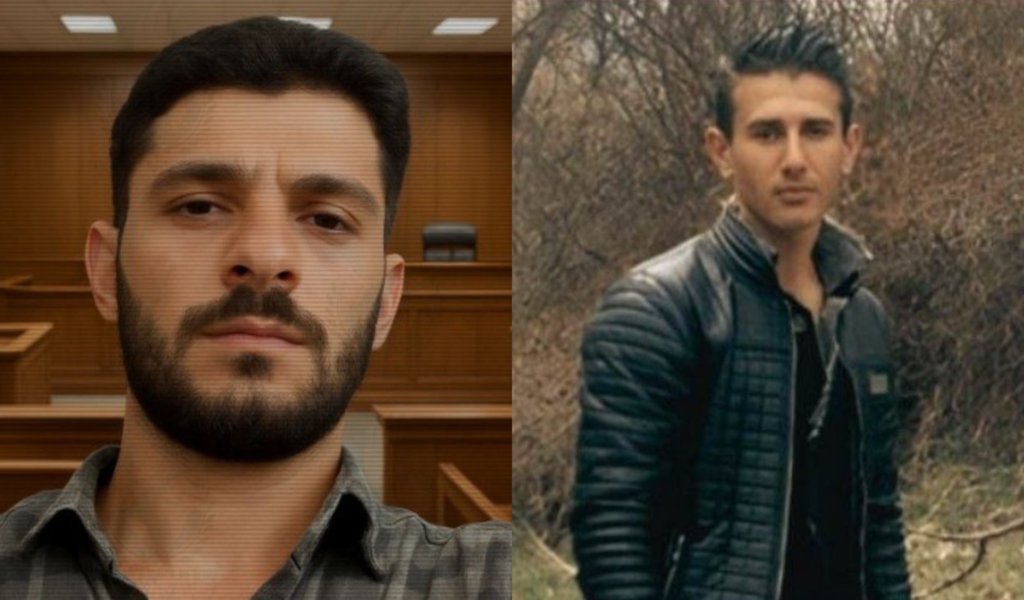
Iran Executes Two Kurdish Political Prisoners as Pressure Mounts on Other Detainees 

On May 21, Iran’s authorities executed Ramin Zeleh and Karim Maroufpour, two Kurdish political prisoners, according to the state-run Mizan News Agency’s reports that accused the men of involvement in armed actions against security forces in Iran. The state-run Mizan News Agency, affiliated with the regime’s Judiciary claimed the two executed prisoners were accused of “The assassination of a commander of an IRGC base in one of the western counties, firing two magazines toward a vehicle carrying military forces, and filming the operation.”  The judiciary outlet also accused the two men of:  “Forming a group with the aim of disrupting security, armed rebellion through criminal groups, shooting, and attempted assassination.”  The executions come amid growing concern over political prisoners and detainees facing execution or additional prison sentences in Iran.  During the third week of May, a court in Rasht reaffirmed the death sentence of Manouchehr Fallah, a 36-year-old political prisoner held in Lakan Prison, over supporting the Iranian opposition group, People’s Mojahedin Organization of Iran (PMOI). Fallah was arrested in June 2023 after the Supreme Court referred his case back for review.  In a separate case, political prisoner Forough Taghipour,  received an additional one-year prison sentence over a message published for Student Day in 2025. Arrested in August 2023 and previously sentenced to 15 years, Taghipour had earlier spent years in prison over support for the PMOI. Several members of her family were killed in the 1980s, while relatives currently reside in Ashraf-3.  Meanwhile, Rouzbeh Alipour, brother of executed PMOI member Babak Alipour, remains in uncertain conditions in Qezel Hesar Prison after reportedly being subjected to torture and prolonged solitary confinement. Reports say he suffered fractures and serious injuries following his arrest in Tehran on January 26, 2026, and has faced continued physical abuse while denied adequate medical treatment.  His brother, Babak Alipour, was among eight PMOI members executed since March 30 2026, including Vahid Baniamerian, Pouya Ghobadi, Mohammad Taghavi, Akbar Daneshvarkar, Abolhassan Montazer, and Hamed Validi and Nima Massoum Shahi on security-related charges.  The latest cases come amid increasingly public calls by Iranian officials for harsher punishment and faster implementation of sentences. On several occasions, Iran’s Judiciary Chief Gholam-Hossein Mohseni Eje’i urged courts to accelerate rulings in security cases, arguing delays weaken deterrence. Earlier, he called for judges to show “no mercy” in protest-related cases. On May 18, Police Commander Ahmad-Reza Radan said more than 6,500 people had been arrested, including hundreds linked to opposition groups, after previously stating on March 10 that protesters would be treated as “enemies.” On May 20, judiciary-linked Mizan published comments by a regime MP describing harsh punishment against alleged spies as a “public demand.” The remarks come as executions, arrests, and security prosecutions continue to expand. 
News

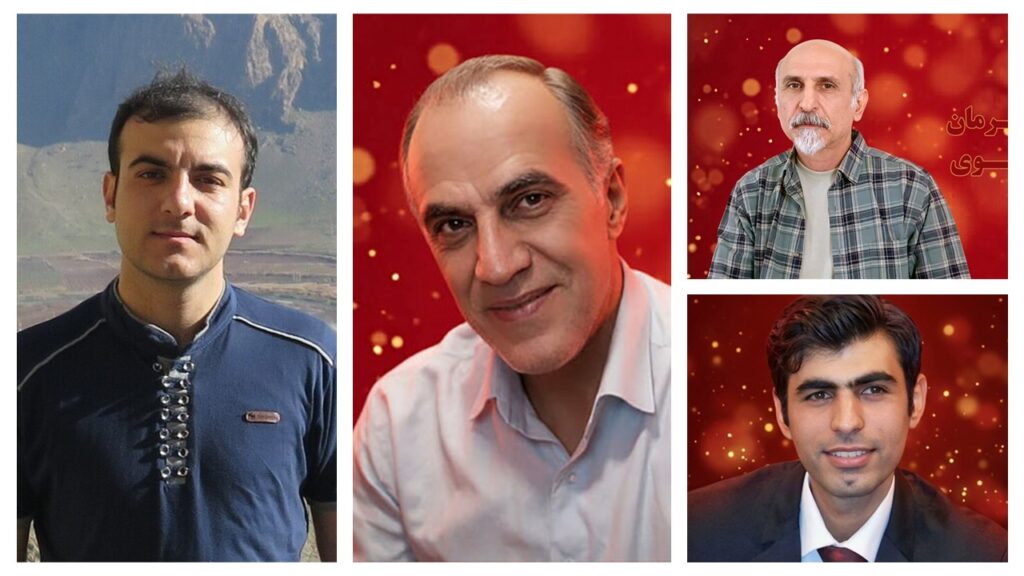
Iran’s Judiciary Acknowledges PMOI Members’ Operations

On May 15, Mizan News Agency, linked to Iran’s Judiciary, provided new details regarding operations carried out by  four executed members of the Iranian opposition group, People’s Mojahedin Organization of Iran (PMOI/MEK) — Mohammad Taghavi, Akbar Daneshvarkar, Babak Alipour, and Pouya Ghobadi — including involvement in attacks targeting sensitive state institutions.  According to reports cited by Mizan and originally attributed to Mehr News Agency, the four men were accused of participating in multiple operations, including a launcher attack on a building belonging to Iran’s Ministry of Intelligence, as well as other actions involving homemade explosive devices.  The report stated that the men had participated in:  “Multiple operations — from firing a launcher at the Ministry of Intelligence building to bomb attacks.”  Authorities also alleged that the group intended to target additional “sensitive centers and locations” inside Iran.  The claims were published weeks after the executions of the four PMOI members and amid broader reporting by Iranian authorities outlining dozens of executions linked to security, espionage, and opposition-related charges.  According to Mizan, Mohammad Taghavi was accused of arranging safe houses in Tehran and Karaj and constructing launchers using funding allegedly connected to the PMOI. The report claimed that Taghavi, together with Akbar Daneshvarkar, Babak Alipour, and Pouya Ghobadi, took part in several operations targeting state institutions.  The allegations are notable because Iranian state and judiciary-linked outlets have rarely publicly acknowledged claims of direct operations against the Ministry of Intelligence itself.  The four men — Mohammad Taghavi, Akbar Daneshvarkar, Babak Alipour, and Pouya Ghobadi — were among six PMOI members executed between March 30 and April 4, 2026, alongside Vahid Baniamerian and Abolhassan Montazer, after convictions on charges including moharebeh (“enmity against God”) and security-related accusations.  Before their executions, videos smuggled from prison showed several of the men singing resistance songs and issuing messages from detention. Their cases drew attention from opposition groups and rights monitors, who raised concerns regarding due process and politically motivated prosecutions. 

News

Iran MP Defends Harsh Punishment as Executions Rise 

In an interview published on May 20 by judiciary-linked Mizan News Agency, Majid Doustali, a member of the regime’s parliament, defended harsh punishment against alleged spies and praised the judiciary’s current approach as executions and security-related prosecutions continue to rise in Iran.  Doustali told Mizan:  “The judiciary today is acting correctly and according to the law, and our demand is that this path continue seriously because this is a public and popular demand.”  The remarks come as Iranian authorities continue expanding security-related prosecutions following months of unrest and conflict.  On April 28, 2026, Judiciary Chief Gholam-Hossein Mohseni Eje’i called on courts to accelerate rulings and implementation of punishments in security-related cases, arguing that delays weaken the deterrent effect of sentences. Earlier, during the post-uprising crackdown, Eje’i had instructed judges to show “no mercy” in protest-related cases, according to international reporting.  Meanwhile, state-run Mehr News Agency’s article, published on May 15 2026, stated that authorities had carried out around 30 executions on charges linked to espionage, terrorism, or armed unrest, alongside dozens of lengthy prison sentences and confiscation of hundreds of properties.  On May 18, 2026, Police Commander Ahmad-Reza Radan said in an interview with state television that more than 6,500 people had been arrested since the start of the conflict period, including 567 cases linked to opposition groups. Earlier, on March 10, Radan said protesters would be treated as “enemies,” and on April 20 reported that 1,200 people had been arrested in a single wave, saying security forces would continue dealing with protesters as hostile actors.  Iran's Police Chief admits to 6,500 arrestsIn this Video Iran Police Chief, Ahmad-Reza Radan confirms:• 6,500 citizens detained in recent weeks.• 567 linked to the MEK and other opposition groups.• Vows to hunt every January protester: “We won’t let them go.” https://t.co/pkB41BvjoR pic.twitter.com/99DmAS1Jsw — Pasha Borjkhani (@BorjkhaniP1847) May 18, 2026 Recent months have also seen executions of political prisoners and dissidents, including eight PMOI members executed between March 30 and April 20, 2026, after convictions on security-related charges.  The latest remarks by lawmakers publicly supporting harsher punishment come amid a chronology of accelerated sentencing, mass arrests, and rising executions tied to security and protest-related cases in Iran. 

News

Over 300 Global Experts Urge UN Action as Concerns Grow Over Executions in Iran 

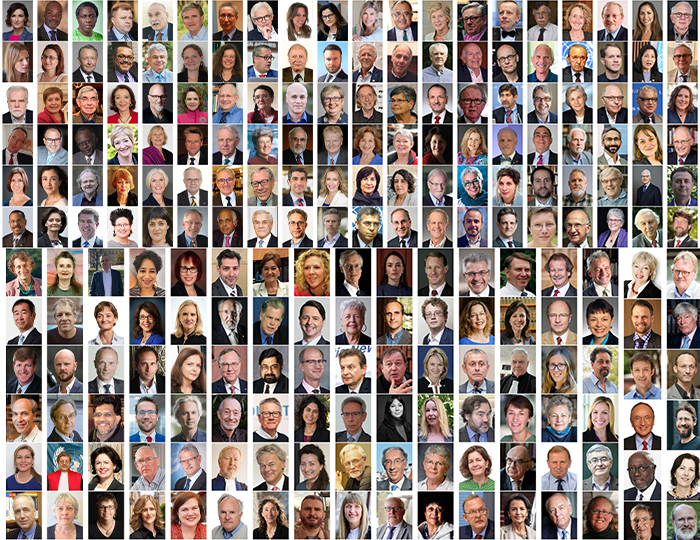
Simay Azadi– More than 300 international legal experts, former UN officials, Nobel laureates, judges, and human rights figures have signed an open letter to United Nations Secretary-General António Guterres warning of what they describe as an escalating wave of executions and political repression in Iran. The letter, dated May 18, 2026, calls for urgent international action and greater accountability measures.   Among the signatories are former presidents of international courts and UN bodies, including Joachim Rücker, former President of the UN Human Rights Council; Sang-Hyun Song, former President of the International Criminal Court; Javaid Rehman, former UN Special Rapporteur on Iran; and Nobel Peace Prize laureates including Oleksandra Matviichuk and Jody Williams.   In the letter addressed to Guterres, the signatories wrote:  “We write to express grave concern over the accelerating use of the death penalty in Iran as an instrument of political repression.”   The letter states that, since regional hostilities began on February 28, 2026, Iranian authorities have allegedly intensified a campaign involving “mass arrests, torture, and state sanctioned killing” while also “cut[ting] off internet access for the general population.”   The signatories further warned:  “The scale of executions has reached levels not seen in nearly four decades.”   Referring to political prisoners, the letter says:  “At least eight political prisoners have been executed solely due to affiliation with the People’s Mojahedin Organisation of Iran (PMOI or MEK), while at least 11 others currently face execution on similar grounds.”   The statement also links recent executions to broader protest-related cases, noting:  “Others have been put to death for taking part in protests on charges such as baghi (‘armed rebellion’) after summary trials.”   The letter cites findings by the Independent International Fact-Finding Mission on Iran, saying senior Iranian officials had encouraged harsher treatment of protesters. According to the document:  “The Prosecutor General declared that all protesters had committed moharebeh (‘enmity against God’), a capital offence, while the Head of the Judiciary instructed judges to show ‘no mercy’ in protest-related cases.”   The signatories also referenced estimates that more than 50,000 protesters have been arrested, according to the Fact-Finding Mission.   In one of the strongest passages of the letter, the experts argued that the current situation cannot be separated from earlier episodes in Iran’s history:  “This wave of executions cannot be separated from Iran’s long-standing culture of impunity, rooted in the 1988 massacre…”   The letter concludes by urging the United Nations and member states to press for an immediate halt to executions, release political prisoners, restore internet access, and consider international accountability mechanisms. The signatories warned:  “Silence in the face of these atrocities only reinforces impunity.”   The appeal comes amid recent statements by Iranian judiciary officials calling for faster implementation of sentences in security-related cases and after months marked by executions, internet restrictions, and mass arrests following unrest inside the country.

News

Iran Internet blackout Passed its 81st day- Officials Warn of Consequences

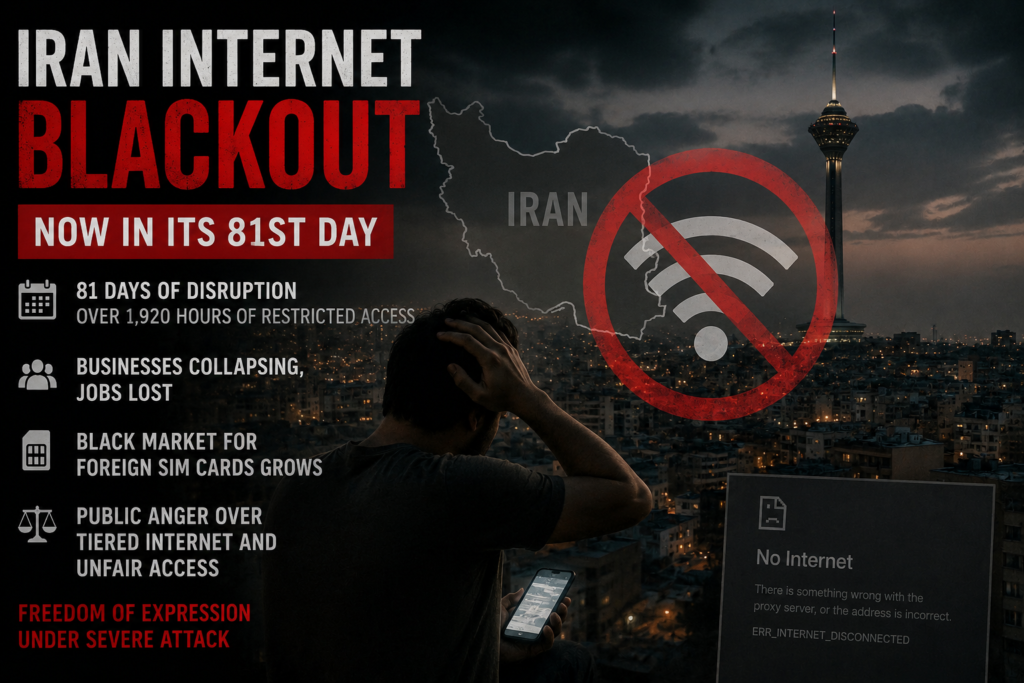
Simay Azadi – Iran  internet blackout passed its 81st day, exceeding 1,920 hours of restricted access, according to monitoring group NetBlocks. NetBlocks warned that Tehran is not only maintaining domestic internet controls but is also seeking broader influence over regional communications infrastructure.  The prolonged blackout comes as officials and state-linked media increasingly acknowledge public dissatisfaction over filtering policies, unequal internet access, and growing economic losses.  On May 17, 2026, the state-linked outlet Khabar Online quoted the regime’s MP Mohammad-Reza Pourdehghan criticizing a recent order issued by the regime’s President Masoud Pezeshkian to his Vice President Mohammad-Reza Aref regarding cyberspace policy.  Pourdehghan described the move as largely symbolic, stating:  “The order issued for Aref is more decorative or psychological in nature… People are tired of these rulings and attractive statements by government spokespeople. They want real action.”  He also referred to growing anger over unequal internet access and alleged preferential treatment under programs sometimes described as “pro internet” or “business internet.” He said:  “People are dissatisfied with the discrimination created under strange names such as ‘pro internet’ or ‘business internet,’ and with the unusual amounts of money being taken from them.”  The comments appeared to reference widespread complaints over so-called “tiered internet,” in which faster or less restricted access is reportedly available to selected institutions or groups while broader restrictions remain in place.  On May 17, 2026, former regime official Mohammad-Ali Abtahi warned that the government could increasingly be held accountable for prolonged filtering policies. According to Khabar Online, Abtahi said:  “If this decision is merely symbolic, it could become a major mistake for the government.”  State-linked reporting has also acknowledged growing economic consequences. On May 17, another report by Khabar Online stated that criticism over internet disruptions has intensified and that many people dependent on online businesses have effectively lost their livelihoods.  Meanwhile, efforts by users to bypass restrictions have reportedly contributed to a growing black market for foreign SIM cards, particularly Iraqi SIM cards in western Iran.  According to a report published by ILNA on May 17, 2026, a member of the regime parliament’s security commission called on intelligence agencies to intervene, warning:  “If Iraqi SIM cards are being bought and sold in the country, this is certainly not good from an intelligence and security standpoint.”  The latest admissions by officials come months after authorities imposed severe internet restrictions during the January 2026 uprising, when activists said communication blackouts limited information flows amid widespread arrests and a deadly crackdown.  Since then, internet shutdowns have increasingly coincided with mass arrests, executions, expanded surveillance measures, and tighter control over online platforms, while authorities continue promoting domestic alternatives under the country’s “National Information Network.”  Although officials often cite war conditions or security concerns as justification, recent statements from regime lawmakers and state-linked outlets increasingly point to their fear of the consequences of these actions, both socially and economically.  

News

Iran: 121st Week of “No to Execution Tuesdays” Campaign

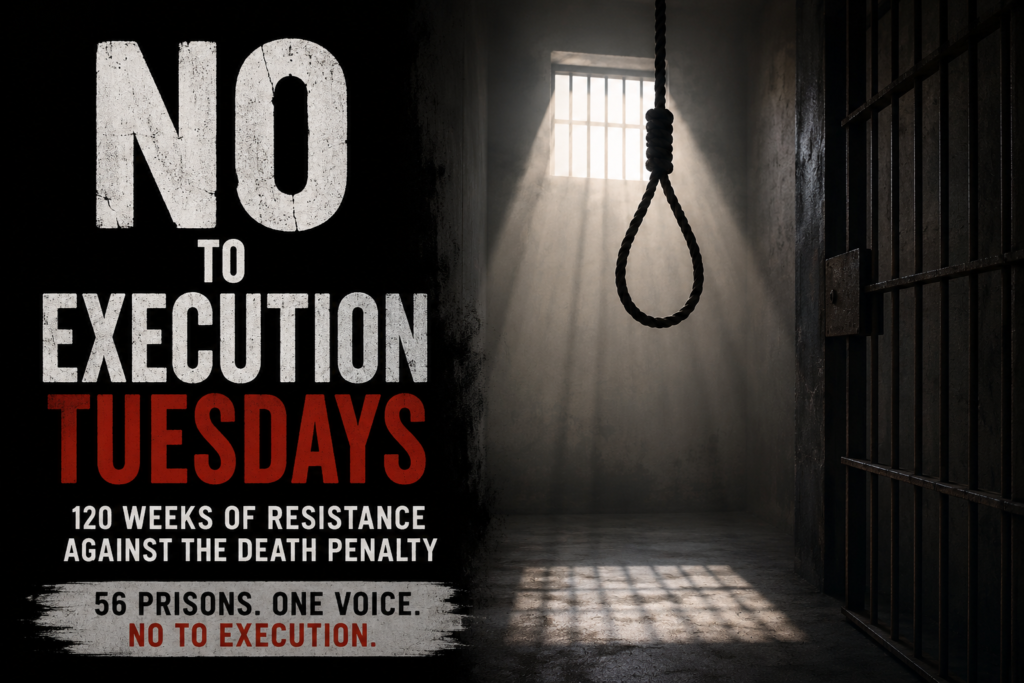
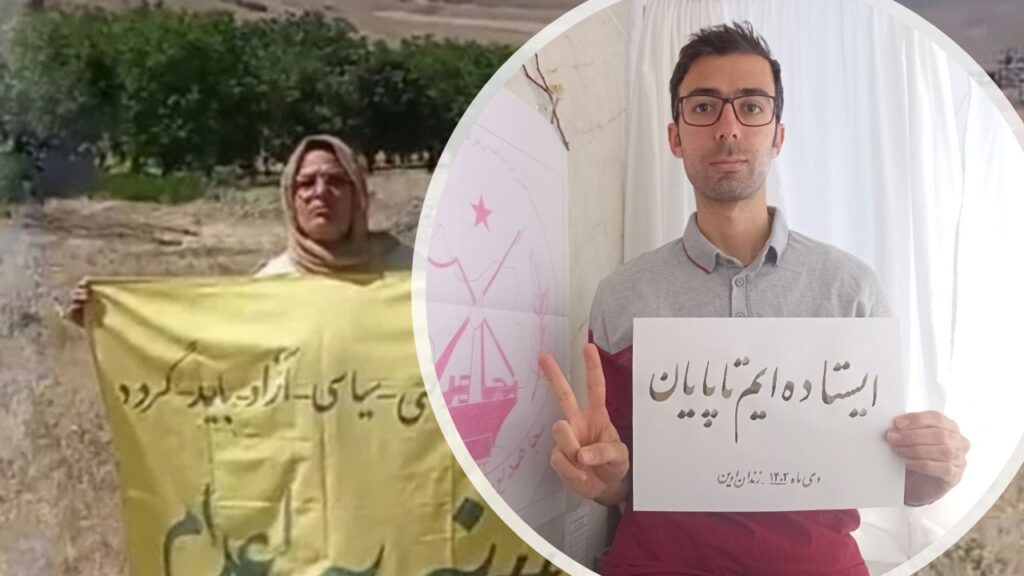
May 19, 2026 – Prisoners participating in the “No to Execution Tuesdays” campaign entered the 121st consecutive week of coordinated hunger strikes across 56 prisons in Iran, warning of intensifying executions, repression, and the normalization of violence by the ruling authorities. In this week’s statement, the campaign alleged that the authorities have spent more than two months militarizing public spaces, conducting weapon training in streets and public gatherings while using children in these events, which they say aims to normalize violence and suppression. The campaign reported the execution of Abdoljalil Shahbakhsh, a Baluch political prisoner, in Zahedan Prison. It also announced the execution of Mohammad Abbasi, described as one of those arrested during the January 2026 uprising. The statement highlighted the case of Abbasi’s daughter: “Mohammad Abbasi, one of those arrested during the January uprising, was executed for participating in the protests, while his daughter, Fatemeh Abbasi, has been sentenced to 25 years in prison and is held in Evin Prison.” The campaign argued that executions in Iran extend beyond political prisoners and are used systematically to suppress society. “Execution is not only an unjust judicial punishment that takes away the right to life; it is the regime’s most important tool of repression and state killing.” The statement further asserted that executions are intended to deter resistance among younger generations: “They execute young people to frighten society, but this violence plants the seeds of awareness, resistance, and uprising.” The campaign maintained that escalating repression reflects fear of public dissent rather than strength: “The ruling dictatorship uses executions for one purpose: to spread fear throughout society.” Concluding the statement, participants in “No to Execution Tuesdays” called for broader unity among activists and civil society: “We call on political, human rights, labor, and civil activists — and on workers, teachers, students, and retirees — to unite and make ‘No to Execution’ heard by the conscience of the world.” The campaign, now in its 121st week, continues to frame opposition to capital punishment as part of a broader struggle for justice, equality, and political freedom in Iran.

News

Iran’s Police Chief Admits to 6,500 Arrests Amid Rising Executions 

Iran’s Police Commander Ahmad-Reza Radan said in an interview with state television on May 18 that authorities had arrested more than 6,500 people accused of espionage, collaboration, or anti-government activity since the start of the recent conflict, adding that 567 cases involved individuals linked to opposition groups.  Iran's Police Chief admits to 6,500 arrestsIn this Video Iran Police Chief, Ahmad-Reza Radan confirms:• 6,500 citizens detained in recent weeks.• 567 linked to the MEK and other opposition groups.• Vows to hunt every January protester: “We won’t let them go.” https://t.co/pkB41BvjoR pic.twitter.com/99DmAS1Jsw — Pasha Borjkhani (@BorjkhaniP1847) May 18, 2026 “In the field of traitors and spies, from the beginning of the war until now, more than 6,500 traitors and spies have been arrested… 567 of whom were special cases related to ‘hypocrisy’ and anti-revolutionary groups,” Radan said, using the official derogatory term often applied by authorities to the People’s Mojahedin Organization of Iran (PMOI). He added that arrests connected to the January unrest were continuing.   Radan’s remarks come as Iran’s judiciary has publicly outlined what it describes as the results of its crackdown since February 28, reporting the execution of 29 people accused of espionage, terrorism, or armed unrest, lengthy prison sentences for dozens more, and widespread property confiscations. Authorities also reported the seizure of hundreds of properties and the freezing of bank accounts and cryptocurrency assets belonging to political, media, and cultural figures.   According to state judiciary-linked reporting, another 36 individuals received prison terms ranging from four to 13 years in provinces including Qom and Isfahan for activities authorities said included transferring money, providing safe houses, lower-level intelligence work, or encouraging unrest. The sentences are reportedly final and already being implemented.   The figures were released weeks after Judiciary Chief Gholam-Hossein Mohseni Eje’i called for courts to accelerate verdicts and implementation of punishments, arguing that delays reduce their deterrent effect. His remarks were widely interpreted as support for faster processing of execution cases involving political detainees and security-related charges.  Recent months have seen a series of executions of political prisoners, dissidents, and individuals accused of links to opposition groups. Among them were six PMOI members — Vahid Baniamerian, Pouya Ghobadi, Babak Alipour, Mohammad Taghavi, Abolhassan Montazer, and Akbar Daneshvarkar — executed between late March and early April after being convicted on charges including moharebeh (“enmity against God”) and attacks on security targets. Two other PMOI members, Hamed Validi and Mohammad (Nima) Massoum-Shahi, were executed on April 20. This is in addition to at least 14 executions of January 2026 protesters in less than two months.   Authorities have announced the executions linked to January unrest cases and alleged victims of being part of “espionage networks. State media reports reviewed by Simay Azadi show an increasing pattern of presenting protesters, dissidents, and alleged foreign-linked actors under a broader national security framework.   Radan’s latest remarks also echo earlier statements made during the January 2026 uprising. On March 10, he publicly said protesters would be treated as “enemies,” signaling a shift in official rhetoric that framed dissidents not as citizens engaged in unrest but as hostile actors aligned with foreign adversaries.  In another statement on April 20, amid growing executions and arrests, Radan said security forces would continue “treating protesters like enemies,” adding that 1,200 people had been arrested in a single wave.  The combination of mass arrests, accelerated sentencing, public calls for faster punishments, and growing use of espionage-related charges has increasingly raised questions among rights groups and observers over due process, transparency, and the expanding use of security laws against political dissent in Iran. 

News

Iran: Audio Message by PMOI Member Vahid Baniamerian

Simay Azadi has obtained an exclusive voice recording from Vahid Baniamerian, a member of the People’s Mojahedin Organization of Iran (PMOI), recorded from prison in July 2025, before his execution. Vahid was executed on April 4, 2026, in Ghezel Hesar Prison amid a recent wave of executions targeting PMOI prisoners. The message was addressed to his mother following the executions of fellow PMOI prisoners Behrouz Ehsani and Mehdi Hassani in mid-July 2025, at a time when Vahid and several others were themselves awaiting execution. In the recording, Vahid reflects on death, faith, poverty, political awakening, his decision to join the PMOI, and his relationship with his mother. He describes his path as one shaped by witnessing injustice, repeated imprisonment, and what he calls a commitment to fight oppression Here is the full translation of this audio message: I am sending this message to you under circumstances where Behrouz and Mahdi have been executed, and we, too, stand in the queue for execution—awaiting whatever God’s will may be. Just as Behrouz reminded us of the Quranic verse and wrote upon his final notification: “Every soul shall taste death.” Every soul, sooner or later, experiences death. And blessed are those whose state is described by Imam Ali in the 64th sermon of the Nahj al-Balagha: “Be prepared for death, for it has cast its shadow over you. Be like a people who were summoned and then awakened, who knew that this world is not an eternal home and thus exchanged it for the Hereafter. God the Sublime did not create you in vain, nor did He leave you to your own devices. Between you and Paradise or Hell, there is no distance but the brief span of death.” Yes, death is ordained for us all. In the school of the Quran, we have learned to see this world as a place of testing, and death as a gateway to another world where we shall be held accountable. From the school of Imam Hussein, we have learned that: “Life is nothing but belief and struggle.” Indeed, the meaning of life is the conscious choice of an ideal and a belief aligned with the monotheistic path of creation, followed by striving (Jihad) along this magnificent, yet painful and arduous path. Until, as the Quran says: “O mankind, indeed you are laboring toward your Lord with [great] exertion and will meet Him.” And the end of this labor and movement is the meeting with the Lord. Yes, dear Mama, you know these verses well; you read them to me and taught them to me many times. Our ideology has a clear answer to the question of death. When we open the Quran and the Nahj al-Balagha, or listen to the history of the Prophets and Imams, it is full of reminders of the magnificent meaning and philosophy of life. Thus, we must only bow humbly before the Truth. But what is my—and our—test in this life? Let me return to my childhood. To the time when the poverty of my classmates pained my childish conscience. One day, I asked you to exchange the shoes that Haj Baba had bought for me with a simpler pair, because I felt the innocent, longing gazes of Sharifi, Mohammadi, and Karami—with their torn shoes and tattered clothes—upon me. That pain bonded me to them. You accepted my request and bought me simpler shoes, and I became certain that I had done the right thing. I became certain that I should not only think of myself. From then on, whenever we had good food, I would secretly pack morsels in my bag to take to them during the afternoon school shift, receiving the sparkle in their eyes as my reward. How fortunate I am to have been raised in the lap of a pure mother like you. However, despite all the troubles a child causes their mother, I finally grew up and entered society. Now, I saw even deeper pains, and I had to understand their roots. While my young soul was tormented by seeing the suffering of my oppressed fellow human beings, I was searching for the meaning of life. What could life be? Studying, going to university, finding a job, getting married, and perhaps serving society? This was the most honorable and “prescribed” type of life, especially available to me as a student who happened to be quite good at his studies. But what about the homeless sleeping on cardboard, the street vendors, the millions of families below the poverty line, the hundreds of thousands of youths falling into addiction, the millions of talents that wither away, and the discrimination and suppression of women? Could the issue be solved, as in childhood, by skipping a meal or wearing simpler shoes to soothe one’s conscience? No. In response to the call of my conscience, I was drawn into the realm of politics. A realm where many of its “seven-faced” pretenders and players had no relationship with honor. I had to be vigilant, searching for the right path so as not to slide into the abyss. In this search and struggle, however, I encountered “stars” whose pain was of the same nature as mine. Their view of politics was not one of power-seeking or duplicity, but of honesty and sacrifice to eliminate oppression and discrimination. I had re-read the stories of the “nameless ones” of Khavaran—those like your friend Masoumeh, and Mansour, and thirty thousand heroes like them. It was as if I knew them now. It was as if an unbreakable bond had been forged between us. It was as if, in the moments before execution, I understood what they were thinking and what passion they felt. Suddenly, everything that had been a mystery to me—from the reason for Baba’s imprisonment and my expulsion from school, to the fear and despair ruling society and the fate of the ’79 Revolution—all fit together like pieces of a puzzle. I stood on the threshold of choosing a different kind of life. All of this was not sudden; it took years.

News

Iran Executes Another January Protester as Crackdown Intensifies 

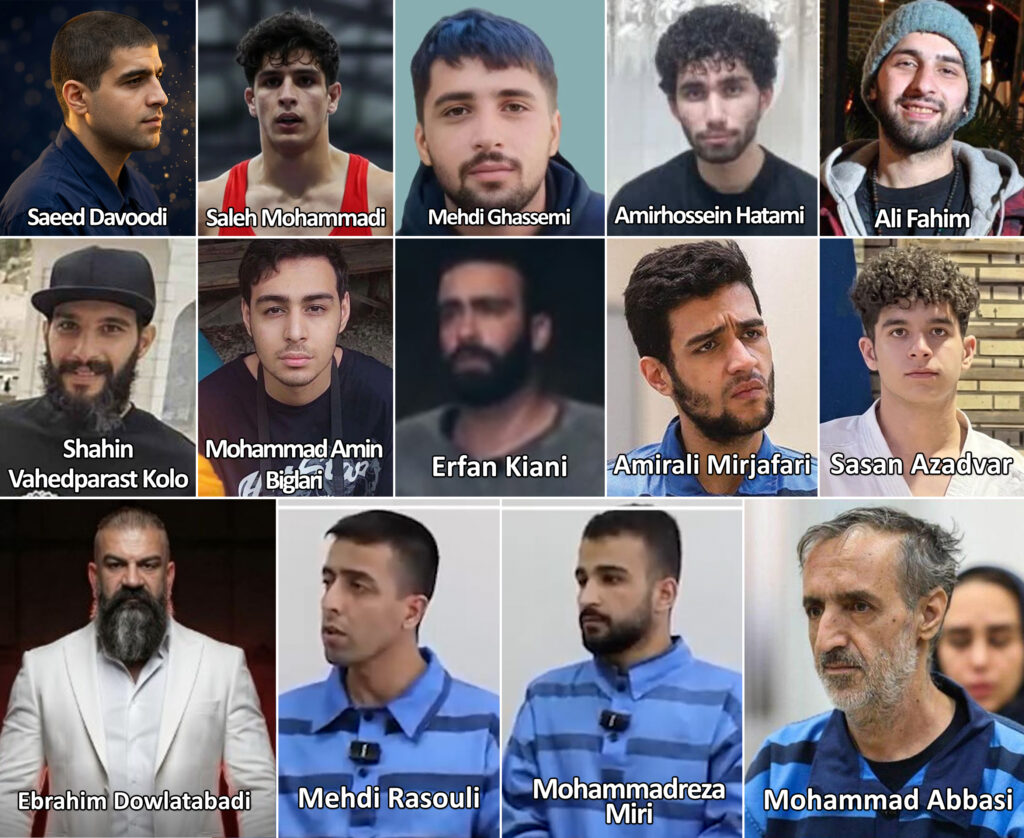
Simay Azadi – Iran’s judiciary announced on May 14 the execution of protester Mohammad Abbasi, who had been arrested during the January 2026 uprising in Malard, west of Tehran. The execution comes amid a rapid rise in death sentences tied to the January uprising.  Judiciary-linked media Mizan News Agency accused Abbasi of participating in what authorities described as “anti-security riots” and involvement in the killing of Colonel Shahin Dehghan, an officer reportedly involved in suppressing the protests. Officials claimed Abbasi attacked the officer with a bayonet during clashes on January 6, 2026, in the Sar Asiab area of Malard Province.  Reports also indicate that Abbasi’s daughter, Fatemeh Abbasi, who was arrested alongside him, has been sentenced to 25 years in prison.  On May 4, Iranian authorities announced the execution of three protesters in Mashhad — Mehdi Rasouli, Mohammadreza Miri, and Ebrahim Dowlatabadi. Judiciary-linked media accused Rasouli and Miri of involvement in violent incidents during the unrest, including the killing of a Basij member, while Dowlatabadi was accused of leading protests in the Tabarsi area of Mashhad.  Since March 19, the Iranian regime has carried out a series of executions targeting young protesters arrested during the January 2026 uprising.  The confirmed executions include Saleh Mohammadi, a 19-year-old champion wrestler; Mehdi Ghasemi; Saeed Davoudi; Amir Hossein Hatami, 18; Shahin Vahedparast, 31; Mohammad Amin Biglari, 19; Ali Fahim, 23; Amirali Mirjafari; Erfan Kiani; and Sasan Azadvar, a 21-year-old provincial karate champion.  Most were convicted on charges such as “Moharebeh,” or “enmity against God,” following proceedings widely criticized by human rights organizations for lacking due process and transparency.  On May 3, the judiciary announced the execution of Mehrab Abdollahzadeh in Urmia. Authorities accused him of involvement in the killing of a police officer and cited charges including road blockades and destruction of public property.  Abdollahzadeh had been arrested during the 2022 protests and was reportedly held under torture for months before being sentenced to death in September 2024.  Senior regime officials have openly defended the executions.  On May 13, the deputy chairman of the Iranian parliament’s Judicial Commission praised the judiciary for the “decisive” implementation of death sentences tied to the January uprising, describing the actions as “highly defensible.”  Days earlier, on May 8, Iran’s Chief Justice Gholamhossein Mohseni-Eje’i declared that the judiciary would “decisively try and punish traitorous elements,” while promising full support to intelligence and security agencies pursuing what he described as “spies, infiltrators and traitors.” 

News

Imprisoned Iranian Elite Student Ali Younesi Rejects Judiciary “Pardon”  

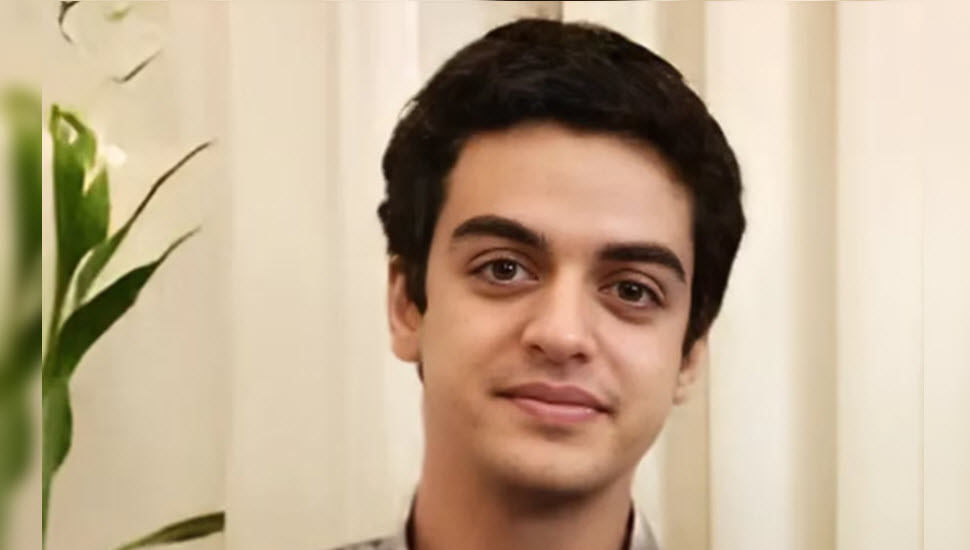
Simay Azadi – Ali Younesi, an elite student at Sharif University of Technology sentence by the regime to 16 years in prison on charges of supporting the People’s Mojahedin Organization of Iran (PMOI/MEK), has rejected a judiciary “pardon” offer in a new letter written from Ghezel Hesar Prison in Karaj.  Younesi was arrested in April 2020 alongside fellow elite student Amir Hossein Moradi. The regime later charged both students with links to the PMOI.  According to the letter, during a family visit on Monday, May 11, 2026, prison authorities handed Younesi an official notice dated February 22, 2026, informing him that the remaining seven months of his prison sentence had been “pardoned” under a judiciary amnesty decree.  In response, Younesi wrote:  “I have never requested a pardon and never will. Freedom is a stolen right; we do not beg for a stolen right, we fight to reclaim it.”  Referring to recently executed PMOI prisoners – Vahid Baniamerian, Pouya Ghobadi, Akbar Daneshvarkar, Babak Alipour, Abolhassan Montazar, Mohammad Taghavi –  he added:  “I have role models: six proud cellmates who were sent to the gallows. Every day and every moment, their memory is alive for me and their voices remain in my ears. They did not bargain over their lives—shame on me if I bargain over my freedom.”  Younesi specifically referenced Vahid Baniamerian, one of the PMOI prisoners executed in April 2026, quoting from his defense statement:  “Vahid Baniamerian said in his defense: ‘Is it us who should defend ourselves, or you?’”  Younesi then added:  “‘Is it us who should forgive, or you?!’ Forgiveness belongs more than anyone else to the grieving mothers and fathers.”  Addressing the families of those executed, he wrote:  “Whatever suffering remains—prison, exile, hardship—is nothing but duty. It is with the strength of your children’s sacrifice that we fight, and we will remain steadfast in this struggle. Fighting for the freedom of the Iranian people is not a source of regret or suffering, but the greatest source of honor.”  The letter comes amid growing international concern over the treatment of political prisoners in Iran and follows a recent wave of executions targeting PMOI members, other political prisoners and January protesters. 

Scroll to Top