
Introduction
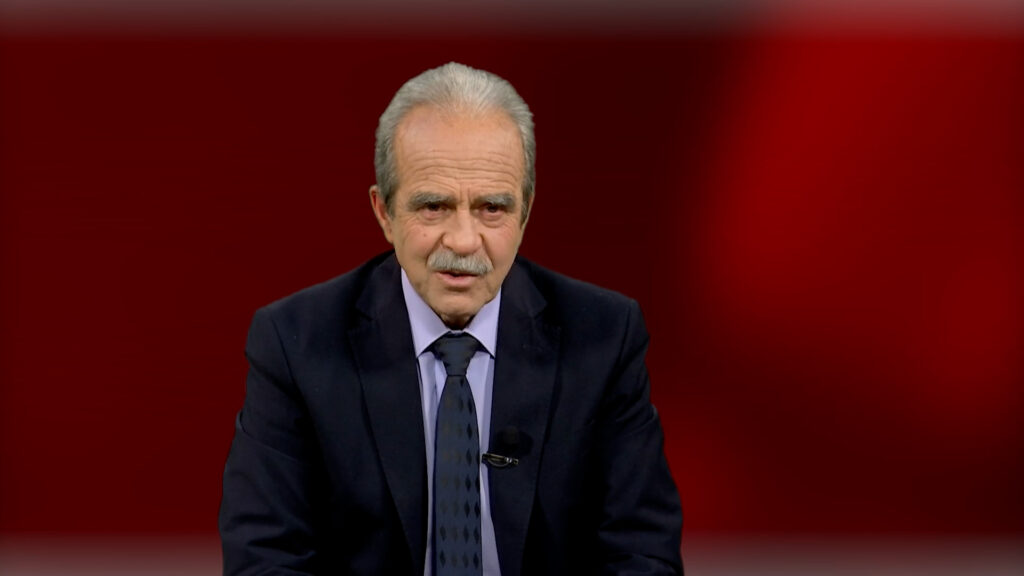
Was Iran a better place under the Shah’s regime? Did Shah and his notorious SAVAK avoid torture? Simay-e Azadi presents an exclusive interview with a man whose body is a living testament to that era’s cruelty: Majid Moini. A member of the People’s Mojahedin Organization of Iran (PMOI/MEK), known to his comrades as “Agha,” he is a hero who endured the infamous tortures of the Shah’s secret police, SAVAK.
His harrowing testimony shatters these revisionist claims, revealing not only the depths of SAVAK’s brutality against those asking for freedom but also exposing a fundamental truth: All tyrannies use oppression as a tool to stay in power. His account demonstrates how the mullahs’ regime simply continued the Shah’s “unfinished job” to torture and kill freedom-loving Iranians, whose primary target has always been the members and supporters of the PMOI.
Majid Moini is a senior member of the PMOI. He was released with the last group of political prisoners on January 20, 1979. Majid Moini, or as his comrades call him “Agha” is known for his heroic resistance under torture in the 1970s.
He was one of PMOI’s candidates for Iran’s first parliamentary elections. Yet, as other candidates, he was eliminated due to Ruholla Khomieni (regime’s founder) engineering the election result, preventing even one PMOI member to enter the parliament.
In his own words, Majid Moini takes us inside the torture chambers of Evin Prison, recounting a story of unimaginable pain and unbreakable defiance.
Majid Moini: The comrades I was imprisoned with used to share stories. I witnessed many too. They said prisoners, after being tortured, were carried away in blankets.
Now, what was the reason for the blanket? I experienced it myself in Evin Prison, a facility notorious for its brutality. When they beat us until we were completely broken, we no longer had the strength to walk on our own feet. You truly couldn’t move. The blanket was a crude tool used by the guards to transport prisoners who could no longer walk.
I was under interrogation myself and in a terrible condition. When I couldn’t walk anymore they would transfer me using a blanket. Because after being whipped with cables, one cannot feel their feet—sometimes you could crawl, but the torturer was in a hurry, he would throw you in a blanket. One person would grab two corners at the head, and another would grab the other two. They would lift you like a sack, carry you to the cell, and just dump you out, as if they were unloading cargo.
A 1980 interview from a SAVAK torture cell. @Mojahedineng's member Majid Moini (Agha),known for his heroic resistance under torture, details the horrors he faced under the Shah's regime. This proves that the Shah's cruelty and the mullahs' oppression are flip sides of the same… pic.twitter.com/tezcJZhcUO
— SIMAY AZADI TV (@en_simayazadi) July 13, 2025
One day, when we were all broken and battered, our feet were mangled. They would whip us with kābel—electrical cables of different sizes, each causing a different kind of pain. One type would just burn you. Another, when it struck the sole of your foot, would send a shooting pain all the way to your brain.
After our feet were wounded, a guard would come and call out, “Dressing!” Then the prisoners who needed their wounds treated—from cell five, cell seven, cell twelve—would be brought out. They would line us up and take us to a room where there was a butcher they called a “doctor.” He would tend to our shredded feet, our torn-off nails, and our broken toes.
One day, in that line, I was there, and so was Kazem Zol-Anvar, a fellow PMOI commander. He was in the same condition. I saw him from under my blindfold—sometimes we just threw our jackets over our heads. I could see that his legs were bandaged all the way up. It pains me so much whenever I remember him. Kazem already had a metal plate in one of his legs, so the torture was especially agonizing for him.
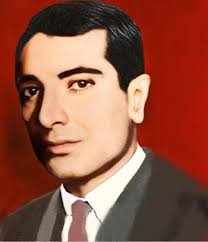
Kazem realized where I was. He made his way through the line, recognizing my voice. He came over and put his hand on me. He told me how they were torturing him, so that he would give up on his ideals. But he said he chose to resist.
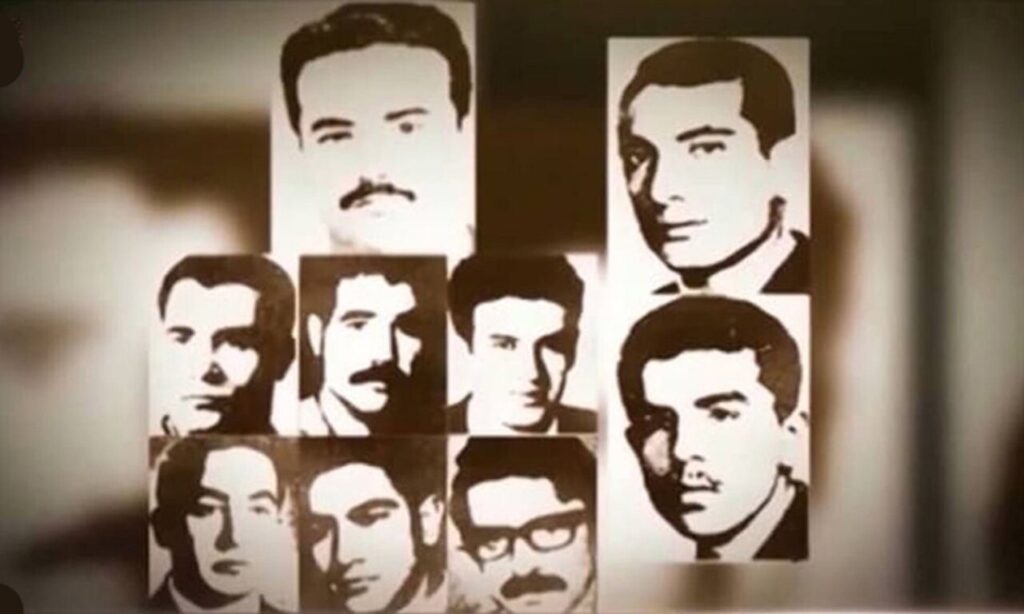
This was a strategic act common among resistance members. The very act of passing this message was a form of communication, a lifeline.
This story shows that if these men had wanted to surrender, they wouldn’t have needed to endure such a fate. As Commander Kazem used to say, even in the cell, under interrogation, they communicated through Morse code. Through any means necessary, they had to maintain contact. As time went on, the point I want to emphasize is this: in the heart of that darkness, communication, somehow, had to be maintained. It was an act of ultimate defiance.