
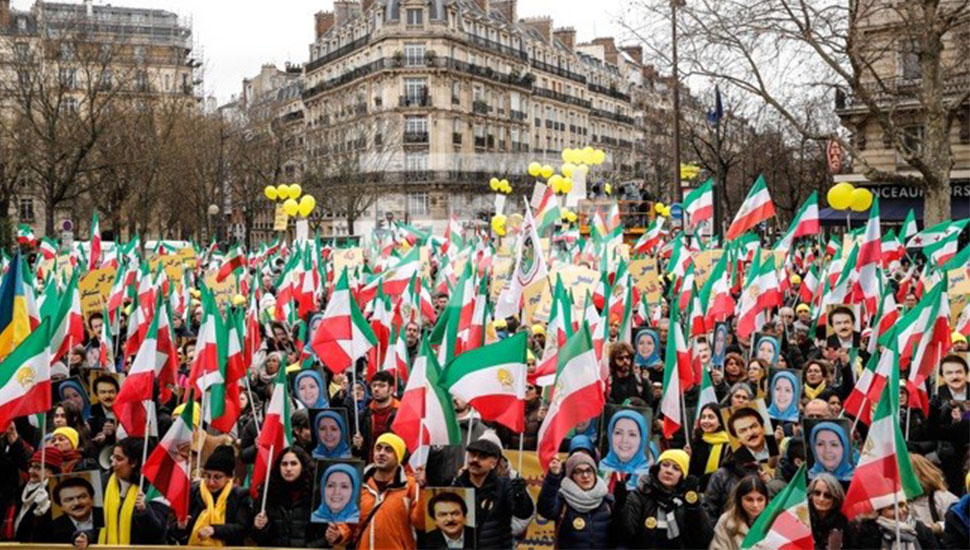
February 8: Iran Paris Rally —A Testament to the Struggle for Freedom
“History is a vast early warning system,” wrote Norman Cousins, a reminder that the past holds lessons for those willing to heed them. On February 8, freedom-loving Iranians and supporters of the Iran Resistance will gather in Paris, not merely to commemorate the anti-monarchic revolution of 1979 but to highlight the presence of a viable democratic alternative at a time when the Iranian regime faces unprecedented internal and external pressures. On Feb 8 in Paris, Iranians will gather to honor the anti-monarchic revolution and advocate for a #FreeIran2025. Join the stand against dictatorship. Simay Azadi will cover the event! #ParisFreeIranRally pic.twitter.com/5x4JTpPIgs — SIMAY AZADI TV (@en_simayazadi) January 29, 2025 This demonstration transcends remembrance. It is a testament to Iran’s enduring struggle against all forms of dictatorship. The streets of Paris will echo with voices rejecting both the monarchy of the Shah and the theocratic rule of the mullahs. The rallying cry, “Down with the Oppressor, be it the Shah or the Mullahs,” reflects the hard-earned lessons of history, etched into the collective memory of a nation that has faced cycles of authoritarianism. The roots of the 1979 revolution lie in widespread discontent fueled by political repression, economic mismanagement, and social injustice. The Shah’s regime was marked by a deeply entrenched authoritarianism, where political freedoms were systematically suppressed. The SAVAK, his notorious secret police, operated with impunity, silencing dissent through torture, imprisonment, and executions. Economically, Iran suffered from the Dutch Disease—an over-reliance on oil revenues that stifled domestic industries, led to rampant inflation, and widened the gap between the wealthy elite and the impoverished majority. The so-called “Westernization” was superficial, serving as a veneer that masked deep-rooted corruption, cronyism, and social inequality. The revolution, however, did not yield the democracy many had envisioned. Ruhollah Khomeini, returning from exile, capitalized on the revolutionary fervor, positioning himself as a leader without having borne the sacrifices of those who fought on the front lines. His rise to power marked the replacement of one form of autocracy with another. The Islamic Republic mirrored many of the authoritarian traits of the Shah’s regime, including suppression of dissent, political purges, and the establishment of repressive security apparatuses. Power became consolidated in the hands of the Supreme Leader, creating a system where ultimate authority was concentrated without checks or balances. On February 8, the streets of Paris will echo with the calls of freedom-loving Iranians commemorating the anti-monarchic revolution. Together, they’ll reject all forms of dictatorship and stand for a #FreeIran2025. Simay Azadi will cover this event!#ParisFreeIranRally pic.twitter.com/6ImyFOgtCe — SIMAY AZADI TV (@en_simayazadi) January 28, 2025 Khomeini’s regime systematically marginalized genuine revolutionary forces, including the People’s Mojahedin Organization of Iran (PMOI/MEK), which had played a significant role in opposing the Shah. Instead of fulfilling the promises of democracy and freedom, the new regime entrenched authoritarian rule under a theocratic framework. Many Iranians view this as a continuation of the same oppressive structures, with power consolidated in different hands but wielded in familiar ways. Today, attempts to revive nostalgia for the Shah’s era overlook the historical realities of repression and inequality. Such narratives risk undermining the aspirations of Iranians who seek not a return to the past but a break from all forms of dictatorship. The idea of restoring a monarchy dismisses the profound sacrifices made by those who fought to dismantle it and contradicts the democratic aspirations evident in Iran’s recent uprisings. The 2022 protests, particularly the chants in Zahedan, underscore this rejection of authoritarianism in all its forms. The slogan, “Down with the Oppressor, be it the Shah or the Mullahs,” articulates a clear message: the Iranian people seek a future unbound by the legacies of either monarchy or theocracy. Their demands are rooted in the pursuit of democratic governance, social justice, and fundamental human rights. The February 8 demonstration in Paris is not just an act of solidarity; it is a platform to showcase a viable alternative to dictatorship. It highlights the resilience of a movement that has withstood decades of repression and continues to advocate for a democratic Iran. This gathering serves as a reminder that the struggle for freedom is ongoing and that the Iranian people have both the will and the vision to shape their future. As part of this movement, the Free Iran Paris Rally 2025 stands as a symbol of hope and determination for those fighting for democracy. Simay Azadi remains committed to amplifying these voices, providing a platform for those advocating for change. This rally is not merely an event; it represents a chapter in Iran’s continuous struggle for democracy. It signals to the world that despite the challenges, the demand for freedom remains unyielding. As Vaclav Havel once said, “The power of the powerless is the ability to live in truth.” The truth is clear: the Iranian people deserve a future defined not by past tyrannies but by the principles of democracy, justice, and human dignity.
