Simay Azadi English

Author name: Editorial Board

News

64th Week of “No to Execution Tuesdays” – 40 Prisons Join in Hunger Strike; Wave of Executions Sparks Alarm

April 15, 2025 – On Tuesday, prisoners in 40 prisons across Iran launched hunger strikes as part of the 64th consecutive week of the “ No to Execution Tuesdays ” campaign—a coordinated protest against the genocidal regime’s widespread use of the death penalty. In their statement, the campaign declared: “With the recent participation of the women’s ward in Zahedan Prison  (Southeast Iran) and Azbaram Lahijan Prison (northern Iran), the ‘No to Execution Tuesdays’ campaign has expanded to 40 prisons in its 64th week.” The campaign’s escalation followed a harrowing surge in executions by the mullahs’ regime. On April 8 and 9 alone, authorities executed 11 and 18 prisoners, respectively. Among those killed were five political prisoners, hanged in Vakilabad Prison in Mashhad (Eastern Iran) after enduring years of imprisonment and torture. The regime’s execution spree continued on Monday, April 14, with the killing of 22-year-old Baluch protester Ali Dahani. Arrested during the nationwide protests of November 2022 following the Bloody Friday massacres in Zahedan and Khash, Dahani was executed in Zahedan Central Prison after being denied a fair trial. Even more egregiously, a juvenile named Behzad—under the legal age at the time of his alleged offense—was executed in Gonbad-e Kavus Prison (northern Iran), in clear violation of international human rights norms. Between April 8 and 14, the regime executed over 18 Baluch prisoners, triggering condemnation from international rights advocates. The No to Executions Tuesdays’ statement warned: “These widespread and egregious human rights violations in Iran… serve as an urgent warning to civil society, human rights defenders, and international organizations: any inaction or complacency in the face of this authoritarian regime will cost the lives of more oppressed individuals and prisoners.” Despite intensifying repression, the No to Executions Tuesdays campaign reiterated its determination to continue: “Dozens of political and ideological prisoners, along with thousands of others are currently under death sentence—most denied even the most basic right to a fair and impartial trial.” As of April 15, all 40 participating prisons observed the 64th week of the campaign with a collective hunger strike, underscoring the prisoners’ unwavering resistance to the regime’s machinery of death.
Exclusive Interviews, News

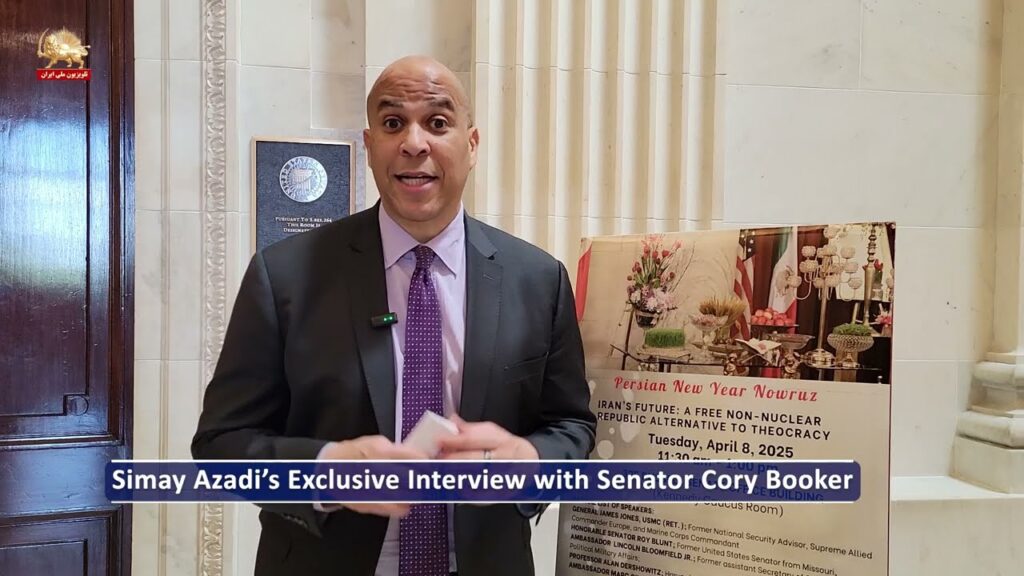
U.S. Senator Cory Booker: “You Are Not Alone—We Will Bend the Arc Toward Justice”

On April 8, 2025 in Washington D.C., in a powerful show of bipartisan resolve, senior U.S. lawmakers,  military leaders, and national security experts gathered in the U.S. Senate for a high-level policy luncheon titled “Iran Policy.” The event highlighted growing congressional support for the Iranian people’s right to resist dictatorship and marked the formal introduction of Senate Resolution 145, co-sponsored by Senators Thom Tillis (R-NC) and Jeanne Shaheen (D-NH), recognizing the fundamental rights of freedom of expression and assembly and legal political activities and the protection of residents of Ashraf 3, home to the organized Iranian Resistance in Albania. Speaking with Simay Azadi on the sidelines of the event, Senator Cory Booker (D-NJ) delivered a direct message to the people of Iran: “Really, I just want to say to the people of Iran, you are not alone,” he said. “There are freedom-loving people all around the world, especially here in the United States that stand with you in the larger cause for democracy, for freedom, and for justice. And so, please, keep your faith, keep your understanding that you’re on the right side of history, and that together, we will bend the arc of the moral universe more towards the justice that you seek.” Offering a message of unity and solidarity, he added: “Because the justice you seek is fully in the interests of free people around the world. We’re all in this together. And I wish you the best. Inshallah, we will see peace and justice in the future for everyone.” Addressing the gathering earlier that day, Senator Booker emphasized the cross-party consensus on Iran policy and paid tribute to the strength of the Iranian-American community. “It is so good to be here, and really to be amongst a community that has so much bipartisan support,” he said. “This is one of those issues that’s not right or left, it’s right or wrong.” Senator Booker highlighted the importance of shared values between the American people and the Iranian people in their quest for justice and democracy. “Our relationship with the Iranian people and their calls for justice, and the very values which we all adhere to, are crucial,” he said. “More than that, the cultural traditions… these ideals that are universal are what America strives for and yearns for.” Calling for a unified response to the regime’s repression and regional aggression, he added: “We must stand for a non-nuclear Iran, an end to what Iran is doing through its proxies, the suppression of freedom and human rights not just in Iran, but for the Ashraf 3 community and others.” Senator Booker closed his remarks with a vision of hope: “What I really will be proud of… is that one day we will all stand and celebrate that the people of Iran are free again… a nation with a democratic north star, and a people who enjoy the blessings of liberty.”

Exclusive Interviews, News

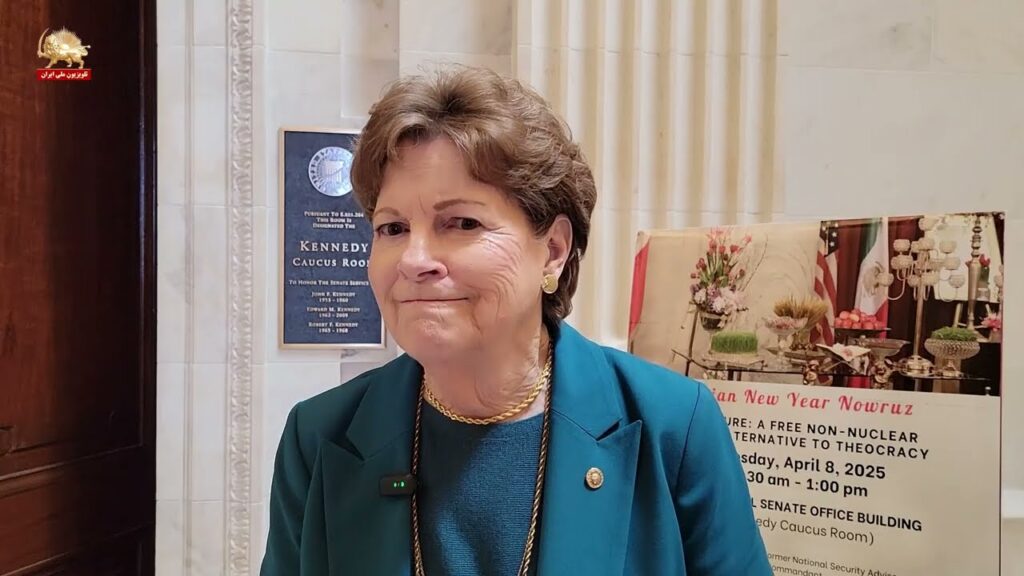
U.S. Senator Jeanne Shaheen: “The Iranian Regime Is Weaker Than It Has Been in Decades”

On April 8, 2025 in Washington, D.C., in a powerful show of bipartisan support for the Iranian people’s struggle for freedom, senior U.S. lawmakers, diplomats, and national security experts convened on Capitol Hill for a high-level policy luncheon titled “Iran Policy.” The event marked the formal unveiling of Senate Resolution 145, introduced by Thom Tillis (R-NC) and Senators Jeanne Shaheen (D-NH), recognizing the rights of the Iranian Resistance and affirming support for the residents of Ashraf 3 in Albania. Speaking with Simay Azadi on the sidelines of the event, Senator Shaheen underscored the unprecedented vulnerability of the Iranian regime. “Well, we’re seeing the regime in Iran weaker than they have been… really since I can remember in… decades,” she said. “And so this is an opportunity for us to think about how we continue to support the people of Iran who are looking for freedom and democracy and the ability to make their own choices about their futures. So that’s why we’re here. We’re trying to make sure that everybody is paying attention to what’s happening there.” Earlier that day addressing the gathering, Senator Shaheen expressed gratitude for the Iranian-American community’s steadfast advocacy: “I’m so pleased that I could join all of you again this year for the celebration of spring and Nowruz. It’s always fun to be here because you make me feel so welcome, and I so appreciate that,” she said. Senator Shaheen formally announced Senate Resolution 145 on her behalf and of her colleague Senator Tillis. “We are introducing a bipartisan resolution again this year, recognizing the people of Ashraf 3 camp in Albania,” she stated. “We have 14 co-sponsors as we introduced it, so we’re looking forward to all of you helping us get lots more co-sponsors both in the House and the Senate.” Pointing to shifting dynamics in the Middle East, she remarked, “We are looking at an Iranian regime that’s in retreat. Just a few months ago, it would have been hard to imagine that Iran would be almost entirely out of Syria, or the possibility that the Syrian people could determine their own future.” She also noted political developments in Lebanon and urged continued vigilance: “We must not allow actions to take place that permit Iran to rebuild in the region.” Senator Shaheen called on Americans to stand with the Iranian dissidents: We must continue our efforts to ensure a nuclear-free Iran… and we must uphold our promises to those in Ashraf 3. Closing her remarks with a message of hope and determination to the Iranian people, she added: “Despite oppression, despite threats, despite indifference, you’ve not given up on human rights, on democracy, or on changing Iran for the better. Let’s recommit to a free and democratic Iran.”

News

63rd Week of “No to Execution Tuesdays” – Iran Responsible for 64% of Global Executions

On April 8, 2025, as part of the 63rd week of the “No to Execution Tuesdays” Campaign, prisoners in 38 prisons across Iran went on hunger strike, renewing their protest against the regime’s continued use of the death penalty as a tool of repression. The protest coincided with a series of significant international developments that further spotlighted the Iranian regime’s appalling human rights record. According to this week’s statement by the campaign, the end of Nowruz holidays (from March 21 to April 1)  has marked the intensification of executions in Iran. The statement reported that numerous prisoners have been transferred to execution wards, warning of the imminent implementation of death sentences. “We are witnessing a sharp increase in the issuance and implementation of death sentences. In recent days, many prisoners have been transferred to quarantine wards in preparation for execution. On Monday alone, at least 10 prisoners at Ghezel Hesar Prison were moved to the ‘secure ward,’ indicating the imminent implementation of their death sentences.” Amnesty International: Iran Responsible for 64% of All Executions Worldwide This week’s campaign was reinforced by a damning report from Amnesty International, which identified Iran under the mullahs’ regime as the country responsible for 64% of all recorded executions globally. The finding is a stark reminder that the genocidal regime remains the world’s top executioner per capita, despite growing international outrage. To this end, the campaign emphasized that Tehran’s execution policy is not only widespread but politically calculated, targeting not just political and ideological prisoners, but increasingly those convicted of non-political crimes. UN Human Rights Council Extends Monitoring and Investigations At the 58th session of the UN Human Rights Council in Geneva, a resolution was passed condemning Iran’s ongoing human rights violations. The resolution extended the mandates of the UN Special Rapporteur on Iran and the Independent International Fact-Finding Mission for another year. Importantly, the scope of the mission has now been expanded. “The resolution expands the scope of the Fact-Finding Mission beyond the 2022 uprising, to include other crimes committed by the regime and the collection of evidence for potential judicial prosecution of those responsible,” the statement of this weeks No to Executions Tuesdays wrote in this regard. This extension reflects growing global recognition of the systematic nature of the Iranian regime’s abuses, and an intent to hold those responsible accountable in international courts. European Parliament Condemns Executions, Urges IRGC Designation Also last week, the European Parliament adopted a resolution condemning the wave of executions in Iran. The resolution highlighted the upholding of death sentences against Mehdi Hasani and Behrouz Ehsani, both political prisoners, and reiterated its call for the release of all political and ideological prisoners. Furthermore, the resolution again urged the European Union to designate the Revolutionary Guards (IRGC) as a terrorist organization—a measure long demanded by Iranian civil society groups and human rights advocates. Regime Defiance and the Campaign’s Warning Despite mounting international pressure and condemnation, the regime has refused to alter its course. In its statement, the No to Executions Tuesdays campaign warned: “The Iranian regime, disregarding both domestic and international protests and pressure, continues its policy of repression and the issuance of death sentences.” The No to Execution Tuesdays Campaign once again called attention to the growing number of political, ideological, and non-political prisoners facing imminent execution and emphasized the responsibility of civil society, human rights organizations, and international actors to intervene. “We, the members of the ‘No to Execution Tuesdays’ campaign, while expressing our deep concern over the increasing threat of execution against political and ideological prisoners, firmly condemn these sentences. We also warn against the rising trend of executions for prisoners convicted of non-political crimes.” A Growing Resistance, A Clear Message Now in its 63rd consecutive week, the campaign has become a powerful expression of defiance from within Iran’s prison system. Despite heavy censorship, these weekly hunger strikes have drawn global attention to Iran’s escalating use of the death penalty.

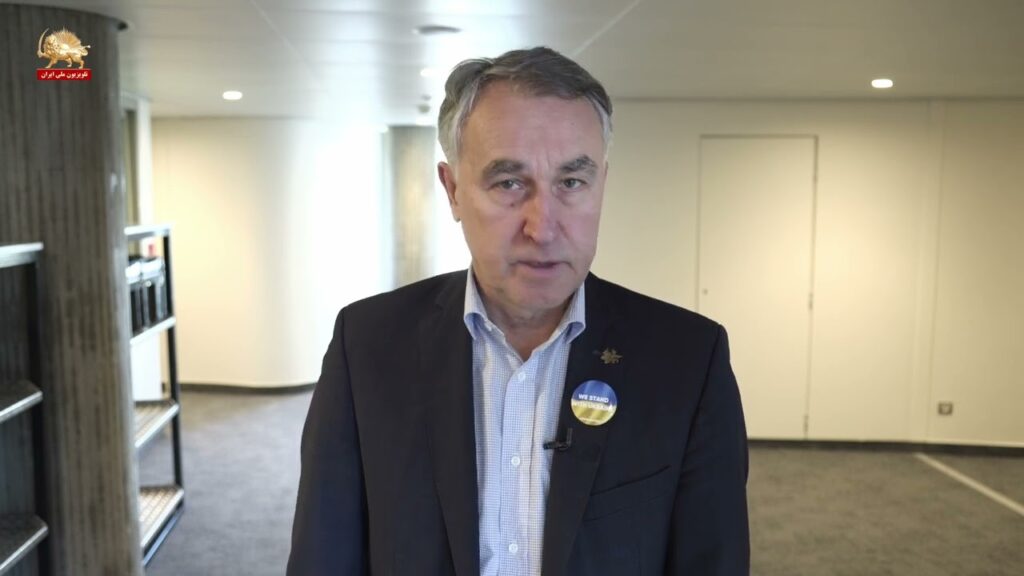
MEP Petras Auštrevičius tells Simay Azadi that the EU sees Iran’s abuses and stands with the people’s fight for democracy and justice.
Exclusive Interviews, News

‘No Impunity for Mullahs’ Regime’: MEP Auštrevičius Discusses EU Resolution and Hope for Iran

On April 3, 2025, addressing the critical human rights situation in Iran, the European Parliament adopted a resolution. This document voices grave concerns over Tehran’s escalating use of the death penalty, its persecution of ethnic and religious minorities, and the ongoing detention of political activists, specifically referencing the cases of Behrouz Ehsani and Mehdi Hassani and calling for their freedom. The parliamentary session saw many members delivering strong condemnations of the Iranian regime’s practices. Amidst these discussions, Simay Azadi TV spoke with several MEPs, including Mr. Petras Auštrevičius. His full remarks are below, edited for clarity. By debating these most important issues for the Iranian people, such as persecutions, such as violation of human rights, including public executions and executions in general, we are sending a very strong message: Nothing is forgotten. We follow the policies of the Mullahs’ regime. We know about all the abuse of policy means they use against their own people, and so they have to be very vigilant, understanding that there must be no impunity for all those crimes, which will not necessarily be a pleasant end for the regime. Many families suffered, lost their beloved ones, but the regime is insisting on having this [the death penalty], perhaps as the last means, to keep control of power and to send a message of fear and, ‘You know, power is in our hands. You have to follow our orders.’ We do follow very closely all the events in Iran. The National Council of Resistance is a strong partner of ours, and they send us all possible messages and information about the situation. So that’s why my short message to Iranians who have a hope for a better future [is]: don’t give up. We know that sometimes before the dawn, there is the darkest period, but be hopeful. Remember, you have partners, you have those who wish you a better future, democratic development, and indeed a great country of your own.

Exclusive Interviews, News

MEP Langensiepen Condemns ‘Execution-Driven Regime’ Following EU Resolution on Iran

On April 3, 2025, the European Parliament passed a resolution strongly condemning the worsening human rights situation in Iran. The resolution highlights the alarming rise in executions, the systemic targeting of minorities and political activists, and demands urgent action, including the release of political prisoners like Behrouz Ehsani and Mehdi Hassani. During the session where this resolution was adopted, numerous MEPs spoke out against the Iranian regime’s actions. On the sidelines, Simay Azadi conducted an interview with MEP  Katrien Langensiepen, The full-text of her remarks are below (edited for clarity) MEP  Katrien Langensiepen: The death sentence against Behrouz Ehsani and Mehdi Hassani is yet another attempt by the regime to crush dissent and intimidate Iranian society into silence. Both political prisoners, one 70 years old, father of two, the other 48, father of three, were sentenced to death in September [2024]. [This was] after a grossly unfair trial, which lasted just five minutes and was marred by allegations of torture and other ill-treatment to exact forced confession. The brave Iranian people, led by courageous women, girls, mothers, sisters, daughters, remain determined to overthrow this tyranny and establish a democratic republic. For decades, the people in Iran have been fighting for democracy against the regime, against the dictatorship, against torture and for freedom, life, participation, democracy. Behrouz Ehsani writes upon learning his death sentence – his words speak volumes –: ‘This execution-driven regime knows nothing else… bargain over my life. I am prepared to give my humble life for the freedom of the Iranian people.’ What a voice, what a strong man. I call [on] the Iranian government to free these two brave people. The people in Iran will not give up the fight for peace and democracy. And we, as a European Parliament, stay on the side of a democratic Iran.

Rally-in-D.C-Iranian-People-Supporting-a-Free-Iran
International Gatherings, News

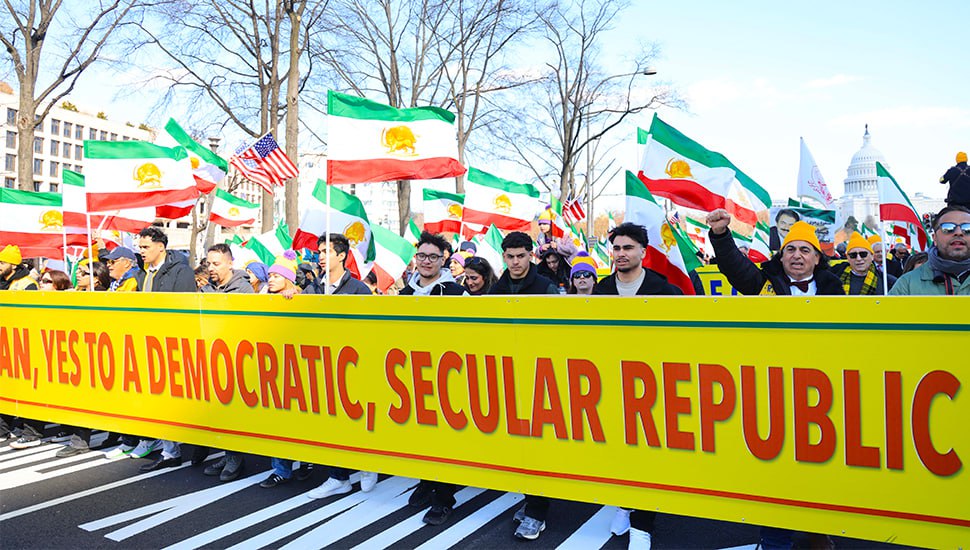
Iranians Rally in D.C. for Regime Change On March 8, 2025

On March 8, 2025, coinciding with International Women’s Day, thousands of Iranian Resistance’s supporters gathered in front of the U.S. Capitol Building in Washington D.C. to participate in a demonstration advocating for the end of Iran’s current regime. The event, which began at 1 p.m. local time, brought together Iranians and representatives from various Iranian communities across the United States. Following speeches by notable American figures and Iranian community  members, the participants marched from the Capitol to the White House to amplify their message. According to our reporters, the rally drew a significant crowd, reflecting widespread support for the cause among the Iranian diaspora and their allies. The event highlighted the ongoing struggle for freedom in Iran, with speakers addressing the regime’s policies and why the international community need to support this cause. Mrs. Maryam Rajavi, president-elect of the National Council of Resistance of Iran (NCRI), delivered the keynote speech via a video message. In part of her speech, she said:  “Now is the time to rise. Neither chance, nor coincidence, nor imaginary forces—none of these will cause change in Iran. This regime will neither collapse nor will it implode from within. There is only one way. That one and only way is organized resistance and uprising. Everything depends on the will and struggle of the children of Iran. Everything depends on whether we are willing to pay the full price for freedom. This is why we have come to the forefront. And we declare: Now is the time to rise.” Her words underscored the rally’s central theme of active resistance as the path to change. Congressman Brad Sherman Highlights Women’s Role and Iran’s Nuclear Threat Congressman Brad Sherman (D-CA) addressed the crowd, focusing on the sacrifices of Iranian women and the regime’s nuclear ambitions. “Today is March 8th. People around the world celebrate International Women’s Day. But no one has paid a greater or steeper price than the women in the Islamic Republic. In September 2022, countless thousands of Iranians, led by Iranian women, rose up against this regime that has for decades been torturing and killing Iranian women who dare to defy the regime and demand to live freely,” he said. Referring to Tehran’s nuclear ambitions, Congressman Sherman also emphasized the role of the People’s Mojahedin Organization of Iran (PMOI/MEK) in exposing Iran’s nuclear program. “Now,  we should remember that it was the MEK that first revealed to the world in the year 2002 that Iran was working on a nuclear weapon. This is the last resort of the ayatollahs’ regime. It cannot achieve popularity because of its policies, so it seeks to terrorize its own people and the people of the region. But it has failed. It lost its ally Hezbollah. It lost its ally Assad. And pretty soon it will lose its death grip on the Iranian people,” he stated. He cautioned, however, that “this is a dangerous moment,” urging U.S. support for pro-democracy groups. “That is why last week, my fellow Californian Congressman Tom McClintock and I joined with 150 bipartisan members of Congress to introduce a resolution supporting democracy in Iran, condemning the state-sponsored terrorism, and standing with the Iranian people—because a democratic Iran will not develop nuclear weapons.” Rudy Giuliani Condemns the Regime and Rejects the Shah’s Legacy Former New York City Mayor Rudy Giuliani spoke about the regime’s record. “We’re here on International Women’s Day to stand together, to change, destroy, get rid of a 40-year regime of terror that has been nothing other than a homicidal, misogynistic regime—meaning they practice the persecution and murder of women because they’re women. How is it so many in America tolerate it, ignore it, and don’t report on it? That’s changing,” he said. Giuliani argued that peace in the Middle East hinges on Iran’s transformation. “I believe that people recognize that the attempt to create peace in the Middle East will not work so long as the regime of terror under the Ayatollah remains in power. No matter what we do, no matter what any other nation does, the Ayatollah will undermine it. The people of Iran are captives of this tyranny. It’s a sickness, it’s a tyranny, and it’s one that has completely undermined the Western ability to resist it, and it’s time to stand up and say: Regime change in Iran,” he asserted. He praised the NCRI’s strength, countering critics: “They say you are just a fringe group. You’re a cult. If you were so weak, why are you the most targeted for execution and murder in Iran? Because they are afraid of you. You don’t need soldiers, you have the NCRI, you have Madam Rajavi, you need support. You have my support. And I believe that next year at this time, with the grace of God, we’ll all meet in a free Iran.” In an interview with our reporter, Giuliani dismissed the idea of restoring the Shah’s son to power. “I think it’s an almost ludicrous distraction. I’ve never heard of a country that fights for its freedom and restores a tyrannical government. The Shah was a tyranny. The Shah had the secret police. The Shah was responsible for the death of many, many people. And the Shah was a very weak man who ran away whenever there were problems. So he gets replaced by something worse. Now we’re going to go back to the lesser tyranny?” “From the first Shah to the second to the third, we got serious gene pool deterioration. I think it’s all about money. And I actually think he cooperates with the regime because he talks about being able to use the Revolutionary Guard. What, is he crazy? The Revolutionary Guard? Those are the people under the guise of the Quds Force who kill my brothers and sisters, my American brothers and sisters,” he added. On the sidelines of today's #2025RallyForAFreeIran we had this privilege to conduct an interview with mayor @RudyGiuliani who perfectly rejected the false notion of restoring the deposed monarchy in Iran. Hear

News

59th Week of “No to Execution Tuesdays” Campaign Expands to 38 Prisons Across Iran

March 11, 2025 – The “No to Execution Tuesdays” Campaign has entered its 59th consecutive week, with prisoners in 38 prisons across Iran launching a hunger strike in protest of the regime’s escalating executions. This week’s campaign coincided with International Women’s Day, bringing further attention to the widespread oppression and discrimination faced by women in Iran. In a latest development this week, female prisoners from the women’s ward of Sepidar Prison in Ahvaz, southwest Iran,  issued a statement condemning the surge in executions, calling for the abolition of the death penalty. In their statement, participants of the No to Executions Tuesdays campaign expressed underlined that they “congratulates all women around the world, especially the resilient and brave women of this land, who have faced severe discrimination for centuries. Over the past 46 years, despite the rule of a misogynistic religious fascist regime, they have risen up for their most basic human rights. The campaign also honors the memory of the thousands of women who have lost their lives in the struggle for freedom.” The prisoners also denounced the regime’s mass executions, revealing: “Since the beginning of Esfand alone—since February 19—nearly 100 people have been executed, including 28 individuals in a single day on March 1.” In their statement on joining this week’s campaign, female prisoners from Sepidar prison in Ahvaz went on to declare: “This week, coinciding with International Women’s Day, we, a group of female prisoners from the women’s ward of Sepidar Prison in Ahvaz, issue this statement to protest the widespread executions in Iran. We declare our participation in the ‘No to Execution Tuesdays’ campaign and demand an end to the death penalty.” The Execution Machine Shows No Signs of Slowing Down The Iranian regime continues to rely on executions as a tool of repression, carrying out mass hangings to instill fear and suppress dissent. The latest figures indicate that nearly 100 people have been executed in just three weeks, a sharp escalation in the regime’s use of the death penalty. A Growing Movement Against Executions The “No to Execution Tuesdays” Campaign has gained widespread support among prisoners across Iran, expanding from a small protest into a nationwide movement spanning 38 prisons. The campaign’s statement this week emphasized the urgency of keeping the plight of death row prisoners in the public spotlight, warning: “We must all remember that thousands of prisoners convicted of general crimes, as well as dozens of political and ideological prisoners, are on death row. Every moment in prison is overshadowed by the thought of the gallows for them and their fellow inmates. Their right to life is constantly threatened by the suppressive apparatus of the religious dictatorship. Therefore, it is crucial that amid the noise of various news, the issue of death row prisoners is kept at the forefront, and we take a firm stance against it.” The campaign urged all political activists, human rights defenders, and civil society members to amplify the voices of those facing execution and demand an end to capital punishment in Iran.

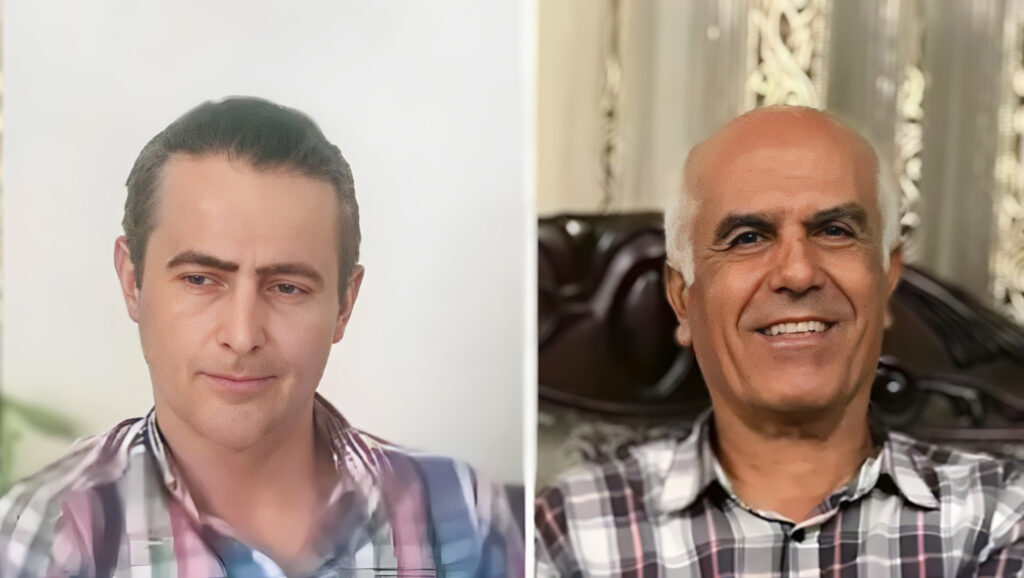
Behrouz Ehsani and Mehdi Hassani
News

Behrouz Ehsani and Mehdi Hassani Face Imminent Execution in Iran

Tehran, February 23, 2025 – Political prisoners Behrouz Ehsani and Mehdi Hassani now face imminent execution after Iran’s Supreme Court rejected their retrial request on Sunday, February 23. The National Council of Resistance of Iran (NCRI) confirmed the two men, held in Ghezel Hesar Prison, are at the edge of the regime’s gallows, convicted on charges tied to their support for the People’s Mojahedin Organization of Iran (PMOI/MEK). Resistance voices and human rights advocates are sounding the alarm, demanding urgent global action. On February 25, Dr. Mai Sato, the United Nations Special Rapporteur on human rights in Iran, urged the Iranian regime to halt the executions of Behrouz Ehsani and Mehdi Hassani, following reports of torture and unfair trials. In a post on X she wrote:  “I call on the Islamic Republic of Iran to stop the execution of Behrouz Ehsani and Mehdi Hassani,” citing trials marred by forced confessions. Her call is part of a broader call by three UN experts, who underlined in their February 25 statement that, ” Executing Individuals for broadly defined national security offences without fair trial guarantees is against international human rights law.” Ehsani, 70, and Hassani, 48, were sentenced to death on September 16, 2024, by Judge Iman Afshari at Branch 26 of Tehran’s Revolutionary Court. The charges— “rebellion (baghi),” “waging war against God (moharebeh),” “corruption on earth (efsad-e fel arz),” and “membership in the PMOI”—were upheld by the Supreme Court on January 7, 2025. The NCRI branded the trials a sham, built on forced confessions extracted through torture after their 2022 arrests during nationwide protests. On January 26, regime agents abruptly transferred the pair from Evin Prison’s Wards 4 and 8 to Ghezel Hesar, a facility notorious for executions, sparking protests among inmates who chanted, “If you execute, there will be an uprising.” Ehsani, a veteran dissident jailed in the 1980s, wrote from prison, “I will not bargain over my life… I am ready to sacrifice my insignificant life for the liberation of the Iranian people.” Hassani, a father of three, endured similar torment in Evin’s Ward 209 before the move. Amnesty International slammed the sentences on January 16 and 23, stating, “Behrouz Ehsani and Mehdi Hassani were convicted… in relation to their alleged support of the PMOI… following a grossly unfair trial.” The group documented prolonged solitary confinement and torture, underlining the regime brutality. On January 23, the European Parliament passed a resolution condemning Iran’s “systematic repression,” calling for the release of death-row prisoners like Ehsani and Hassani. The NCRI’s warned on February 24, “The mullahs’ regime is accelerating executions to crush dissent,” urging the UN High Commissioner for Human Rights, Human Rights Council, and Special Rapporteur on Iran to intervene. The statement highlighted a global campaign that briefly halted the executions in late January, but the Supreme Court’s latest ruling has reignited fears. “Time is running out,” the NCRI stressed, pointing to Tehran’s 2024 execution tally of over 1,000, with 47% in the last quarter alone. Ehsani’s lawyer had filed for a retrial last week, banking on Article 478 of Iran’s Criminal Procedure Code to suspend the death penalty. The Supreme Court’s rejection on Sunday dashed that hope, leaving the men’s fate in the hands of a regime defiant of international pleas. The NCRI noted six other PMOI supporters also face death sentences, signaling a broader crackdown. From Ghezel Hesar’s isolation cells, Ehsani and Hassani embody the resistance’s defiance. “This execution-driven regime can do nothing else,” Ehsani wrote, a sentiment echoing across Iran’s prisons. The NCRI’s president-elect, Mrs. Maryam Rajavi, long a voice against the mullahs, has framed such executions as the regime’s desperate bid to stave off a popular uprising—a view bolstered by the 2022 protests that first landed Ehsani and Hassani behind bar

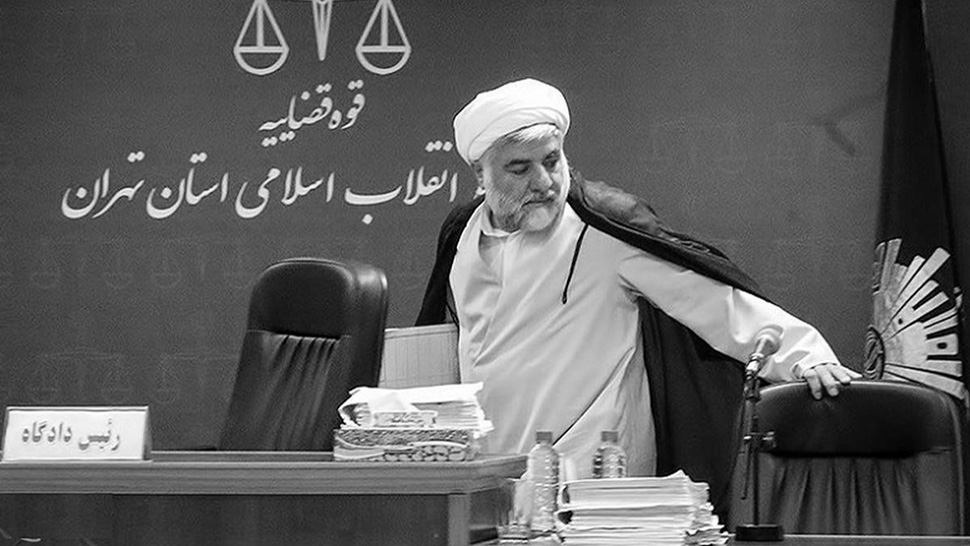
Mohammad Moghiseh
News

Leaked Video Shows Mohammad Moghiseh Discussing 1988 Mass Executions

A newly surfaced video clip from February 15, 2025, reveals Mohammad Moghiseh, an Iranian judge and interrogator, recounting a pivotal meeting with Ruhollah Khomeini regarding the 1988 massacre of political prisoners. In the footage, Moghiseh describes how he and six other officials visited Khomeini, who explicitly ordered them to continue the executions without hesitation. “This matter concerns me alone. Do not concern yourselves with Qom or elsewhere. Just ensure that none of these Monafeqin [the MEK members] escape God’s verdict,” Khomeini reportedly said, according to Moghiseh’s account in the clip. The revelation provides further evidence of Khomeini’s direct role in the 1988 mass executions, a period during which thousands of political prisoners—many affiliated with the People’s Mojahedin Organization of Iran (PMOI/MEK)—were executed across Iran’s prisons. The timing of the video’s release is particularly notable, coming just weeks after Mohammad Moghiseh was assassinated in Tehran. Mohammad Moghiseh’s Assassination in Tehran’s Justice Palace On January 18, 2025, Moghiseh was shot and killed inside Tehran’s Justice Palace by Farshad Asadi, a judiciary employee. He was killed alongside Ali Razini, another senior judicial figure linked to mass executions. Their deaths marked the end of a career defined by Moghiseh’s direct role in Iran’s suppression of political dissidents. Despite his high-ranking positions in Iran’s judiciary, Moghiseh was widely recognized as an executioner rather than a judge. His name was frequently mentioned in human rights reports for overseeing politically motivated trials, issuing harsh sentences against dissidents, and personally participating in prisoner interrogations. Who Was Mohammad Moghiseh? Born in 1956 in Sabzevar, Moghiseh, also known as Nasirian, was an interrogator and prison official before becoming a judge. His career was shaped by his role in Iran’s judicial and prison system, where he worked closely with Asadollah Lajevardi, the infamous “Butcher of Evin.” Between 1981 and 1985, Moghiseh served as the assistant prosecutor of Evin Prison, participating in interrogations, torture, and mass executions. He later became the deputy warden of Evin Prison and was directly involved in the 1988 massacre, during which thousands of prisoners were executed without fair trials. During the mass executions at Gohardasht Prison, survivors recall that Moghiseh would personally ensure prisoners were killed efficiently. According to eyewitness testimony, he would pull down the legs of prisoners as they were being hanged to speed up the process. Moghiseh continued to play a central role in political repression after 1988: He was responsible for sentencing numerous protesters, journalists, and activists to long prison terms and even death sentences—including those arrested during Iran’s 2009 Green Movement protests. New Evidence and Unanswered Questions The video clip of Mohammad Moghiseh confirms what human rights organizations have long stated: the 1988 massacre was a premeditated purge ordered by Khomeini and carried out by key judicial figures, including Moghiseh. His words in the footage reveal how judiciary officials reported back to Khomeini and received his direct authorization to continue the executions.

Scroll to Top