
Simay Azadi English

Author name: Mahin Habibpour

News

Iran: Pressure Intensifies on Women Political Prisoners Mainly Those Linked to PMOI

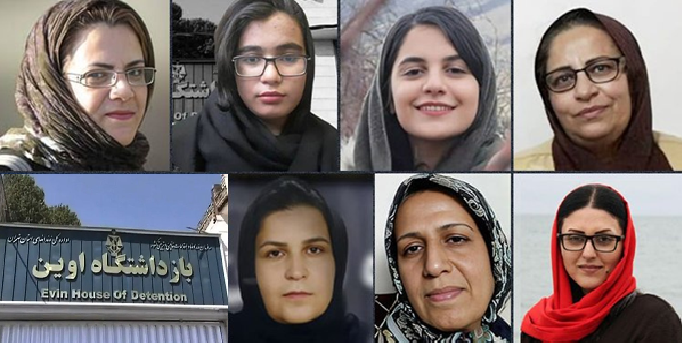
Iranian authorities have intensified pressure and punitive measures against women political prisoners, mainly those supporting the People’s Mojahedin Organization of Iran (PMOI/MEK), amid a broader escalation in repression and executions across the country. In recent weeks, several female prisoners have reportedly faced new legal cases, additional prison sentences, denial of medical treatment, and restrictions on family visits. According to reports from Evin Prison, Shiva Esmaili and Elaheh Fooladi, two prisoners arrested for supporting the PMOI, were sentenced to an additional six months in prison on charges of “insulting the leadership” after protesting the death of fellow prisoner Somayeh Rashidi. Rashidi, 42, died on September 25, 2025, in Qarchak Prison, south of Tehran. Opposition sources described her death as occurring under torture and abusive prison conditions. In a separate measure, prison authorities reportedly banned seven women political prisoners from family visits after they participated in the “No to Executions Tuesdays” campaign inside prison. The prisoners include Zahra Safaei, Forough Taghipour, Marzieh Farsi, Elaheh Fooladi, Arghavan Fallahi, Shiva Esmaili, and Golrokh Iraee. The women had reportedly sung protest songs and chanted slogans opposing executions. Meanwhile, in Yazd Prison, authorities are accused of denying medication and medical treatment to Parisa Kamali, a 40-year-old prisoner accused of supporting the PMOI. Reports indicate prison officials have refused to transfer her to hospital care despite concerns over her health. Kamali, who is reportedly facing transfer to Khash Prison in southeastern Iran, issued a message marking the fortieth day after those killed during the January 2026 uprising. In the message, she wrote: “We will never allow this flag to fall to the ground, and we believe this blood-soaked path will end in victory.” The growing pressure on women political prisoners comes amid an intensified wave of executions in Iran. Since July 2025, at least 10 PMOI members have been executed. Eight of those executions have taken place since March 30, 2026, including multiple prisoners held in Ghezel Hesar Prison. Human rights groups and opposition organizations have warned that additional political prisoners, mainly PMOI prisoners remain at risk of execution as the crackdown continues.
News

Iran Reports PMOI Arrest in Khuzestan Amid Rising Executions

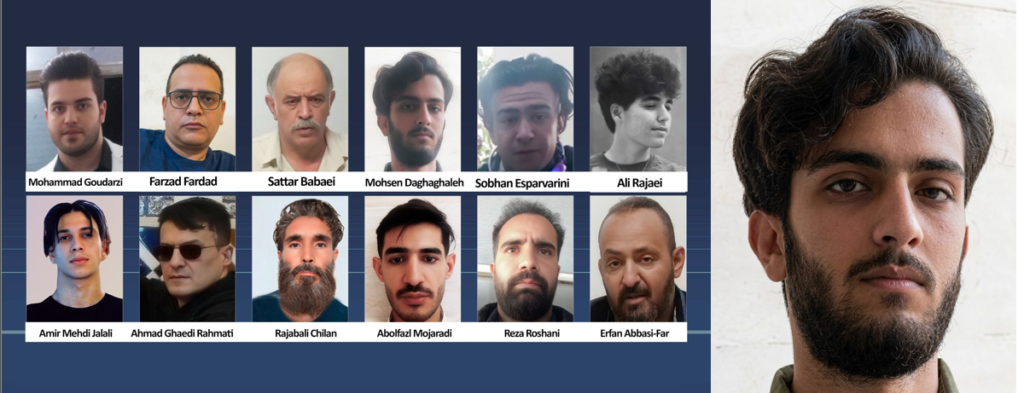
On April 29, the state-run Tasnim News Agency—an outlet affiliated with the Islamic Revolutionary Guard Corps (IRGC) Quds Force—reported the arrest of an individual in Khuzestan Province. Authorities described the detainee as an “operational element” linked to the People’s Mojahedin Organization of Iran (PMOI), an Iranian opposition group. While Tasnim announced the arrest on April 29, Iranian opposition sources had already identified the individual as Mohsen Daghaghaleh on April 21. He was reportedly among a group of 12 individuals detained for alleged support of the PMOI. Images of the detainees circulated at that time, alongside reports indicating they were being held under significant pressure. According to Tasnim, the detainee is accused of involvement in the January 2026 protests, with allegations including attacks on government and religious sites, injuring two officers, setting fire to a bank branch and ATMs, distributing Molotov cocktails, and possessing weapons. Authorities also claimed he had received bomb-making training online. These claims have not been independently verified. Meanwhile, the Iranian opposition had previously shared the identities and conditions of those detained, stating that their cases have been submitted to international bodies, including the United Nations Special Rapporteur. The individuals identified by opposition sources include: The reported arrest comes amid a broader escalation of pressure on individuals accused of links to opposition groups. In recent weeks, multiple reports have pointed to an increase in arrests and executions related to such allegations, raising ongoing concerns among human rights observers regarding the fate of political detainees in Iran. On April 19, Iran’s Judiciary Chief, Gholamhossein Mohseni-Eje’i, called for the expedited processing of cases, stating: “Today, work must be entrusted to experts, moving faster and faster, both in the prosecutor’s office and the courts.” Urging officials to take rapid action, he added, “The prosecutor must go in person, go to the scene, and if necessary, go to the prison… Question, answer, investigate, and notify them of the charges. Take the final defense and do whatever is required.” 🚨 Iran's Judiciary Chief: “If 'the case' is given in the morning, get the results by the afternoon.” In a drastic escalation of summary justice, Iran’s Judiciary Chief Gholam Hossein Mohseni Eje'i has ordered prosecutors to bypass standard legal timelines and issue "immediate"… pic.twitter.com/cNzcxtxNyj — Pasha Borjkhani (@BorjkhaniP1847) April 19, 2026 One day after these remarks, two PMOI members, Hamed Validi and Mohammad Massoum-Shahi, were hanged. Their deaths bring the number of political prisoners executed in less than a month to 12.

News

Who Was Forouzan Abdi? The Athlete Executed in 1988

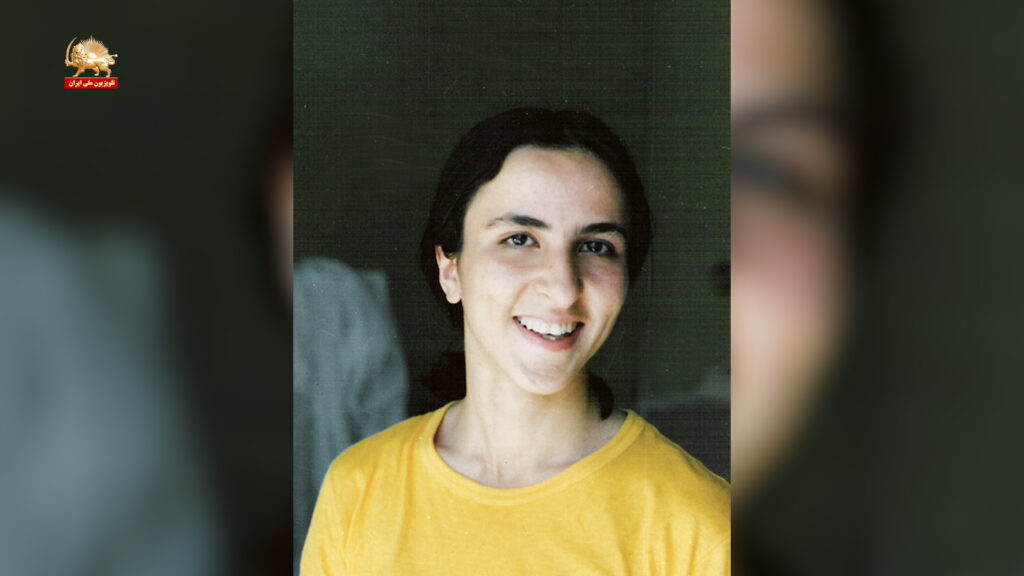
Summer of 1988 marked one of Iran’s darkest chapters, when tens of thousands of political prisoners—mostly PMOI/MEK supporters—were executed. Among them was Forouzan Abdi, a national volleyball champion, alongside doctors, students, mothers, and countless others. Forouzan Abdi Pirbazari was a physical education student and a member of the Iranian women’s national volleyball team before the 1979 Revolution. A celebrated athlete born in Tehran in 1957, her life changed after the fall of the Pahlavi’s regime as she became involved in political activities. Her unwavering commitment to freedom would ultimately lead her to martyrdom during the 1988 massacre of political prisoners in Iran. In June 1981, during the early days of the clerical regime’s brutal crackdown on dissent, 23-year-old Forouzan was arrested for supporting the People’s Mojahedin Organization of Iran (PMOI) and sentenced to five years in prison. Even after completing her sentence, she was illegally held for an additional two years, a common practice for unrepentant political prisoners. In the summer of 1988, her resistance reached a new climax. During the state-sanctioned massacre of tens of thousands of political prisoners, Forouzan was brought before a “Death Committee” for a trial lasting only minutes. She was asked to denounce the PMOI. Her refusal sealed her fate. She was sent before a firing squad, becoming one of the first female PMOI supporters to be executed in the atrocity. It is worth noting that during the 1988 massacre, over 30,000 political prisoners were executed, mostly PMOI supporters. Forouzan’s fellow inmates remember her as a resilient, beloved, composed, and patient figure. Even in the grim confines of prison, she maintained her athletic spirit. During a brief period when prisoners at Qezel Hesar Prison had access to a yard, she defied a ban on group sports by organizing volleyball matches. In 1984, while imprisoned, Forouzan formed sports teams and began teaching volleyball to fellow inmates. It is said that she spent every morning until noon in the prison yard, coaching the teams she had organized, and in the afternoons, she would run alongside other prisoners. Her resilience, however, was met with extreme punishment. As one former prisoner recounted, Forouzan was subjected to horrific conditions. In early 1982, she was held in a punishment ward at Qezel Hesar, where up to 30 people were crammed into cells built for three. Later, she and a few others were forced to live in a filthy bathroom, causing them all to develop skin diseases. For her resistance to the guards’ inhumane regulations, prison officials kept her in the solitary confinement cells of Gohardasht Prison for over a year, from the autumn of 1983 to the winter of 1984. There, she was deprived of all contact with other inmates, denied access to newspapers or fresh air, and often forbidden from receiving family visits. Afterward, she was transferred back to Qezel Hesar and then to the infamous Evin Prison in 1986. Because of her continued protests, she was almost always held in punishment wards, where cell doors were kept locked and prisoners were allowed out for only thirty minutes, three times a day, to take care of all their needs. Among the tens of thousands murdered in the 1988 massacre, Forouzan Abdipour was in one of the first groups of PMOI supporters to be tried and later executed. Her legacy, however, endured. Prisoners later held in the prison infirmary reported seeing a poem etched on a cell wall, believed to be hers: “Oh God, help me, like a worthy servant (Abdi), to be a shining candle (Forouzan) on Your path.”

Scroll to Top