
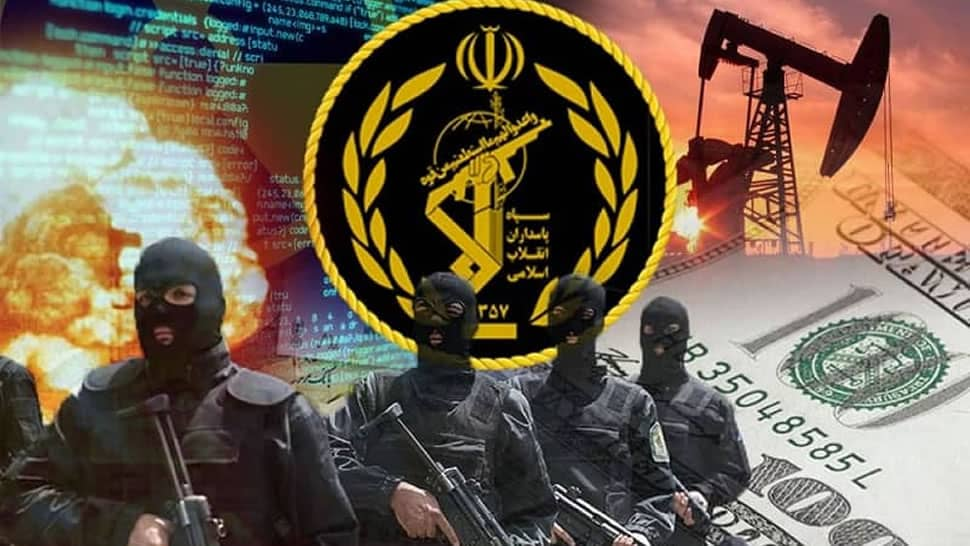
Britain’s designation of the Revolutionary Guards marks a major policy shift following years of campaigning by the Iranian Resistance and cross-party parliamentarians.
The United Kingdom announced on July 13, 2026, that it has proscribed Iran’s Revolutionary Guards (IRGC) as a terrorist organization, using new powers under the National Security Act to target what the government described as state-sponsored proxy activity on British soil. The move follows years of warnings by British security agencies about IRGC-linked operations in the UK.
According to Reuters, the British government concluded that the IRGC had been linked to threats against individuals in Britain. Prime Minister Keir Starmer said the new measures would make it easier to “prosecute and lock up anyone carrying out their dirty work here in Britain.”
It will be a criminal offence under the National Security Act to express support or have any relations with the IRGC or its related organizations, and one could be sentenced to 14 years in prison. The legislation bans the IRGC and its front companies activities in the UK.
In a statement issued on July 13, the British Committee for Iran Freedom called the designation “a crucial, long-overdue step” against “one of the world’s most dangerous instruments of state-sponsored terrorism, domestic repression, and regional destabilisation.”
The cross-party committee said the IRGC is “the principal apparatus through which Iran’s ruling theocracy exports extremism, finances hostile proxy militias, and seeks to intimidate democratic societies far beyond its borders.” It urged the British government to treat the proscription as “the beginning of a robust, comprehensive policy toward the Iranian regime,” including dismantling IRGC front companies operating in Britain, expelling individuals acting on its behalf under diplomatic or commercial cover, and ending commercial activities that financially benefit the organization.
The committee also paid tribute to Mrs. Rajavi and the NCRI, stating that through “detailed disclosures, sustained international advocacy, and extensive documentation of the IRGC’s covert operations and financial empire,” the Iranian Resistance had made “an invaluable contribution” to informing lawmakers and governments about the organization’s true nature. It concluded by calling on Britain “to stand with the people of Iran in their endeavour for freedom and democracy and to recognise the right of the Iranian people and their Resistance to confront the IRGC and bring an end to the dictatorship.”
The decision was also welcomed by Mrs. Maryam Rajavi, President-elect of the National Council of Resistance of Iran (NCRI), who described the proscription as “long overdue” and “essential for regional and global peace, stability, and security.”
“From the very outset, the Iranian Resistance has identified the IRGC as the principal organ of coercion and repression of the religious fascism ruling Iran.”
Mrs. Rajavi also expressed appreciation for more than four decades of efforts by members of both the House of Commons and the House of Lords, particularly those in the British Committee for Iran Freedom (BCFIF), for consistently advocating the proscription of the IRGC and exposing its crimes.
It is worth noting that the NCRI, has held dozens of conferences exposing the IRGC’s destructive role both inside and outside of Iran. In addition to holding conferences, the NCRI’s U.S. Representative Office published several books since 2016. These books include: IRAN: Islamic Revolutionary Guard Corps (IRGC) The Machinery of Terrorism, IRGC’s Rising Drone Threat, IRAN: Exposing the Latest Terrorist Game Plan of the IRGC-Quds Force, IRAN: The Rise of the Revolutionary Guards’ Financial Empire, Terrorist Training Camps in Iran, How Iran Fuels Syria War, Iran’s Emissaries of Terror, IRAN: Cyber Repression
In an exclusive interview with Simay Azadi conducted before the government’s announcement, Bob Blackman MP, Co-Chair of the British Committee for Iran Freedom, said the National Security Act would finally enable Britain to take the action “we’ve been calling for for many years, namely, the proscription of the Iranian Revolutionary Guard Corps (IRGC) as a terrorist organisation.”
Blackman said the designation would allow authorities to act not only against the IRGC itself but also “all of the front organisations, whether they be media, whether they be charities, or other types of organisation.” He added that the UK should go further by dismantling networks acting on Tehran’s behalf, deporting individuals involved in regime activities, and standing with the Iranian people.
“The only solution that is feasible is a regime change, so that Madame Rajavi, with her Ten-Point Plan, can restore democracy and freedom to the people of Iran.”
He added that the plan would allow Iranians to choose their government through free elections within six months, placing power in the hands of the Iranian people.
The British government’s decision marks one of the most significant actions taken by London against the IRGC and follows years of advocacy by members of Parliament, the British Committee for Iran Freedom, and the Iranian Resistance, which has consistently identified the IRGC as the regime’s primary instrument of domestic repression and international terrorism.